
Radian
-
Posts
2586 -
Joined
-
Last visited
-
Days Won
15
Everything posted by Radian
-
Does seem daft but googling around people ask questions such as "why is my meter LED glowing red even though my main switch is off?" It seems to be more likely to be off than on but I think that's just where it is in the measurement cycle when it detects no power flow. Yes - If it's really sunny, I can manage a couple of hundred Watts or so past my base load. Again, this is just a temporary lash-up of second-hand PV modules thrown against a S facing fence to test my diverter project. So far 5.1kWh has 'leaked' past since April.
-
I've been misinterpreting the meaning of the impulse LED coming on constantly - I thought it was signaling power going back into the grid (Joule bucket overflowed). That's not what it means at all. It simply stops flashing in either on state or off state when it sees no chargeable power consumption through the meter. In fact, if my firmware ever detects it changing state, I know the Joule bucket is effectively empty. This might still be handy for synchronising my model which can only ever 'dead reckon' the level in the Joule bucket based on instantaneous power measurements (that may be a bit off).
-

Use of Portable Air Conditioners / Heat Pumps?
Radian replied to Ferdinand's topic in General Self Build & DIY Discussion
The timing will be executed in the AC unit. The device running the app isn't required beyond programming the AC. In case you've never encountered it before, the Chinese often use a short-cut for multiple temperature/time of day routines whereby they have three modes synonymous with 'comfort', 'economy' and 'frost protection'. Comfort would be the actual dialled-in temperature, economy would be 2C or 3C lower and frost protection would ignore the dialled-in temperature and use 5C to 7C instead. The saving they make in firmware is that the scheduler only has to store the mode (maybe as little as two binary bits) for each time slot instead of an actual temperature value. That remains global. Your AC may or may not have that degree of control but it might help to know this if it does. -
As you can see, the stated reason appears to be because Hep2O hasn't been tested for that use. Litigation protection I guess. Seems stupid.
-
For anyone like me with a UFH loop in a garden room, outside the heating season, the floor may be a significant thermal resource. The sunlight that falls directly on the floor is re-radiated and trapped by the low-E glazing so becomes one of the most significant contributions to the room's air temperature. In turn, reducing the floor temperature would reduce this re-radiation so reducing the source of the unwanted air temperature rise. The fact that this would also be sourcing the DHW, potentially through solar PV is a win-win.
-
This caught my eye: And cools the floor as well. Hmmm...

- 16 replies
-
- 1
-

-
- dhw ( domestic hot water )
- gas
- (and 2 more)
-
I like this comparison. 3 to 4 miles per kWh appears to be ball-park for EVs so whenever I put on a 2kW heater for half an hour, I'll bear in mind that I didn't have to push a car for 3 miles to get the room warm. Probably would have made me warmer though.
-
And come October, at least £1.50
-
Use of Portable Air Conditioners / Heat Pumps?
Radian replied to Ferdinand's topic in General Self Build & DIY Discussion
Yes official open-source development tools are available on github e.g. for HA https://github.com/tuya/tuya-home-assistant Depends on how hacky you want to get. But, from the user guide, some of the built-in app functions would seem to cover what you want to do? "Automation allows an automatic action to be set up for the device. This can be triggered by the Time, indoor temperature, humidity of the room, weather conditions, and a range of other influences." -
There is an element of discouragement towards ASHP in cooling mode in the UK coming from somewhere. I remember years ago someone had been 'shopped' to local authority by a neighbour for installing ASHP without planning and BC eventually decided it was OK but insisted it be disabled from cooling. I wonder if this is a ripple coming from that direction?
-
Use of Portable Air Conditioners / Heat Pumps?
Radian replied to Ferdinand's topic in General Self Build & DIY Discussion
Ooh! Sounds like a good opportunity for a spot of hacking. Tell me more about the app... does it look like a generic "smart life" or "tuya" app? -
I hope you'll excuse me. I was really quite angry about yet another big rip-off with people owning heat pumps.
-
Yes that'd be right. Odd to use an E48 value with 1% tolerance but that's what makes it so special (not). I seriously wouldn't want to be doing any business with a company that would try selling me that and neither should anyone else IMO. The question is - who set the price?
-
Looks like 4-bands in which case: brown (1), brown (1), red multiplier (2), black tolerance = 1100 Ohms but black as tolerance is not right? If it was grey it'd be a ridiculous 0.05% The Other way round makes no sense either. Have I forgotten how to read old-school resistors? 😕
-
Hybrid inverter for small in roof 2kw array - help please!
Radian replied to Timmyk's topic in Photovoltaics (PV)
16A MCB provides an appropriate margin. -
Because it's just two connections it's virtually guaranteed to be a dumb resistor. If it is just a resistor then it's borderline criminal. If it was a 'smart' dongle, like a secure microcontroller (e.g. a satellite viewing card) that'd be a bit different. But not much.
-
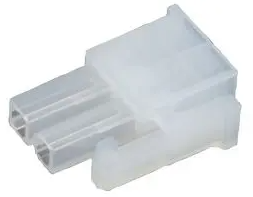
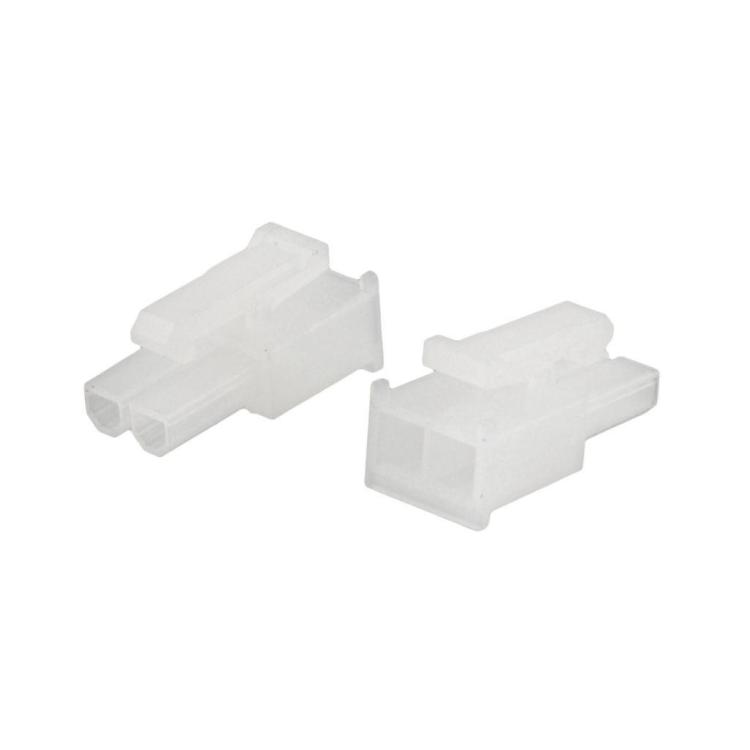
Correction: Picture of vaillant-0020269259 shows the catch on the side: So connector is Mini-Fit Jr. 5557 26pence + crimps
.jpg.c9ec0ebeb31e1b2a66cf3855b23ef61f.jpg)
-
FFS. A penny resistor in what looks like a Molex Mini Fit plug Someone's gotta know the resistor value? Or stick a 100k Pot on it and turn it until something shows up someplace?
-
Use of Portable Air Conditioners / Heat Pumps?
Radian replied to Ferdinand's topic in General Self Build & DIY Discussion
Never mind that... what's it like at heating???😂 -
Optimisers typically have a built-in safety function that reduces the output to 1 Volt DC when unloaded. So if disconnected or isolated or even if the AC is removed from the string inverter, the big scary DC voltage (should) drop to a few 10's of volts - depending on how many optimisers are in the string.
-
Maybe, although the TN junction ought to be reliable enough and the other Kelvin tap would probably be on the first connection to the Neutral busbar with just the main breaker switch in between. Could always resort to the old "Steel dressmaking pin through the insulation" trick but that would be criminal (well, it would be on the other side of the meter).
-
There's a thought. Actually there's a relatively benign way of doing that... the combined TN earth point could be at one end of a Kelvin connection pair and the other at the Neutral in the consumer unit. The same current is flowing in the Neutral (CT clamps work just as well on either conductor). And I'm quite happy referencing my voltages to Neutral as it is. Might have to look into that a bit more.
-
Yes it looks like an IEC 62056-21 optical bi-directional comms port.
-
Reactive power is being measured when the alternating current is not in phase with the supplied voltage. It's the component of complex power that's stored and retrieved from reactive loads like capacitors and inductors rather than actually performing useful work. Thank goodness we aren't currently billed for it! This is one trick the network operators have got up their sleeves to squeeze more revenue out of us. It makes the presence of all mentions of reactiveness around the meter a little bit worrying. Of course it's also the case that heavy industry pays for reactive power so the equipment is no doubt multi-purpose. If we were to be billed for reactive power, my fridges and freezers would be twice the price to run and your pound-shop LED lamps might be 10 times the cost to run as the power factor is approximately the ratio of mains voltage to output voltage across the LED's.
-
Yes you read that right but the load may not always be on for a fixed time because other factors may affect the power flow during that period. In addition to the dump load there will be other changing house loads and the PV may be gong up or down as well. That's why I needed a low-latency link for the signal to turn on the Triac: the power flow is evaluated for every cycle, and the bucket model adjusted accordingly. It seems to work for you but it sounds like you've 'locked-in' a certain amount of loading that may not be altogether appropriate. Probably evens out over the long term but I'd expect a touch of over/underflow. Although now I read that back I'm not so sure - depending on when you commit to dumping a certain amount of energy does that not mean you might be working in a 'virtual buffer' on the consumption side - albeit balanced out by half of the buffer in the meter?