
Radian
-
Posts
2586 -
Joined
-
Last visited
-
Days Won
15
Everything posted by Radian
-
But just how airtight is the room in reality? Have you measured the ACPH? My rooms all leak like a sieve mostly around windows and electrical fittings. The skirtings to floor are mostly OK and I'm going to re-caulk the windows but trying to seal the electrics on dot & dab plasterboard is virtually impossible.
-
Isn't that the obvious answer?
-
Shaving a bit off the bottom of bedroom doors is my plan for that.
-
I was just thinking that in a non-airtight building, a single PIV loft type fan introducing filtered, warmed fresh air in a central hallway might be helpful. I know you don't have a loft as such but if one of your eaves spaces has room for the unit and access to the outside air, and the stairway (a lot of if's) then it's a relatively simple low cost exercise. In the heating season, the trade-off between introducing uncontrolled cold air from outside via a myriad of leaks and pushing out warmed air through a positive internal pressure is difficult to evaluate but having a system you can control should provide some advantage. Admittedly it would the kind of thing that would benefit from a degree of DIY electronics - monitoring CO2, temperature and humidity and developing a control algorithm. My own musings revolve around installing a fan unit in our loft feeding filtered air into the airing cupboard that houses our HW cylinder and venting out into our central hallway. The waste heat available would deplete quite rapidly on cold days (have to do some calcs) but a small resistive heater as a PV diverted load could cover some of the requirements.
-

Checking to see if smart meter is on the SMETS2 network
Radian replied to Radian's topic in Electrics - Other
Looks like it's dead in the water now then. 😕 Thanks for trying all. I suppose I could try registering with a DCC connected company like Hildebrand and see if it fails. -
Do you have a central hallway that has an open stairway to the first floor rooms?
-
The government has put in place a programme to move first-generation SMETS1 meters onto the SMETS2 network, giving old meters the same benefits as new meters and access to DCC. smartmetercheck hosted by citizensadvice.org is supposed to take your MPAN number and postcode and tell you if your meter has been migrated but every time I try using it I get "There has been a problem trying to check your meter. Please try again." Perhaps someone else might give it a go and report back?
-
No. Current transformers need either L or N but not both as their magnetic fields cancel each other out. You can get 13A plug-in type adaptors if your ASHP is terminated in a standard 13A plug but that's extremely unlikely.
-
Of course this places greater demands on the environment being clear of obstacles. I have a South facing fence that I've had some spare modules stood against and while they're doing great at the moment, I see the shadow of the house getting closer every day 😪
-
Glulam vs Oak for exterior uncovered pergola
Radian replied to thefoxesmaltings's topic in Landscaping, Decking & Patios
My go-to timber for outdoor use. Victorians used it for the deck of the Clifton Suspension bridge and it was replaced once in 1958. Still there under the tarmac I think. -
What's the consensus on legionella and dhw storage temps
Radian replied to SimonD's topic in Boilers & Hot Water Tanks
Doesn't it depend on vented vs unvented systems? There can be all sorts of things going on in water storage tanks in the loft. The thing that promotes bacteria growth is slowly changing temperature gradients - particularly ones that pass through human body temperature. Like your fridge is full of bacteria but they only thrive at low temps, a long way from body temperature. And that rough 30 degree delta is held similarly for hot water storage at the recommended over 60 degrees. -
you never go back to us with the status of your cavity insulation...
-
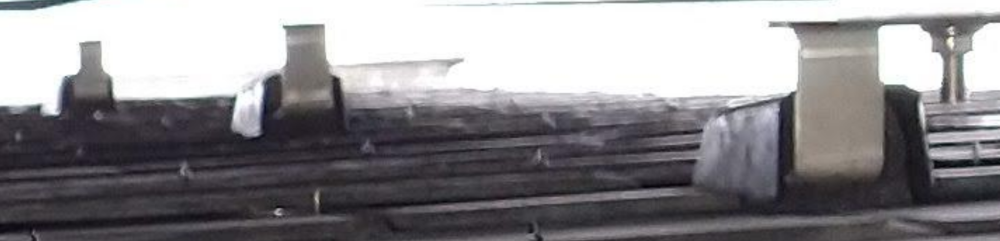
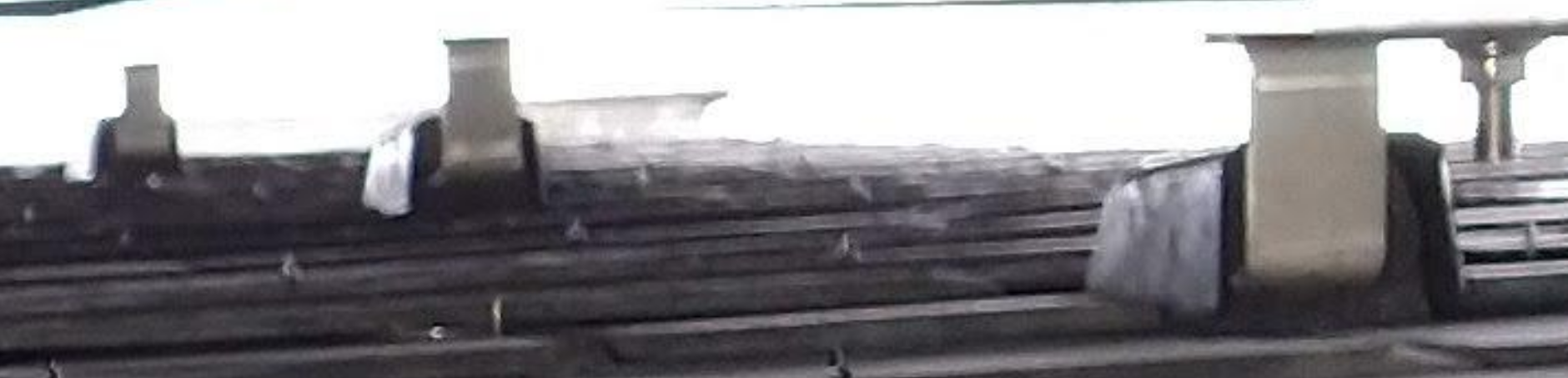
Yes the roof looks perfectly straight to me. When I zoom in on the photo in the OP of this topic I can see the bottom of the top two hooks, where they enter the flashing hoods, appear to bend up and away from the slates. These are the two that the laser line meets half way up so suggesting that these two push the rail up (rather than the bottom two being too low) If this is the case then the hooks are either bent up or aren't sitting flat on the rafter.
-
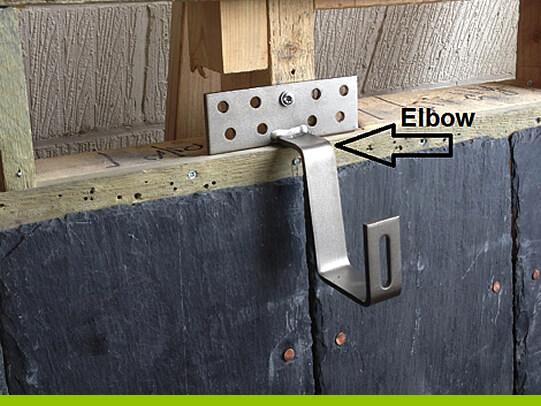
I've just clocked that the brackets themselves may differ from the ones in the above photo. geniusroofsolutions don't actually provide the brackets (hooks), just the flashing kit that goes around them. So I can't say for sure what the bracket looks like. These were recently manufactured chunky attic trusses so I wouldn't expect them to be this much out of true. Having said that, I would expect the greatest deflection under roof load to be acting somewhere between the collar and wall plate. Based on that, I can see how the shape the rail has taken might have come about simply by following the natural deflection. It could be that the lower two brackets need shims between them and the rails. Again, a simple string line would reveal the 'truth'.
-
No, they bolt down straight on top of the flat. The hooks are solarflash from geniusroofsolutions If I had been doing it, I'd have treated it like any other job where you're placing things in-line, like fence posts or shelf brackets, and used a laser or simply a string line to make sure everything lines up. But I can't understand how we ended up about 25mm out of line when four of these were attached to the same rafter (geniusroofsolutions own photo is a bit odd as it seems to be vertical slate cladding but at least it shows the bracket we've got):

-
Will energy storage be worth it if the energy price is capped?
Radian replied to George's topic in Energy Storage
I didn't use 333,333kWh yesterday. Does that make me millionaire? -
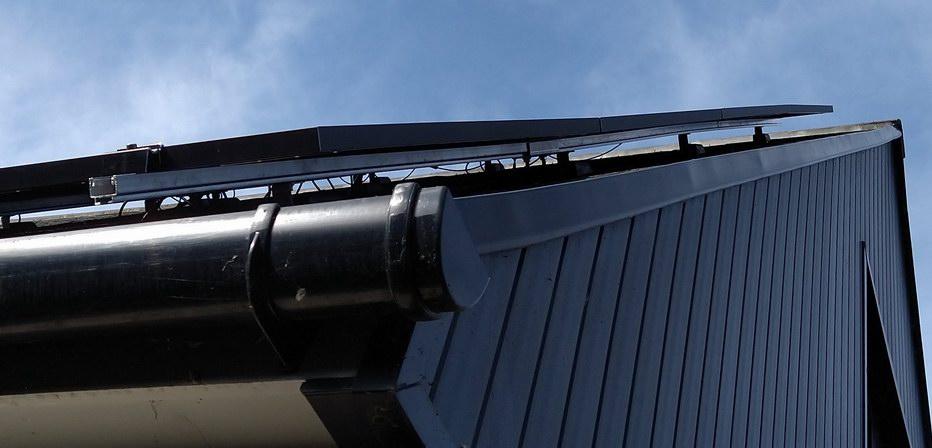
OK, this one's rather awkward. Bear in mind that I only want an easy life, and that the installation co. are bending over backwards to keep me happy. The array performs well but it bothers me every time I look up at it from the path below. The modules are in landscape so the mounting rails sit directly on top of the rafters - which, at 175mm deep, are pretty darn straight. Yet the rail on the outside edge of the array is a bit of a rollercoaster at the top and the modules follow the bends: Now I get that there's no such thing as perfection and function-wise everything's fine. But this is the view we get every time we walk around the corner of the building and glance up. What I just don't get is how the roof hooks which are screwed onto the rafter could end up at different heights. To try and quantify the amount of deviation I got up on a stepladder and shone a laser plane at the side of the rail: The green laser wouldn't reflect off the side of the rail or modules but showed up OK around the vertical face of each roof hook where it meets the bottom of the rail. At least it did on the lowest two. looking up at the top two you can see it hits the bracket about half way up. That's about 25mm out of line. So what should be my expectations be here? I wouldn't expect it to be deviating from the rafters at all. It just seems as though something's wrong up there. If you could stand back from the roof I'm sure it'd look fine but its 1.5m away from our boundary so we only ever see it from close-up below. I showed the installer these photos and he is willing to return and strip off the first column and inspect the mountings but I don't want to put him to the trouble if people here think it's really no worse than they'd expect. So thought please...
.thumb.jpg.fd455b727774f3fcdfcae19537eb80f7.jpg)
-
Pretty obvious really given how the range in azimuth diminishes towards the winter solstice. Now if you split SE/SW you might see some extra benefit in terms of extending the generating day.
-
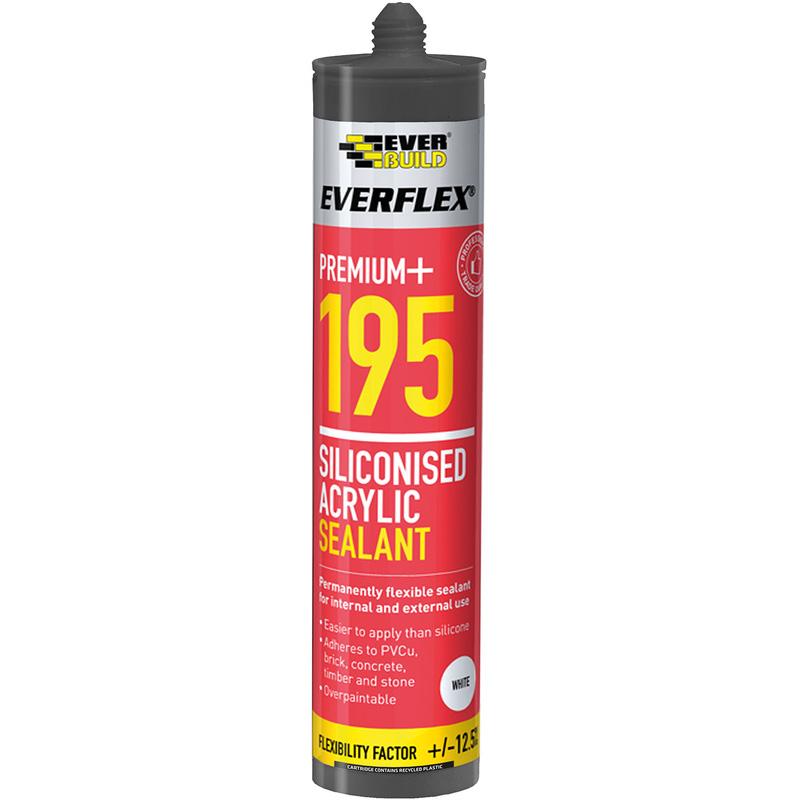
Yeah, 750% extension before break is impressive for a MS polymer. Bought a tube to see it for myself.
-
I don't know if they use the same testing regime but the Soudal product claims it has an Elongation at Break of 750% compared to SP510 at 500% - so I'd be happy to use it. In the absence of anything else, the ability of the sealant to remain attached to both surfaces is of paramount importance.
-
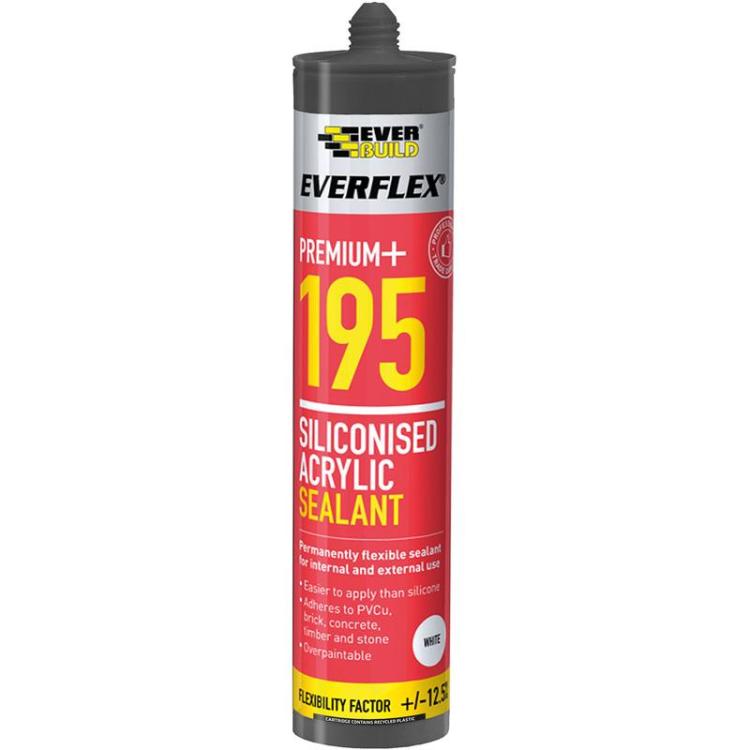
When you say silicone, that's not paintable so you end up with a messy edge. Plus if you tool it and get it on the surrounding area then that becomes difficult to decorate over. The only reason to use silicone is because of its flexibility. Acrylic is over-paintable but is less flexible and tends to dry out and crack so you're back to square on in a few years time. However, you can get a siliconised acrylic sealant which has the both the benefits. It's not going to be as thorough a fix as removing the full plasterboard reveal and window board and taping but it's so much simpler and should last a reasonably time.
-
I have an idea of what you've been through. I had a Haemorrhagic cerebral infarction a few years ago - just before embarking on building 110m2 extensions to house and garage. Having already submitted plans I decided to go ahead with contractors. Learned to walk and use my left arm again while waiting for them to show up. I swear the effort of doing as much as I could manage on the build sped up my recovery. Everyone thought I was nuts and I realise I looked pretty disabled at the beginning but after a year of pushing myself physically I would say I made a full recovery. Apart from not being able to hold on to a piss for as long as I used to. I guess much depends on the luck of the draw but if it happened again I'd take the same gamble. The alternative of giving into it just didn't figure in my thinking. Brains can be incredibly plastic if you take the time to rewire them.
-
In an AC inverter driver the rectification and capacitive smoothing stage upstream of the PWM switching transistors typically has a power factor of around 0.65 or less.
-
That sounds great but I suspect you'll be having to plug it in sometime in the next month assuming you're not within 30o of the tropics. The A/C units I've bought are supposed to be scop 5 with a heat output of 3.5kW so 1.4kW electric in at full blast. I don't expect to have the PV to power that beyond the end of this month. Air-water ASHP cop figures seem to be slowly catching up with air-to-air but I still like the immediate 'on demand' kind of heating for my application.
-
I've not been paying particular attention to what's being measured because it's best not to assume the type of load. Some of these compressors use DC PWM to double-up the motor windings as heaters and that would sure as heck give a misleading reading.


.jpg.c20ffb06d057306eee7981c1c853db58.jpg)