
Radian
-
Posts
2586 -
Joined
-
Last visited
-
Days Won
15
Everything posted by Radian
-
Oh yes! But I'd recommend adding a dash of SBR for a certain piquancy!
-
Not if the surface is 150mm or more below DPC. But this isn't. it's 75mm or less which is criminal. In this case the only affordable remedy might be to create a drainage strip along the entire front elevation See this article on pavingexpert.com for details.
-
Not really necessary IMO. Like nod says, if its a powder it'll be fine. I've put it all through a garden sieve before now to sort out the usable powder from the lumps - I even crush up the lumps and mix into hardcore to make some use of it. That stuff goes off like concrete too eventually. No point wasting expensive materials when they can still serve a purpose. I've trained my nose to tell me when a mix is right. There's a certain smell to the gear when it's good. 'Gear' - listen to me trying to sound like a proper brickie 🤣
-
New build? The test happened when it was warmer. Since then your floor may have settled a little and the flue pipe etc. is colder so thermal contraction adds to the problem. It may all need reseating now the building fabric has stabilised.
-

Feedback on 1st attempt at en-suite / bedroom floor plan
Radian replied to Gill's topic in Bathrooms, Ensuites & Wetrooms
I wouldn't like that. I would want the guest loo to be off the main corridor, as it is now but not necessarily in the current position. This would also be for dinner and other casual guests to find - so ideally would be nearer the sitting/dining room - currently where the bedroom door is. Might it be possible to bring both bathrooms down to this wall (currently where fitted wardrobes are) and have the ensuite access wholy in the main bedroom? This would give up the window to the bedroom. Cats could use the guest bathroom.🤷♂️ -
Feedback on 1st attempt at en-suite / bedroom floor plan
Radian replied to Gill's topic in Bathrooms, Ensuites & Wetrooms
Is the shower in the second bathroom actually needed in there or could it relocate to the ensuite? I can see why you'd want to have the second loo and wash basin for visitors but it could give up some useful space if the shower wasn't located in that room. -
We're talking about vermin, not emmets.
-
I never got why external doors open inwards. Security would seem to be even better for outward opening doors in some respects: try kicking your way out of an inside opening door for example. I can only guess it's to do with the shielding of locking gear and hinges. Things that could be made secure in other ways.
-
What're you taking about Karen?
-
Agree it may just be a mouse. They're so small they can get in through the tiniest of holes. Think the size of a hole you could get your little finger in. Consequently there's not much you can do to keep mice out but poisoning them inside the house is just awful if they crawl away and rot. A humane trap baited with peanut butter or Nutella will round them up (check daily) then a drive a few miles to a supermarket car-park or similar to let them out. We always go to the one that has an Owl sanctuary on route.
-
Feedback on 1st attempt at en-suite / bedroom floor plan
Radian replied to Gill's topic in Bathrooms, Ensuites & Wetrooms
So why not just move the door to the two rooms from the main corridor round to the bedroom opening. Yes it's no longer en-suite but it's only a fancy word for 'easy to go for a pee in the night'. -
I'm not sure what you mean by 150mm battens - do you mean running joists perpendicular to the rafters so support the floor? This would indeed be expensive not to mention heavy. You will need to add at least 50mm for an air-gap over the insulation or it will turn into a mouldy mess without decent airflow over it. Now you're flying your floor at least 200mm up! I'm afraid to say it's not as simple as you might think. Do you really need this space? If so, it might be more practical to move the insulation up to the rafters and make this a semi-warm store. Or at least for a specific zone in the loft. You're still going to need to insulate for the whole house so at least 150mm of rigid insulation to make up for 300mm of cellulose in this area. All the usual ventilation issues need addressing - like a 50mm air gap between insulation and roof membrane and vapor barriers. The advantage would be having a safer environment for the items you're storing, and improving the house's ability to reject heat in the summer.
-
I would think your biggest deciding factor should be your use pattern for the kitchen. UFH is only really practical if left running constantly in the heating season. If you're only in and out of the kitchen at meal times it's not responsive enough to warm the room on demand. As part of a whole house heating system (or ground floor only) it makes more sense, especially for more open-plan layouts. A galley kitchen strikes me as being as far a way from this as possible. Also, cooling is a more likely requirement - especially if using the oven in the summer months with all that solar gain (assuming the tall window doesn't face North). IMO UFH is not really suited to this application in any respect - although there's nothing technically wrong with it providing that you can get 200mm of rigid insulation under it (assuming the corridor beneath is an unheated space). I would be thinking about a Fan Coil Unit possibly integrated with your hob extractor boxing-in (if it still exists). Presumably it was boxed to provide a route for the vent trunking, in which case it might be extended the full length of the room - for symmetry and to give space for pipework). Another approach might be a mini-split A/C which would provide the same advantages (out of the way, heating/cooling, near-instant activation) but if you are already installing an ASHP, it might provide no advantage.
-
No, I just hack into @pocster's (if that's what you meant) and use it remotely. I did write a UNIX like OS to run on small systems. Should have called it MINUX. Might have caught on.
-
Maybe, but I always start out by thinking "what would I get if money was no object" then figure out how to copy it. This narrows things down a bit by looking at the niche end of things. But when it comes to heating controls and energy monitoring, while there are masses of products to choose from, the core principles and facilities are very similar so there's an opportunity to capture the essence of them and make an accessible design product that's easily replicated. The closest examples I can come up with are Robin Emley's PV Router and the Open Energy Monitor emonPi projects.
-
I wish there was a simple way of disrupting this model. We're nearly there with Opentherm, openenergymonitor and Home Assistant but you need to be familiar with setting up a Raspberry Pi or flashing a microcontroller. Much if this stuff is copy/paste and the same requirements keep popping up over and over again. Also, being based on HTTP protocols over the LAN means user interfaces can be entirely virtual, so no fancy enclosures or attractive looking wall gadgets have to be fabricated. Any standard tablet might suffice. It feels to me like a little bit more effort going into modularity and documentation might just tip the balance. There's nothing lacking in the results that can be obtained - quite the opposite. Local control, complete ownership and a community of experts contributing their time and skills mean the things that can often be custom created that exceed the usefulness of commercial offerings.
-
Probably had one too many Martini's.
-
https://tasmota.github.io/docs/Power-Monitoring-Calibration/#setup It seems to adjust offset only. But yes, it's done for each device. I'd say it's usually good to within 20W before calibration. But this is obviously worth correcting.
-
Filling a crack: Cut away scrim tape or leave it?
Radian replied to Radian's topic in Plastering & Rendering
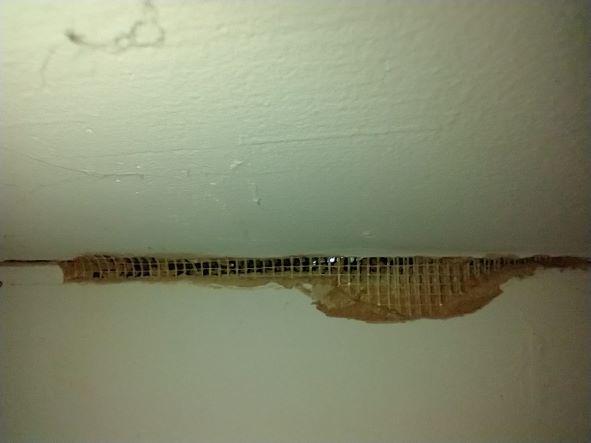
Oh, the second photo in the OP does look like you might be seeing a glint through that hole! Thankfully there's 150mm of PIR, an OSB sheet and cladding beyond. Just a reflection off the foil.😎 Part of the problem is that they haven't 'caught' the end of the PB sheet on any timber for the ceiling. When I was scraping it, I could push the PB up slightly. The gable end is constructed with a ladder coming out from the last truss, which means the ceiling floats a little way beyond that truss. -
You should have tagged me because I missed this. Probably. It's a bit tricky because not all Tuya compatible devices work with Tuya Convert. I linked the other one because I bought some very recently and they converted just fine. Yes, well, converting them to Tasmota lets you calibrate them quite accurately but if you're not converting them, it's not much help.
-
Filling a crack: Cut away scrim tape or leave it?
Radian replied to Radian's topic in Plastering & Rendering
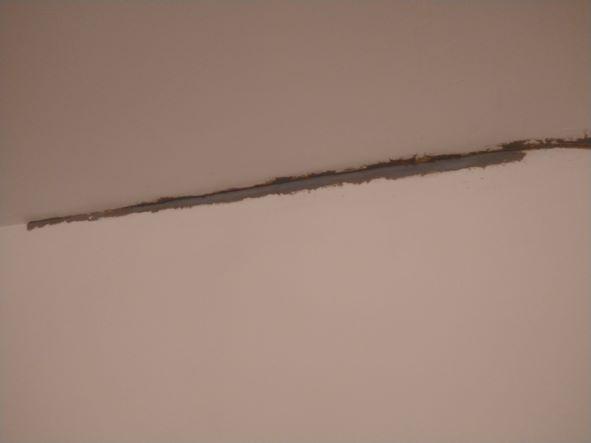
Well, I ended up 50:50'ing it. The scrim tape broke in a few places so I kept as much as possible and cut away the rest: I hope it doesn't crack again now I've forced filler into the gap: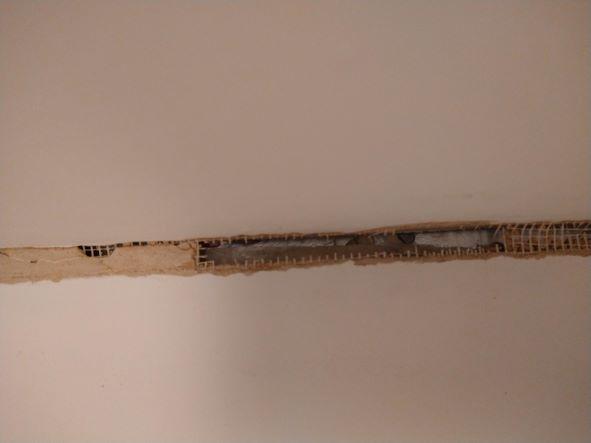
-
Essential standby equipment, energy use and solutions
Radian replied to ProDave's topic in General Alternative Energy Issues
Heavy Weight Man Body Odour? -
Immersion heater automation
Radian replied to Andrea C's topic in Networks, AV, Security & Automation
The switch uses Tuya as the control app and that has IFTTT integration: https://support.tuya.com/en/help/_detail/K9t5tqp8132gg It should be accessible as a regular smart socket but I've not used this particular product. Tuya devices are also hackable using Tuya-convert to load an alternative open-source firmware. This provides another means to control the switch using a Raspberry Pi or other computer running an MQTT broker. It would basically cut out the Chinese cloud (Tuya) and the (now paid for) IFTTT cloud and give someone who enjoys tinkering with code hours of fun. 😀 -
Those look like clay pipes of a type typically used from the 18th century onwards. Are they about 3" diameter? Normally laid loose, horizontally, to drain across fields. I wonder if there was a particularly persistent wet patch and someone used these vertically to drain down to a deeper stratum? They might have been filled with stone for that purpose.
-
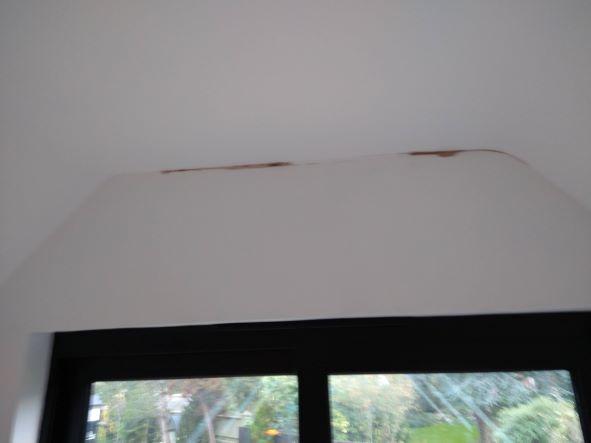
So I'm trying to fill a crack where the vertical gypsum boards meet the ceiling here: Up close, you can see how the vertical boards stopped short of the ceiling and they just scrim taped the joint and trowled on the scrim coat: They didn't trowel enough in and it's all broken away. I've been painstakingly chipping it out from the front and pushing the bits on the other side of the scrim out the back in order for me to trowel-in some deep crack filler. But is this really necessary? Would it be OK just to run a stanley knife top and bottom to open up the gap and just fill without any scrim? The vertical boards are screwed directly onto 50mm PIR covering the studs behind so the filler would be contained.