
TerryE
-
Posts
3806 -
Joined
-
Last visited
-
Days Won
30
Everything posted by TerryE
-
Jan did our Hep2O pipework and it was her first plumbing project, though I acted as her labourer and did all the calcs and the central copper work. Absolutely no regrets. I would never subcontract this to a plumber unless we'd agreed the overall design and pipe runs. I did invite NickFW for a few days but he declined as he didn't want to mix business and pleasure -- Jan is far prettier anyway. Manifold layouts rule forever, IMO.
-
There's no such thing as free in this life. "Free" in this case means that you pay no annual or monthly fee but there will either be scraping of your content or ad placement on your viewing. Lots of service providers provide budget hosting services at a low annual cost that avoid this crap. For example I use Hear Internet for my personal website and mail domain. They are UK-based and do a basic entry service for ~£30 p.a. which would do what you want (though I use their Home Pro offering with costs ~£100 pa.) but there are lots of alternatives around this ballpark. I suggest that you stick to EMEA-hosted services so at least you know that they have to conform to current data protection legislation.
-
I reckon on 1-2 tubes for a 4×4m room. It depends how flat the walls are. Skimmed boarded, that is. If brickwork or blockwork and the plastering a bit wibbly then maybe double that. BTW, its easier to put the adhesive onto the skirting before you finally offer it up. Put the wedges in before you do the last offer up, then you wont be running around like a headless chicken. If you are sticking to block or brickwork and can't use the wedge trick then pre drill any fixing points in the MDF, then through drill into the blockwork through these holes using a decent SDS masonry bit and insert the pluug and screw through the hole. This is fast and avoids all of the "hunt the hole" hassle.
-
No, the adhesive fixes better to a porous surface, so you just have to be careful about it moving or pulling off the wall in the first few mins because it might not re-adhere well If your walls are very straight than you can just press it intimate with your toe and show grab fine, but if they are slightly vary then use the wedge trick on wooden floors. If you doing skirting on stone floors then you might need the odd lost head nail. just to keep then in place until the adhesive grabs. Also work from any outer corners, mitre and mitre bond them first. For inner corners don't mitre but but a negative profile to a square cut piece. Cut the negative profile but using a 2cm slice of skirting on the back side and you find that you can cut this fine with a jib saw and fine blade. Work round the room swastika fashion clockwise or anti clockwise (or both away from any outer mitred corner. Cut the profile on one side first and them cut the other to fit the run. The next negative profile will cover this.
-
Or to rephrase this, use adhesive to stick and decorators filler to caulk once fixed. They've got very different material properties. If you are filling "gappy" cracks then it's easier to do the fill in 2 passes, the first to do the bulk fill and the second to get a decent level.
-
As Crofter says, the Screwfix no-nonsense adhesive is cheap and effective. Just be careful that the boarding doesn't move within the 1st 10 mins or so after fixing otherwise you will create a shear plane between the adhesive and the plaster. A good trick if you've got a radial arm chop saw is to cut a bunch of ~25° wedges from a bit of CLS, say 88 × 200 on the rectangular sides. If your walls are at all wavy, then you can use a single temporary screw to screw these to the floor on the 200 long side about 2 cm from the skirting surface (so the sloping side is facing up and the 88mm side near the skirting) and tap in a couple of 2cm folding wedges to push the skirting back hard onto the wall until the adhesive cures. We have a box of 20 or so these that only took a few mins to cut and we use them whenever we are fixing skirting over a wooden floor.
-
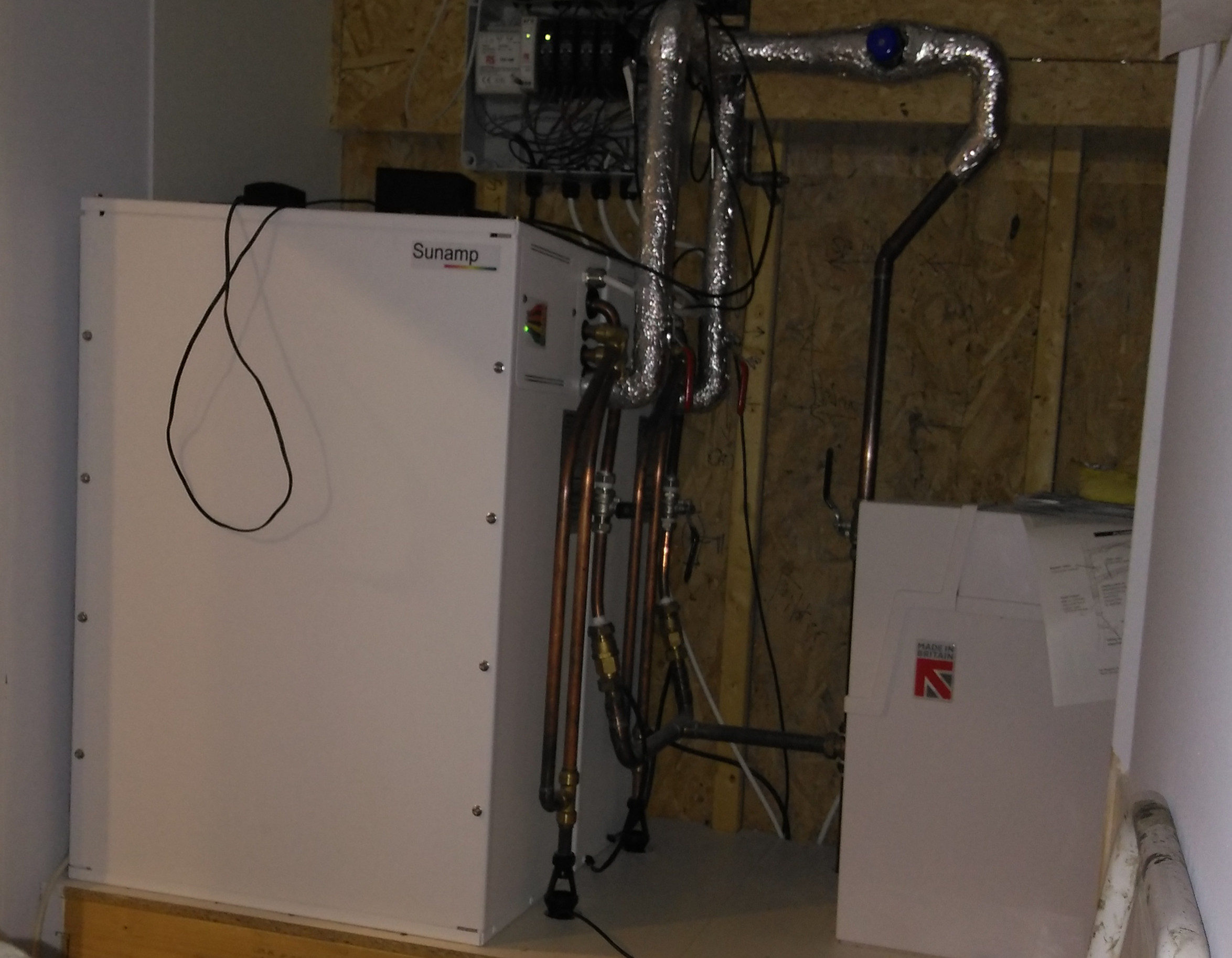
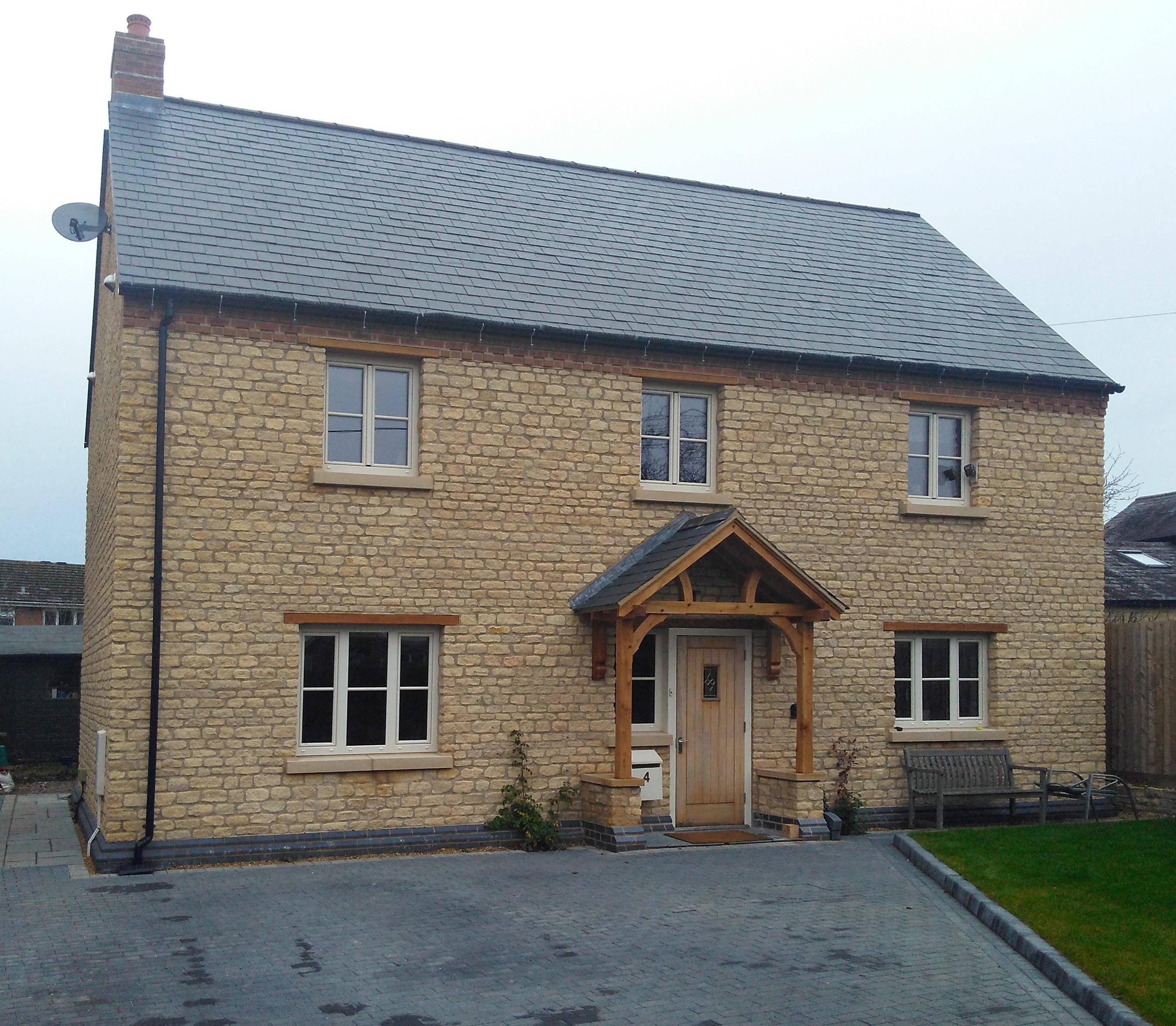
Somewhat like Peter, we laid out our house to keep things simple. It is double fronted and roughly organised as a 3×2 file with the middle front third the hallway stairs and landings, the middle back third is where our utilities bathroom, ensuites are clustered. The only exception is our kitchen sink. My "plant room" is a 1.4×0.65m cupboard off the downstairs toilet. There are some pics in my recent Boffin's Corner topic. We saw no point in wasting a room on what could be fitted into a cupboard with a little thought.
-
You two must have boundless energy, so congrats and well done. But what next??
-
Timing of House Sale vs Ordering Timber Frame
TerryE replied to mike2016's topic in Self Build Mortgages
As @AliG said, you have to be brutally realistic about selling a house next to an adjacent building site. This is going to hit both the saleability and the value of No 66. Find a local estate agent or two that will give you honest advice (if that's possible), and get their opinion about the value of the property and the impact of an adjacent building site.. You also need to think of the risk that someone could buy No 66 and then attempt to derail your adjacent development: that way the new buyers will get a two-for-one: a reduced price for No 66, but no building works next door. At a minimum I suggest that you get full PP and discharge as many conditions as you can -- certainly to clear all preconditions for build above FFL and that way you de-risk this for both you and the the new buyer of 66: its' a lot more difficult for a neighbour to derail a development once you have got the foundations / slab down, and also the new buyers will have a better idea of what they are going to have to live with next door. Less risk = less price impact. The other thing that you need to factor in is that your mortgage company is an "interested party" in your title, so you aren't going to be able to split it without their permission. They will want to be convinced that their agreeing to the split isn't going to increase the risk on their loan -- especially if the mortgage is worth more than say 80% of their valuation of the reduced No 66 with an adjective building plot. We fully own our farmhouse at the centre of our village and it had a large plot that we could split and we had quite a bit of savings to get us started. We cleared planning approvals, then split our title, and took out a new mortgage on the farmhouse in its new title to finance our new build. At the early stage we had pre-planning advice (which proved very worthwhile by the way), and I remember the planner's jaw dropping when we mentioned that we hoped to move in in 9 months. It's now over 3½ years later, and we are just about to move in. So this is all going to take you time, and you need to have an honest expectation of how long it is going to take. For example you'll be very lucky to get full planning permission and clear preconditions within 18 months, IMO. And you have to agree an update to your mortgage and sell your existing house before you can begin in earnest. So I suggest that you make the best use of that ~18 moths by building up your knowledge preparing and also trying to improve your existing property cost-effectively to maximise its current value and saleability, which is going to help with agreeing any mortgage changes. Hard advice, I know, and to be honest my wife and I wouldn't accepted it if some gave it to us 3½ years ago. All I can suggest if that you read some of the blogs and related threads here. Our experience is mid spectrum, and about the only people who can build in short timescales have a shit load of money to throw at the project, and you don't seem to be in that category. -
Out of interest why didn't you just have one water softener between the water filters and the PV? Surely the purpose of the PV is that this acts as the primary accumulator to handle high demand so that the borehole pump can run at a (steady) low rate? There's nothing wrong with storing softened water in the PV.
-
Water supply - temporary and permanent
TerryE replied to Weebles's topic in General Self Build & DIY Discussion
Unless you can avoid it keep these runs as short as possible, e.g by taking them on a direct tine to nearest sensible side of the slab. We just laid some extra 110 soil pipe runs form the services area out to the boundary of the slab. I suggest that you use a swept 45° to bring them up into the service area. You can use a multitool to cut them off flush to the slab when it's cured. It's just a lot easier to pull ducting and stiffer pipe through these if you have a slow sweep coming up through the slab. -
Ditto. The Harvey model that @JSHarris and I use is pretty much the top of their range, but it would still struggle with two showers and the kitchen tap running.
-
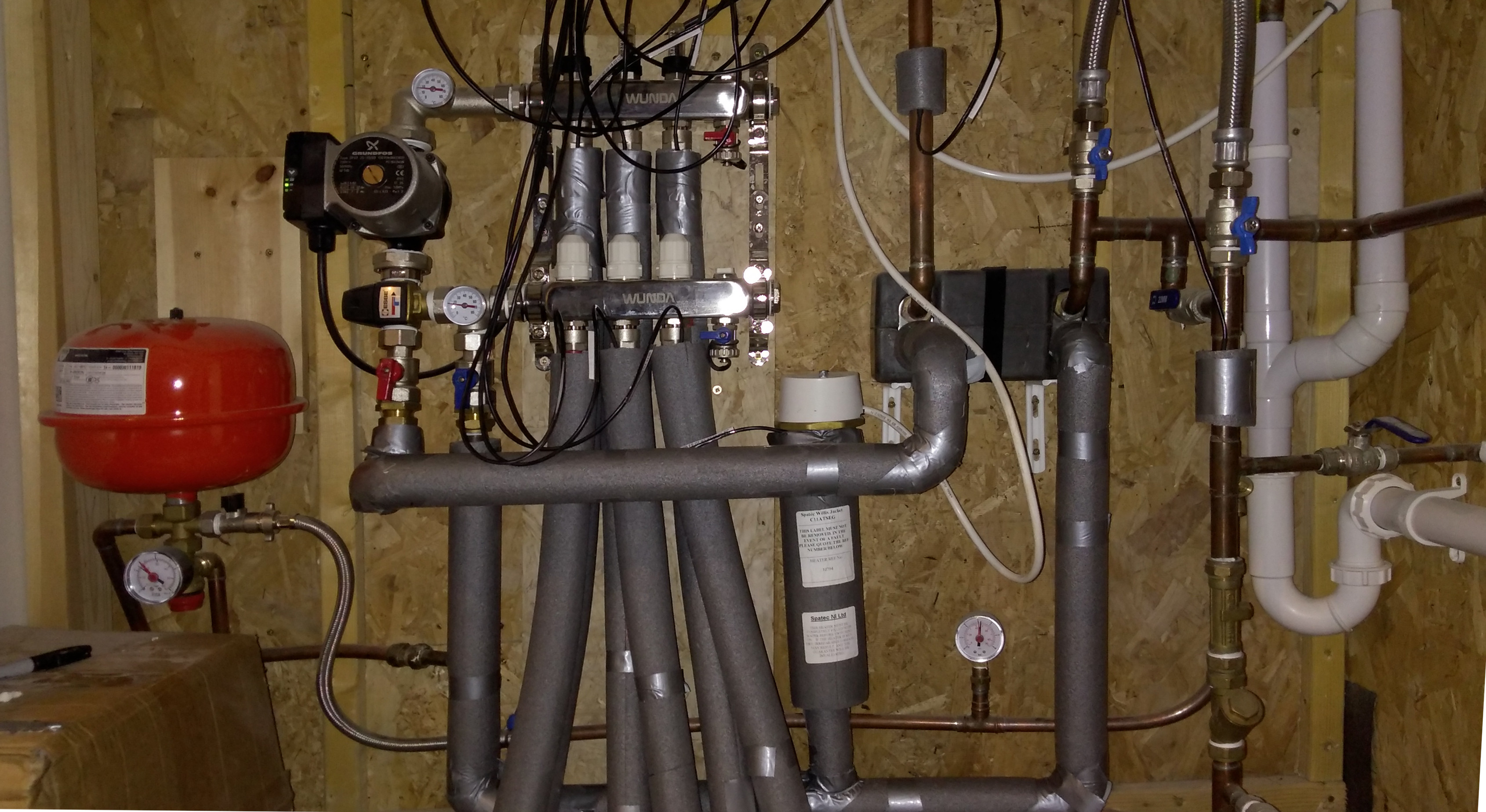
We used a radial Hep2O approach and minimised the pipe runs by (i) having our DHW + CH service area manifolds centrally positioned, and (ii) taking a near-as-practical to direct route for the pipe runs. IMO, the only thing that we got wrong was not using 10mm pipe for the HW to the low flow taps -- these 10mm runs hold a ⅓ of the dead water than the 15mm ones. You can see my total lagged pipework in the two earlier photos. My building supplier was @RandAbuild who had a couple lengths left over and that was all I needed.
-
IIRC the recommendation is that the house internal pressure should be limited to between 3 and 3½ bar. Our issue is that where we live is pretty flat, so Anglian use boost pumps to maintain the supply pressure, and they must set it so that the "top" of the village which is some 2m higher than we are is at 3 bar, so we are at a pretty steady 3.2 bar. This can drop by maybe ½bar during peek water demand in the early evening. The PRV itself takes around 0.2-0.5 bar off the head , so if we use one and set the target to 3 bar then this will take our pressure at the PRV closer to 2bar at peek use in the evenings. Not good. Hence we decided not to use a PRV at all, but I do monitor the pressure and will put one in if it looks as if Anglian increase the supply set point. Having a pressure transducer feeding into your HA system or even a visual pressure meter (as you can see in my system) or both is sensible, IMO. PS. @dogman, sorry for hijacking your thread, but at least I can plea in mitigation that you are going to interested in this anyway.
-
I think that this comment has been raised before, but I bought proper 22mm flexible couplers for mine. But the main issue is the internal ion exchange unit inside comes at a pressure drop cost, particularly as the flow ramps up. I came across this in one of the Harvey data sheets: At a nominal aggregate 35 l/min with this and the DoubleCV, SunAmps, TMV, etc., I suspect that the flow will pretty marginal for showers and the 2nn floor. But TBH, I've still to do his test.

-
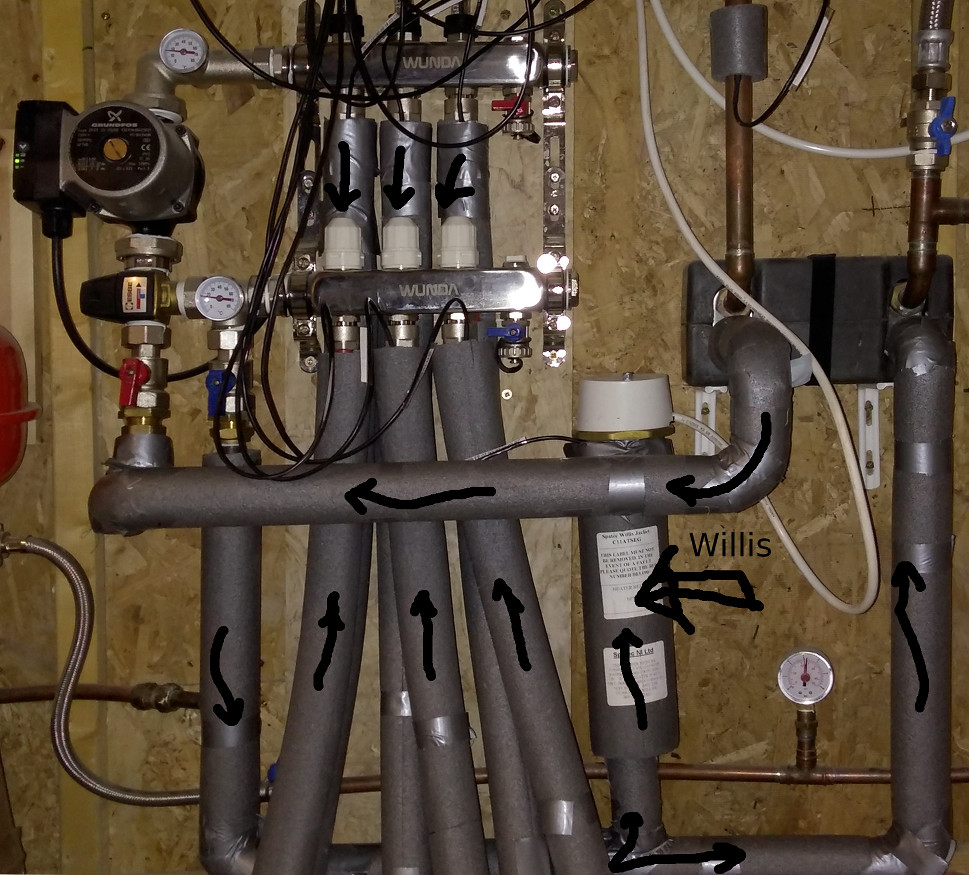
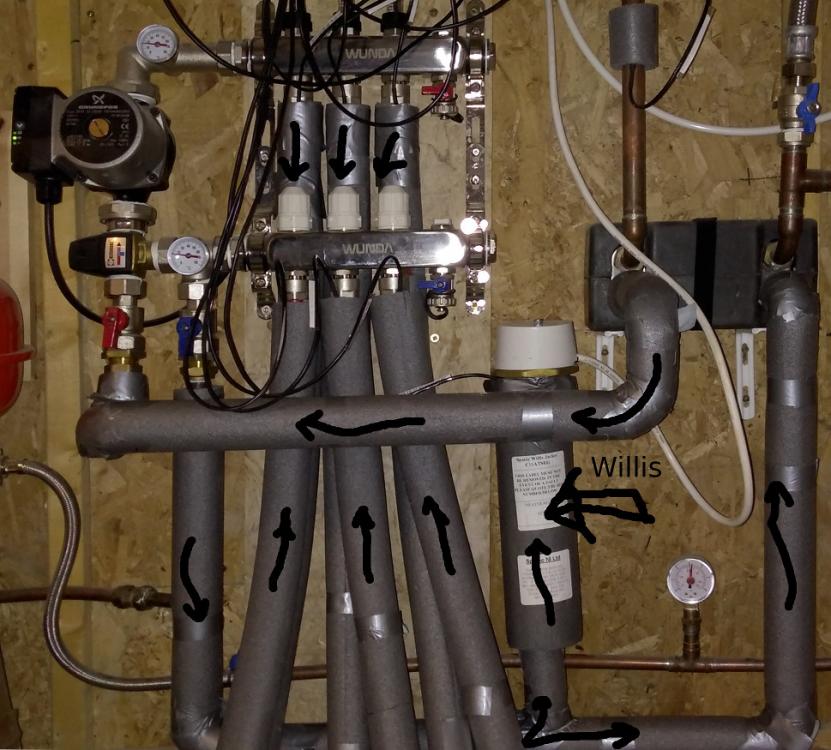
Sorry, thought that you'd see it. Your arrow is pointing to the TMV mixing PHE heated cold + SunAmp hot into the DWH manifold box. This is what you are looking for. Apart from the UFH pipework in the slab, this is my entire central heating system: Now that I've got DS18B20 themos on 3 × out and 3 × return and on the willis (and a couple on the DCW in and out of the PHE). You don't need thermos in the slab. Just run the pump for 5 mins and take the average temp of the water coming back in the returns.
-
Yes, paralleling up the SunAmps has a lot of advantages, though at the moment (before moving in) I only have one on at a time. But the biggest throttle on my flow rate is my water softener which drops the pressure almost 1 bar if we have two high flow taps (e.g. two showers) on the go together. Our mains is pretty steady at 3.2 bar, so one of the possible "to do" items is to add a PRedV in parallel across the Harvey, set at 2.4 bar say, which will allow water to bypass the Harvey in these rare high-demand cases so we might end up with a 50:50 hard/soft mix, very occasionally. Yes this will allow some hard water into the system, but given that under normal circumstances the PReV won't cut in and the system will be being flushed with softened water, this shouldn't be a problem. But that is better than no being able to have two decent showers going when the occasion demands. But I am waiting to do full load commissioning tests before considering this any further.
-
Yup, but they didn't sell the expansion module when I bought mine. I also like the redundancy, anyway.
-
Sorry I took 2, 200 as 2,200 not 2×200
-
Nick, my only comment is that I'd avoid mixing potable water and UFH so you need a PHE somewhere, probably the one that both Jeremy and I use would be fine. Plus a lot of insulation. Not sure why you need 2200 Kg × 50° worth of storage though. I have this vision of having a Rocket Stove below ground level under my workshop / shed together with a couple of 1 tonne tanks and maybe 200mm EPS wrapper. IMO, the trick with a RMH is always to use power assisted draw so that you can take the exhaust gas through cob store / exchanger well below 100°C so that you recover the latent heat of evaporation -- so the combustion is getting close to 100% efficient, and with flue gas getting over 1,200 K in the main burn chamber there are none of the usual nasty particulates left -- but it's only a dream, as the boss has the veto on such ideas One of the downsides of an otherwise superb wife.
-
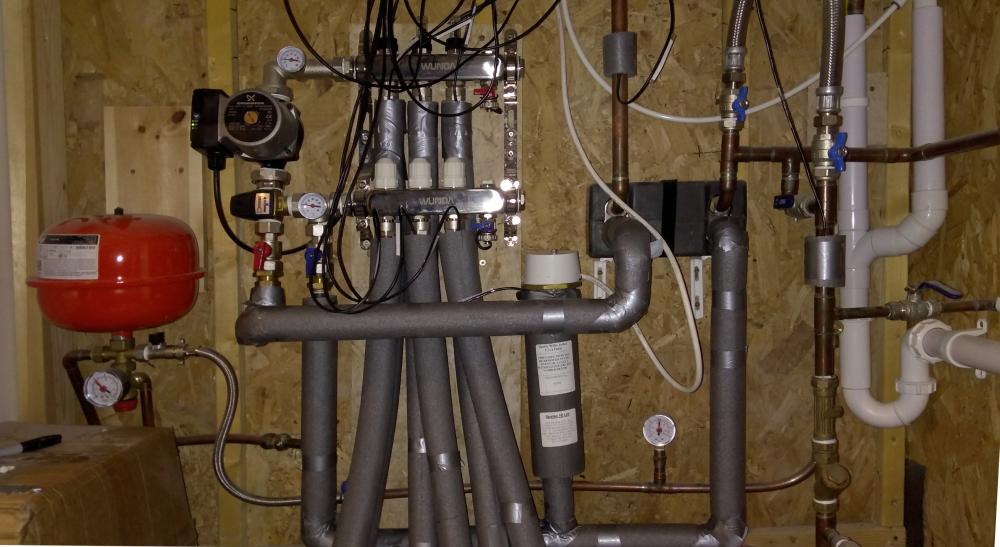
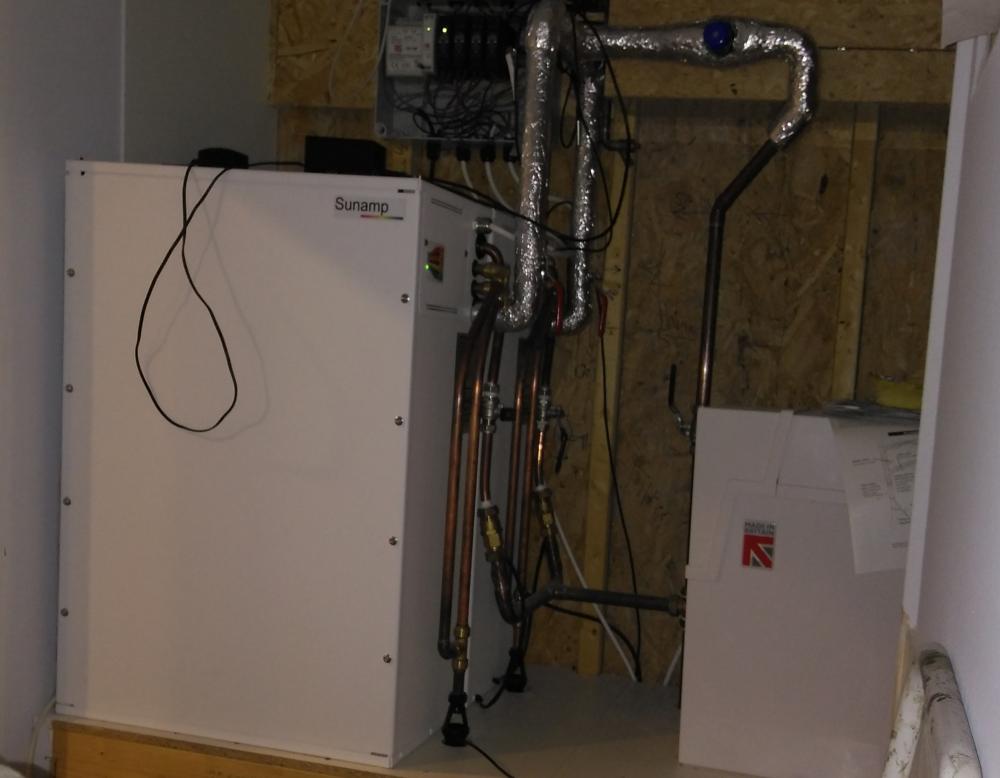
I've included the upper and lower levels of my system. This is the lot -- CW + Filter + DHW + CH all in a cupboard some 1.2m × 0.7m off the side of my ground-floor loo. The hot-works are all lagged. The system is stripped down to its bare essentials, and only electromechanical bit is the UFH pump. If running your CH on this costs maybe ~ £200 a years and my current BGas boiler maintenance contract is over £300, then its hard to make any payback case for anything more complicated. At the moment the heat exchanger preheats the DHW mix (which is the reason for the notch in my output temp above. If I do decide to use an ASHP, then I'll pinch this HE and prime it from the ASHP.
-
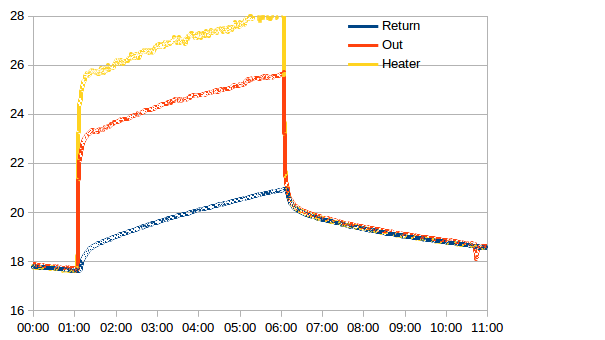
Just out of interest for those that want to compare "real-world" results to the model shown on the previous page, here is a plot take from our commissioning runs where I had our Willis heater running for 6hr at Economy 7 low tariff (cost ~£1.40). The house is still warming, hence the slab is still dumping heat into room space. But it's already got to the point where I am stripping off jumpers when working. The overall conclusions are: The slab is reacting pretty much as I modelled it. The output of the Willis is easily enough to heat our house. Our actual flow rates through the slab on the pump's middle setting are about half what I estimated, hence the out:return delta temp is nearer 5° rather than 2° but this doesn't matter. At this cost even if I use E7 electricity to heat my house the annual running costs will still be less than out BGas maintenance contract on our current boiler. The Willis is simple cheap and effective. Even if you have an ASHP or alternative, then it;'s still worth considering fitting one as a fallback heater Trust the physics, but validate your assumptions.
-
I've got an outer stone skin sitting on Foamglas. The structural engineer was fine with this approach. Download the date sheets and have a look.
-
Here's mine. The relay box is open at the mo, and the thermo cables need tidying. But the 4 SSDs cost about the same as the rest of the computers and electronics. As I said, I am overdue writing up my system, but the heating and DHW is run by a battery backed RPi3 and 2 ESP8266 FEPs handling 4 relays, 14 thermostats, 2 flow meters, 1 pressure transducer and 1 PWM fan. The HA is handled by another RPi3 with HDD running Node Red.
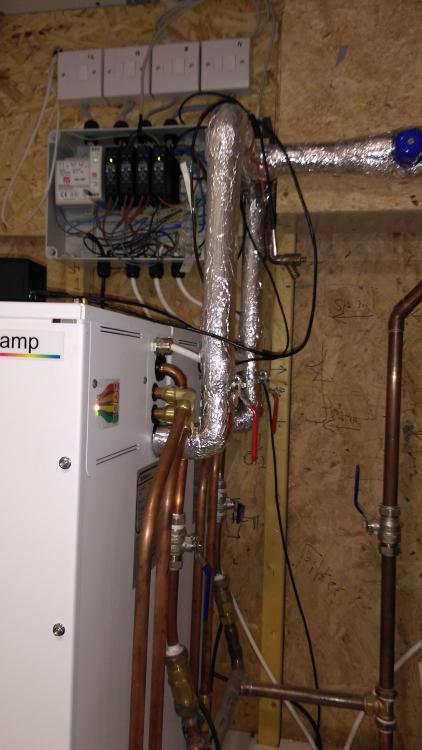
-
I will have a similar issue when I come to integrate my MVHR into my overall control. The unit has a serial interface for a NAME and a set of contact connections to force boost, bypass etc. The simplest approach for me is to use a couple of SonOffs or my own project box. In the latter case it would be my own custom code, and in the former it would be a case of re flashing the SonOffs with a standard MQTT driver.