

TerryE
-
Posts
3806 -
Joined
-
Last visited
-
Days Won
30
Everything posted by TerryE
-
I am old enough to remember Kate Boyle's TV advert for Cling Film in 1972 -- that was the one where she covered a glass of milk and inverted it over her head. And that was the first time that our family had seen the the use of plastic wrap for food use (or to be honest any use). And up to that point plastic bottles were also pretty much unknown. So this is really the same point that @richi has just made. It's really only in the last 45 years that we've moved from a food and contaminant mix that we'd had for 50 years prior.
-
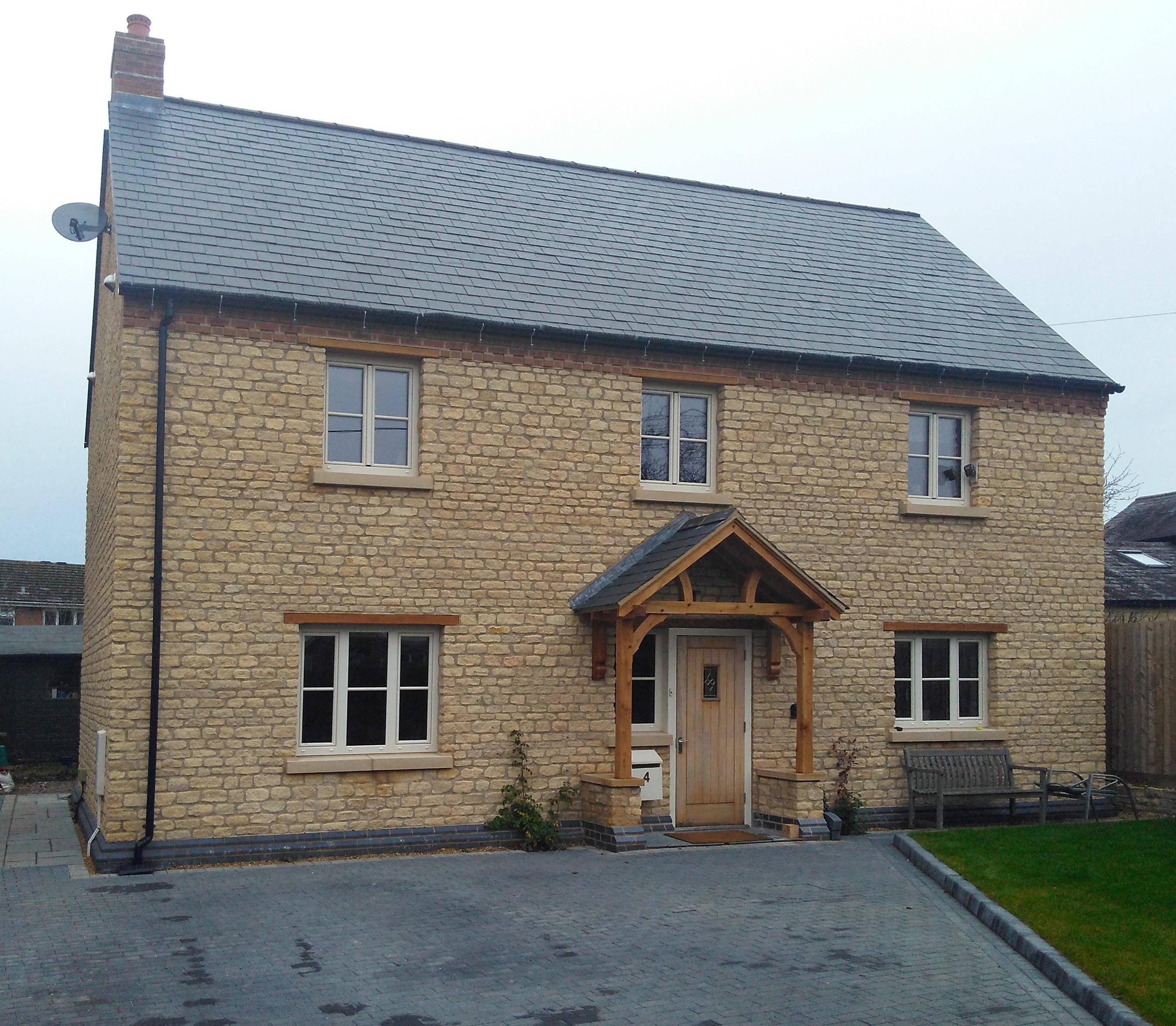
Yup, I am one of the "gurus". We have an MCF TF + stone clad cottage-style house about 220 sq m usable floor space on 2½ floors. All heated by a Willis heater through the UFH + twin SunAmp. We just moved in before Xmas, and the main problem facing us over the holiday was that we had 3 kids, two spouses and a grandchild staying in the house, and my eldest son kept going around opening windows because he was complaining about being too hot!! With just the two of us and one live-in son, we don't have the body-heat problem, but we keep the house cosy with maybe 6 hrs @ 3 kWh of E7 heat into the slab overnight. I estimate that this will by down to 0 by around April. No heating other than the ground floor UFH and the first floor is maybe 1-2°C cooler than the ground floor, but that's fine. I've still got some fine tuningto do, but yes, it works brilliantly, IMO. MBC has some good competition, but IMO, it just saves so much hassle and issues if you pick a proven company which can do the slab, frame and airtightness as a single bundle to a contracted spec. If you go this route with a decent window supplier and MVHR, then you can be confident that your house as built will be in the passive-class band and this means that you can avoid so many hassles: No need for a conventional CH system; no radiators anywhere; no need for a gas supply; no need for expensive maintenance contracts, .... BTW we have 4 induction + 2 gas rings on our hobb, but the gas is bottled. We'll need to swap the bottle maybe once a year. Big deal.
-
Sorry, just come to the thread late. I can understand your builder's concerns. I was thinking about options for taking the step-back all the way up to the roof line and having a deep overhang on one side, but this just increases the support challenges on the ground floor because you are going to need even more steel work in the ceiling space. With all of the consequential bridging issues. This is a hard one, isn't it?
-
I know this is an off-the-shelf thought, but if you have to have a block and beam floor then why not just put a poly membrane and 100mm whacked MOT as an under base and then fill the void with blown EPS? Bugger, JSH beat me to it.
-
We have gas in our village but we didn't bother -- forget the one-off installation and boiler costs; the maintenance cost that we avoid by having no gas boiler is more than the extra cost of using only electricity (using and E7 tariff) We do have a propane cylinder feeding two gas rings which are fall-back to our induction hob. The main challenge if in the detail of the thermal design and avoiding bridging which is one reason why we went with MBC. You want a company like MBC or one its specialist competitors who has a consistent track record for delivering this class of house.
-
The advantage of passive class + MVHR is that the house acts like a thermos -- good for keeping heat in or out. Read JSHs blog. Active cooling is always a potential issue / requirement which is why Jeremy uses his ASHP to cool the slab in winter. WE have yet to see how our house performs during the height of summer, but I suspect that this might be the issue which triggers us into installing an ASHP.
-
@Cambs, Your build shares many similarities with ours which is now complete apart from odd jobs like paving the front drive and putting on the porch. We TF + external stone skin gives fantastic decrement delays as well as looking very pleasing. We just use a Willis heater to heat the ground floor slab. No upstairs heating; not even in the ensuites. OK, the upstairs is about 1-2°C cooler than the downstairs, say 20°C up and 21°C down, but what we've already noticed in the new house is that whilst we used to swap between winter-wear and summer-sear in oour old farmhouse, we just use summer-wear all the time in the new house. It just doesn't get cold. Also no rads cluttering walls. Nice and simple -- if you've made sure that your builder has addressed all of the insulation and potential bridging issues that could compromise on passive-class performance. This warm slab which is floated before the frame is erected works brilliantly. We just covered the entire ground floor in slate. A simple cheap and effective finish. My wife just pads around in bare feet most of the time because she likes the feel of the warm slate on feet. Also 60° angled reveals are essential IMO with cottage-style windows. They just seem to open out the light into the rooms.
-
You need to put out traps or poison, because all it takes is one pregnant female to create an infestation. If they get hungry enough the will start to eat things like wiring sheathing. A couple of decade back, we had our then cat bring in and release a mouse in our dining. It was having great fun catching it then letting it go again. When we went to capture it, it vanished -- no mouse to be found. A few weeks later, Jan noticed a slight lump in the interlined curtains. The injured mouse had crawled up inside the curtains to escape the cat and died. When Jan separated the interlining from the lining at the lump a dessicated mouse dropped out!!
-
I have found the same when occasionally demounting HEP2O fittings. As you say, it's because the insert barbs aren't gripping the pipe. I found that you can just use the demounting tool to unlock the fitting and extract the insert using pointed pliers. Note that the job of the insert is to brace the pipe internally so that the grip ring inside the fitting bites properly into the wall of the pipe. The insert barbs not gripping doesn't impact the insert's role. It just makes demounting a slightly more inconvenient two-step process.
-
@Cambs, Your build shares many similarities with ours which is now complete apart from odd jobs like paving the front drive and putting on the porch. I'll do a blog update soon, but you might find it worth coming and having a walkaround our place if you don't mind an hr's drive to NN7. It will give you a lot of ideas and some refinements that you or your architect might miss. It's always easier to look at a close match and say to yourself: I really like that, or alternatively I don't like that; this will help you to get your design right. I'll post an update blog entry soon.
-
Nick's got a point -- pushing the wedge up and screwing it might work, but we found the wedge method had (as shown by Ed) had two advantages (i) we pre-painted our skirting before fitting and the planed surface of the wedge against the skirting was a lot gentler on the skirting painted surface; (ii) by adjusting the hight of the wedges you can trim the lean of the skirting. For some room like the bathroom where we had a floating floor, we used Pete's prop method just using lengths of scrap battening but also used wedges here for the same reason: to protect the skiriting paintwork.
-
Well, I just realised the answer to my problem as I was posting this. My router can't be monitoring all ports for a putative HTTPS proxy. It mist have been filtering the NAT tables for use of a 443 port on either side of the translation, so I've just switched to another port using the same none-standard port for inbound and outbound address translation: http://subdomain.ellisons.org.uk:4444/test.php. (This isn't a valid link BTW, as the port and subdomain name are changed to prevent a scraper finding a target). So all is working!! Jeremy, the issue wasn't configuring a secure service on a webserver; it was stopping my bloody router snooping on the inbound HTTPS sessions.
-
This subject has many layers, like how can I use HTTPS inside my home network, but the one that I am facing at the moment is that I would like to open up some limited access to my home network: Public key, no password SSH to a non-standard port HTTPS to a web small hierarchy on one web-service provided by the same server. The first part of this was easy for me. My ISP allows my home router to have a fixed IP and I have full control of my personal domain's DNS records, so I can (and have) set up one of my sub-domains to point to this IP. This gives me the SSH functionality and HTTP to a gateway server using my router's NAT configuration. Job done -- apart from the fact that I don't want to allow inbound HTTP, just HTTPS. I also used certbot to validate a free Let's encrypt certificate for this, so I thought that this would now just be connect the dots -- except that my test session barfed on Chrome and Firefox with a certification error (certificate is unsigned and not valid for the name ph.ellisons.org.uk). After lots of head scratching I also tried a wget and this was more specific: certificate common name ‘ZyXELcert’ doesn't match requested host name ‘my.subdomain.org.uk’. The ZyXELcert was the give-away as my ISP provided an ZyXEL VDSL router. My router is not just passing the HTTPS through; it is actually doing an inbound HTTPS proxy and substituting its own unsigned certificate. Uaaarrgg!! The certification check was throwing up a valid man-in-middle attack from my Chinese router! Time for a new VDSL router, I think. Has anyone else has similar fun? Can anyone recommend a good specialist forum where I can research / bounce options? (My son-in-law says just to set up my own VPN service and have done with it.)
-
Where on earth could you manage to hoard something like that? You must have a lock-up somewhere. There's certainly not a lot of storage space in the new house I have a tendency to hang onto stuff that I feel that I might want in the future, even down to useful offcuts of wood, plumbing bits, etc.. However, Jan and I know a few people who have become OCD hoarders in older age (including an older sister); we have also been involved in clearing out decades of accumulated possessions of deceased relatives -- all very valuable to them, but little more than detritus to the relatives faced with the task of clearing out. So we don't really want to end up doing the same to our kids. Jan has a simple philosophy: if we probably don't need it soon and the replacement cost is small, then free-cycle or dispose. However for some reason, this rule doesn't seem to extend to kitchenware, but does to the contents of my shed.
-
I've got single Cat-5E to all of my rooms and an 8-port 1000/100 switch which happily runs the 1Gb enabled devices at 1Gbit. Maybe I should have used Cat 6 but my thinking was that I could happily run 5E at 1Gb over these sorts of distances so why bother? I've cabled up double thin satellite cables to all rooms (so that they can all support a 2 channel Freesat PVR) , but I am beginning to wonder if I will ever bother getting around to putting the face plates on. It seems just easier to stick a Humax MultiRoom PVR in the Services room where my cables will come in and them put the Humax streamers in any room where we need one.
-
It isn't. In the end I had just too many other things to do to buy one of these and have a play, so I am running on an RPi + SSD config as discussed here: I am still unhappy with the RPi -- only 1Gb RAM, no USB3 or SATA. I run my SBCs as a minimal server instance (e.g. dietpi). The main outstanding issue is the SSD support over USB in Linux, as the USB drivers don't currently pass through the ATA TRIM command to the SSD controller.
-
Conceptual and detail design software
TerryE replied to LouiseSJPP's topic in New House & Self Build Design
I used a 3D visualisation package called Smarty3D to do all of the visualisation and make sure that the house design worked in 3D. We have a warm loft with a couple of rooms in the loft, and some of the tolerances needed juggling to make sure that we had enough BReg clearances and corridor widths, etc. So I found having a 3D visualisation package very useful. We then used a local architect technician to prepare the AutoCAD 2D drawings for our planning submission using the Smarty3D outputs as a starting point. Our timberframe company then did their own AutoCAD 2D plans and elevations, and we did further tweaks to work some issues in the detailed frame design and again I put these back into Smarty3D to check the 3 D issues and as a sanity check. This process worked well for us, and everything fits in the house as-built as I envisaged it . I am sure that you could use something like Sketchup just as well. -
Yup, seriously. Some of us aren't quite so addicted. But welcome to the club.
-
That's what we thought. We ended up with 2½ years. Self build takes a long time. You have little leverage over your subs unless you are willing have lots of ££ sweeteners, and most of us end up doing a lot of work ourselves at the tail because we care about quality and controlling it and doing so all within a budget.
-
Drying Towels in an MVHR fitted bathroom
TerryE replied to TerryE's topic in Mechanical Ventilation with Heat Recovery (MVHR)
@pdf27 You are missing one aspect in your heat calc which is that any moisture which condenses out in the MVHR will return this latent heat of evaporation or at least the majority of it back into the house environment. But now that we are in the house, we find in practice that the towels dry fine without needing a heated rail. We also hive a5-line drier in our services room which has an MVHR extract in it and like JSH says, this will dry a load of washing in about 12 hours. All of the moisture is recovered in the MVHR condensate or evacuated in the MVHR exhaust. -
Do low energy houses really need heating controls?
TerryE replied to pdf27's topic in Boffin's Corner
As Jeremy says, this just isn't a real risk in a passive house. The heat imbalance is typically at most 1kW or so and for a typical slab this might need it's surface to be 2-3°C cooler than room temperature to do this. This is way above condensation temp for the RHs you find inside a passive house, thanks largely to the continued MVHR circulation. -
We had a dance with our enforcement officer because our front door style wasn't to plan; they told us to put in an NMA (pointing out that the door wasn't even visible from the road) -- which we did and the planning office turned it down because "any change to the principle elevation is not non-material". So we have (i) admitted that we'd changed from our original plan and (ii) our door was not to plan. Game set and match. I suspect that its the 2m that triggered the reaction. That plus the fence looks nice and permanent. I'd be tempted to do a variant of what Peter suggested (i) don't put in an application; (ii) build a low bedding wall backfill with soil and plant the hedge. (iii) leave the posts, but remove the top 40cm of the fence or maybe and replace it with trellis. If you put in an application then you are effectively admitting that you are intending it to be a permanent structure. Stick to your point that you need some form of 2m fence because of the use of the safety issues, and keep to your line that it's just temporary. The issue will really become one of whether they think it worth the effort to execute an enforcement order for a temporary fence. If you've already got the hedge in place then its clearly not permanent . If they execute an enforcement order on removal of a 2m fence, you can immediately respond with "what 2m fence?" Don't put in the application, and just keep spinning it out. Threatening emails are cheap, but enforcement orders are costly to execute and pretty hard to enforce. Are they really going to take you to court for a fence that won''t even be visible by the time that you go to court? You could always add some "temporary" Hessian screening or plant some rapid growing clematis or honeysuckle to the trellis once the EO dogs have got bored.
-
Do low energy houses really need heating controls?
TerryE replied to pdf27's topic in Boffin's Corner
As @Alphonsox says it's a BS quoted power law fit. The way I read it , the non-unity power term really reflects the convective element starting to kick in for higher delta temperatures, but in the case of a low temperature passive salve, I'd just stick with a straight proportionality. Is it 7 or is 8 or what depends on such factors as the material type (roughness, and transmissivity) -- we have a slate floor and I am sure that a dark matt slate would have a slightly higher coefficient than a light polished tile. The coefficient comes out of a linearisation of the Stefan–Boltzmann law. I used 7 rather than 8, but that's the sort of ballpark. I've only had 3 days of living in our house (rather than working in it 7 days a week for years)) so I am still getting to grips with the dynamics and will do a blog post on this, but I think that the coupling between floors is less than I'd hoped. Maybe its all of that acoustic insulation in the ceiling void, maybe its that the house hasn't reached a proper equilibrium vertically, but if our ground floor is at a comfortable 20°C ish, then the 1st floor is definitely a couple of degrees cooler. I have my office on the first floor and it's enough to notice when I am sitting working at my PC. At the moment, if the outside temp is around 0°C and the MVHR is 90% efficient, then the inflow air is at around 18°C. I am considering putting an inline heater in the MVHR in-stream to lift the air temp to say 22-24°C to counter this effect. Jeremy won't be experiencing this because of his Genvex. At @jack mentioned in and earlier related topic, the temperature differences and thermal gradients are so low, that I don't see any material evidence of convective flow between floors. The only material coupling is though the ceiling/ floor and MVHR circulation. -
Yup you can do this, especially if you use btrfs, but a Kingston UV400 SSD + case costs around £50. Speed and reliability are worth more to me than a few £10s bought-in cost savings. I'd be happy with USB3 if the linux driver supported ATA pass-through. Failing that, it's OrangePi or BananaPi. These also have the benefit of supporting 2Gb RAM.
-
@Onoff na. Bad idea. It's cheaper to do it properly and get an SSD.

