.jpg.c21f3ac78c9b7efd90cbdcb312744dc5.jpg)
jack
-
Posts
7460 -
Joined
-
Last visited
-
Days Won
41
Everything posted by jack
-
Our entire roof is flat (well, flat-ish - most of it actually has a 5° slope, which is better than 1:20). We were advised that fiberglass would be difficult over such a large area due to thermal expansion issues, although I've since learned that this likely wouldn't have been the problem it was made out to be. The leaks happened where the Resitrix membrane joined scuppers passing through the parapet wall. We have five scuppers, and three of them failed (one failure only became apparent when the scupper was removed). Our Fakro rooflight is built on an upstand and nothing in that area has ever leaked.
-
Do you have PV? If so, then anything that can tell you how much the PV is generating could be the source of such a signal, which could be used in conjunction with your thermostats to block calls for heat. If you don't have PV, I assume you're interested in solar gain, in which case I'd have thought letting the house do its thing based on temperature would be sufficient. One thing to keep in mind is that ASHPs don't like short-cycling, so whatever you, ideally build in a minimum run time element.
-
Impressive! Have you had any issues with building control and DIY windows?
-
Weed burners are okay as long as you do it regularly. They're a lot less effective if the weeds get above a certain size. Unless you get a massive one, they also cover only a small area at a time, so you may end up spending a lot of time covering a large area like a driveway. Little and often might be the key. Weeds are killed immediately if they've just sprouted, so you can just do a fast sweep every week to get new sprouts rather than a massive effort every month involving more established growth.
-
Welcome to BuildHub, sounds an interesting project.
-
Welcome Clive.
-
.jpg.c21f3ac78c9b7efd90cbdcb312744dc5.thumb.jpg.7adcad4c0e384f5ecd7d56b0618df6e5.jpg) I submitted late October and got a positive decision 4 months later.
I submitted late October and got a positive decision 4 months later. -
All done @Geminiuk01 (link to original thread).
-
Hi Gem Welcome to BuildHub! A lot of members don't follow the Introduce Yourself sub-forum, so you'll likely get a better answer if you post your question in the correct sub-forum. This also makes it easier for others to find the information in the future. If you want to start a new thread in the relevant sub-forum and cut-and-paste your question into it, then let me know, I'll edit your post above to provide a link to the new thread. You can get my attention by putting an '@' sign immediately followed by 'jack' (no quotes), then clicking my name on the pop-up that should appear underneath. Thanks Jack
-
Massive pinch of salt, but according to Elon, you can play online games requiring low latency. Whether you can play them well...? The video above did show some latency numbers when he first connected, but I don't remember what they were.
-
I suspect that isn't going to happen. Signals from these satellites are not going to be strong enough to be received with a small non-directional antenna like you'd find in a dongle. There's overlap, so it's continuous.
-
I think the main application at the moment is those who live in places where broadband bandwidth is still very poor.
-
That's an extremely low demand. I'd have thought electric towel rails in bathrooms, supplemented with a small electric heater (maybe portable) for really cold spells, would be sufficient.
-
This is a difficult question. Several years ago, HMRC quietly changed its practice from always giving claimants three months from the completion certificate date, to undertaking a multi-factorial assessment including factors such as date of last invoice and moving-in date. There was a presumption that if you moved in, say, three years ago, the house was "complete" enough to live in, especially if no significant further building costs (i.e., costs directly related to the building itself) were incurred in the three months before you actually lodged your claim. They were denying claims made within three months of the completion certificate on this basis. There's been a series of tribunal cases challenging this position over the last couple of years, and most have found for the claimants (although annoyingly, one or two followed the multi-factorial test). Unfortunately, tribunal cases are not precedential, and so they can't be relied upon by future appellants. In short, unless and until this matter is heard by a higher court that can issue a precedential ruling, there'll always be a risk associated with moving in and claiming more than three months later, even if that claim is made within three months of the completion certificate. The risk can perhaps be mitigated by ensuring you have some high value invoices less than three months before submitting your claim, especially if those invoices relate to building works rather than, say, fencing or driveway materials. Although the latter are claimable under the DIY VAT scheme, HMRC seems focused on completion of the building itself, rather than the project as a whole. If you have the cash, one thing you could do is buy as much of the required materials as possible and then put in your VAT claim. I believe you're also allowed to continue buying materials after completion/moving in, up until the point you lodge your claim. TL;DR: To avoid risk, you should make the claim within three months of the completion certificate and also within three months of moving in.
-
It'll be interesting to see what happens when the price eventually comes down. At the moment, there isn't a lot of contention, but if the price falls enough to make it a viable alternative to ADSL, that will change.
-
Welcome to BuildHub! You'll get the best response if you post specific queries in the relevant sub-forums, as not everyone monitors the Introduce Yourself section. Have you checked out the VAT section? There's a particularly useful (to your circumstances) sub-forum in there that only becomes visible when you have, I think, 10 posts. Is that right @newhome? If you want to re-post your questions about VAT and insurance in the relevant subforums, I can edit your original post to direct people to those new posts. I'll monitor this thread, or feel free to drop me a direct message.
-
Cheaper options for bespoke Crittall-style interior doors?
jack replied to jack's topic in Doors & Door Frames
Yes, we're starting to look into that now. I think these expensive systems use some quite complex extrusions and hardware, whereas we're happy with something quite basic. -
Many things in the building world are "really not difficult to do right", and yet experience says they're often done wrong. People come onto this forum daily and ask for help addressing significant cock-ups by professionals. If it happens so regularly with stuff that's visible, why is it unreasonable to be wary about stuff that isn't going to be visible? I thought the main issue with non-inspectable concrete (as happens in ICF) was the difficulty in getting someone to warranty it when it's used underground, although I can't remember who said that. @Bitpipe, did you ever look into ICF as a possibility?
-
Jeremy hasn't been around for several months. I'm pretty sure these weren't for a flat rooflight though.
-
Cheaper options for bespoke Crittall-style interior doors?
jack replied to jack's topic in Doors & Door Frames
Just checked and it seems the £15k quote was from Crittall. -
Take a look at this thread, which references several others that have taken a similar approach.
-
What look are you trying to achieve? I assumed from your mention of ply that you wanted visible ply on the cut edge - is that not the case? More generally, oak faced ply is certainly available (eg, https://www.atlantictimber.co.uk/crown-cut-oak-veneered-birch-plywood-2440mm-x-1220mm-8-x-4.html), albeit probably not from places like builders' merchants. Probably you'd need to order online and get it delivered unless you live near a suitable supplier. If you want a veneered edge, many of these suppliers will cut and professionally edge-band veneered MDF to order. Unless you have a particular interest in doing this yourself, I'd be tempted to just give a suitable supplier a cut and veneer list and have them make it all up as cut strips for you. All you need to do onsite is cut to length and install.
-
One or two other members have posted something similar in times past. It'd be amazing if something like this ever got off the ground. Something like a mini Graven Hill would be an awesome thing to follow.
-
ICF window details - Be VERY careful
jack replied to magnethead's topic in Insulated Concrete Formwork (ICF)
That sounds hideous. Thank very much for sharing - this will really help others. -
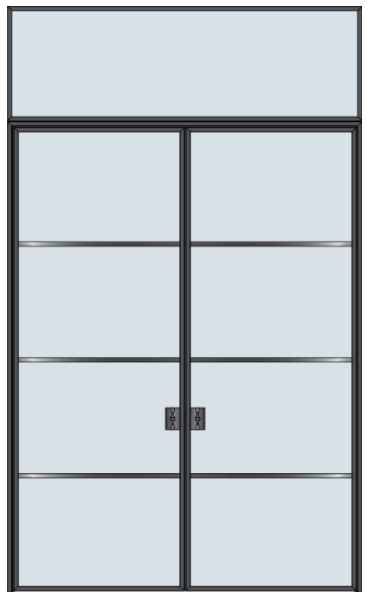
We'd like to install pairs of steel-framed glass doors across the two entrances to our living room. The apertures are both about 2800 high and 1050 wide. The plan was for a fixed pane at the top, and then a pair of opening doors underneath. Roughly along these lines, although obviously quite a bit narrower: We've started getting quotes. The couple we had for supply only were £5-7k. Then on Friday we had stunning quote of just shy of £15k, although that includes all measuring and installation. I appreciate that bespoke solutions are always going to be more expensive, but various standard sizes seem to be available at a tiny fraction of these costs. Anyone had success with sourcing this sort of thing at a more reasonable price?
.jpg.c21f3ac78c9b7efd90cbdcb312744dc5.thumb.jpg.7adcad4c0e384f5ecd7d56b0618df6e5.jpg)