.jpg.c21f3ac78c9b7efd90cbdcb312744dc5.jpg)
jack
-
Posts
7460 -
Joined
-
Last visited
-
Days Won
41
Everything posted by jack
-
Interesting. I think this offering has changed since I looked into it a while back. My recollection is that you couldn't previously sign up for this if you received the feed-in tariff. Withdrawing from the feed-in tariff concerns me slightly. Do they say anywhere whether you can re-join in the future. If that's not possible, there's a bit of a risk if Octopus stops offering this or changes the payments so they're less than the feed-in tariff.
-
We have 8.5 kW (peak) installed, but our panel orientation is a long way from ideaI, and I don't recall ever seeing more than 6.6 kW (~78% of nominal peak output). We regularly hit 6.1-6.3 kW during June, and usually exceed 6 kW at least every few days across the whole of summer.
-
How much sun do you get during the months in which you need heating? Given the much lower insulation offered by glass compared to walls, are you sure you won't lose more energy through these windows than you'll get back through solar gain?
-
I suspect I've been a bit lucky with the sweet spot. No idea about cycling, but it's a good question. I think it's more likely to be a bigger issue when leaving it cooling for several days, rather than just for a few hours through the middle part of the day.
-
I don't have the actual numbers for my setup, but what you've recorded seems similar to my subjective understanding of how my house responds.
-
Ha, you'll fit in around here.
-
Not exactly. I was responding to these points: You're talking about control theory problems that arise out of system behaviour - time constants, cycling, flow temps, etc - but my experience doesn't agree with that. My point was that I can push one button on the ASHP controller and leave the cooling system on for days if needed, without any further intervention. Even without any form of thermostatic control, it will happily keep the downstairs area pleasantly cool without me having to turn it on and off or adjust flow temps to keep things comfortable. The question of manual control is a bit of a red herring in my response. I control it manually because I want to choose when I consume energy for cooling, not because I have the problem with automated control that you describe. I may eventually get around to installing a timer (and maybe even a thermostat), and perhaps control it via Loxone. But at the moment, it works perfectly well just turning it on and off when I feel it's needed. Sure, but my comment was in reply to Nick's regarding his problems with control theory issues like time constants and temperature stability. You have an interface problem, which, while frustrating, is not what I was talking about. In the warm weather leading up to the big heat wave recently, I was running it most days during daylight hours to use as much PV as possible. I forgot on the odd day but it didn't make much difference. Even without intervention, it takes a good couple of days for the slab to warm up when the weather's hot. A couple of days before the record day, I started leaving it on 24 hours day. I left it on continuously for maybe 5 or 6 days that really hot week. Edited to add: Hence, this: ... is not my experience, despite the fact that I have to manually choose to turn the system on. More generally, if I know it's going to be a warm day, I'll turn it on if I think of it in the morning. It takes a few hours to kick in, but the slab time constant is so long that even if I forget on a hot day, it doesn't make that much difference. The cooling's been off now for a few days and the floor is still slightly cool underfoot despite the temperature having been in the 20s this week. I do think that concrete, and presumably similar surfaces such as tile, are just inherently more comfortable in warmer weather.
-
Interesting. This isn't my experience at all. I just have mine set to output 15 or 16 degree water (can't remember which) and turn it on manually when the house is too hot or there's a heatwave predicted. I run the cooling open loop - no separate thermostat. I don't care if the floor's a bit cold underfoot, but realistically the downstairs floor temperature never drops below 19 degrees or so. I had it running for a few days in a row when things were really bad a couple of weeks back and it worked perfectly. It's lovely to come downstairs when it's been hot overnight and feel the steel banister get colder and colder with every step! I do wonder whether having polished concrete floors helps. I imagine it absorbs heat from the air pretty well compared to, eg, wood.
-
Agreed. Even in just the 7 years we've lived here, I've had several situations where having an RCBO allowed much quicker identification of problems. One was a heating element in a coffee machine intermittently causing problems. Another was an UFH leak (due to our poor electrician accidentally hitting a pipe with a screw) that flooded an underfloor socket cavity. Another was a bad earth on a light fitting. I'm sure there were one or two others. In each case, knowing exactly what circuit was affected was a massive timesaver.
-
.jpg.c21f3ac78c9b7efd90cbdcb312744dc5.thumb.jpg.7adcad4c0e384f5ecd7d56b0618df6e5.jpg)
ASHP, Just an outdoor fridge ?
jack replied to Post and beam's topic in Air Source Heat Pumps (ASHP)
What about when my ASHP is in cooling mode? -
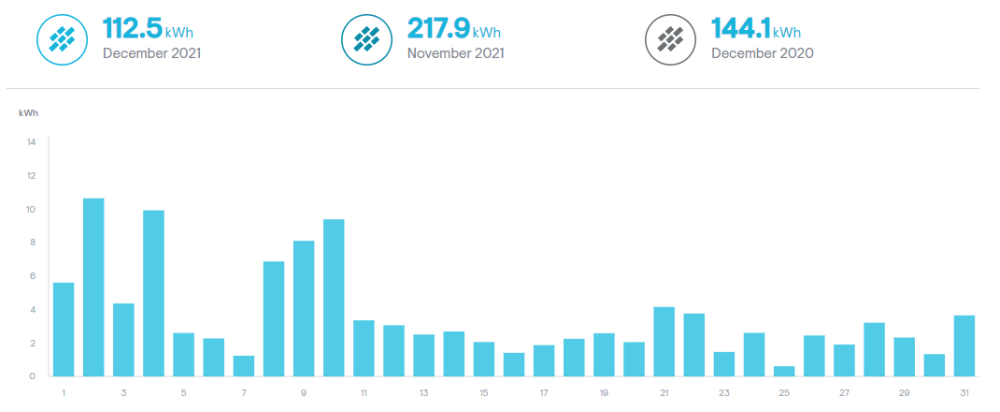
Those national house builders who are renowned for poor workmanship and corner-cutting? Perhaps not surprising if they aren't getting good results. Hopefully you plan to build and insulate better than these builders. I think the main point people are making is that nothing he says seems to make sense. He's flat out wrong on the hydrogen boiler theory, and his comments about ASHPs are completely at odds with the experiences of most BuildHub members. These numbers don't add up unless they're running massive arrays. To give you a concrete numerical example, I live in the south of England and have 8.5 kW of PV on the roof. I average maybe 150 kWh/month in December and January. That's 5 kWh/day, although the median is lower than that. Put another way, that's 5 hours of a 1 kW electric heater. I'm pretty sure any dwelling in Scotland is going to need a huge amount more energy than that to remain comfortable through winter. As an example of how bad things can get, here's December 2021: Output rises above 4 kWh/day only a handful of times, and is regularly below 2 kWh/day. As another comparison, my electric car has a 38 kWh battery (that's actually on the small side - Teslas have between 50 kWh and 100 kWh batteries). Assuming 100% efficiency, my panels could charge my car 3-4 times a month in winter, assuming I don't use the energy for anything else. To achieve even these theoretical numbers, I'd need a battery system connected to the PV array, because the array itself rarely outputs enough power in winter to charge a car (car chargers have a minimum charge power of something like 1.2 kW, so if you can't get that from the array or a connected battery, the difference will need to be made up from the grid). And that's based on an 8.5 kW array in the south of England. The same array will do considerably worse in Scotland. You really need to do the numbers based on heating demand calculations for your proposed property. Edited to add: I forgot to include this link, which you might find interesting: http://euanmearns.com/solar-pv-potential-in-scotland/
-
I barely know where to start with this. What did he say was wrong with heat pumps (ASHPs as we tend to call them)? Many BuildHub members have ASHPs and are very happy with them, myself included. It's interesting that he sells and installs ASHPs for housing associations - are these retrofits and/or poorly built/insulated housing by any chance? Or maybe he or the company he's involved with don't actually know what they're doing and are undersizing what they sell/install for their customers. I can't think of any other reason someone would be so anti ASHP. As discussed repeatedly on BuildHub, hydrogen is unlikely to have a future in supplementing gas for boilers: As for infrared heating panels, they have their place, but primary heating for an entire home probably isn't it. That he's suggesting solar can be relied upon for providing significant energy during the heating period anywhere in Scotland is concerning. Solar panels won't output much in the depths of winter in Scotland, even on the best of days. Sorry to be so negative about your family member, but I'm really struggling to see how any of the advice he's given makes any sense.
-
Concrete or tiles should be fine (assuming no chipboard or OSB underneath). I suppose if there was enough condensation within grout for a long enough period you could get some mould growth, but at the sorts of temperatures we're talking about that doesn't seem likely. There's an increasing risk the more mould prone the final surface or substrate is. Also, the more insulating the substrate, the less effective the cooling. We have one carpeted room downstairs, for example, and it's the hottest room in summer and the coldest in winter, as a result of the carpet and underlay (not low-TOG) insulating the underlying slab from the room.
-
I wouldn't worry about looking for drawings to set up underfloor cooling. It's literally exactly the same as UFH. The only differences when cooling instead of heating are: - You need to figure out how to enable cooling mode on the ASHP. Varies by manufacturer and model. - If you want to have the cooling controlled by a thermostat, I seem to recall that you may need a second thermostat for cooling operation, or at least a thermostat with both normally open and normally closed outputs. One output is connected to call for heat, the other is connected to call for cooling. I personally don't bother with a thermostat in cooling mode. I have the ASHP outlet temp set to about 15° C in cooling mode, and that seems to result in the (polished concrete) floor settling at around 19° C. During long warm periods, I run it during the day when the sun is up so it gets assistance from our PV. During the worst of the recent heatwave I left it on 24 hours a day for about five days, including a couple of days before the really high heat hit. Worked really well.
-
@Steve247, there was an event posting that mirrored the wording above. I assume it was unintentional, so I've hidden it. On the topic of underfloor cooling, there's nothing in the standard Wunda setup that will prevent its use for use with an ASHP in cooling mode. They just don't want to be responsible for someone running their cooling at well below the dew point under wooden floors, and being sued a few years for water damage caused by condensation. I have a standard Wunda manifold and pump set (admittedly from about 6 or 7 years ago) and it works perfectly fine to cool our insulated slab with polished concrete overlay.
-
Bad maths, meant a quid.
-
That's a 3 kW kettle element for an hour a day, or about £0.30 a day at current rates. Doesn't seem wildly excessive given the volume of water being heated.
-
I believe they only module down to a certain point though. If that point is too high, you could have cycling problems.
-
MVHR with adiabatic cooling
jack replied to Garald's topic in Mechanical Ventilation with Heat Recovery (MVHR)
That seems high. Was that the building regs calculation? Our house is 289 m2 (with 2.85 m ceilings downstairs, a double height area, and 2.5 m ceilings upstairs, so probably higher volume than average for the floor area) and I think the BR calculation was 180 m3/h. In general, the BR requirements ventilation rate is far too high imo. I know that several people on BuildHub have cut that rate by half (or more) without any issues. -
MVHR with adiabatic cooling
jack replied to Garald's topic in Mechanical Ventilation with Heat Recovery (MVHR)
I generally run the MVHR at a fairly low default setting (80 or 100 m3 per hour, from memory) all year round. -
MVHR with adiabatic cooling
jack replied to Garald's topic in Mechanical Ventilation with Heat Recovery (MVHR)
Following on from my earlier comment about being surprised that it wasn't sweltering upstairs the night before last, I had the same experience last night. Back-to-back hottest days on record after a week of high and increasing temperatues, and it was still only a bit warm upstairs. Perfectly comfortable to sleep with a pedestal fan on low. I can only assume that by getting the underfloor cooling on early and leaving it running 24 hours a day for the last handful of days, the temperature upstairs hasn't had a chance to get out of control. It's a puzzlement. -
Crazy. It takes hours for underfloor cooling to bring the temperature of the whole space down. 24+ hours would have been a better test period. Well here's the funny thing: I hadn't been upstairs during the day, and guessed 30+ based on the temperature the night before and the fact we had an incredibly hot day yesterday. However, when I went upstairs last night, I was surprised to find it only warm, not ridiculously hot. If anything, it felt like the temperature hadn't moved at all from the night before, and I'd be surprised if it was 30 degrees. Best guess is probably 26 or 27. The only things I can think that might have caused this are: it was overcast here a lot of yesterday, meaning solar gain was lower. I've had the underfloor cooling running 24 hours a day for the last three days, and that's having some impact on the temperature upstairs even though it's only directly cooling the slab downstairs. There'll be a small amount of cooling from the effect of cold air from downstairs mixing in the MVHR heat exchanger, but that alone surely can't explain the difference.
-
I run my UFH at 25, and it's only that high because I can't turn it lower. I have a small amount of weather compensation dialed in - from memory, I think it starts kicking in at about 7 or 8 degrees outside temp, and ramps the outlet temp to 28 or 29 degrees at around 0 degrees outside temp. I'm sometimes curious about what it would have been like to have radiators rather than UFH in an airtight and well-insulated house. That said, I certainly don't miss having big lumps of metal all over the walls!
-
I haven't watched the whole video, but how long did they allow the house to cool before deciding it didn't work that well? I don't have temp sensing, but at a guess it's currently something like 20º C downstairs, with a 16º C outlet temp from the ASHP. Coming in from outside feels like walking into a deep, dark cave. It got to 37º C here earlier today, and it's got to be over 30º C upstairs. Perhaps the cooling effect won't be so pronounced in a bungalow, given you have a warm ceiling immediately above the cooled floor. That said, even if you only get a 5º – 6º reduction, that could easily be the difference between a tolerable 22º C and an uncomfortable 28º C. I know which temperature I'd prefer to be sleeping in!
-
MVHR with adiabatic cooling
jack replied to Garald's topic in Mechanical Ventilation with Heat Recovery (MVHR)
Ah, that sounds like positive pressure ventilation. Try putting this search term in google: positive pressure ventilation site:buildhub.org.uk Incidentally, positive pressure ventilation isn't considered MVHR, because it doesn't include heat recovery (= the HR in MVHR).
.jpg.c21f3ac78c9b7efd90cbdcb312744dc5.thumb.jpg.7adcad4c0e384f5ecd7d56b0618df6e5.jpg)