Bitpipe
-
Posts
4118 -
Joined
-
Last visited
-
Days Won
53
Everything posted by Bitpipe
-
 Golden rule is you cannot reclaim any VAT charged to you by contractors (even if in error). In general, only services directly involved in the build itself are allowed (from demo to landscaping) but not professional services (survey, architect, SE ect..) or hire fees of plant or equipment. Some contractors are OK with this, some struggle with the concept and need educating. Worst case, get them to charge you for labour only and you provide all materials. You can reclaim for materials (check HMRC for what is and isn't allowed) consumed in the process of the build that you buy, invoiced to you and delivered to your site or collected by you.
 -
That was about it really - his other key mantra is to focus on past success. He admitted that none of this is rocket science to explain but the challenging bit is to apply it at moments of pleasure.
-
I thought it was a trebuchet...
-
I don't know, I quite like my basement.
-
Chin up! At my last job we had a talk from one of the leading sports psychologists in the UK who works for national rugby teams etc. His advice to top athletes was quite simple - concentrate on the things you can change (i.e. your own performance variables) and ignore the things you cant (weather, other team etc...). While a surprisingly simple approach, it does help as it removes focus on extraneous issues. You can't control your neighbours attitude but you can ensure that your deliveries are as professional as possible and that things are left as they were before.
-
I clad the exterior of the basement walls in EPS blocks - most went on un-cut but a few needed trimmed and foamed in. Was glad that my handiwork was quickly covered in correx and then backfilled never to be seen again
-
MVHR install is one job that most of the self builders here have DIYd - almost a rite of passage. Saves a few £k on install fees. @JSHarris and @JanetE did their own plumbing, plenty others have done substantial bits of their own builds (foundations, roofing etc..). Plus the finishing jobs of plastering, tiling, painting etc.. Your challenge really is that the most critical stage, getting to a weathertight shell, will be happening when you are free but when you probably have least to offer and risk slowing things down (time is money). First and second fix are when you're likely to be able to make more of a 'best effort' contribution at your own pace. Another role you can play is to record everything that's happening onsite through daily diaries and extensive photos (both close up detail and from a distance) as you'll refer back to that archive time and time again during the build. You should also be ready to know every dimension of the build and carry a tape and laser to check that everything is as it should be. You need to be the one thinking about ensuring allowances for services runs, joist positioning for shower wastes etc, etc. First fix is normally when you realise all the things you should have thought about during the earlier stages of the build. While everything can always be fixed, this is where unplanned costs start to rack up, especially labour if one trade now needs double the time to correct the mistake of a preceeding trade (ask @Nickfromwales how much joinery he used to do on a new build job...). Just being on site daily makes a big difference - we lived in a caravan in the garden and all the trades were more than happy to come and knock if they wanted to double check something. Also got used to me wandering around all the time - didn't feel like I was checking up on them. As the old saying goes, "It's the work that's inspected, not the work that's expected..."
-
recommendations for low profile frame sliding glass doors
Bitpipe replied to Adamantium's topic in Windows & Glazing
We have two 4.5m Gaulhofer lift & slide (The inline 91 slim style). Very pleased with the style and performance (triple glazed passive certified), despite the weight you can move it with a single finger once its on the wheels. We built up the internal and external floor to be flush with the door threshold - looks very sharp. I know they can go much larger in size so your budget is the limit We looked at Internorm, also nice, but when we tried to get the price down their suggestion was to flip from alu clad timber / alu clad UVPC which was not what we wanted at all. -
yes. And it's on fire.
-
Any sofa supplier recommendation?
Bitpipe replied to TerryE's topic in General Self Build & DIY Discussion
We got our 'new house sofa' from John Lewis as I liked the style and fabric choices. Some peace of mind there too on quality and aftercare. -
Great advice above. Be the site opener, closer & tidy upper. You're also the H&S enforcer so keep an eye out for hazards. I spent a 1/2 hour at the end of the day tidying the site & sometimes pulling timber and other recyclables or general trash out of the skip to maximise space for proper building waste. Went in the council bin or down the tip for free. You're also the proxy for the architect and BC to some degree so make sure you know every inch of your drawings and how you expect things to be done - ask questions (without getting in the way) to make sure you understand what's happening, why and if its correct. Be ready to call the architect or BC if needed to clarify details (always get a written confirmation by email before action) Sometimes you will want to change things once you get an idea of how they really work on site - in our case it was positioning of Velux - the plans had them far too high up and it was a simple tweak of a few noggins to get them right at that stage, i.e. before roofers started work. You can also be the materials purchaser where you've not got a supply and fix rate from your trade. If they buy the materials, they will be zero rated in their invoice to you. If you buy them then you'll pay the 20% up front and claim back a year or two down the road which may impact your cash flow. Most trades will not bust a gut getting you best price on everything, you may be able to beat the prices that they get but need to trade off any saving against getting materials to site on time and of sufficient quality & quantity so as not to hold them back. Given we had a timber frame build, I did not need to source much myself in the main build aside from MVHR, Velux windows, EPS insulation (for basement), lightwells and bathroom fittings & furniture plus timber & sundries for the joiner who was on a day rate (doors, skirtings, timber, fixings etc..). The landscaping has been much more supply intensive as that guy is also on a day rate also so I've paid for all the sand, cement, ballast, slabs, crush, turf, block, etc etc.. He always gets a better price than me from his regular suppliers so we use them - can be tricky to always get the invoices in my name for VAT though as they typically use his account to apply the big discount.
-
I like to think of it as the end of the Crystal Maze when you're in the big perspex box frantically trying to catch money spinning around you.
-
I've used one to grout the patio (5mm gaps) and it works a treat. Would suggest making up small batches with a paddle mixer to get a nice smooth consistency. I had a large bucket of water that the gun went into using each batch (3-4 refills). Had a cup of tea and then washed it out for the next batch.
-
My joiner had something equivalent and I was always nicking them while he was here so went down to the decorators merchant to get more. Turns out they do a spray of the voodoo liquid and it's been my go-to cleaner ever since. Especially good at removing the residue from sticky labels. I'm sure someone will be along soon to tell us what the active ingredients are...
-
I've had a can on a gun that's not been used for over 6 months, chipped off the crusty tip with a stanly knife and away it goes. Note, buy a big bottle of isopropyl alcohol on eBay as it's the only thing that will remove the wet from from your hands or other surfaces before it goes off (and stains your skin black). Even if you wear gloves, it always seems to find you somehow!
-
New diesel and petrol vehicles to be banned from 2040
Bitpipe replied to Triassic's topic in Environmental Building Politics
Having just created a Ltd co for contracting, this is where I'm interested. If you own your own company it does not normally make sense for your company to buy a car and give it to you as the employee as a company car, as you (the employee) will need to pay benefit in kind (BiK) tax, normally 20%ish of the book value of the car. There is a scheme though for ULEV cars whereby you can write the cost of the car off against company profit, works for PHP as well as outright purchase. That saves 20%. The BiK are also lower but they have been increased recently which removes some of the benefit. 2017/18 9% 2018/19 13% 2019/20 16% 2020/21 2% 5. Salary sacrifice for the provision of benefit in kind 5.1 ULEVs are eligible for tax benefits if purchased through a salary sacrifice agreement made between an employer and employee, where the employee's cash remuneration is reduced in exchange for an equivalent BIK (as explained in Section 4). Due to the reduction in pay, this results in a reduced income tax liability for the employee and reduced national insurance liability for both parties. 5.2 Due to their wider societal benefits, ULEVs were exempted from the reforms announced in the Autumn Statement 2016 to remove the income tax and employer NICs advantages resulting from such schemes, whereby the taxable value of the BIKs provided through salary sacrifice is fixed at the higher of the amount of cash forgone or the amount calculated under the existing BIK rules. This is also interesting 6.4 As electricity is not a road fuel, the car fuel benefit charge does not apply to electric charging. If an employee uses a company car, no BIK arises on charging their vehicle at the workplace. 6.5 If an employer provides electricity to an employee to charge their own car, a BIK arises representing the cost of the electricity used, which must be reported to HMRC. The government announced at Autumn Budget 2017 that employer-provided electricity, provided from workplace charging points for charging electric cars, will be exempt from being taxed as a BIK from April 2018. 6.6 The provision by an employer of a chargepoint for an employee at their home also gives rise to a BIK. 6.7 An online tool for calculating whether tax is due in relation to the charging of an electric car is available here: www.gov.uk/expenses-and-benefits-electric-company-cars. The government recognises that this is a developing area and keeps the tax rules under review at fiscal events to ensure that they remain effective in promoting take up of cleaner cars but are also consistent with the government’s wider fiscal objectives. -
New diesel and petrol vehicles to be banned from 2040
Bitpipe replied to Triassic's topic in Environmental Building Politics
What spec did you go for? My boss in US has a S with ludicrous mode and it is like that ride in Thorpe Park. Tesla still out of my league financially at present as all remaining funds are for finishing the landscaping, gates etc. That said, I was looking at the Audi Q7 etron and there's not much between them cost wise when spec'd up. Current A6 is limping along (10 years old) practically worthless now so eyeing the diesel trade in deals and the electric incentives. Nothing grabbing me really, would be interested in a Q5 sized car but that's still a year away at least I think. -
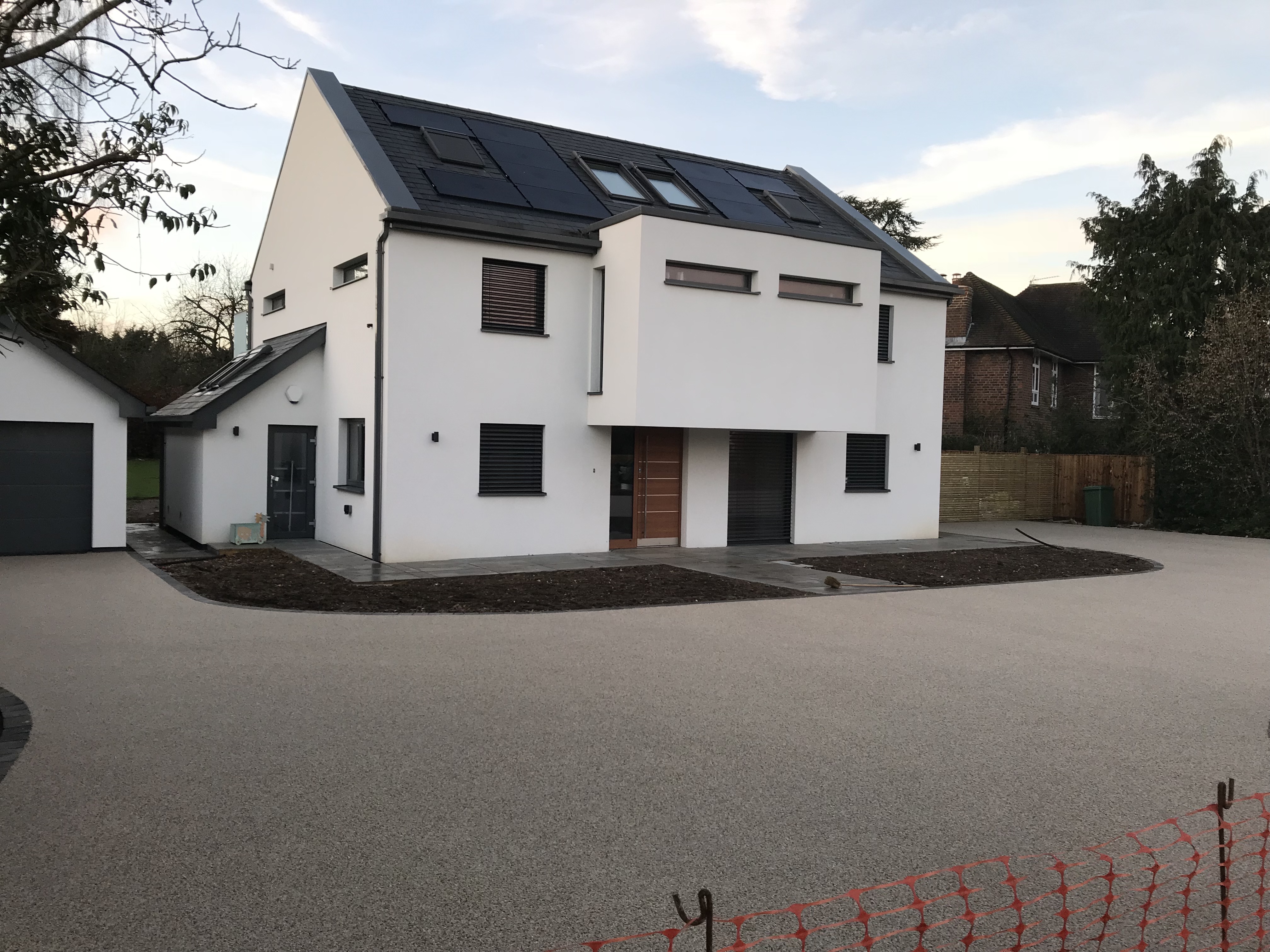
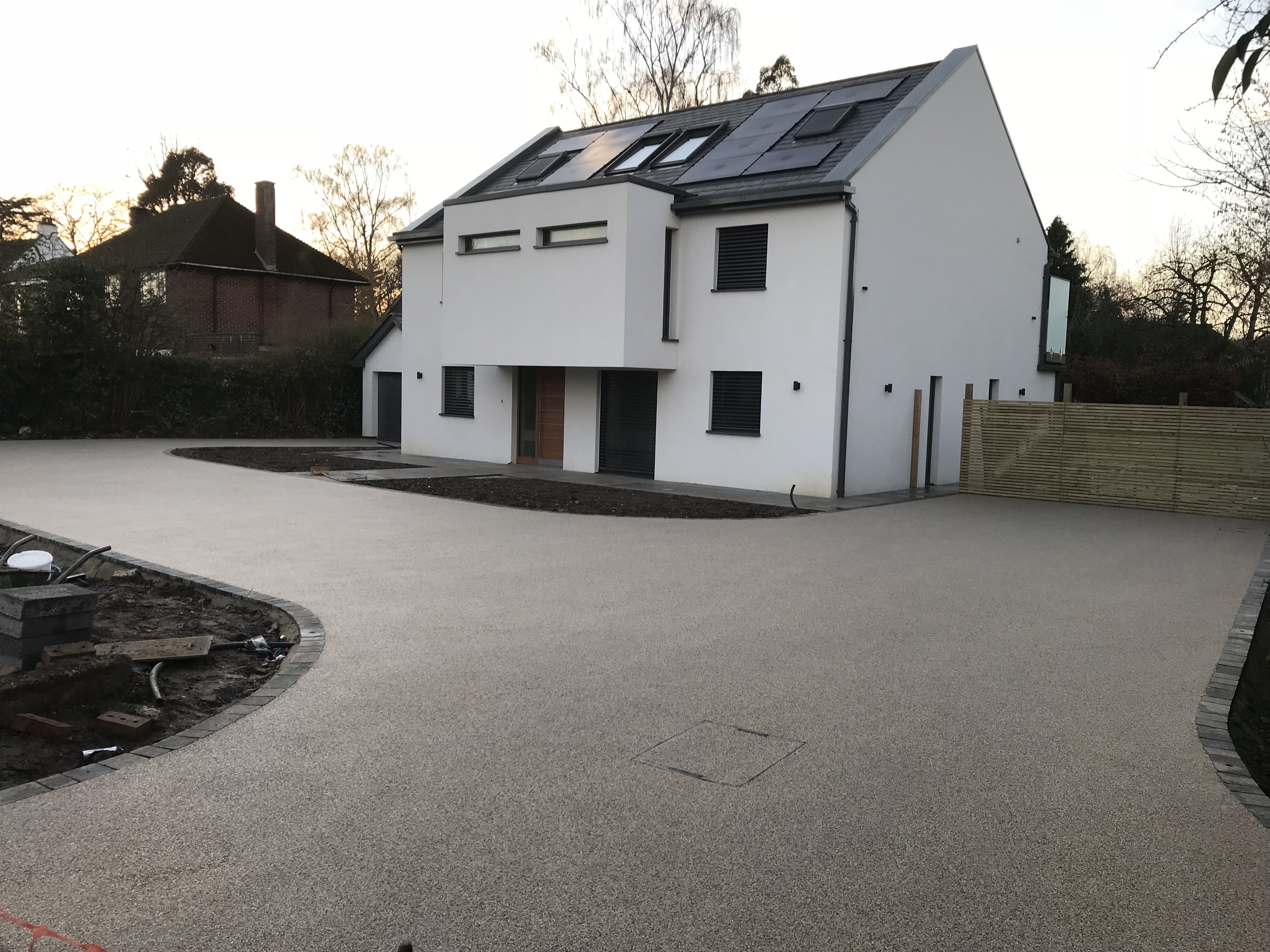
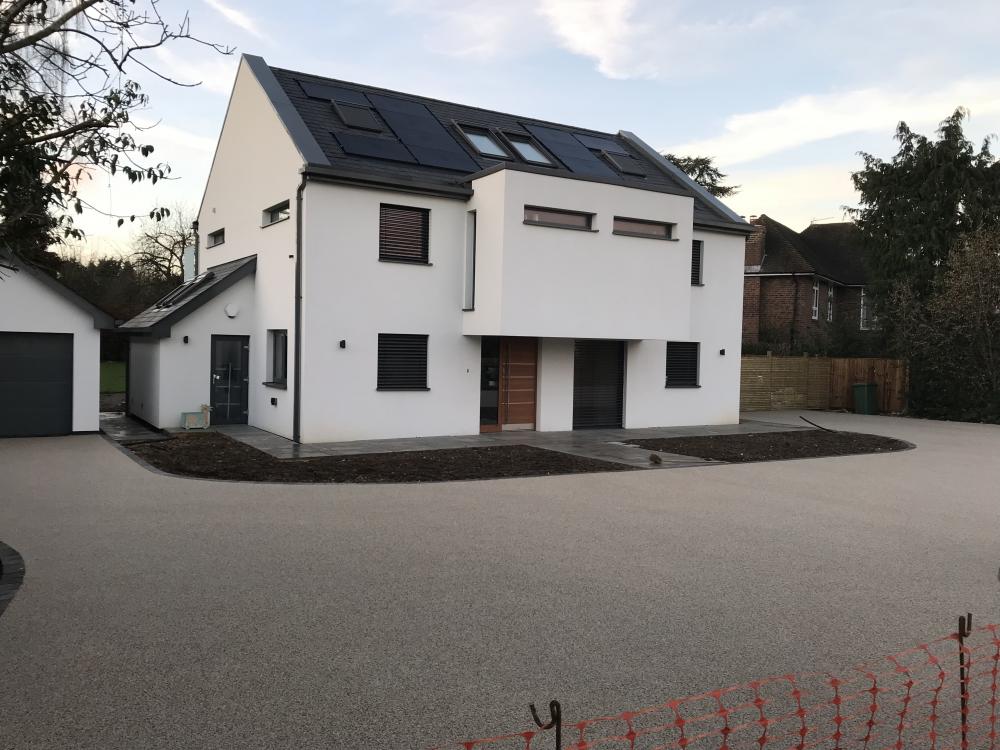
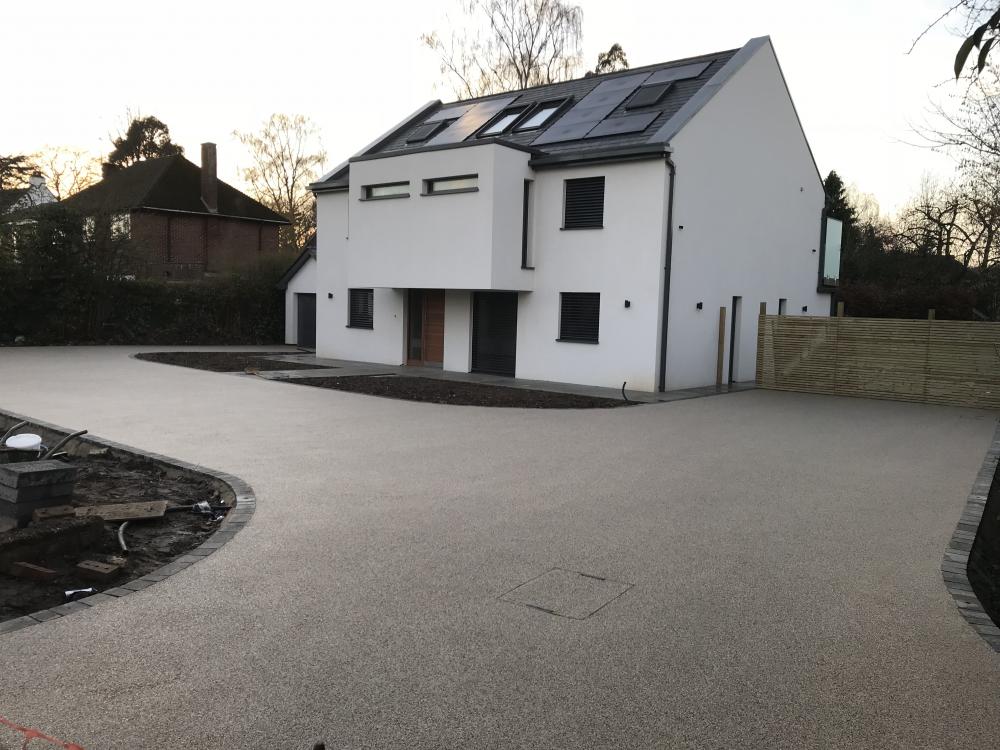
All done - just need to keep cars off it until we get the entrances paved next week. Then I can render wall, hang gates, plant hedge, turf front etc... I keep telling myself that we’re almost done ?
- 61 replies
-
- 11
-

-
Looks great. I made provision for one in our build as I had to box around a soil pipe coming down the living room wall from an ensuite above. As the pipe had a dog leg, we got the joiner to build a fake 'fireplace' alcove. Plan was to line with heat resistant material and install a bio fuel burner - however even the smallest size would kick out too much heat and make the room uncomfortably hot. So we make do with a fire app on the TV and I'll put some fancy logs in the alcove...
-
Same for us - I understand that it's not as hard wearing as the impermeable variety but as a base layer its fine.
-
I'm having mine laid as I type - just had the resin bound/bonded discussion with the contractor. He's amazed that architects interchange the two when they are quite different - bound is permeable and the bonded is not. Spec is pretty much same as Peter. We've laid a block perimeter to enclose the resin and have a substantial sub base, competed in layers, before the permeable tarmac and resin is laid. Our landscaper did all the prep work. Very surprised at the speed. Our H shaped drive is about 250m2 and the tarmac was down and level in half a day. They're back today doing the resin and after an hour have already done about 20%. They're using a specialist mixer to blend the resin, aggregate and sand (looks like a candy floss machine) as he says standard bell mixers don't mix as well and the resin collects at the bottom. Hand troweled finish and a dusting of powdered glass for grip and sparkle! Cost wise (and these are SE prices), tarmac is £25/ms and the resin bound gravel is £51/m2, although we've gone for a very light colour which necessitates more expensive clear resin. Darker colours can use the cheaper yellow resin and are more like £30/m2. Like any high value service, there are lots of chancers in the game (glorified tarmackers) so we were careful to get a good recommendation and check the work of our guy. As we're a big job - he has about 8 lads on site right now so it will get all laid in a single day with no joins. For the bel mouths, we're going for blocks (to match the perimeter) with the gates as a transition point between the two materials. It's the final big spend of the build but a great note to end on as it looks spectacular.
-
Back to balconies - we have two at the back of our house on master and guest bedroom - obviously added for aesthetic rather than function and I admit they do look good externally and break up what would otherwise be a flat expanse of wall but I seriously doubt that they'll ever get much use. Also added significant cost (some of this was my fault for not putting in provision for supporting glass so we needed to go for a suspended deck system) and eat up floorspace that could have been used in the bedroom itself.
-
They are two very different systems. The internal flooring system is a 2-3mm sub layer of resin (ours is a Sika comfort floor system, laid on a 4mm rubber crumb mat) and then a top coat (the colour) is painted on with a very thin layer of very hard wearing topcoat. This is the bit that can be refreshed if you want a colour change in the future. Initially shiny, it quickly wears to a matt finish and is extremely robust. Works out at around £100/2 which is not far off a high end floor tile plus labour. Aside from the aesthetic of a solid colour throughout, the other advantage is a continuous surface that has no joins or grout lines etc so it stays quite clean. Ours covers the whole ground floor in every room (kitchen, dining, study, utility, hall & WC). The resin bound driveway (which we're also getting installed next week) is a fine aggregate bound in clear (expensive) or yellow (cheaper) resin on a concrete or tarmac substrate. Our old house had a gravel drive and it drove us crazy as it either got stuck in shoes and ended up scratching the floors in the house or ended up in the road outside. Only downside of the resin bound system is you miss the 'crunch' of approaching visitors but we're having external gates so this is not so much of an issue.
-
We have resin on GF (on a suspended timber floor) and it feels really, really nice underfoot with (or without) UFH - a warm and slightly squashy floor. Bathrooms are tile with UFH. Rest of upper house is engineered wood and no UFH under that but still feels warm under foot. Basement (insulated concrete slab, no UFH) is Karndean, cooler than wood but still not cold. Rugs here and there break up the wood but I really went off carpet after our last new build house and two small kids. Carpets were wool and decent quality - we got a professional cleaner in a few times and DIY annually the rest and the practically black water that we were disposing of was disgusting - goes to show how much dirt and dust embeds itself in, despite very regular hoovering. With hard surfaces throughout I find the hoover out more often as dirt, dust & pet hair are more obvious but equally the floors are clean and a decent multi surface steam mop brings them back to new once a week, removing anything the hoover missed.
-
if you're digging a basement then this is an important consideration (it was for us). From where did they detect the contaminants? How much made ground do you have under your feet? Worst case you may need to dispose of the made ground and the as yet undisturbed ground separately which will add to your costs but some further clarity on the scope of the contamination will help quantify this (and minimise cost).
- 16 replies
-
- 1
-

-
- soil survey
- asbestos
- (and 1 more)