oranjeboom
-
Posts
698 -
Joined
-
Last visited
-
Days Won
1
Everything posted by oranjeboom
-
I was thinking that too, and many others too no doubtedly, hence the statement at the end in the credits "This build was monitored by building control".... More of a concern is my wife's grumbling as to why our (or "your house" as she puts it these days) is taking more than 3 yrs to build.....
-
Best price I have had for my slab insulation was mostly from Insulation Giant. I'm using EPS70 though. And some thicknesses were cheapest on fleabay. I didn't use any L-shaped components though so didn't have to get the sellotape out
-
Best to get your drawings done first and then send it to a few SIPS companies. There's now one based in Kent also, so may get a good price with transport included. Likelihood is that there will be some iterations after you have chosen a SIP manufacturer. Many will also offer an install/erection service. The SIP company I used simply contracted out the installation team. SIP company I used were complete shite in the end, but the two installers were great (I can PM their details).
-
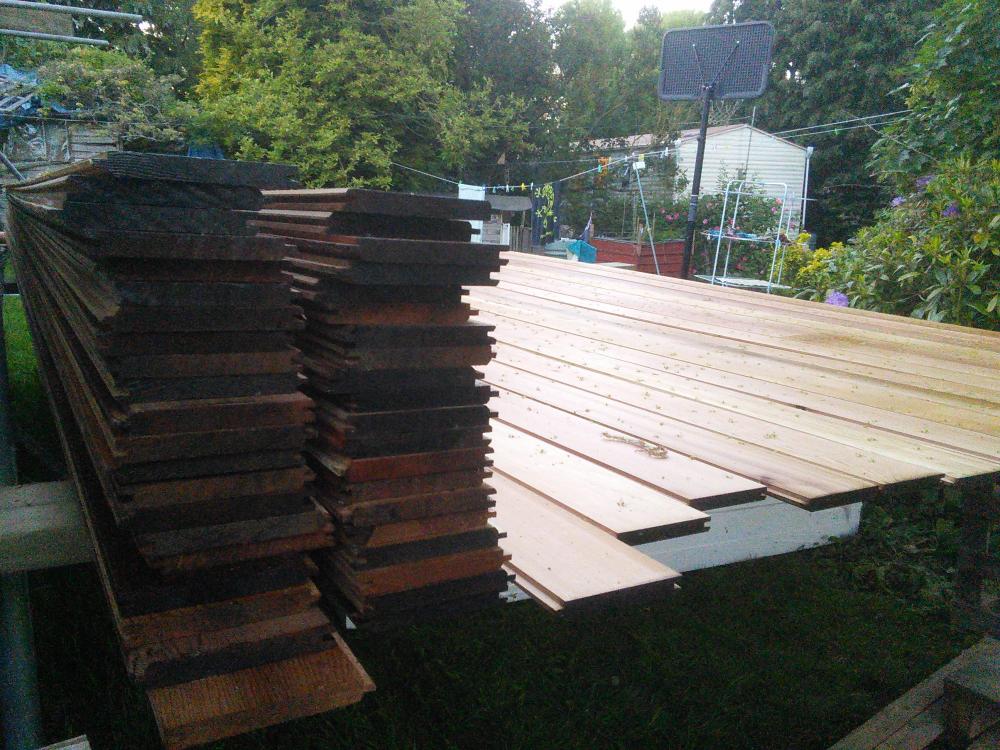
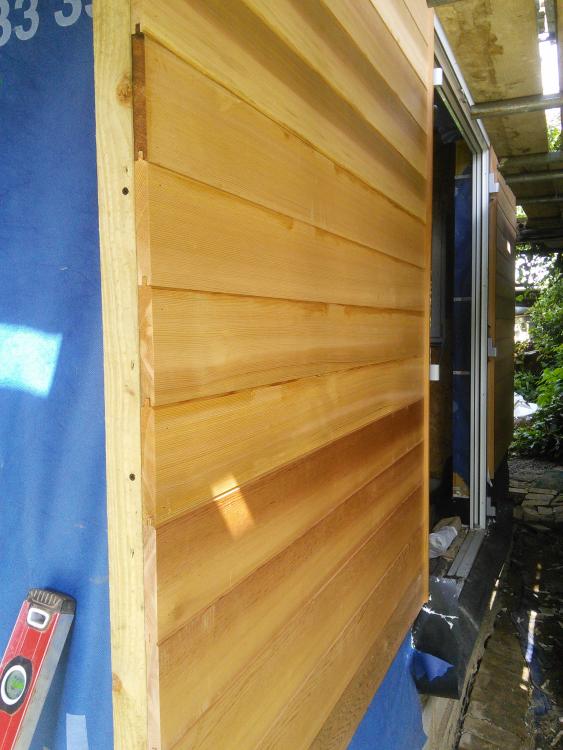
Thanks Paul. I went for the Osmo UV and I'm pleased with how easy it is to apply. Cost is around £59/2.5L tin and that's the biggest tin they do of course... and they recommend doing the rear of the plank too. I only did that side once and then two coats on the face. Let's see how long it lasts!
-
If only Toolstation did flooring, then that would be another 10% off...
-
@pauldoc Hi Paul - just wondering what product you went with in the end and what your experiences were with application etc? Too early to tell on performance of course. Just seen that you are in Kent also so be interesting to see how the cladding performs as a comparison. I've just bought 5tins of the OSMO UV stuff, so will be applying that before I put the cedar up. Busy painting 130sqm this weekend....
-
 Yeah, that's what I thought too. There's an online map you can check, and from memory along the coast where you are there no radon risks.
 -
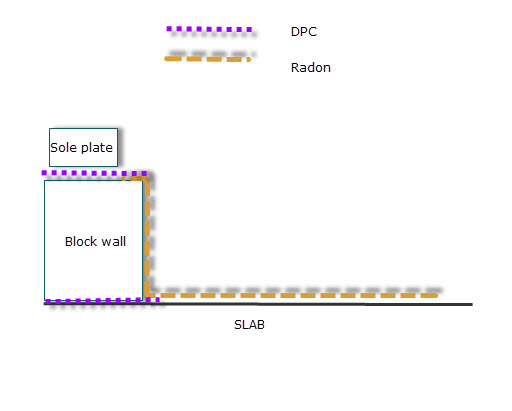
Yes ideally that would have been the way to go. But the SIPs are already up you see. Working front to back here! Blockwork does have DPC at the bottom though (between slab and blockwork), so little transference of damp at that point. The ground level outside will be lower than that DPC (ignore first pic) also so won't have a case of soil moisture being transferred to the blocks. Blocks will be shielded by exterior EPS and final covering of brick slips. So I hope I am covered on the rising damp front. Alternatively, I could lap the radon over the DPC rather than underneath, but more potential for ingres of radon/gases. Not that I am in a high risk area. Previous occupants in bungalow did not die of radon either.
-
One further question: I presume it's best to continue the radon barrier up the inside wall then lap it underneath the DPC? as I have shown in the above pic and made clearer here: I'll use doubled sided tape underneath and then finish off with jointing tape on top. TIA!
-
SIP structure is already up. Sole plates fixed through the marmox with bolt fixings into the blocks below (below the marmox blocks that is). The other DPMs - I was just going to use that to prevent contact with the cement on the foiled PIR - I have some spare, so may as well use it. Also a bit more durable than the poly when I am throwing mesh around on top. Potentially I was going to use DPM also to separate the PIR from EPS, but that appears unnecessary. Slab all clean, clean from sharp bits also. Bit wet in places still so waiting for those areas to dry off before I cover with the radon/dpm. When we poured the slab here, the chairs crushed all over the place with people walking all over the mesh to the point that the mesh ended up on the EPS. I ended up getting another bag of supports to elevate the mesh again before they came back for the pour. At least it's just me this time, so won't have to 'patch' things up after the experts have been in. Yes, I'll take a similar approach with the old bungalow set up, by laying 100mm EPS on the sharp sand and then radon barrier followed with remaining EPS insulation. Or I may just lay the radon barrier on top of the insulation to prevent ingress of concrete between any EPS joins. Decisions!
-
Perimeter insulation for heated slab - roll or EPS board?
oranjeboom replied to oranjeboom's topic in Heat Insulation
Thanks Onoff! Looks like I need to get some spray glue and some low expansion tape, as parts of the old bungalow retrofit I have footings everywhere that will need filling/securing with bits of insulation / upstand. So you ended up with a 25mm EPS layer on top of your celotex? Was that simply to get to the correct height? I just started another post on that very subject. -
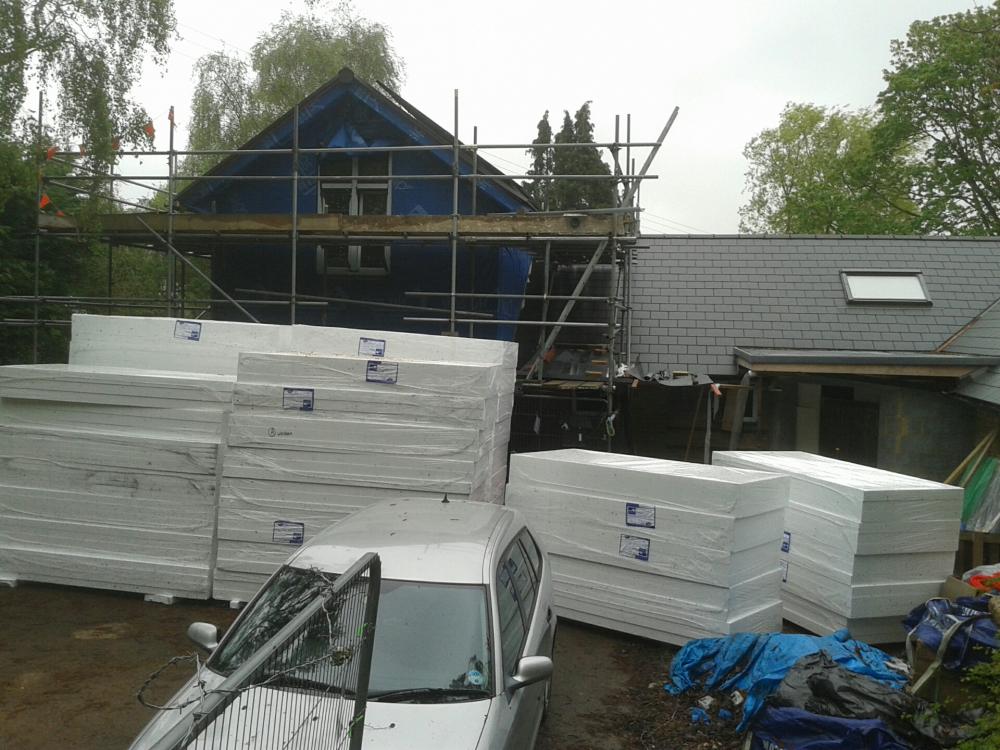
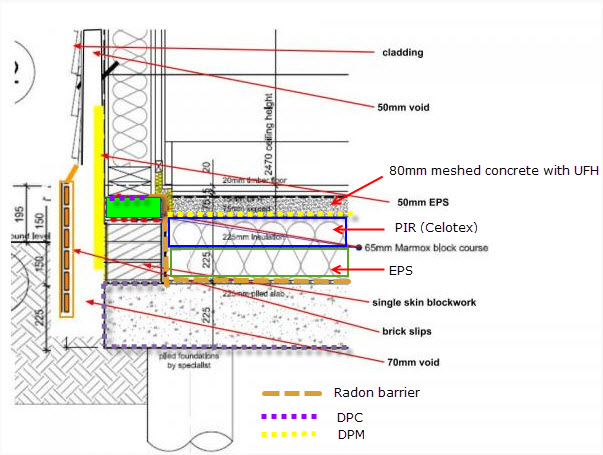
Okay, big iceberg delivery yesterday, so now I need to start laying the insulation for my slab: Bungalow has two extensions which are piled slabs – both extension slabs will have a mix of PIR and EPS. The bungalow floor has been dug up, hardcore is down and I am ready to fill that with EPS. The extension slabs both have SIPS sitting on blockwork, with cold-bridging around the sole plate best mitigated with marmox block beneath and external insulation on outside SIP wall (see pic). No feedback required on that please! : ) I just need a sanity check on the slab insulation please: Bamboo flooring 80mm meshed concrete with UFH (with 25mm EPS upstands) DPM 100mm PIR 160mm EPS Radon barrier (lapping with DPC under sole plate) 225mm Existing piled slab A mix of PIR and EPS to attain desired u-value / get correct FFL height. My thoughts were that it’s safest to get PIR on top of the EPS away from piled slab in terms of moisture. I was also thinking the PIR is better at withstanding point loads from the mesh chairs/spacers that will keep the mesh elevated above the insulation. Should I wrap it entirely in polythene/DPM to prevent moisture travelling up into the PIR? I was just going to cover the top with DPM as it is foil faced. Or should I have EPS on top and PIR at the bottom? Or does it matter?? Feedback appreciated. OB
-
Perimeter insulation for heated slab - roll or EPS board?
oranjeboom replied to oranjeboom's topic in Heat Insulation
Thanks. Yes, I had realised that the roll-type was more for compression purposes. I'd just noticed that on some UFH details / slab details, it was either a case of proper 25mm+ upstands or the thin perimeter roll type upstands. I suspect that there are a lot of slabs with just the latter. -
Just getting my final orders in before I start to lay my insulation down and just checked what my UFH supplier was going to provide in terms of perimeter insulation - it's only 8mm thick! I understand it's on a roll and therefore can't be too thick, but this seems very thin. I am tempted to go with this technique that @JamieM describes here : Surely 25mm EPS offers better u-values? And using the wedge technique described in the post would provide a more robust approach I would think too? I can imagine that some of the perimeter rolls are not always ideal when sticking in dusty environments. I guess on most installs the perimeter roll insulation is a nice quick solution, but prone to movement during installation of ufh or pouring of concrete (concrete/screed could force a gap between the upstand and the insulation board below causing a thermal bridge with the adjacent wall).
-
Being on the floor as tiles, would they not have a tendency to soak up water also?
-
Number two's are the most important aspect when it comes to sewerage I would say! No.4 = You are splitting your outflow into two paths at IC1 in this case. This has the potential to reduce flow of water via either route and increase debris settlement at the point of the split. I think that's what @MikeSharp01 is referring to.
-
Thanks @Temp. Yes, the membrane is vapour permeable, so that extra 50mm will help with additional insulation, though will leave maybe 10mm void. Probably bang in a row of nails 10mm from the top of the rafters to stop me pushing the PIR all the way against the membrane. Just a bit anal with my insulation. I've seen how the cowboys have done it elsewhere. And if there's any 'leaks' in the VCL the foiled PIR can act as a secondary VCL with minimum airflow through gaps. So will probably get my shaving foam out for every gap and also tape all joins. This is a relatively small area of 14sqm. Yes, i think the more expensive ones have foil, so I could even end up with 3 VCLs. I'll probably end up going with your 2/3 rule
-
Let me know when you are back for snagging / leak issues!
-
I've got hard chalky water down this way. Must be why it isn't possible. I did not even bother going down that route as I think I know what the answer would have been. Thanks for the comments Nick. Let me know when you're down this way in Kent for a bit of plumbing! My Welsh boss makes some neat Welsh cakes.
-
Ohhhhhhhhh (suck in air through teeth moment). That approach is not one that supplier recommends or can guarantee..... They have preference over having two seperate manifolds in the cupboard (i.e. not elbowed together via the tails). That way they can charge more for pump, blender, wiring....another £350 thanks. Otherwise it's all down to me risking it. Guess they have preference over simple, but potentially costlier solutions. If I knew who my plumber would be at this stage I would probably go for it Nick. But as I essentially want him to commission the whole setup (including boiler) I don't want him having any excuses with my UFH install. Have to 'Keep it simple, stupid', for most trades that I seem to have at my disposal down this way. I don't the the manifold upstairs feeding downstairs is the way to go either. I'll end up with a heated wall which is no bad thing, but I want the loops as short as possible. I may have to squish in a 12-port manifold elsewhere after all.
-
Not even sure that would fit. At the moment I have approx 800mm x 400 in the cupboard. Need to ring them and see. Another thought I had was to use the manifold that I will have upstairs (for 2rooms and a hallway) and increase that from a 3port to say a 7 port to feed some of the downstairs rooms. Means I would only need an 8 port manifold downstairs. Main concern would be the extra pressure on the upstairs manifold pump if it's feeding some of the loops downstairs.
-
900mm is just for the manifolds I think, and does not even include the pump and blender!! Will confirm that tomorrow though.
-
The problem I had was they they were charging approx £350 more for having two manifolds in the first place. But that was for having two of them in different locations in the house (see plan at very top). Cupboard is about 800 x 350 (internal dims) so can't go 'round a corner', but potentially could have one above another. Would that still require 2 pumps, or could I have 1 operating both in this configuration?
-
Hi @Nickfromwales - just seen your question now. 2 bathrooms and 4 human occupants. One's soon to be a teenager so maybe that either counts as 2 humans depending which way they sway on the cleanliness front. Not looked at boiler options for a while and I was going to tackle that once I approach a decent plumber, but would need some ideas before they just fit whatever suits them! I've finally got my manifolds down to one instead of two. But now the flamin' designers have realised that my existing hallway cupboard is not long enough to fit the 12 port manifold (905mm). I'm about 100mm short. It's going to be unsightly to have a cabinet elsewhere in the hallway and my other positions are very limited. Can I rotate the manifold 90 degrees? I have seen one like this, but I'm sure there are reasons not to go down that route! I'll probably end up knocking down a wall in order to extend the cupboard size.
-
Cavity: To fill or not to fill (and what with)?
oranjeboom replied to oranjeboom's topic in Heat Insulation
Yes, Dudda. It will be one large slab, so will ensure that the two areas are meshed separately to encourage any cracking where we want it to crack - good tip. Thanks.