Iceverge
-
Posts
4487 -
Joined
-
Last visited
-
Days Won
32
Everything posted by Iceverge
-
If you have decent ventilation above the insulation I wouldn't worry about it. Your instinct is correct not to wrap timber in plastic. Almost all moisture gets into a structure via air leakage not diffusion so like @ADLIan says seal all ceiling penetrations and you'll be fine. A consideration might be the thermal bypass. wind will simply blow through the mineral wool. No risk of timber decay but your insulation won't perform well on a windy day. I've heard suggestions of covering the mineral wool in building paper as a possible solution but I can't find the reference.
-
Welcome welcome. Any pictures to share? Fundamentally you need 1. A continuous layer of insulation with a 2. vapour control layer (airtightness too in this case) inboard and 3. space for ventilation outboard. Once that is done you're looking at 1. cost Vs 2. ease of install Vs 3. fire performance Vs 4. decrement decay Vs 5. embodied carbon V 6. u value for the various insulations. These won't matter a jot unless you get the fundamentals sorted first.
-
The only things that a self builder can offer over a volume builder are. 1. Self unpaid Labour 2. A site that may be unattractive to a developer. 3. No builders profit to pay. Everything else you will pay more for. What you get in return are. 1. A bespoke house. 2. Often a high performance home unavailable to mass market. 3. A tremendous learning and satisfying experience. 4. Lots of work that could otherwise be dedicated to leisure or gainful employment. Have we saved any money overall considering our time and input. Absolutely not. Would we do it again. Absolutely.
-

MVHR pipe height change
Iceverge replied to Pocster's topic in Mechanical Ventilation with Heat Recovery (MVHR)
No risk of condensation so long as your ducting is in the heated envelope. I would consider making a dedicated MVHR sound proof enclosure with built in silencers if doing it again. My DIY silencer alone is working a treat. -
MVHR pipe height change
Iceverge replied to Pocster's topic in Mechanical Ventilation with Heat Recovery (MVHR)
You could make a couple of custom OSB/MDF boxes wit a larger inner volume to compensate for the bends. Also MVHR fittings can oft be very expensive for no good reason.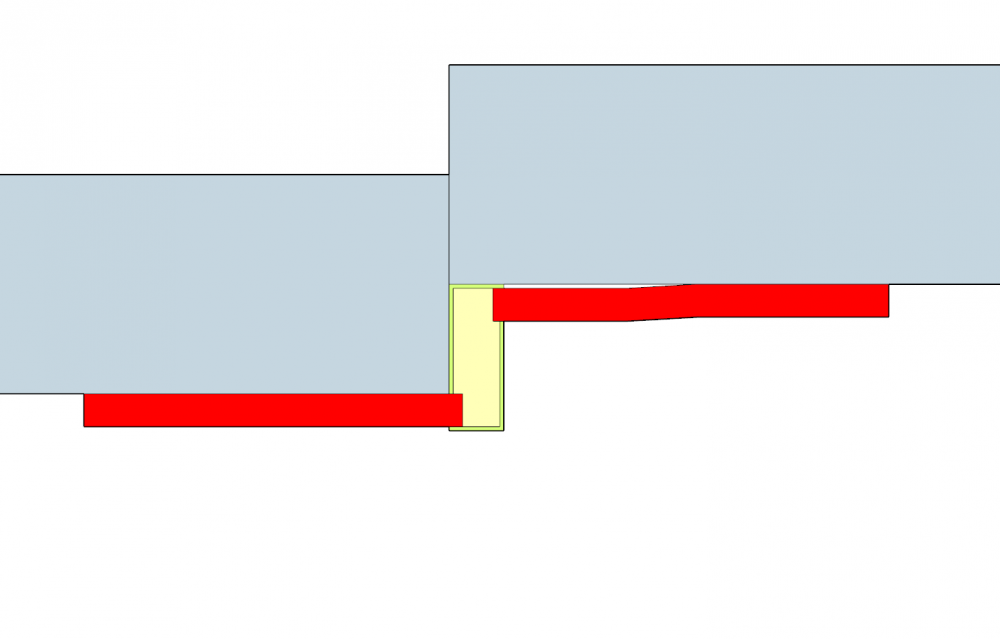
-
Airtightness testing before doors in?
Iceverge replied to Adam2's topic in Mechanical Ventilation with Heat Recovery (MVHR)
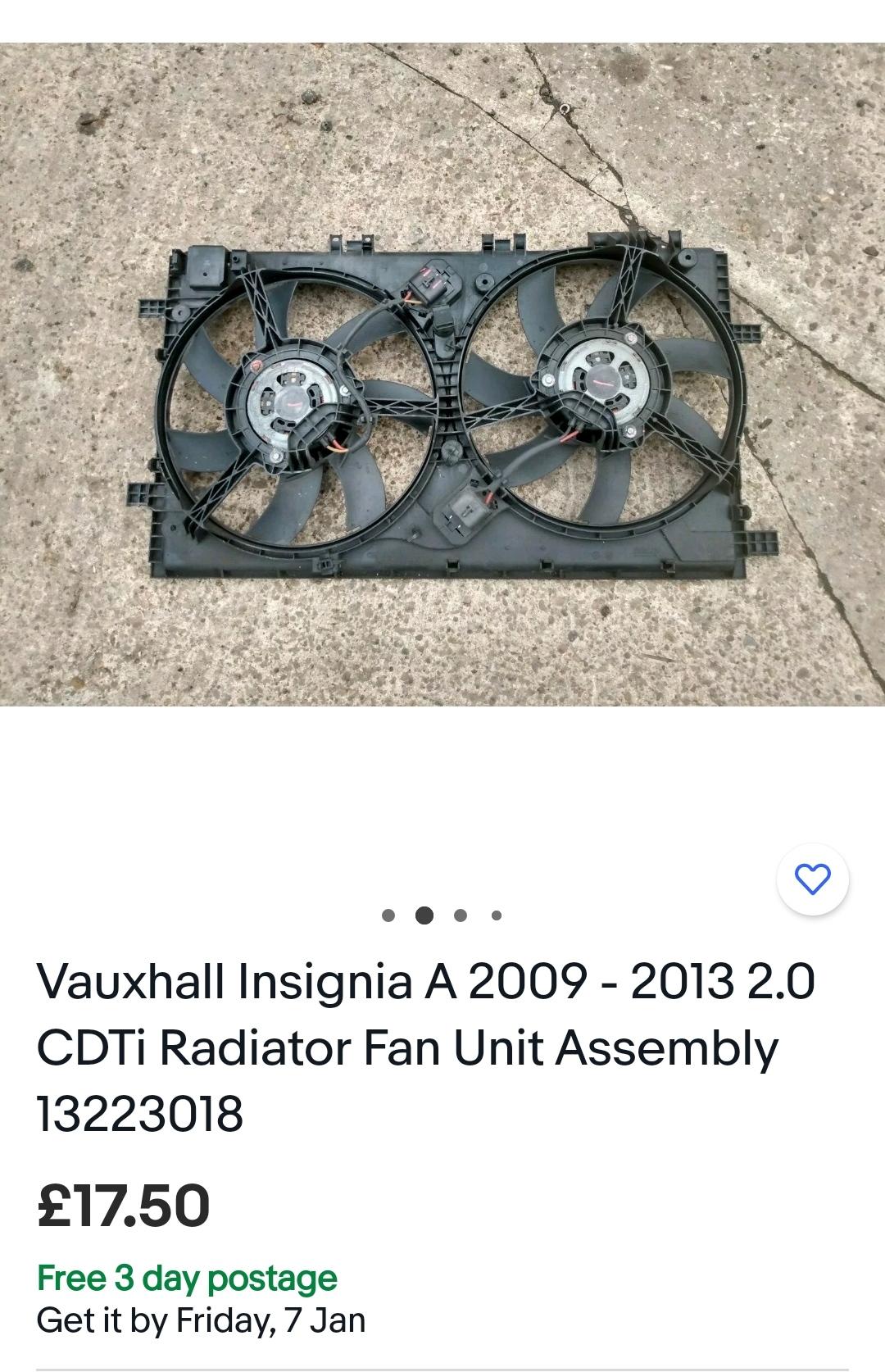
Yes if you tape the OSB in place correctly. 18mm OSB is generally considered airtight however I reckon 11mm is too if it is a well made board. Don't bother getting a professional to do a trial. Rather buy something the car fan below. Bigger is better. Then screw and tape it into one of your sheets of OSB. Get some crocodile clips and wire and attach to your car battery. They develop a howling gale compared to a proper blowerdoor. It makes it easy to find leaks and you can do so without time pressure. You should be able to just reverse the polarity to change fan direction if needed. Listen for the biggest leaks. Lick the back of your hand and feel for the smaller ones. Use a lighted candle and ram it into a length of conduit or tape it to a broom for a hyper sensitive leak finder.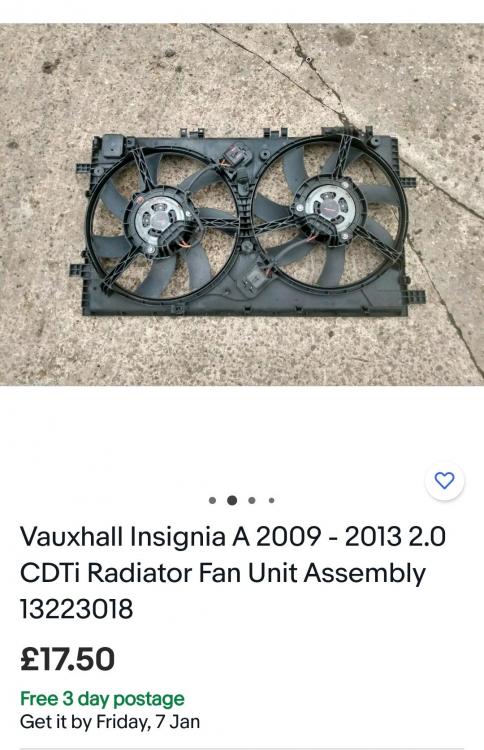

-
I can't see how the EPS beads would make the situation any worse. AFAIK most problems with cavity fill are from blown mineral wool.
-
What fittings do I need to connect to my shower mixer and heads?
Iceverge replied to Conor's topic in General Plumbing
When you tube told me PTFE was a lubricant rather than a sealing tape a penny dropped. Roughing the threads made all the difference for metal to metal. "Peel it like an apple" the man said! -
I can hear our sewage treatment plant. It annoys me! Hopefully I'll tackle it this year. I did a post about silencing our MVHR. It was very successful. Wouldn't be without it now. Horizontal rain and 8deg here all day. 700w heater's been on since about 6pm. House is 20 deg. I'll give it the full 2000w beans before go to bed.
-
I wouldn't rule out cavity wall insulation. EPS beads are breathable so moisture won't get trapped in the timber. Also any insulation outboard will increase the temperature of the timber making it less likely to form condensation.
-
Eeek! Maybe discuss this with them now. It might avoid a costly redesign. I'm trying to come up with a detail out of interest. I'll see how I get on. I've had this fight a couple of time on here. DO IT BEFORE YOU NEED IT. It's less than 1m2. You can use it to store junk once it's done but for heavens sake build it while you can. Documentary On One - I'll Send You Butterflies (rte.ie) Listen for 2 minutes from 21:21 about this very discussion. Anyway without the gloom of succumbing to a nasty disease it's perfectly possible you'll need to avoid stairs for a week. I did a couple of years ago when I came off my road bike and bashed my knee. Washing yourself with a cloth in the sink soon gets old. The house looks beautiful by the way.
-
What goes under the door sill?
Iceverge replied to MortarThePoint's topic in General Construction Issues
No thats the radon barrier. There's a seperate DPC 150mm above ground level in the outer leaf. Ground level is 150mm below floor level. We also have a substantial gravel filled French drain all around the perimeter. -
Correct. Yes from the outside. An alternative might be using a proprietary system like that from Illbruck. I've heard good reports. https://www.illbruck.com/en_GB/solutions/window-installation/brick-block/ Yes. Beware protecting the window boxes whist exposed however. Did it myself. Of course. If you're going to compromise with doors etc you're probably wasting your time painting chases etc. They're really the finishing touches as you aim for passive levels.
-
Looking at your plans you'll really need to take care with the thermal bridging. It's a nice design, in effect its a smaller second story on top of a larger ground floor. The external upper block walls being supported by steel will be the main source of your issues as these will bridge the continuous thermal envelope. Steel is a tremendous conductor so you could end up with condensation as well as energy loss and discomfort if not attended to. Is that a chimney in the Study? I would bin it unless you're far from neighbours and have ready access to free wood. Is it possible to include an accessible shower and on the ground floor. I recently listened to a heart-breaking documentary about a woman who went from hale and hearty to dead in the space 7 months with motor neuron disease. In the middle of the worst of it there was a discussion with care workers where the woman in point was faced with the choice of builders coming in to rip up her home to make it suitable for her condition or being carted off to a convalescent home mid covid. A few lines on a piece of paper now is cheap and easy in comparison.
-
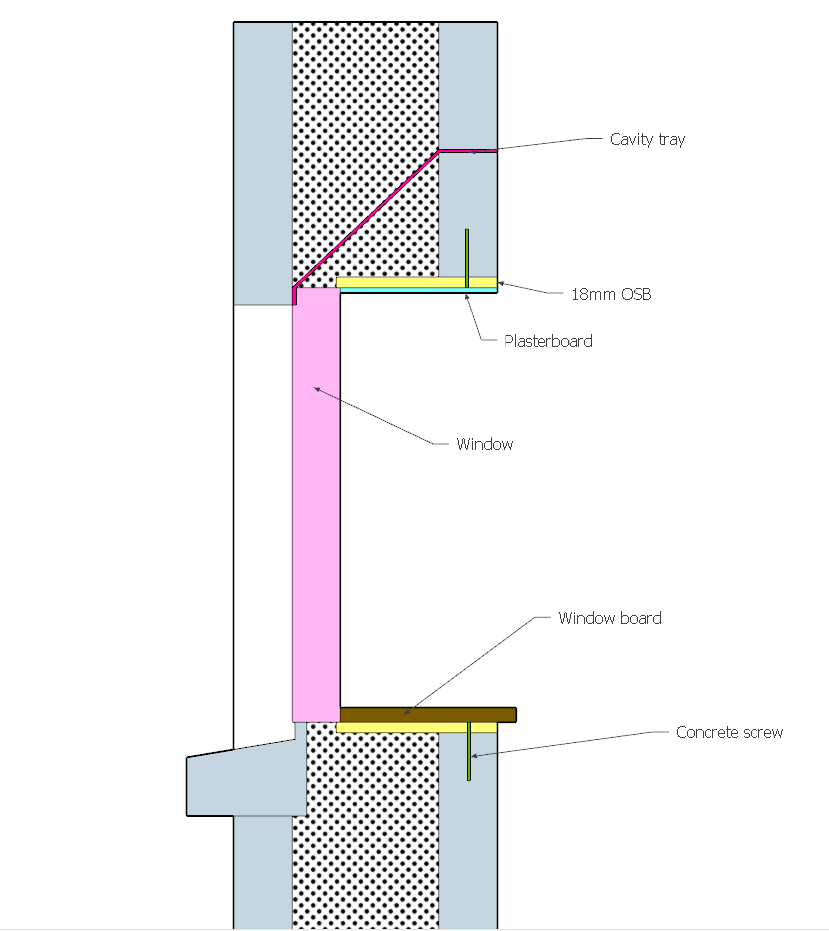
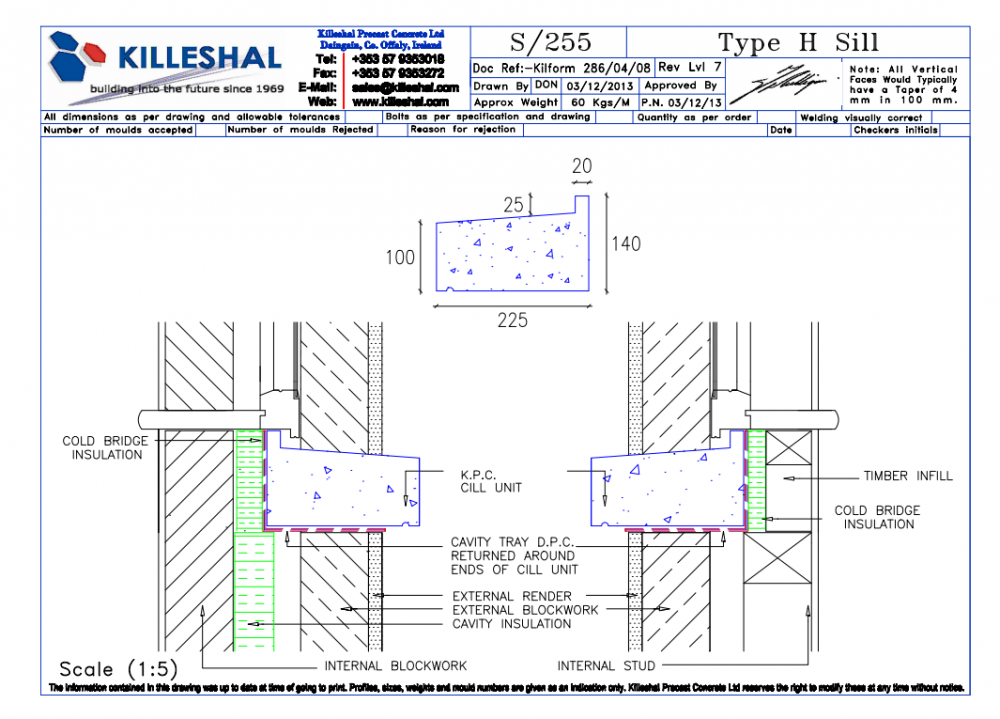
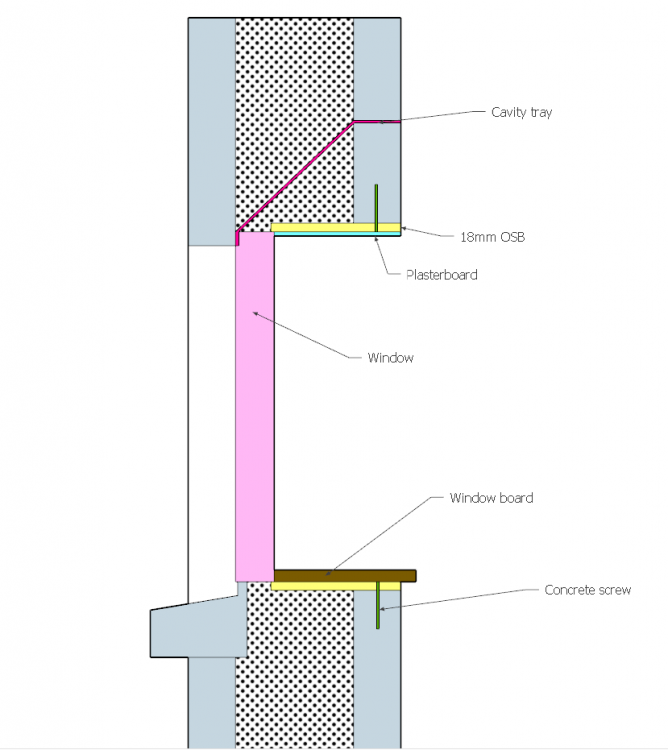
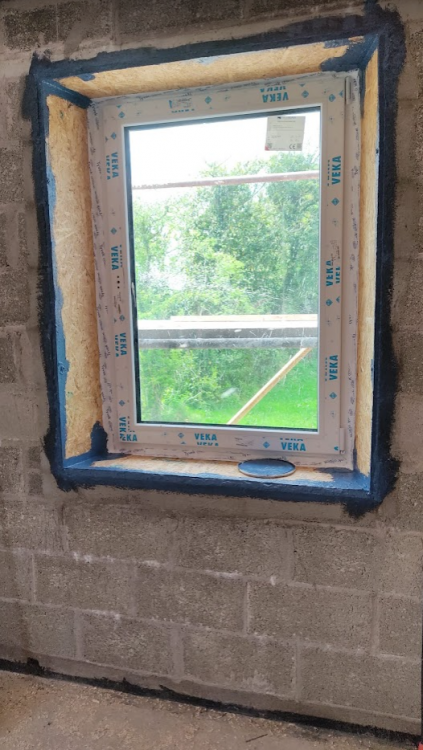
https://www.greenbuildingstore.co.uk/golcar-passivhaus-windows-doors/ this shows the Golcar project. Our windows were supported underneath buy the concrete window sill built into the outer leaf and bolted to the outer leaf with angle brackets. We used these sills which have a thin upstand. The OSB is overlapping the windows by about 5mm and concrete screwed to the inner leaf. It requires care by the bricky to set back the sill and header the right amount although nothing would stop you building too big and packing it out. The window was installed first. Then the OSB sill and head and finally the reveals. All had to be cut to measure. It was slow, but once screwed in place with brackets was quite rigid. We drilled the OSB to pump eps beads into the area below the cavity tray and under the sill. As you can see the OSB is still about 50mm back from the outer leaf so doesn't get damp and allows the EPS beads to press against the edge of the window. There is an alternative and maybe easier to build method here but I preferred the use of OSB to membranes for robustness https://www.edmondodonoghue.com/build-it-better-window-door-detailing/ Re damp and fire. As I understand it the issue with fire is from the inside the house into the cavity. The plasterboard and skim take care of this. Mineral wool batts are better than EPS beads for fire. Regarding damp I'm surprised there's not more leaks with plastic dpc used as cavity trays. It's so vulnerable to being damaged during building. In fact, I would build an angled PVC profile only half way across the cavity into the outer leaf if doing it again and dispense with the full cavity tray. I sealed the windows to the outer blockwork reveal with airtight sealant and carefully(ish) airtightpainted the PVC windows to the outer blockwork reveals. This was mainly to keep the cavity windtight but has a dual purpose of sealing the window to the outer render in a fashion that won't crack and let water blow in. Yes and put 44x44mm battens x 2 to create an 88mm service cavity. It was a good bit of work but I didn't want to penetrate the ceiling membrane. With the benefit of hindsight, as I did the MVHR myself I would trust myself to seal around the ducting and plenums if it was done in the attic and use a 22mm service void with 22x75mm strapping for the electrician. Not sure what you mean re the OSB? Greenbuildingstore's threshold is as good as any. I bought GRP grating. I did a post on this somewhere recently. Bifolds. "Sucks through teeth..........." It can be done. Greenbuildings store achieved 0.18ACH with https://lacunaofdenmark.com/en/lacuna-folding-doors/ . I imagine they're pricey however. However MOST of them are tragic. if you can live with french doors or tilt and sliders instead it'll be much much cheaper and perform better. Sliding or brush seals belong in the bin. Compression seals X 3 for every opening.
-
@SteamyTea @joe90 I assume our Kerradeco panels wouldn't be to your taste then. ?
-
I did this. Used 18mm OSB. Worked fine. Airtight paint + airtight sealant to connect to walls that had been parged. Tape might have been easier. We followed the Golcar window positioning. It's much easier to build. Membrane to bottom of trusses. 88mm service cavity for MVHR and wiring on 2nd ceiling, then plasterbaord. It's tricky to detail around the back of conduits from the wall chases into the service void. Here's what I came up with. It made it easy for the membane to be cut back and not interfere with the chase. I used airtight paint. Dilute coat first and then proper layer x2. Yes, you can see the chases above. again a dilute course first. I found lots of leaks here when blower testing. Used airtight silicone to seal. Airtight silicone and paint again. Where cables ran through the ceiling membrane I drilled individual holes in a 300x300mm square of ply and siliconed each wire one by one. I found those grommets expensive. You can make a pretty good seal with airtight tape too. We had a disaster with our "tony tray around the precast concrete slabs. I ended up sealing every room individually . Not ideal. I would use the denby dale detail and timber floors if doing it again. Yes. Hard to find. I bought a passivhaus approved one and it leaked. I would be tempted to use a window with an insulated panel instead of glazing. Don't forget that blockwork is very leaky . I was careful to make sure any walls abutting external walls were sealed within 1m of the external wall Including the tops of the internal walls on the first floor. Building a DIY blowerfan made all the difference in finding leaks. Tested 0.31ACH50 in the end. Do you have a robust detail for the threshold? Re insulation, we have 200mm EPS in the floor. 250mm EPS Beads in the wall and 400mm cellulose in the wall. If we could do it again 300mm EPS floor. 300mm cavity wall. Would have added less than €2k which starts to look like small money considering it will work forever unlike a boiler or heat pump. Maybe mineral wool batts instead of EPS beads. The jury is out. Good luck!
-
Dig it out. Find an offcut of insulation somewhere and bung it in. Mix a bucket of concrete and pour it level with the exiting floor. Vinyl will cover any cracking if it's a floating floor.
-
What goes under the door sill?
Iceverge replied to MortarThePoint's topic in General Construction Issues
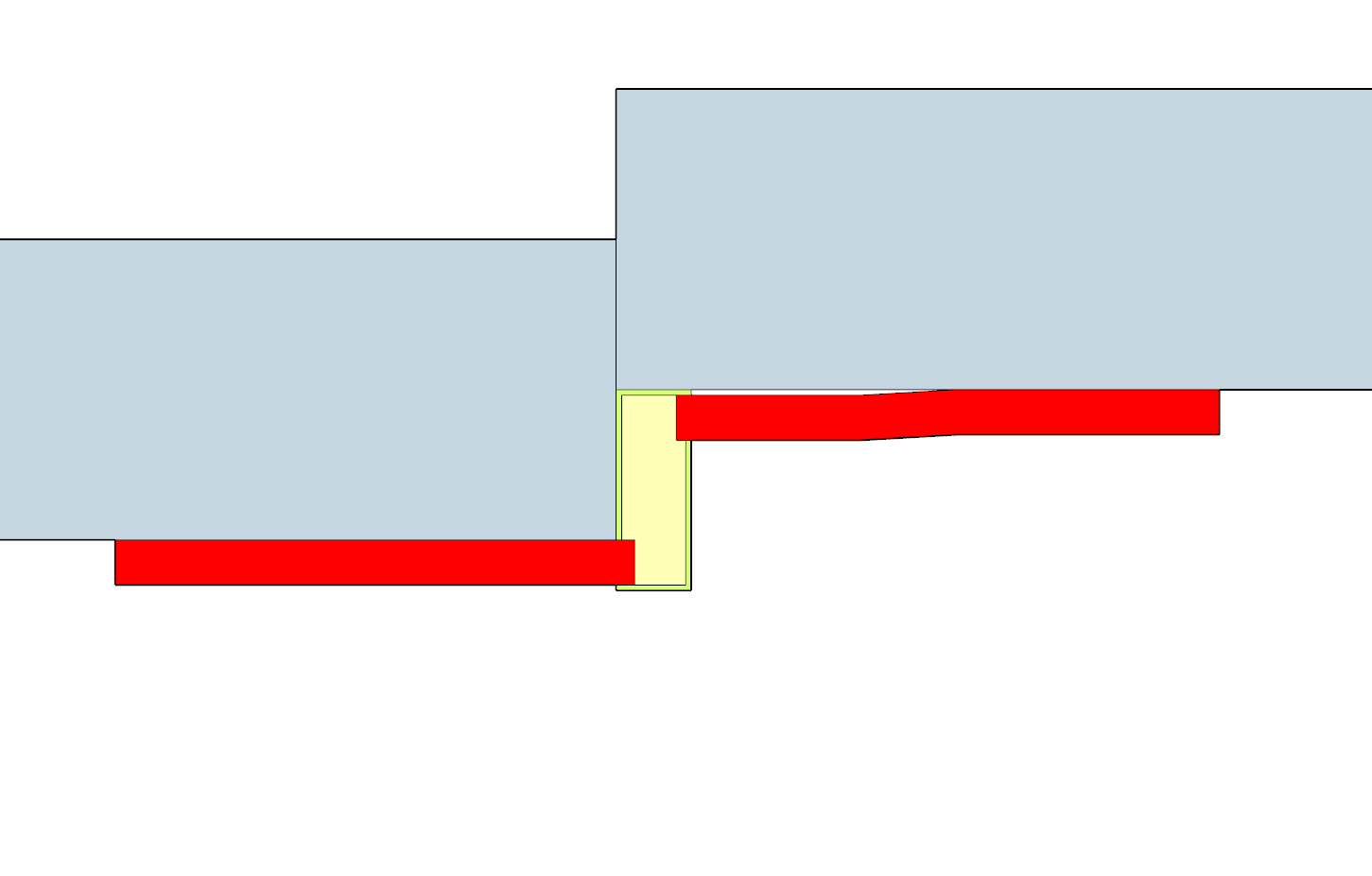
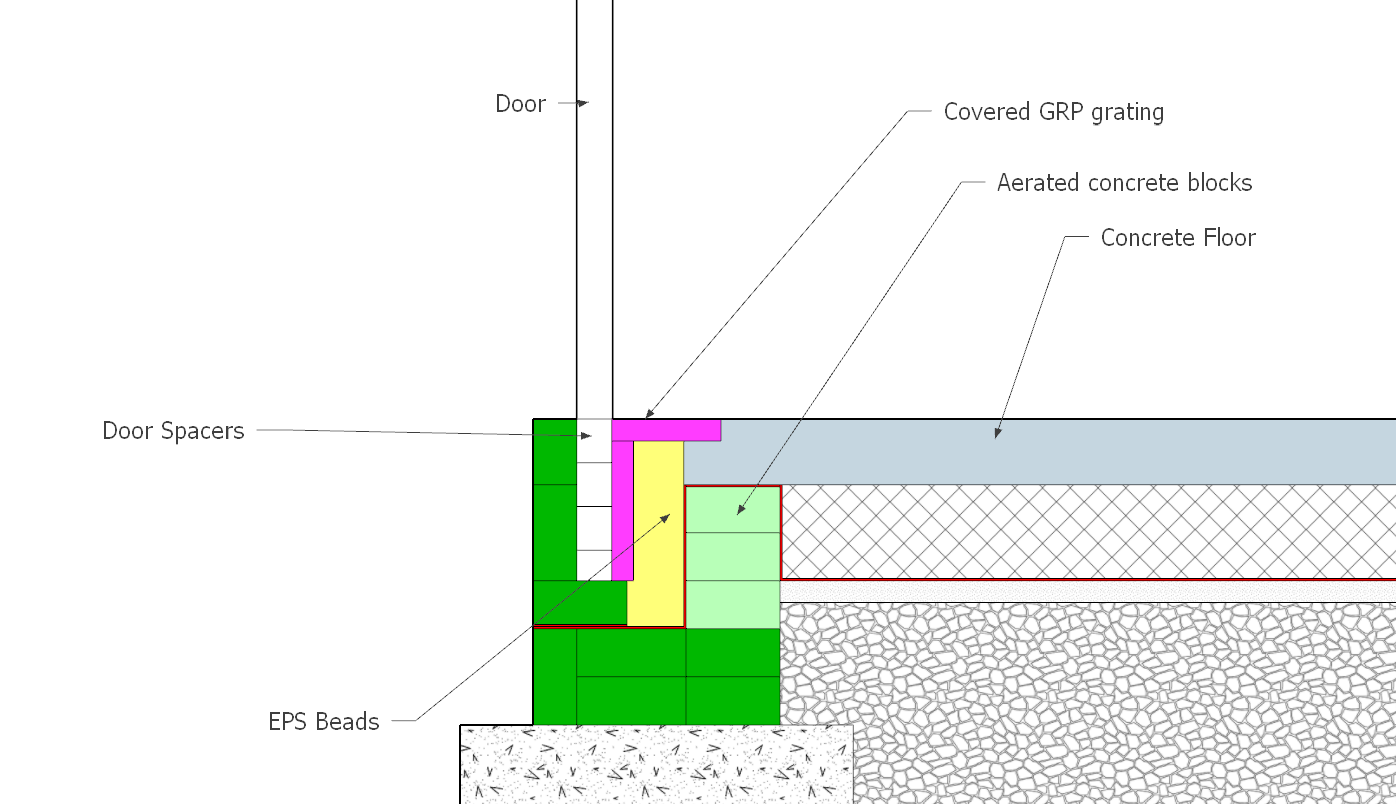
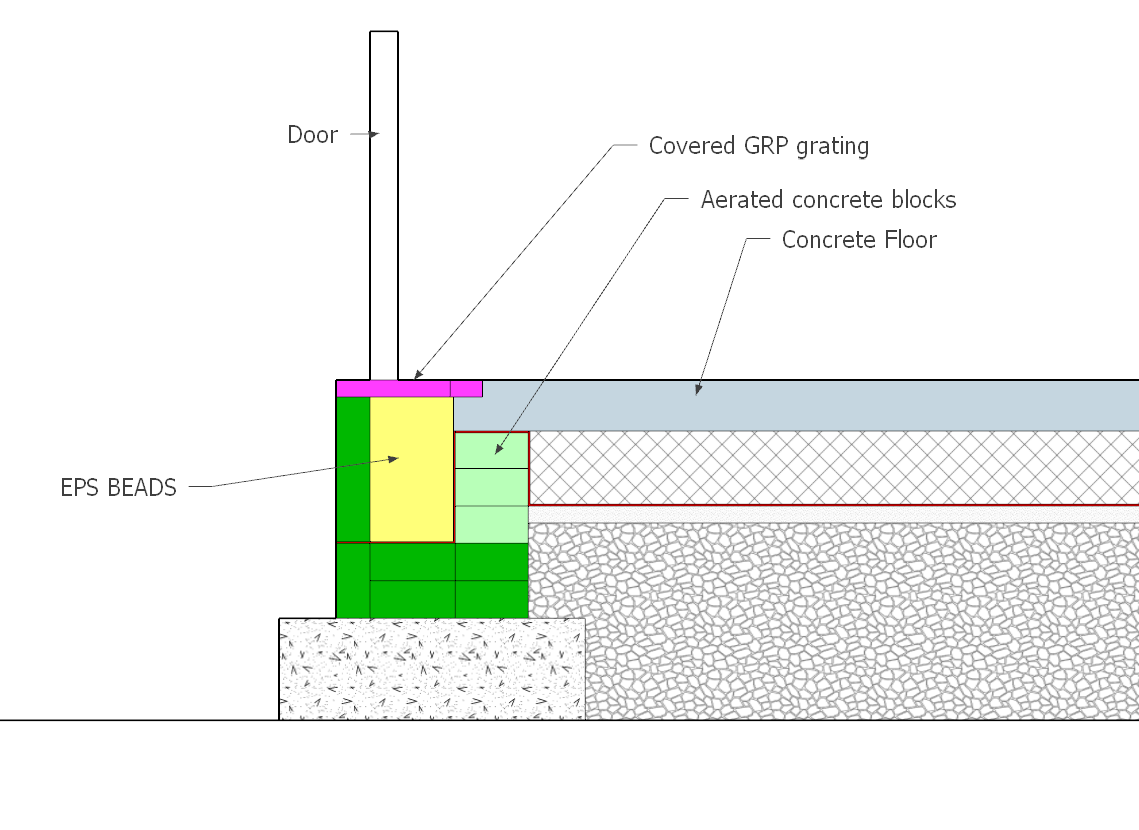
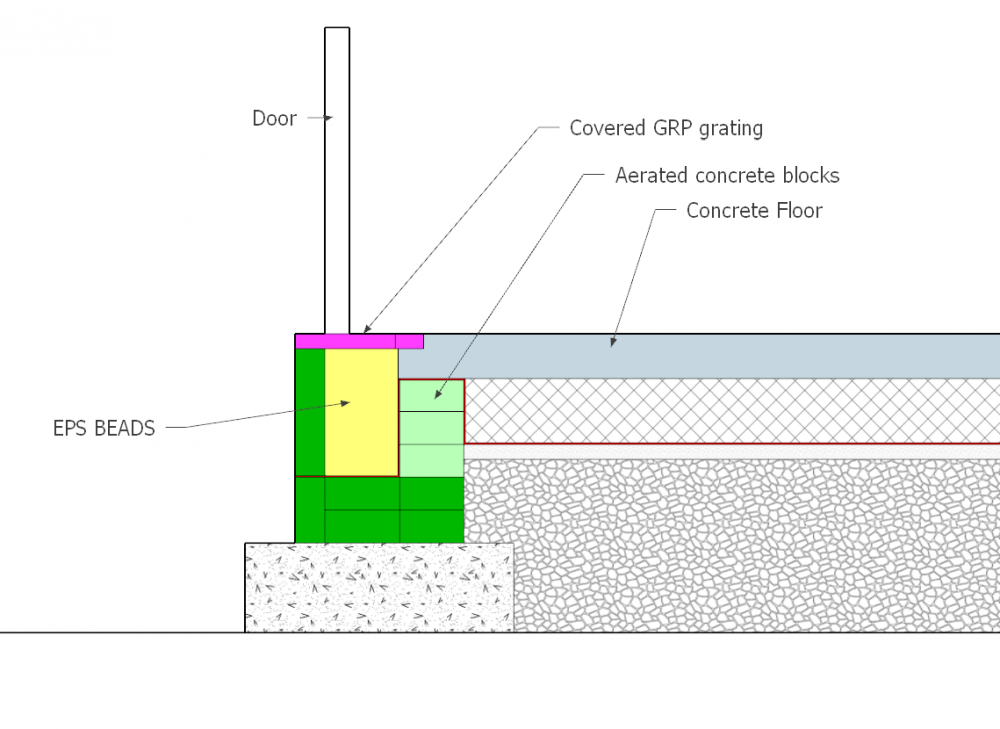
I bought some secondhand GRP grating from ebay and laid it across the cavity, level with the top of the floor. It's proper stuff. Really tough but can be cut with a wood circular saw and suitable dust extractor. This is the detail that ended up being built. A bit messy but works fine in the end. The holes in the GRP covered mesh are filled by the EPS beads. K value of GRP ends up at about 0.065 W/m/K. Below is what I wanted to do. Simpler to construct and better thermally. I was talked out of it by various disbelievers. Early on in the build wasn't belligerent enough to insist I knew better.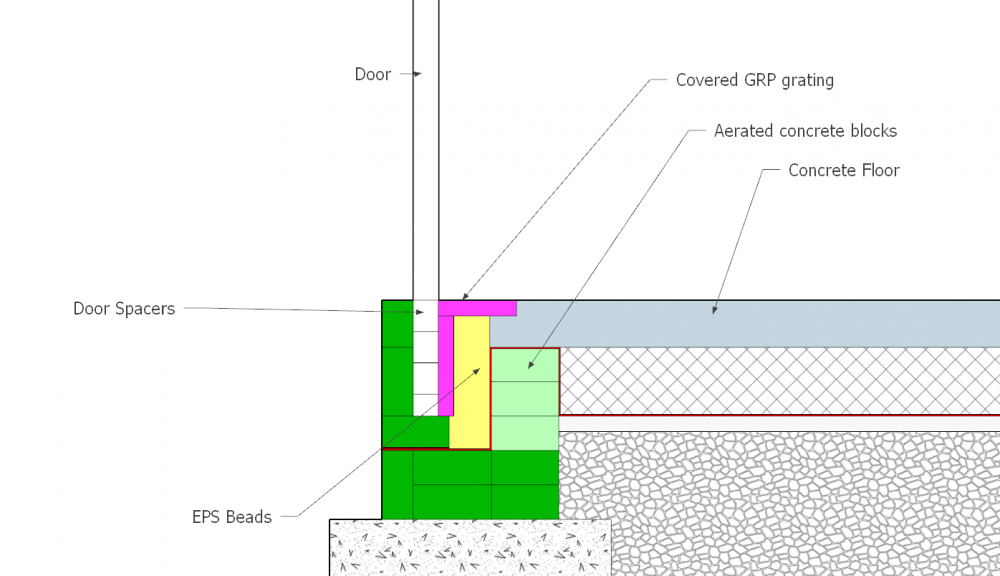
-
What's your final floor build up going to be?
-
Another vote for a proper tractor. Get an old Ford or Massey. They're reliable, cheap to run and go forever. Also you can absolutely abuse them and they just take it and take it. Our Ford 3000 is almost 50 years old, has had little love and I still use it on the farm for all the job's that aren't too big for it. As far as i can tell it need's to be refuelled about once a year! They're probably cheaper to own than a compact utility type and certainly cheaper for parts. Also I'd like to see a baby kubota try and pull a 3 furrow plough!

-
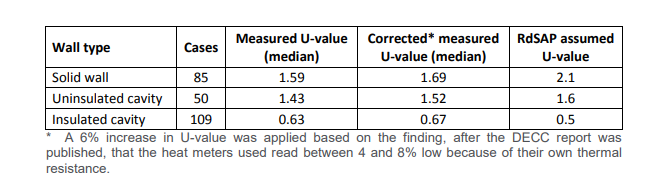
They are crudely sealed at best. Many gaps in mortar and around windows. Also blocks are quite porous. With any wind substantial amounts of air will blow right through them. Good rendering can improve the situation but I wouldn't rely on it. Even on a windy day ? About 10% on average from https://www.bre.co.uk/filelibrary/SAP/2016/CONSP-16---Wall-U-values-for-existing-dwellings---V1_0.pdf True. EWI is expensive, as a rainscreen where most of it's value will be lost through cavity wall thermal bypass. For @House man I think EWI is too disruptive for the benefits you'll likely achieve. I would put EPS blown beads into the cavity. If you want to go further polyurethane foam would add a good level of airtightness and lower U value but it is expensive. Then I'd consider internal wall insulation or EWI if that'd suit better.
-
welcome welcome. Perhaps consider altering that mantra to the less electricity and heating i can consume the better. much better to not to need it rather than have to produce it.
-
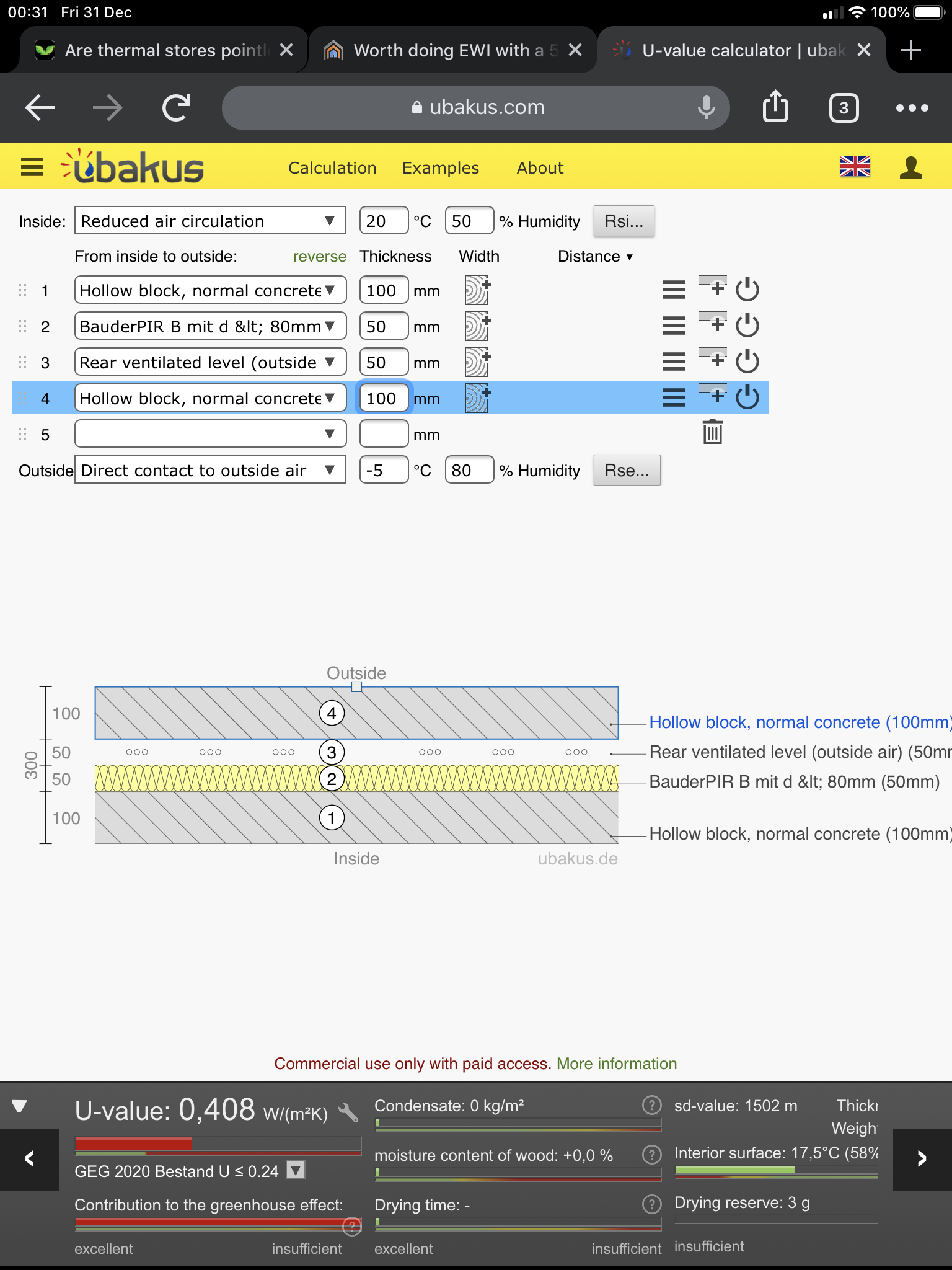
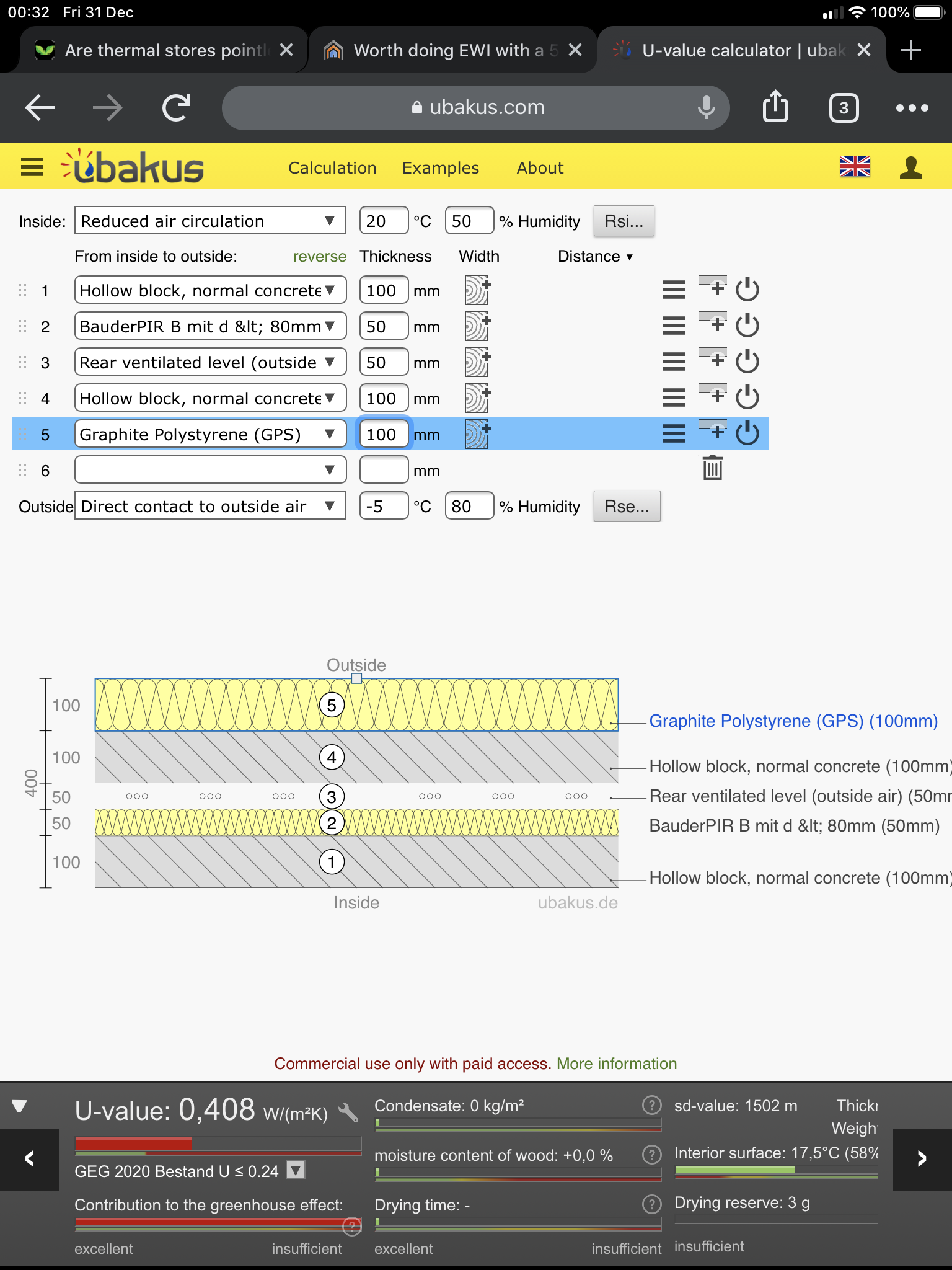
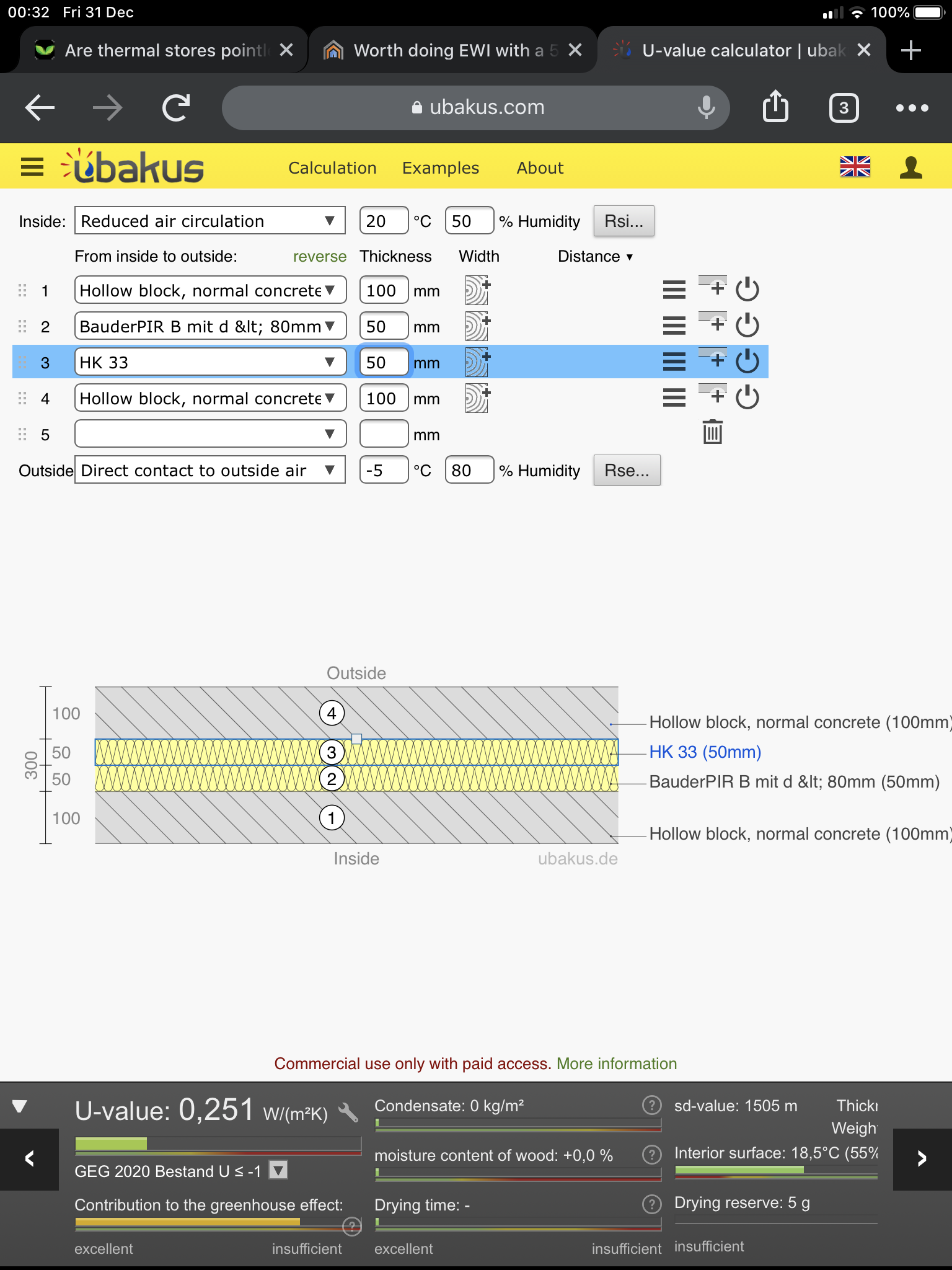
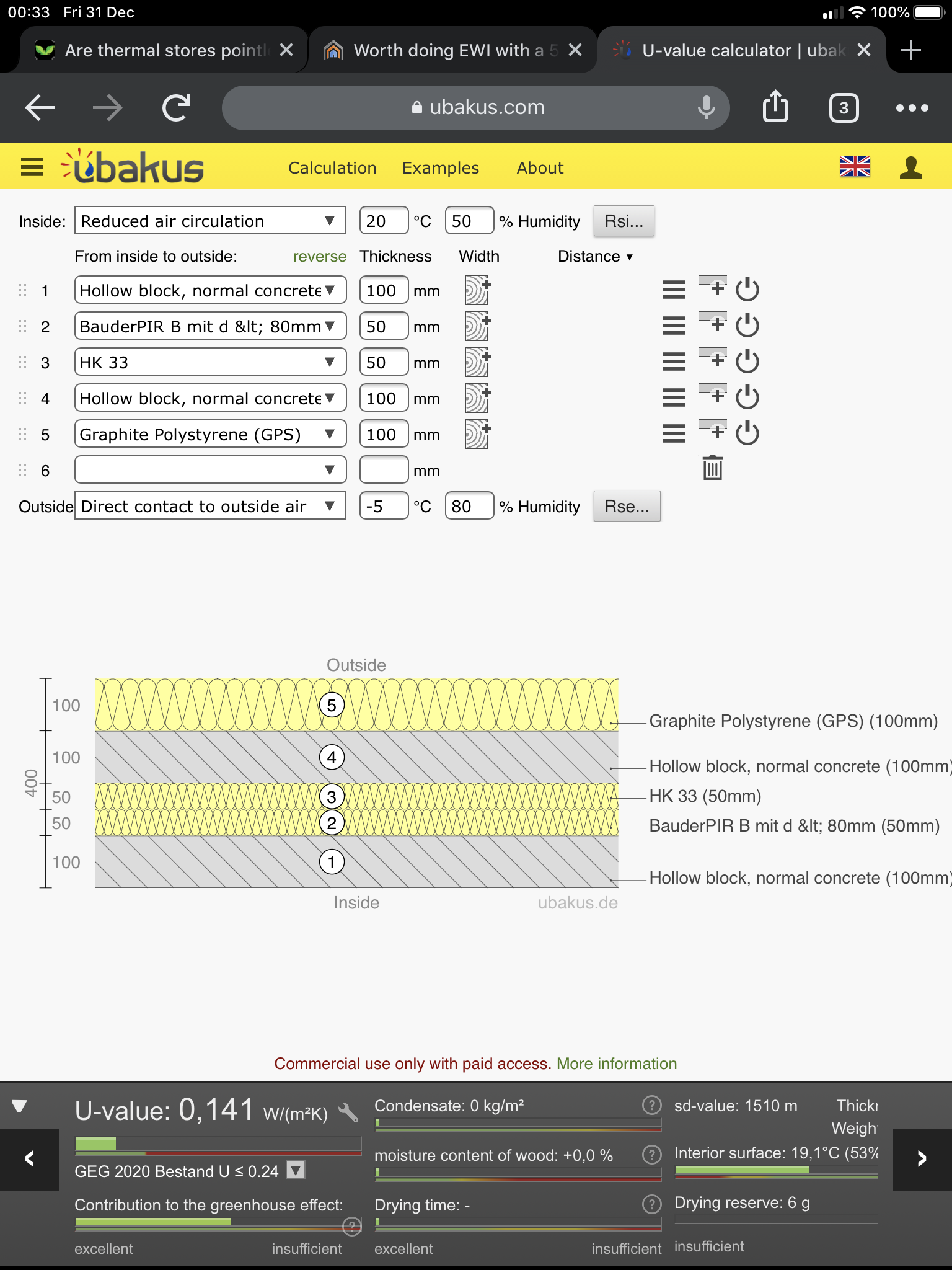
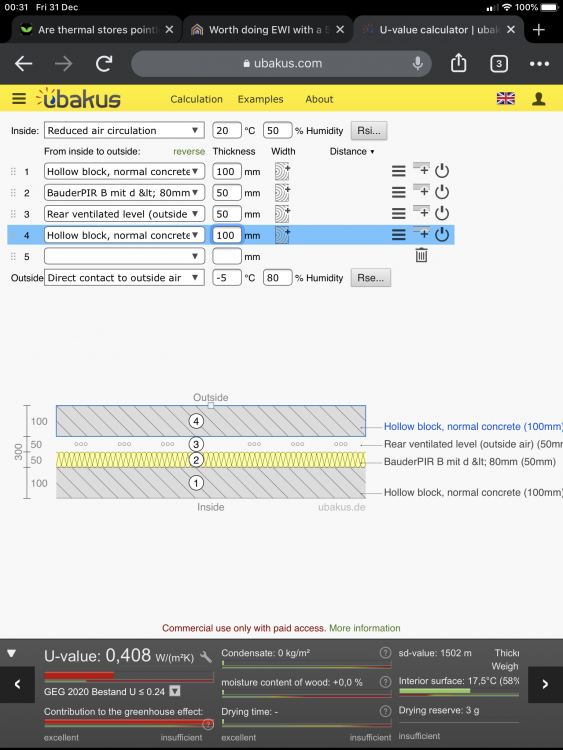
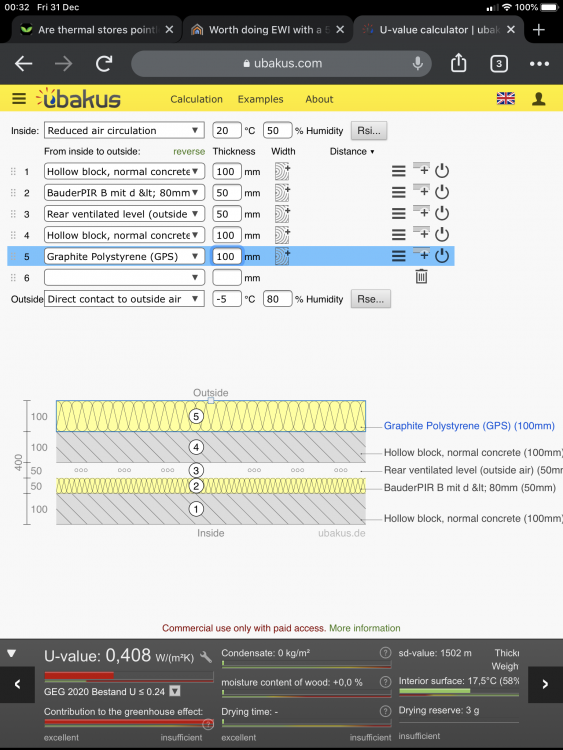
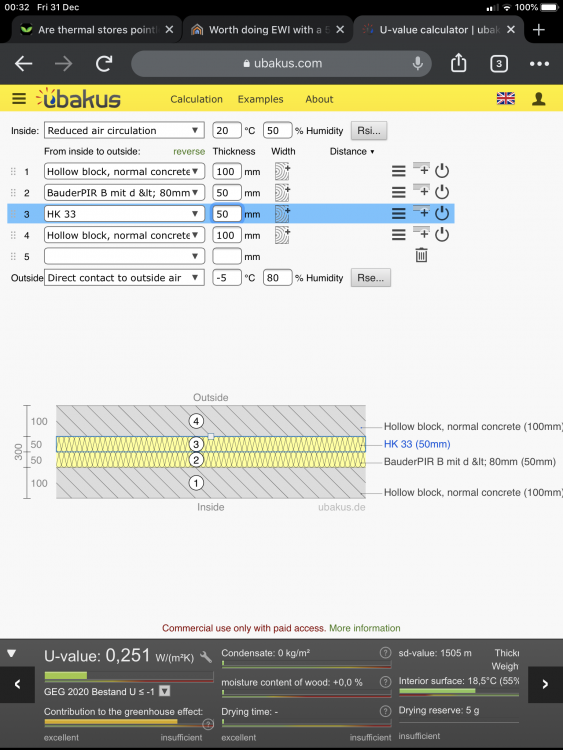
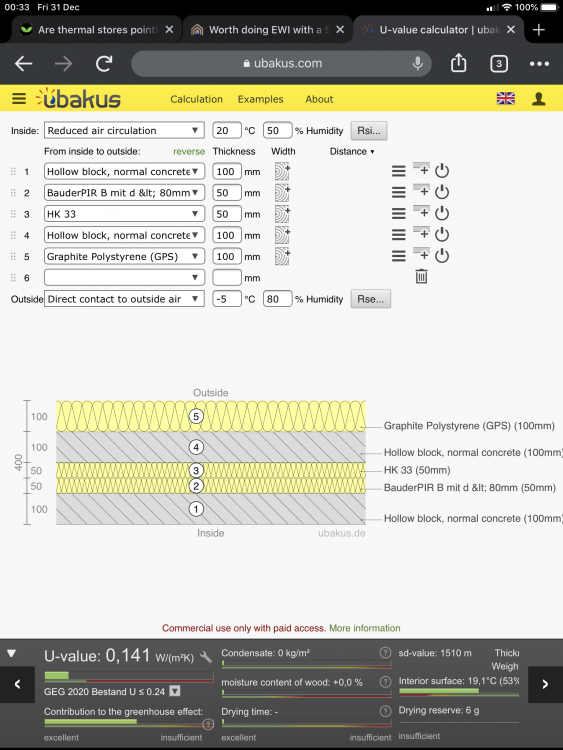
You are correct here. Its pretty pointless unless you fill the cavity or seal it 100% from drafts which is almost impossible. Even with EWI you will have to consider an unfilled cavity as vented. Pump EPS beads or a suitable injected or poured foam into the residual cavity before EWI if you want to realise the full benefit. I had a play with this calculator online. If you could guarantee absolutely zero air movement to inside or outside in the residual cavity, then EWI will help. otherwise its a waste of money.
-
You can build well with any method. The main things to get your designer to Consider are external wall thickness (400mm minimum). Avoiding lots of impossible to detail junctions . Form factor (ratio of surface area to floor area) and appropriate glazing. Many architects whilst having a great eye for design and utility are still in the "oil era" of efficiency and comfort. Great low energy architects are available too. Poor professionals or trades aren't worth taking for free, very good ones are worth what ever they charge.