Jeremy Harris
-
Posts
26430 -
Joined
-
Last visited
-
Days Won
360
Everything posted by Jeremy Harris
-

Heating System Basics...
Jeremy Harris replied to Mulberry View's topic in New House & Self Build Design
Looks like prices have risen by around 15% or more in the last week or two. Not just Calor, but others too. The list I gave is just the energy price, doesn't include LPG tank rental or gas or electricity standing charge (although the electricity standing charge will be paid anyway) -
Heating System Basics...
Jeremy Harris replied to Mulberry View's topic in New House & Self Build Design
Looks like I made an error and used the wrong price for LPG. I'll edit that table to fix the error. Not sure what happened, but it looks like I may have read off the cost for low volume LPG, rather than bulk LPG. -
The house that I grew up in had a larder that just had a cast in place concrete shelf. The whole of the interior was lined with white tiles, including the shelf. At our old house I decided to use large format floor tiles as worktops. laid on to a laminated marine ply base, that was shaped to fit the kitchen, so there were no joints showing. I think the tiles were the size @PeterW mentioned. I laid two rows, staggered by 450mm, to make a worktop that was just over 600mm deep. Finished with a hardwood strip on the front this made for a relatively cheap, but hard wearing, worktop, and the same technique might well work for a larder.
-
Heating System Basics...
Jeremy Harris replied to Mulberry View's topic in New House & Self Build Design
FWIW, we only have UFH on the ground floor, and no heating at all in the bedrooms, but we find that the bedroom temperatures are, if anything, a bit too warm at times, just from heat that rises from the warmer ground floor. With regard to bathrooms, then one thing I wish I had done was fit UFH in ours. The bathroom temperature is fine, no need for any heating really, but having the floor slightly warmed would be nice. I'd not bother to fit wet UFH in the bathrooms, as I think that just fitting low power electric heating mats under the flooring would be fine. They would be cheaper and easier to install, and the running cost would be low, as the need for a bit of heat in the floor is only really for a very short time each day. -
Anyone used online 3D printing services
Jeremy Harris replied to Gone West's topic in Tools & Equipment
My Anycubic Photon seems very well made. Produces very high quality prints, but has a limited build volume and, being a resin printer, it's a bit smelly and messy to use. It's hard to tell the difference between the prints it produces and an injection moulded part though, as there are virtually no 3D printing artefacts.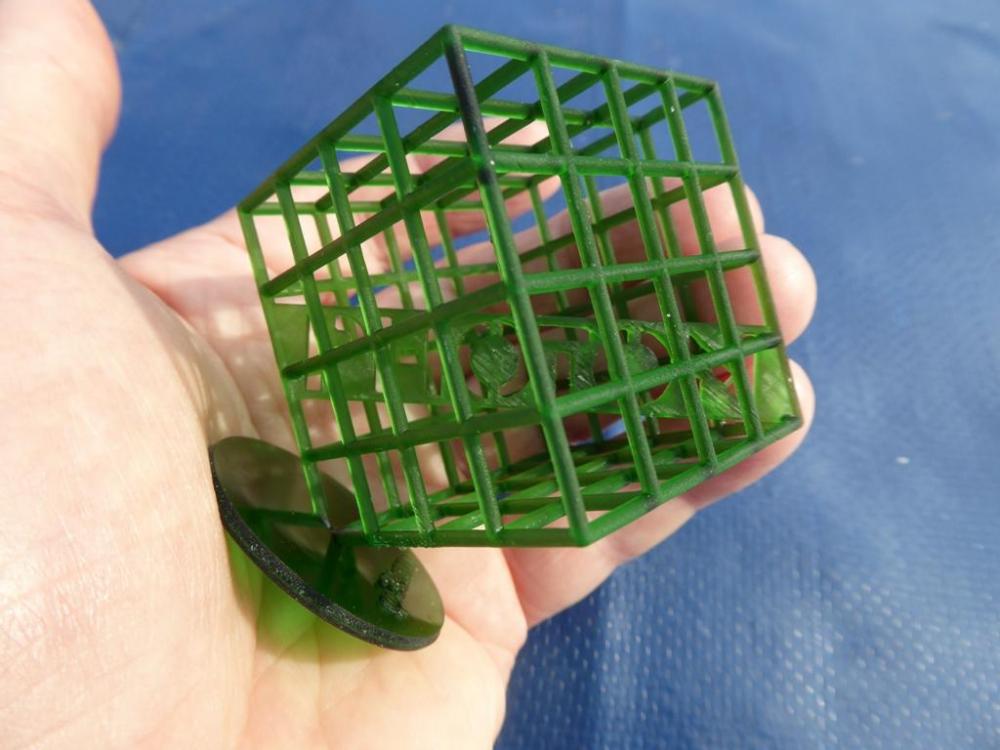
-
Here they are, but the largest is only 50mm, so not much use for lights: https://www.banggood.com/Drillpro-12pcs-15mm-50mm-Hole-Saw-Cutter-Kit-Drill-Bit-Set-p-1038253.html?rmmds=buy&cur_warehouse=UK
-
TBH, the underground stuff seems to solvent weld as well as the above ground stuff in practice. The only reason you're not allowed to solvent weld underground joints is to do with cracking, as underground pipe joints are designed to be able to tolerate a small amount of movement and stay sealed, just to allow for things like clay heave, roots pushing them, etc. One slight issue with solvent welding underground pipe may be that some of it seems to have a core that's a slightly different formulation, it has a orange/brown outer and inner skin over a white core. Not sure quite why some of it's made like this, or whether it has any effect on a solvent welded joint made to the stuff if used above ground, but it might possibly.
-
Locker knob will not not tighten on screw
Jeremy Harris replied to Moggaman's topic in General Joinery
Ooh, err.. not sure about stiff knobs on a family forum like this.... ? -
Sunamp UniQ HW+i experience? Charge via ASHP?
Jeremy Harris replied to oranjeboom's topic in Energy Storage
Really glad to hear it's all working well (and sorry for the delay in replying to the PM - my inbox here seems to fill up quickly!). I can confirm that since Sunamp resolved the issues with the controller firmware and sensor chain, our Sunamp UniQ eHW has been working very well indeed. The difference between the way it performs now, and the way it performed before the controller change is like night and day. We're now finding that our Sunamp is charging a bit during the E7 boost time, as our PV production does the usual and falls off the October cliff, although we've pretty much had 100% solar provided hot water until fairly recently, so we can't complain. We're on target for a sub-£80 annual hot water cost, which seems pretty reasonable, as we don't skimp on using hot water at all. -
Locker knob will not not tighten on screw
Jeremy Harris replied to Moggaman's topic in General Joinery
Should have mentioned that, as I had a spray can of it, plus the same stuff in a thing like a fat felt pen, when I was fixing our oak architrave mitres with high viscosity superglue. BTW, I can strongly recommend hidden fixing architrave this way, worked a treat, no problems at all in the ~5 years since I fitted them and no fixings visible. -
Locker knob will not not tighten on screw
Jeremy Harris replied to Moggaman's topic in General Joinery
I've recently found that superglue is very good for this. Takes a bit of patience, but dripping superglue into the hole in the knob, with it propped up to the hole is facing upwards, will very effectively harden the wood around the hole. It takes a while for the superglue to cure sometimes, but once it has, and the wood around the hole is nice and hard, adding a bit more superglue to the screw thread, and then screwing the knob on pretty quickly, usually results in a pretty strong repair. If you can use two different types of superglue for this, a low viscosity one to soak in and harden the wood, and a higher viscosity one on the screw thread, to fill the gaps better, then it will be a bit easier. Having used loads of different types of superglue, I'm now sold on the EverBuild stuff stocked by Toolstation, amongst others. It seems to have a reasonable shelf life, but best of all the nozzle on the bottles doesn't seem to get clogged. -
Too much of a good thing
Jeremy Harris replied to daiking's topic in General Self Build & DIY Discussion
That it wasn't installed by @Onoff? -
Slightly, but if you turn off the AC, then turn off the DC at the isolator nearest the panels, then do a dead check, you're safe enough. Usual golden rule applies - never, ever, assume a switch works, always test to be sure it has! Second golden rule - never use a voltage detector pen/screwdriver, they are notoriously unreliable.
-
On the subject of hole saws, albeit smaller ones, I recently bought a cheapo set from China, that seemed as if they might have carbide teeth. As the set of 12 cost less than £13 delivered (from a UK warehouse) I took a punt. I'm simply amazed at how good they are. They seem to cut very cleanly, even when used on stainless. They do seem to all have brazed on carbide teeth. Goodness only knows how they can be manufactured, shipped and sold for this price. Only go up to 50mm though, so not much use for downlights.
-
Heating System Basics...
Jeremy Harris replied to Mulberry View's topic in New House & Self Build Design
Yes, over a period of a few hours the IR system will be exactly the same as any other heating system. Over time, all the stuff inside the house gets up to temperature, and from then on the heat energy input, for any heating system, will just equal the heat losses, less the incidental heat gain from the occupants, appliances etc. The latter can be very significant for a well insulated house with decent airtightness and MVHR. For quite a lot of winter days two occupants plus a couple of hundred watts of heat from appliances etc is enough to keep our house comfortably warm, with no heating needed. -
Sounds a lot of money for a device that is pretty simple and has no moving parts. In essence it's much like a plug hole turned on its side, that's designed to always create a flow-limiting vortex when it gets totally submerged. Just had a look at the design calcs, and it seems a pretty easy thing to design and fabricate for any limiting flow rate. I can't find list prices, though, for off-the-shelf units. We had concerns expressed about surface water drainage, with good reason, as the stream alongside us has been known to flood in very heavy rain. I used the rainfall intensity data in Part H3, together with the surface areas involved, to work out the size of attenuation tank we needed, added a bit to make it a nice round number of heavy duty crates, and then just buried the crates, wrapped in suitable permeable membrane, under the drive. The one area of permeable soil we had in one corner of the hole where the crates are (the rest was clay) gave a suitable permeability in terms of both allowing the attenuation tank to drain within a reasonable time, and in terms of not releasing water that ultimately flows underground to the stream at a rate that's high enough to add to storm surge related flooding. Just a pity that we have a few houses further up the hill behind us who don't have something similar. Several, fairly large area, hard surfaced drives up there feed torrents of water on to the lane, turning it into a fast flowing stream in heavy rain (and washing loads of debris down that ends up at the end of our drive).
-
Just tuck the cables up out of the way. If the cables are doubled up on themselves and folded up they will usually stay well away from any hole saw. Our joists were 225mm deep, IIRC, and the hole saw's only about 50mm deep, if that, so there's plenty of space to tuck the cables well out of the way usually.
-
Heating System Basics...
Jeremy Harris replied to Mulberry View's topic in New House & Self Build Design
Pretty easy to do some basic running cost comparisons for different fuels. Just comparing cost per kWh of heat delivered (so allowing for boiler efficiency, heat pump COP, etc), then these are the approximate heating costs, excluding standing charges or tank rental (for all-electric heating this should really be apportioned across all electricity consumption, as it will be paid anyway): Peak rate electric boiler running UFH = £0.15726/kWh LPG fired boiler running UFH = £0.08471/kWh Off peak (E7) electric boiler running UFH = £0.08148/kWh Oil fired boiler running UFH = £0.07647/kWh ASHP at peak peak rate running UFH = £0.05242/kWh Mains gas boiler running UFH = £0.04274/kWh ASHP at off-peak (E7) rate running UFH = £0.02716/kWh For all the above the ASHP was assumed to be running with a COP of 3. In reality, ours seems to run at a COP of ~3.5, so a bit better than these figures suggest. The electricity cost figures above are for our E7 rate, so may well be different in other areas/for other tariffs. -
When designing the house and choosing stuff, I ended up selecting most of the outside stuff, for some reason, and I felt it was a bit unfair, so decided that SWMBO should be encouraged to have a free hand in choosing the kitchen, bathrooms etc stuff. Within a day or two I found our budget had grown a lot - something like £7.5k just for the work surfaces and window cills in the kitchen...
-
Had this discussion with our plasterers. I left all the cables looped up in the ceiling void (SELV DC, so no Part P concerns...) and had a plan showing the exact centres of each light. The plasterers were adamant that they very much preferred there to be no holes at all in the ceiling when they skimmed it. Worked OK, only thing I found that needed care was selecting a decent hole saw for the cutouts. The first one I tried chipped the plaster a bit. I switched to one with very much less set in the teeth and that was a great deal better.
-
Looks like the two strings are wired in parallel to me, so OK in terms of max voltage. The usual reason for wiring two strings to two separate MPPT inputs on the inverter is if the strings may produce slightly different outputs, from being differently aligned, or if the strings are of unequal number of panels (for example our system has12 panels in one string and 13 panels in the other). In this case, I doubt there would be the slightest difference if the two equal strings were wired to separate MPPTs. There might be a miniscule difference from the very slightly reduced voltage drop in the separate 4mm² DC wires, but not enough to be able to detect, in terms of performance, I suspect. No reason not to do it if you wish, though, especially as it looks as if you can isolate the panels to make the downstream wiring safe to work on.
-
Several of us here of of much the same mindset, try not to line the pockets of too many people who advocate that you "must" use their (often expensive) services in order to be able to self-build. Time spent researching, learning about planning policies, building regulations, legal and other issues around plot purchase, as well as construction techniques and options, can save a fair bit of cash. Because most self-builds are a single home, the added cost of some professional services can make the difference between the home being affordable or not. There are certainly some builds where professional services are needed, but equally there are many where they aren't, as long as your prepared to learn and have access to the resources needed to help. One of the objectives of this forum, perhaps it's primary objective, was to provide a support network, where information could be freely shared, so that self-builders and renovators might feel more able to do more of the work needed themselves. The cost savings by doing this can be significant. For example, we ended up (not by choice) not using an architect or planning consultant. This cost saving more than paid for our solid oak kitchen with Silestone surfaces and all the fitted appliances. Not a saving to be sneezed at for a few hundred hours spent doing some research.
-
I have a tremendous amount of sympathy for anyone that's put their life and soul into a home, only to see the next owner pull it apart. It happened to a lovely house a few hundred yards up the lane from us. We'd marvelled at the superb kitchen they'd had installed, clearly a few tens of thousands of pounds worth. Two years later the first thing the new owners did was rip the kitchen out. I walked past and saw the kitchen smashed up, sitting on their drive in the rain. Enough to make you weep.
-
There's a growing body of evidence that the chemical injection "damp proofing" systems aren't effective, much of which may be because the damp wasn't ever "rising damp" in the first place, but penetration coming in from somewhere higher. My brother had the same problem with water in the garden. He had a big pond, that his kids had stocked with all sorts over the years, and had loads of enjoyment from. When he came to sell the surveyor recommended that the pond be filled in, as it presented a risk to small children. My brother did fill it in, as he felt that doing this was easier than risking losing the sale.
-
One thing I found over a period of around 2 years spent plot hunting (over a pretty wide area) was that all my initial ideas about build methods and materials went out of the window, as so much depended on the nature of any particular plot. We ended up with a timber frame, but that was a million miles away from my initial thoughts when we first started seriously thinking about self-build. The sort of considerations we had to take into account ranged from the ground conditions (one plot we seriously considered would have needed something like screw piles to make any economic sense) through to fairly restrictive planning rules (being in a conservation area, area of outstanding natural beauty, adjacent to a listed building, etc). Although you can probably make a timber frame build fit in with most planning or site constraints, it may be that building using other methods makes more sense in some locations. For example, the conservation officer here was insistent that we build the house from Chilmark stone. As this was very expensive (the quarry only opens for special orders) I found some historical evidence that previous buildings on the site (which stood there for around 100 years or so) were timber clad, and also provided evidence that several of the nearby houses, including the listed building opposite, were partially, or wholly, timber clad, so this was in keeping with the local vernacular. The CO and planning officer were fine with this, so that then led to us considering timber frame. You can certainly win arguments with planners, I found, as long as you read and understand the policies that apply. A reasoned argument as to why you should do something, showing that it's compliant with policy, is hard for them to argue against. It doesn't automatically lift all the possible constraints, though, hence my view that the plot really plays an important part in the design, and perhaps construction, of any house.