Jeremy Harris
-
Posts
26430 -
Joined
-
Last visited
-
Days Won
360
Everything posted by Jeremy Harris
-
Welcome, can you please reply to the PM sent when you joined.
-
At the start of our build, after about half a dozen trips to Screwfix in as many days, they asked if I wanted an Electricfix card. I mentioned that my quals were a bit old, they said no problem, just bring them in. Next trip in I pulled out a ratty C&G chit from 1977 and they duly gave me a card...
-

Uponor balancing using return lockshield
Jeremy Harris replied to DIY_Amateur's topic in Underfloor Heating
Enough to deliver about 1.045 kW of heat with a temperature differential between flow and room of 5°C. We run our three floor loops at ~2.5l/m each, with a temperature differential of ~2° to ~3°C, so in total the UFH will be delivering between ~1 kW and ~1.6 kW when running. -
In addition to the heating pay back time for an ASHP, over something simple like a Willis heater or two, there's also the value of the cooling an ASHP can provide. We find this invaluable, and I think our ASHP spends more time in cooling mode than it does in heating mode. Hard to put a value on this, but I think if we didn't have the ASHP I would have had to install another air con unit to cool the downstairs of the house, particularly during that hot spell we had a few months ago.
-
Yes, but wiring regs aren't, so failing to comply with BS7671 isn't an offence. Also, the approved documents (and Part P is an approved document) are not the building regulations, they are contained within the Building Act 1984. The approved documents are just a recommended way of demonstrating compliance with building regulations, but they aren't the only way to demonstrate compliance.
-
It's illegal to do it yourself, I believe. Unlike DIY electrical work, which may be just a breach of regulations that aren't law, doing work on gas pipework or appliances is a criminal offence unless you're Gas Safe registered, I think.
-
There's a reasonably good UK forum here: http://www.mycncuk.com/
-
Charging points (rate of installation)
Jeremy Harris replied to Temp's topic in General Self Build & DIY Discussion
However, most wood burning for heating happens in residential areas, so the relative air pollution impact is greater than road transport, where the highest density of traffic is on major trunk routes and motorways, which tend to run for most of their length away from connurbations. -
Charging points (rate of installation)
Jeremy Harris replied to Temp's topic in General Self Build & DIY Discussion
The cable comes out right at the very edge by the curb, from the cut out there. The parked car's wing mirrors present more of an obstruction. -
Glad it arrived OK.
-
Charging points (rate of installation)
Jeremy Harris replied to Temp's topic in General Self Build & DIY Discussion
All road vehicle transport emissions in the UK amount to about 20% of harmful air pollution. Burning wood for fuel is responsible for ~18% of harmful air pollution in the UK. Curious thing is that you can still get a government subsidy for burning wood to heat a home... -
Charging points (rate of installation)
Jeremy Harris replied to Temp's topic in General Self Build & DIY Discussion
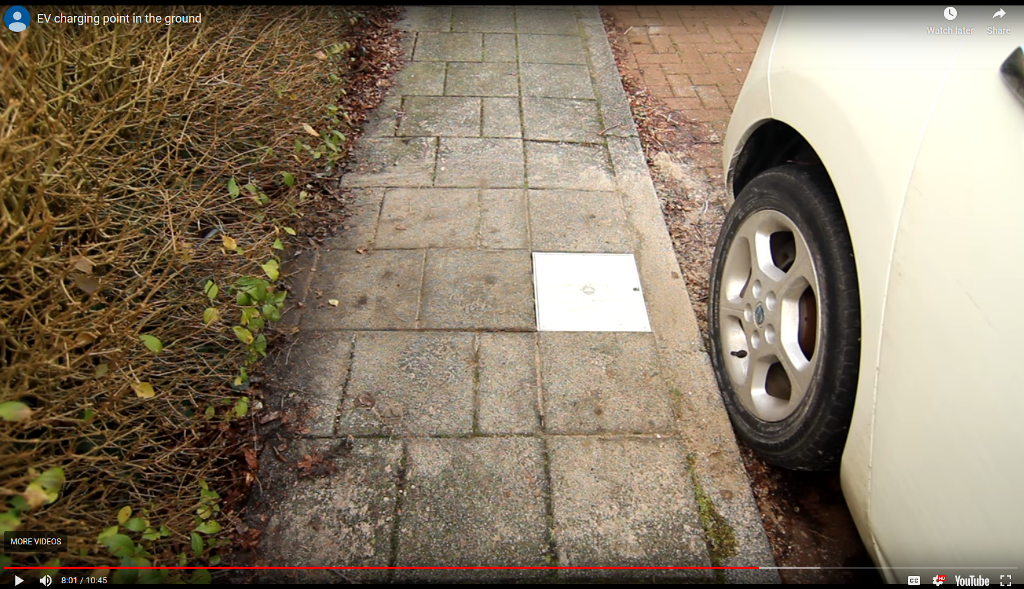
Yes, black LR AWD, without FSD, but with the black premium interior. Couldn't justify FSD, as I don't think it will be a great deal of use here for some time. I also didn't think knocking just over a second off the 0-60 time was worth the extra cost of the Performance model, either. I reckon 4.4s to 60 is quick enough for the lanes around here. Hard to see how they could have any problem with something that presents less of a hazard to a partially sighted person than a paving slab: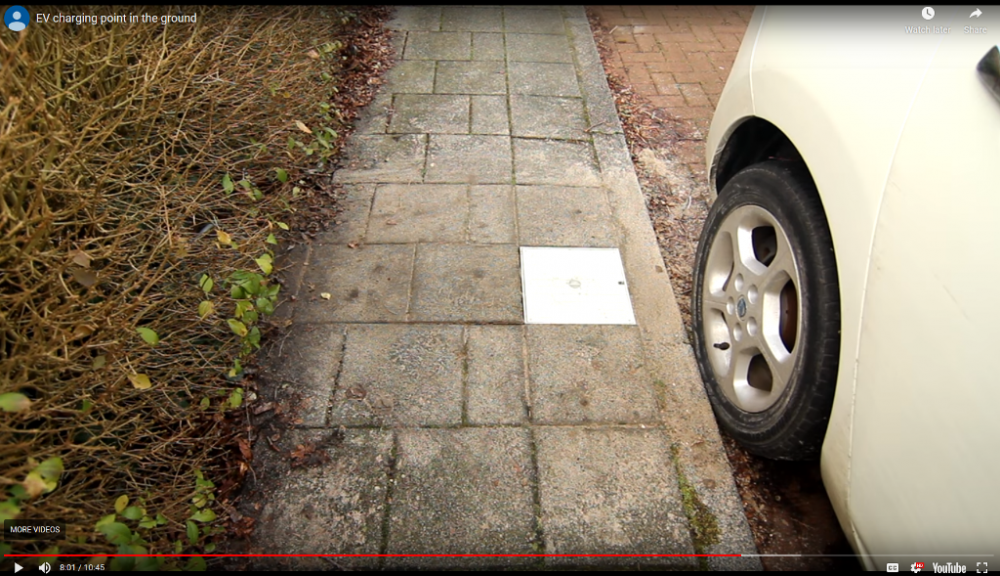
-
Charging points (rate of installation)
Jeremy Harris replied to Temp's topic in General Self Build & DIY Discussion
First year VED is free, from the second year onwards VED is £370/year, at the moment (may change in the next budget). -
Charging points (rate of installation)
Jeremy Harris replied to Temp's topic in General Self Build & DIY Discussion
Just to be clear, the road tax on the EV I've recently ordered is £370/year after the first year, so not free. Charging at a Tesla Supercharger is billed at 20p/kWh, charging at home typically costs around 8p or 9p/kWh at off peak rate, so the only free charging will be that which comes from our solar panels. All public on route charge points charge for electricity, usually between 20p and 30p/kWh, but it varies, as some have a fixed minimum charge. -
Charging points (rate of installation)
Jeremy Harris replied to Temp's topic in General Self Build & DIY Discussion
I didn't mention payment, of course you pay! The clever bit is that the account of the registered owner of the car automatically gets billed as soon as the connector is plugged in. The secure billing data is transferred via the connector data line, with the car identifying itself to the charger, which will only start to charge once the vehicle identity has been verified. It's much the same as the tags used for toll payments by regular users. -
Charging points (rate of installation)
Jeremy Harris replied to Temp's topic in General Self Build & DIY Discussion
Long journeys are the Achilles heel of an EV, for sure. Ecotricity have a monopoly on all motorway services, and have an absolutely appalling reputation for reliability, plus they aren't exactly fast chargers, even when they are working. Dale Vince needs a kick up the backside, and either booted off the motorway services network, or "encouraged" to actually install charge points that work reliably, and at a decent rate. The reason that Tesla are doing so well, has a lot to do with their Supercharger network. When you can just rock up somewhere like here: plug in (no need for cards, codes or anything) charge up in half an hour whilst having a cup of tea etc, and carry on, then it makes life a heck of a lot simpler. Coupled with a range of over 300 miles on a charge means that only one charge/rest break is likely for any long journey.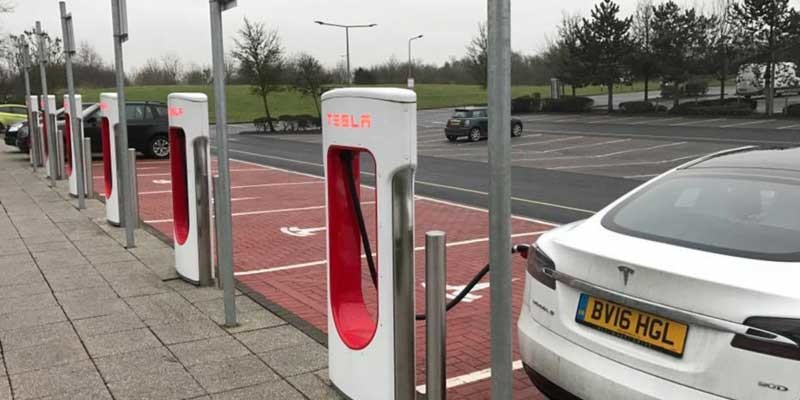
-
Charging points (rate of installation)
Jeremy Harris replied to Temp's topic in General Self Build & DIY Discussion
Pretty much all EV batteries are recycled, so their component materials get re-used. Got to make more sense that pumping millions of tonnes of oil out of the ground, shipping it all around the world, then burning it and not recycling anything -
Charging points (rate of installation)
Jeremy Harris replied to Temp's topic in General Self Build & DIY Discussion
The estimated world wide amount lithium available is around 65 million tonnes, enough to build around 3,250,000,000 Teslas, without recycling any of it. Other EVs use less of the stuff, there's enough to build about 6,000,000,000 BMW i3s. The reserves are all over the place, but vary in the ease with which lithium can be extracted. It seems likely that Australia, Chile and Argentina will remain the biggest producers; currently they have ~75% of the exploited reserves. The biggest EV battery factory is currently in the USA, not China, although it seems likely that the BYD factory in China may overtake the Gigafactory next year, although China still has a way to go in terms of producing high capacity, long life, cells. -
Charging points (rate of installation)
Jeremy Harris replied to Temp's topic in General Self Build & DIY Discussion
I can't see why they would cause any disability-related issue. No different to all the thousands of service access covers we already have in pavements, really. This video shows a chap installing one in The Netherlands: -
Charging points (rate of installation)
Jeremy Harris replied to Temp's topic in General Self Build & DIY Discussion
The Dutch are allowing charge points to be installed in boxes in pavements by home owners. Seems a reasonably enlightened approach. Fairly easy to do in most cases, just a trench across the pavement with a small box set in near the kerb. The box has a weatherproof socket in, that can be accessed by lifting the lid. Power can be turned on or off from inside the house, which stops someone else from just charging at the home owner's expense. I've seen a fair few pavements with channel drains cut across them, so allowing something like that to take a charge cable would seem pretty easy to do, practically. Wouldn't cost a lot, either, just half an hour with a disc cutter to make a groove into which some form of cable channel could be inserted. -
Fixing a back-box onto fresh air (well, nearly)
Jeremy Harris replied to ToughButterCup's topic in Power Circuits
I'd be inclined to stick a bit of thin ply to the foam (a bit of 4mm to 6mm ply would do) and then screw the box to that. PU bubble glue works very well for stuff like this. -
Charging points (rate of installation)
Jeremy Harris replied to Temp's topic in General Self Build & DIY Discussion
I'm not convinced that we need vast numbers of fast, on route, charge points, TBH. Very few EV owners charge a lot when away from home, most seems a bit like me, and charge almost exclusively at home or at a destination (as in an overnight stop). On route charging is invaluable, but unlike petrol or diesel powered cars, not the most common means of "refuelling". In about 11 months of EV ownership I've only used an on route charge point a couple of times, as almost all charging is at home, with a bit being at hotels when we've been away. -
Charging points (rate of installation)
Jeremy Harris replied to Temp's topic in General Self Build & DIY Discussion
Home or destination charge point installations take between a couple of hours to a day absolute maximum to install, and the vast majority of EV charging is done at a home, or destination (workplace or hotel) charge point. No need for DNO involvement most of the time, either (other than notification afterwards in some cases). The average time taken seems to be around half a day. It all depends on how easy it is to get a cable from the CU to the charge point, really, as that's the most time consuming bit of the job. Actually installing the charge point and earth rod, then testing it, is less than an hour's work. Roadside charge points seem to be going in reasonably quickly now, too. Tesla converted all their Superchargers in the UK to CCS in a couple of months, ready for Model 3 deliveries, and they seems to be rolling new Supercharger parks out fairly quickly, often with a at least half a dozen fast charge points. There are over 27,000 public charge point connectors available now, and that number is increasing at a rate of about a dozen or so new ones per day. There are currently just under 10,000 public charge point locations. Decent fast charge points, like the Supercharger network, or perhaps Ionity when it really gets going, can charge a car in less than half an hour (the latest Superchargers can add ~70 miles range in 5 minutes). As these come on stream the number of charge points per location becomes less critical, as charging times will be significantly reduced. The major waste of money by government was to subsidise the installation of car park slow charge points. These are a complete waste of money, as at best they only charge at around 28mph, and the charge cost is often around 25p to 30p per kWh (or more, as many have a fixed minimum charge). No one seems to use any of our local car park charge points, as there's no point, really. I can charge at home for around 2p/mile (or much less, if the sun's shining), so why would I want to top up with less than 30 miles of range for nearly 4 times the price? Some car park charge points are even slower, for example the ones in Amesbury charge at just 14mph, and have a minimum charge of £6 to use them, so an hour parked there will get just 14 miles of range at about 43p/mile, which is completely bonkers. -
It's pretty easy to look at PVGIS ( https://re.jrc.ec.europa.eu/pvg_tools/en/tools.html ) and see what your predicted generation will be. PVGIS is fairly accurate, I've found it to be within a few percent of what we usually generate.
-
Charging points (rate of installation)
Jeremy Harris replied to Temp's topic in General Self Build & DIY Discussion
Currently there are only around 200,000 EVs on the road in the UK, and most of these will probably have a home charge point. The rate of growth seems to be quite high, ~100,000 since 2017, and that seems to be increasing quickly. If we assume that the number over the last year was about 75,000, then that's around 200 installations per day, given that not all owners have a home charge point. It looks as if the installation rate has to increase a lot, but that will be partially offset by new homes being built with charge points (not sure when this becomes mandatory, it's still at the consultation stage I believe). The biggest problem is all the homes that have no off street parking. No one has yet come up with the perfect solution for this, and the few pilots that have been carried out haven't been a great success (not enough EVs around being part of the problem I think). There are an increasing number of EV drivers who just rely on fast charging on route, especially amongst the Tesla fraternity, it seems. Not something that would work for us, I find home and destination charging very easy, plus it meets ~95% of my charging needs.