Jeremy Harris
-
Posts
26430 -
Joined
-
Last visited
-
Days Won
360
Everything posted by Jeremy Harris
-
It's a pity that they don't still supply the older valve we have, as it works very well. I particularly like the way it senses the supply temperature from within a deep pocket inside the supply manifold, as this seems to allow a slightly faster warm up, as the valve opens fully until the supply manifold itself has reached the set point. It controls well at 25 deg C, which is the number "1" on the dial, but isn't that happy at 24 deg C, and tends to hunt around a bit. Looking at the valve it seems to be a remote sensor 3/4" thermostatic radiator valve, but there's no obvious manufacturers name I can see now it's installed.
-

Solicitor use - Self build
Jeremy Harris replied to aims's topic in Party Wall & Property Legal Issues
My experience of using solicitors for plot purchase was not great. In general, the conveyancing staff at the solicitors will probably be unfamiliar with dealing with plot purchases, will have a lack of knowledge about things that are always an issue, like boundary positions, and overall they add very little value to the process. Both plots we looked at, and where we had instructed a solicitor, had problems that the solicitor didn't help with at all. I'd go so far as to say that you're far better doing all the investigation work yourself, as at least that way you can be sure that you understand all the issues. You absolutely cannot rely on a solicitor to undertake all the checks needed for a plot purchase, as they are unlikely to pick up critical issues. -
Website designers who think it's effective to have a high bandwidth video start in virtually full screen mode need to be banished to the countryside and be forced to endure rural "broadband" speed. Perhaps then they'd realise that a fair part of their target market just clicks away from the website when it fails to load after 30 seconds................
-
If you get a company to provide a package of work, which is what we did, then they should zero rate the whole job, so you don't pay any VAT. The same goes if you take this approach for the build; in our case the supply and erection of the foundations and frame included some costs that, if we'd contracted for them separately, wouldn't have been zero rated. For example, there were structural engineer costs for the foundation and frame where the VAT wouldn't have been reclaimable, had we contracted for them separately, but because these were included in the one contracted build package they became zero rated.
-
The same applied for our build; we have a "negative energy" house (it makes us more money for exported energy than it uses over a year) and yet the fabric of the house didn't cost any more than a conventional build would have, in fact one architect who asked to see the cost breakdown got back to me with a comment that he thought the building fabric cost was perhaps 10% lower than he expected for our area.
-
Land registry and boundaries
Jeremy Harris replied to Vijay's topic in Party Wall & Property Legal Issues
The OS man turned up at our build before completion and spent ten minutes with a survey GPS and tablet noting the location of the house and the new boundaries. Since then I've seen the same chap around the local area several times. I was interested to see that the OS had bought a fleet of hybrid Yaris cars for their surveyors - my other half has one. -
Buying from plan or fences
Jeremy Harris replied to Vijay's topic in Party Wall & Property Legal Issues
My experience, with the two plots that we looked at in depth (including the one we bought) was that both had large boundary errors. The Land Registry plans were massively in error for both plots, one having a 14m boundary error, the other having a 5.5m boundary error. In the first case we withdrew our offer and wrote off the expenses we'd incurred, as it was clear the error was going to take a couple of years to sort out (complicated because a public footpath had been moved). In the second case our plot purchase was held up for around 12 months whilst the vendor sorted out the boundary error and got the Land Registry Title Plans corrected for both the plot and the adjacent land. We ended up paying for a boundary survey, just to prove to the vendor that there was a big error on the Title Plan. -
If you are running these ducts through Posijoists, then I found that big cable ties around the duct and joist web seemed to work pretty well.
-
Not really a proper test, but I fitted one of these: http://www.clothesairerstore.co.uk/index.php?main_page=product_info&cPath=21_32&products_id=122 in the utility room, above the sink and work top, with an MVHR extract terminal directly above it. I've dried hand-washed towels on it and they always dry completely over night. Because the extract duct is right over the centre of the drier I suspect towels dry more quickly than they would on a towel rail. On the topic of towel rails, I managed to find a wide one (1300 wide, 400mm high) that will (hopefully) overcome the problem of towels being on top of each other. I fitted the smallest electric element I could find to it, and have it connected to a time switch (outside the bathroom). I'm hopeful that this will be enough to dry towels OK, but I'm sure that some will end up in the tumble dryer, just to get them fluffy.................
-
That's the same valve and manifold as ours, and it does hold down to 25 deg C OK I've found. It seems significantly better than an ordinary thermostatic mixer valve in this application, because it remotely senses the internal temperature of the supply manifold, with the capillary probe. The only downside I've found is that when little power is being drawn from the UFH, that valve shuts right down and presents a fairly high flow resistance to the ASHP, which would cause an over-pressure trip on ours, until I fitted a bypass valve. Works very well now, though.
-
I was about to raise the dreaded "fluffy towels" issue, too....................................
-
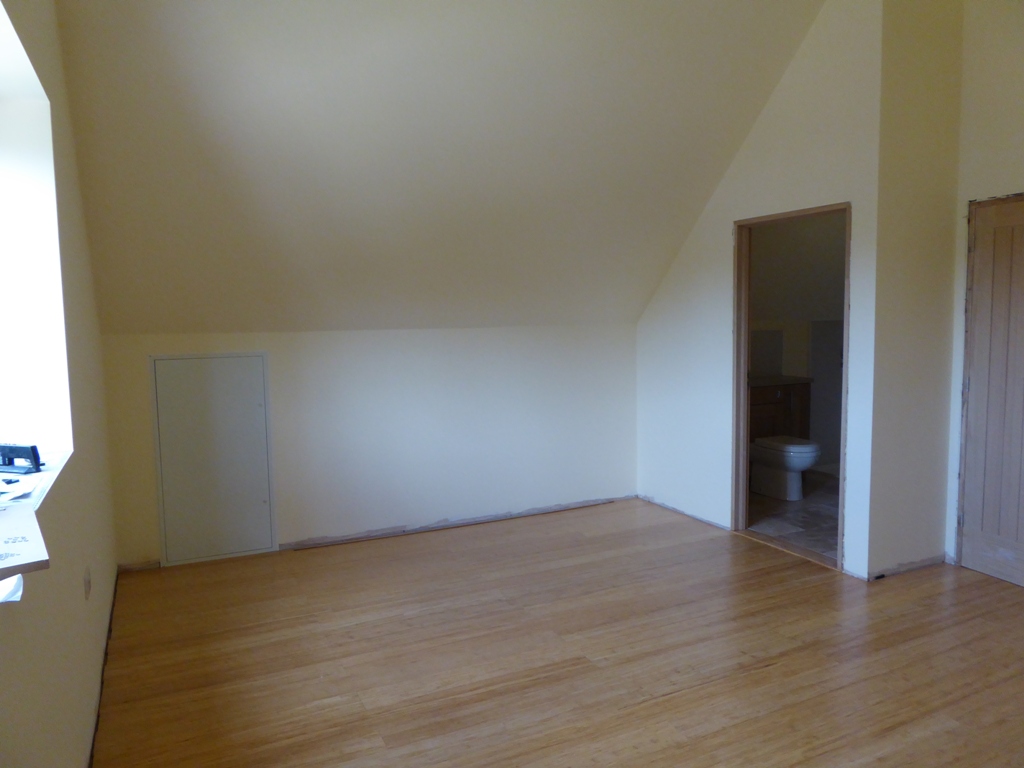
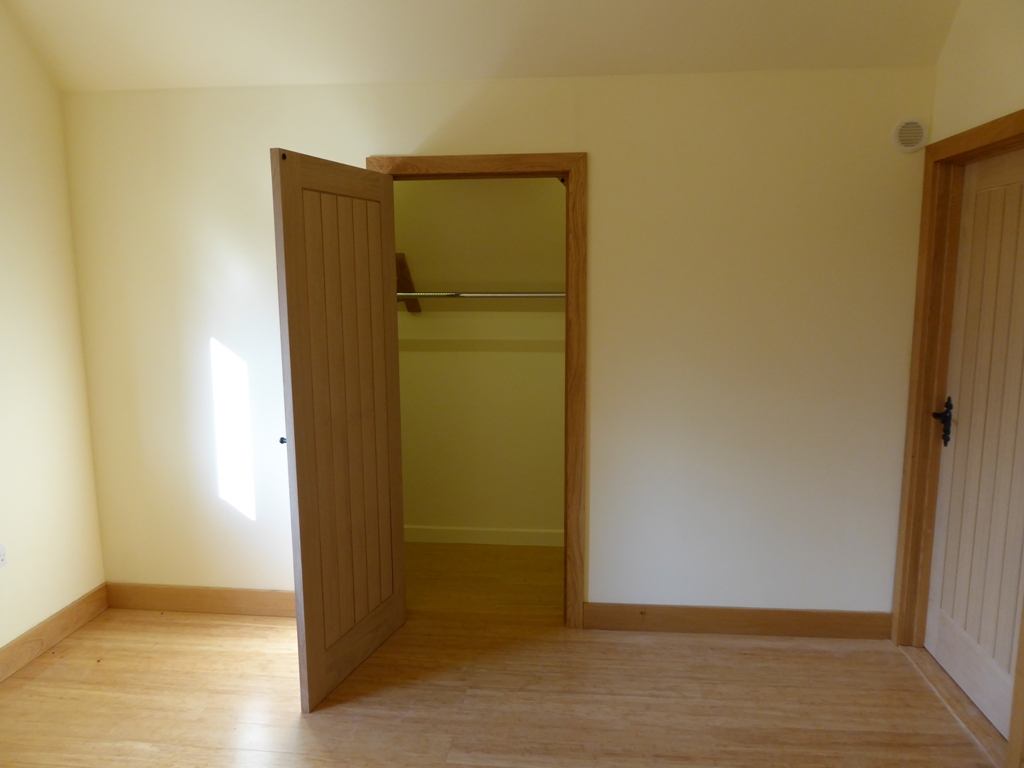
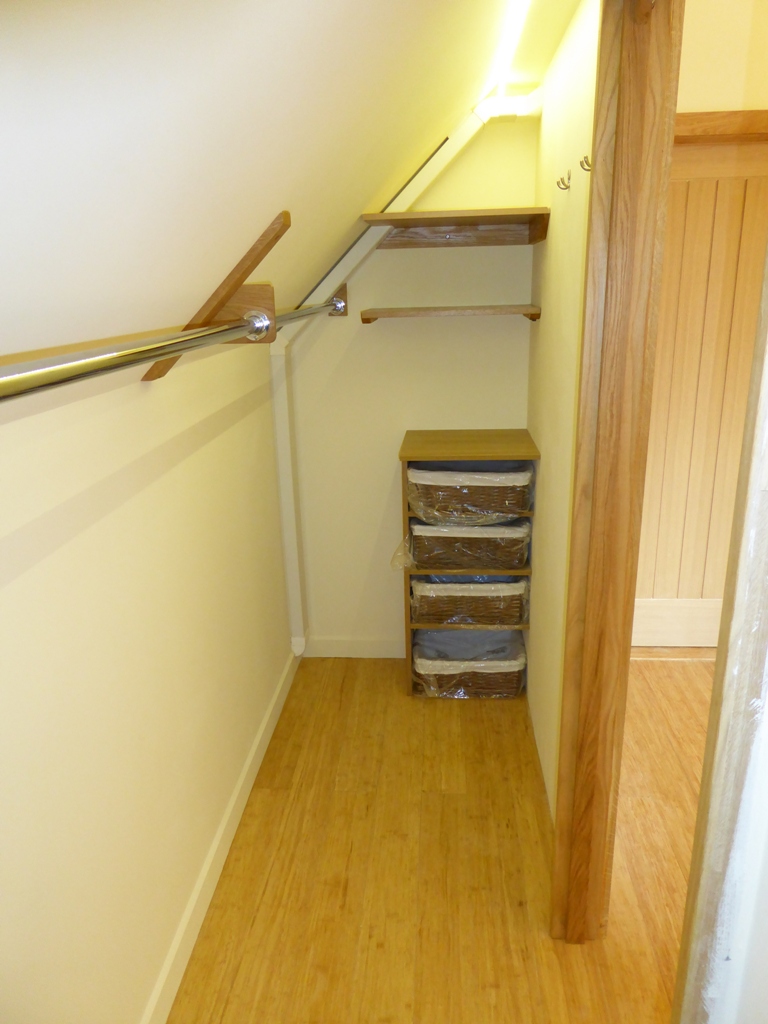
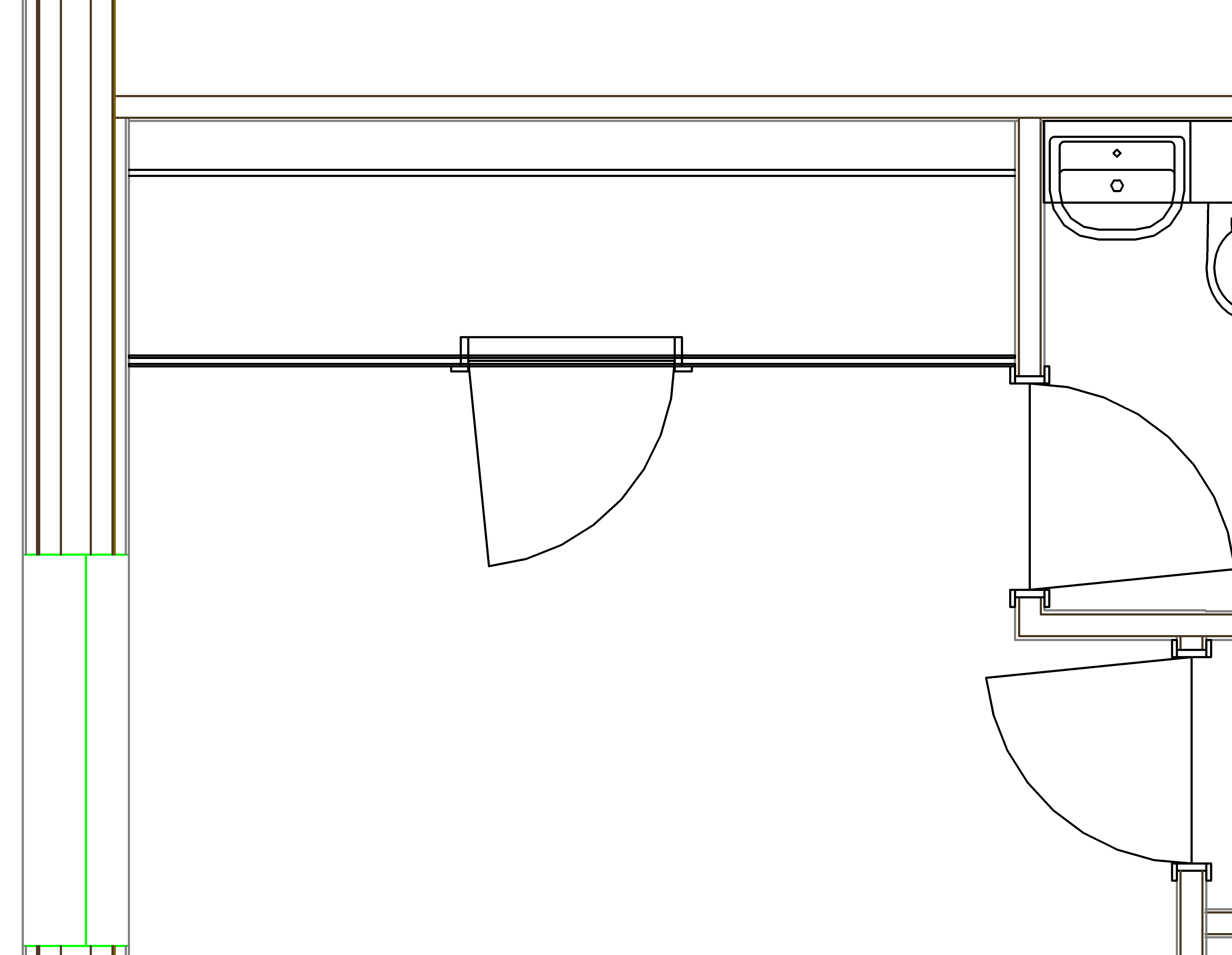
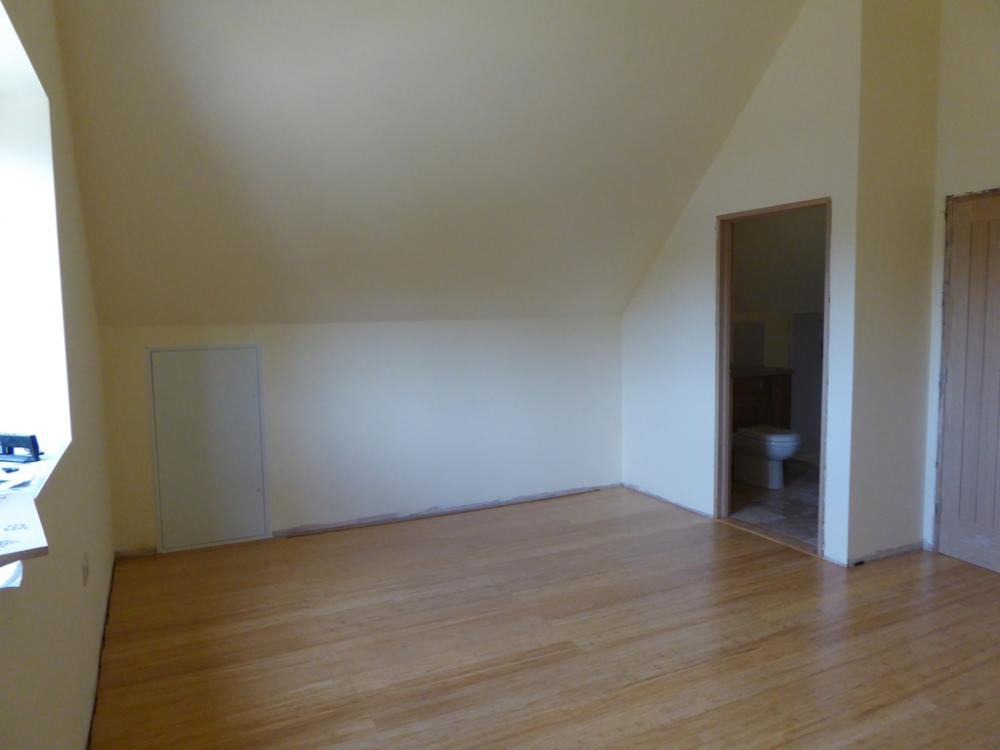
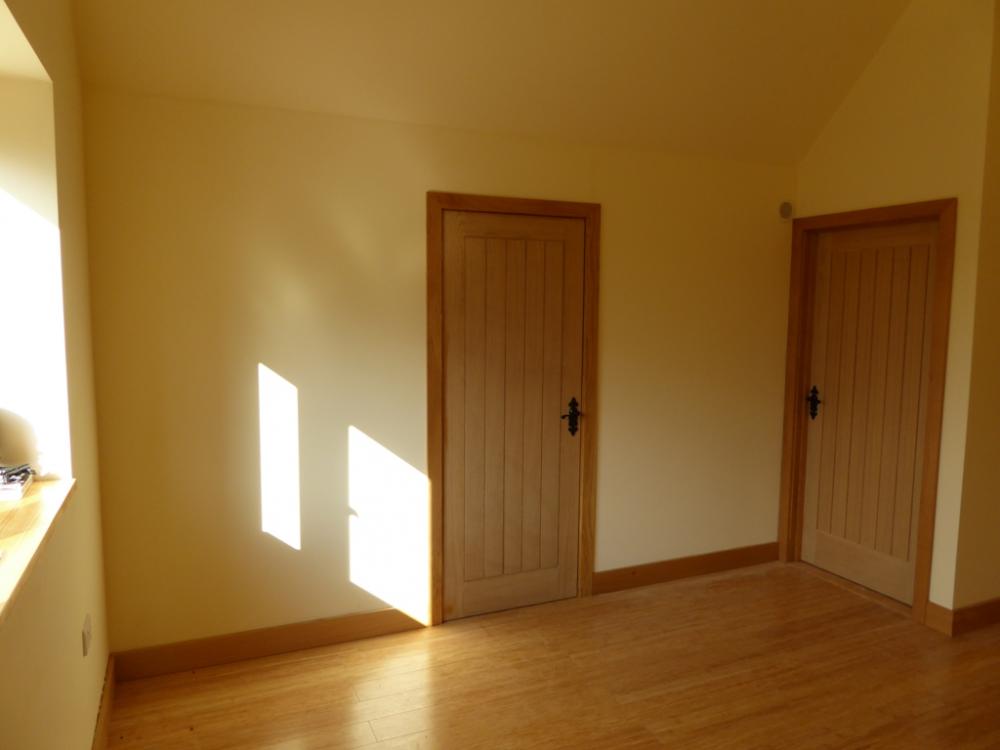
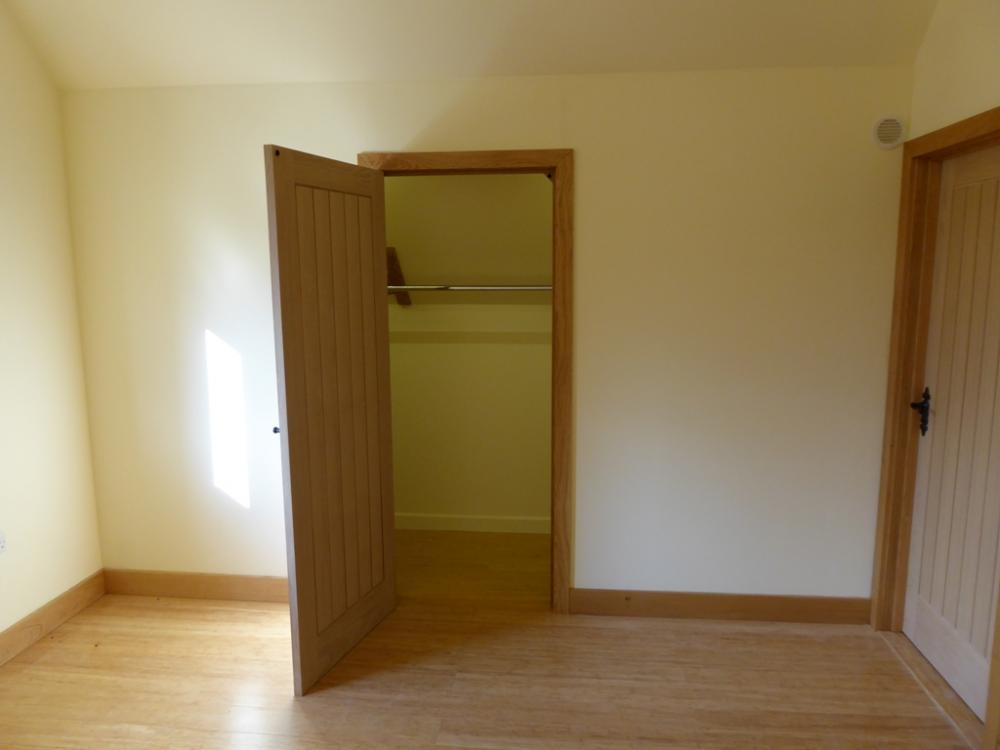
Here are the photos from that Ebuild post: Before making and fitting the wardrobe (the hatch is the access to the eaves space where most of the services run) After fitting the wardrobe (all the rest of the photos below are of the semi-finished wardrobe)
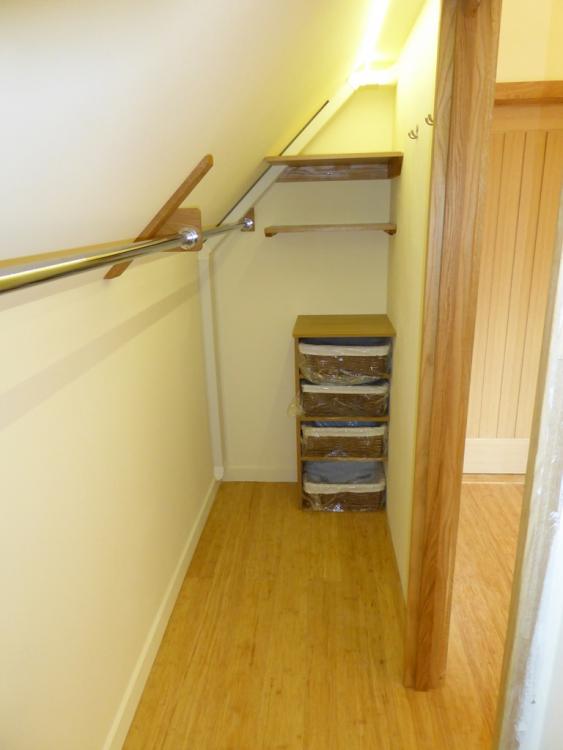
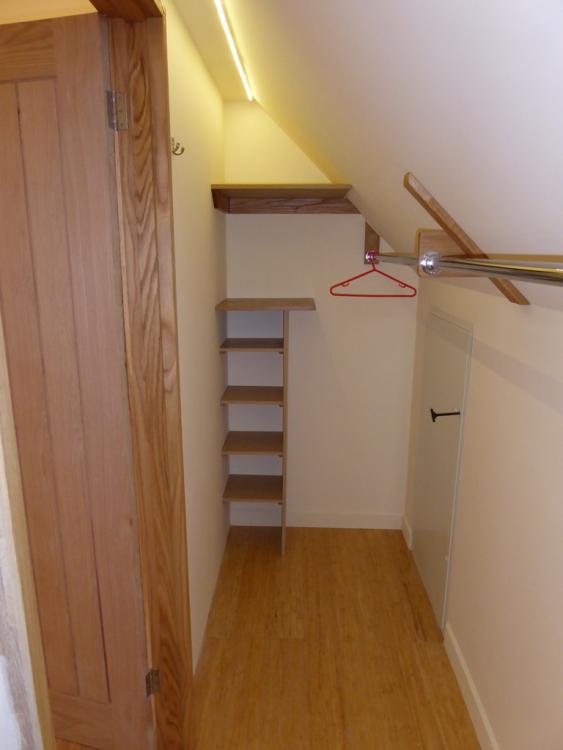
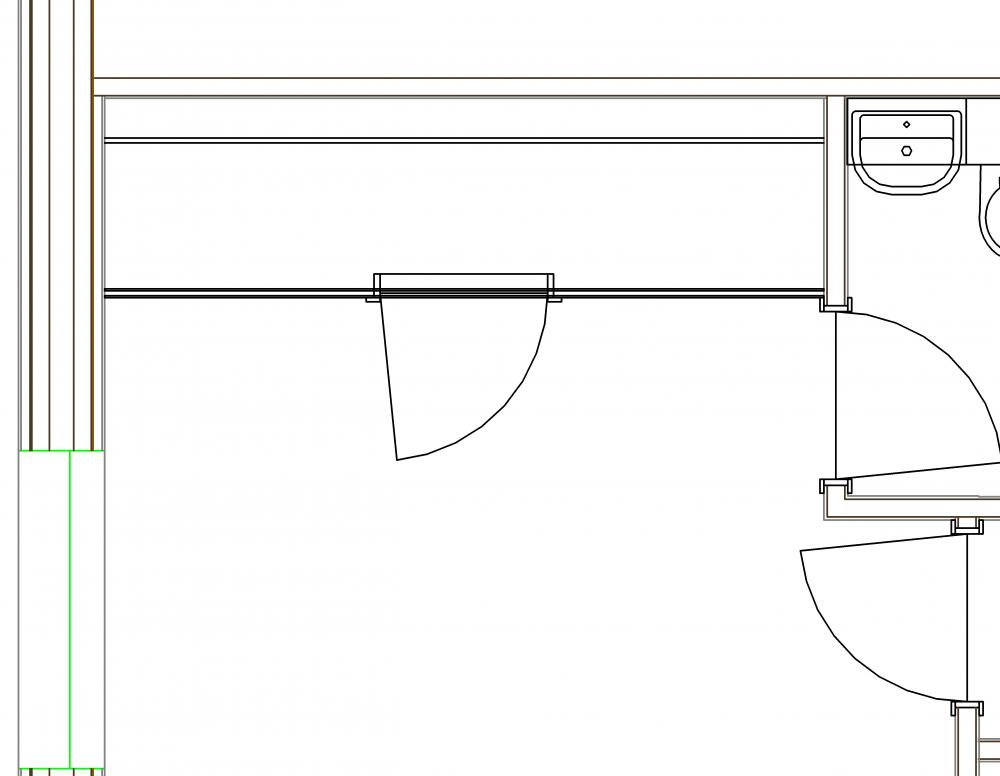
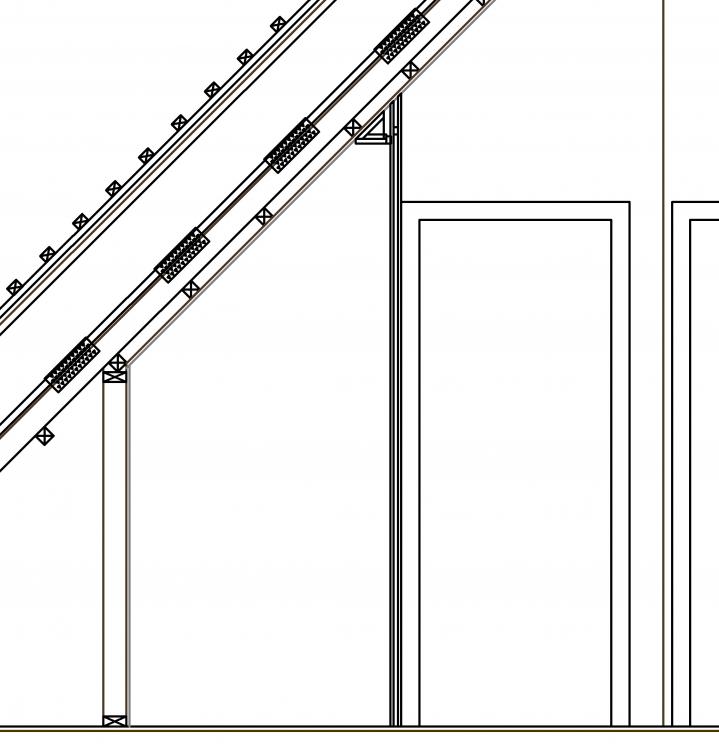
-
Any one else have problems with Jewsons?
Jeremy Harris replied to Leaway's topic in Building Materials
My experience with Silverline stuff is that any tool they flog with a cutting edge will be about as useful as using soft cheese, and any tool they flog that needs any strength may as well be made from wet spaghetti. I guess that even Silverline can flog a usable lump hammer, though..................... -
Glad to hear there's a simple solution to getting the tape to adhere, and that there's no need to undo the work that's already been done.
-
That quote has all the discounting hallmarks of the older double glazing companies. About 20 years ago we rang around for quotes for half a dozen new windows. I was stupid enough to include a well-known big name (beginning with "E" and ending in "t"). Their shiny-suit salesman turned up one evening and right at the start I said I didn't need a sales pitch, but could he just measure up and let us have a written quote. The bloke insisted he had to go through his pitch, as it was company policy. He duly wasted an hour trying to convince us of how wonderful his windows were, then measured up, produced a quote, saying that it was a "one time special offer, half the normal price" if we signed up right now. I said sorry, but I wanted to choose after having received other quotes. He then repeated that the "special offer price" only applied if we were to sign up right away. I refused again, and he asked if he could use our phone to call his manager (this was at around 8pm). He came off the phone saying that his manager had authorised him to reduce the price by another 20% if we signed up straight away. Again I told him that we wouldn't and he, very reluctantly, left. We had already decided that no matter what we weren't going to buy from that company, just because of their sales practices. A week later we got a phone call from him again, saying that they were running a "very special offer" and could knock another 50% off the price, as long as we agreed to our house being photographed (pointless, as the new windows would be all at the back). The next house where we wanted new windows I sent out written invitations to tender to half a dozen local companies, with the explicit instruction that any attempt at high-pressure sales would disqualify them. Worked a treat, as we got a small, local, company to do the job, at a good price and to a high standard.
-
I'm afraid I don't. We don't have a VC membrane in our build, it uses a vapour permeable board internally as the VCL. There doesn't seem to be any info from Ampack on the detailed performance of this membrane that I've been able to find quickly.
-
Design Help - Plumber not helping
Jeremy Harris replied to DeeJunFan's topic in Other Heating Systems
Worth looking at the ASHP controls, as you may find that it has a DHW setting. Ours has, there's a dry contact for heating and a separate dry contact for DHW. The temperatures for both are set by the ASHP command unit programming, so you can set a weather compensated heating flow temp if you like (there are various preset curves, plus the option to define your own custom curve) and you can set the DHW temperature when it's in DHW mode. All you need do then is use a valve operated microswitch to select the DHW or heating contacts, as required. -
Reading the data sheet I'd agree with you, it does state clearly that it has to be fitted smooth side facing in. I do not like the idea of having tape on the outside face of the membrane at all, that may well be against the tape manufacturers instructions, too. With the rough side inwards, taping around any penetrations going through the membrane later will be impossible.
-
The smooth side is the only side that tape will adhere to, which is why the MIs say to install it smooth side in. How are they taping the joints in the membrane? Airtightness tape probably won't adhere well to the rough side.
-
Controlling underfloor heating in passive house
Jeremy Harris replied to dogman's topic in Underfloor Heating
Don't forget that I spent over a year trying to fine tune the slab control system. I know, beyond doubt, what is possible and what is not possible, not in theory, but in practice. The key issue is that this is not anywhere near as simple a challenge to find a solution for as I originally thought it should be. There is no way on this planet I'm going back to using a complex control system, been there, done that, and run around in circles in the process. We now have a reliable, simple, off-the-shelf, control system that works - it maintains the house at a steady temperature with very little variation, and certainly not a big enough temperature variation to be noticeable. I will admit to being a bit annoyed at just how well the simple control system works, having invested a great deal of time in trying to get the rather complex, multi-sensor control system to keep the house at a steady temperature. My switch to the simple room stat control came about by accident, in part, as I loaded a very simple on/off room temperature control code into the microcontroller system one Friday, simply because I wanted to stop the house getting too cold whilst we were away for a break and the system was still failing to reliably control the house temperature. When we came back from holiday and I downloaded the logged data I was more than a little surprised to find that the simple room stat code had done a far better job of controlling the temperature than any of the complex multi-sensor strategies I'd been playing with over the previous year. That finding, together with a decision we made whilst away, which was to take out as much customised, home-built stuff as possible, and replace it with off-the-shelf alternatives that anyone could fix, led to the system we have now. I've no intention of changing it, mainly because it just works very well. I'm afraid that I have no appetite left for installing critical components in the house that are not fairly easily serviced or replaced when I'm not around to fix them. Had I managed to get the original microcontroller system to work as theory suggested it should, then I would have been the critical failure point for the whole house heating system, if something happened to me their was every possibility that the house system could fail and there would be no way of fixing it. It is very easy to fall into the trap of over-thinking things, just because you can, I found. Sometimes the best bet is to just take the simplest solution that's available off-the-shelf and use it, even if you do think you can do better. -
I can confirm that the Wilo is a lot quieter than the same size Grundfos. We have a Grundfos (the newer low energy model) on the UFH, and that pump is in the utility room, downstairs. On the DHW preheat system I fitted the same size pump, but a Wilo, and it's much quieter; so quiet that it's very hard to hear when it's running. When the time comes to replace the UFH pump then I'd fit a Wilo, just to reduce the noise (not that the Grundfos is really noisy, it just makes a slight noise that I'd like to get rid of).
-
Controlling underfloor heating in passive house
Jeremy Harris replied to dogman's topic in Underfloor Heating
Not sure what you mean by "blender", all I have is the standard Wunda remote sensor thermostatic valve on the input to the manifold, controlled by a capillary pipe in the upper (supply) manifold. There's no way I can run the supply to the UFH at 30 deg C, as the room temperature overshoot from doing that is pretty massive. If I let the supply temperature go no higher than 25 deg C then things stay reasonably well-controlled, and 24 deg C supply temperature is better (but the valve does have a problem trying to hold 24 deg C, so it tends to fluctuate a bit). What happens is that the thermostatic valve pretty much closes after a few minutes, because the supply manifold reaches the set point temperature, and the flow resistance increases on the ASHP circuit. Before I fitted the bypass valve, the ASHP would then turn off with an over-pressure fault, because it sensed that the flow resistance was too high. I added the bypass valve to overcome the over-pressure trip problem, but then that results in the return temperature increasing to virtually the same as the flow temperature, which then causes the ASHP to go into anti-short cycle mode. -
Controlling underfloor heating in passive house
Jeremy Harris replied to dogman's topic in Underfloor Heating
All I can say is that they are based on measurements on our system. I tried running the UFH without the buffer tank valve open, and when doing that I turned the ASHP flow temperature down to 30 deg C. When I did that the ASHP went into anti-short cycle mode, and kept shutting down for about 20 minutes, even when there was a call for heat (pretty much the same as a boiler with the same feature will do when asked to modulate down below it's lower limit). The problem is that the return temperature rises to be very close to the flow temperature and the heat pump does not like that one bit. There has to be a few degrees temperature differential between flow and return for the thing to stay turned on. We have three 100m loops, too, and what happens is that the thermostatic valve pretty much closes, and the bypass valve opens because of the increased resistance, even with the ASHP internal pump on its lowest setting. The bypass "short circuits" the ASHP and so causes the return temperature to rise to close to the flow temperature, whereupon the ASHP shuts down and enters the anti-cycle delay. -
Controlling underfloor heating in passive house
Jeremy Harris replied to dogman's topic in Underfloor Heating
My guess is that with that sort of volume of water you may well be OK without a buffer, as our buffer is only 70 litres, and our UFH is about the same as Terry's, 3 loops of 100m each. -
How to finish exterior around timber frame build?
Jeremy Harris replied to Bitpipe's topic in Landscaping, Decking & Patios
We did something similar, with a 200mm wide black uPVC fascia trim, fitted over the exposed EPS, with the DPM just dressed down behind it. Below that I covered the EPS with galvanised expanded metal, and have coarse stone over that all around. It seems pretty rodent-proof, as I had a pile of left over larch stacked against it for around 6 months or so, and mice made a nest in that but didn't touch the EPS, or even attempt to burrow through the stone.