Jeremy Harris
-
Posts
26430 -
Joined
-
Last visited
-
Days Won
360
Everything posted by Jeremy Harris
-
We used locally sourced (as in from a saw mill 3 miles away, and trees grown 6 miles away) waney edge larch. Nice wide boards, generally between 200 and 300mm wide, some wider, and 20mm thick. The price was roughly half that of oak, and there was no requirement to use stainless steel fasteners, as there would be with oak, galvanised nails were fine. Additionally, the larch didn't need pre-drilling for nails, where often oak does, especially near the edges. All told, larch was probably around 1/3rd the installed cost of oak, with an estimated life of at least 50 years, the first 20 years without treatment, then clear preservative applied every ten years after that. There are larch clad barns around here that are well over 100 years old, have never been treated, and are generally in good condition. Where there are problems it's inevitably only the lower couple of boards, from rain and mud splash back, I suspect. The chap at the saw mill was helpful, and reckoned larch was very under rated as cladding, as in his experience it was almost as durable as oak, easier to fix, less liable to move around in the first few years after fixing and half the price of oak. He would have happily source oak for me, but felt I'd be wasting money by using it!
-
You can still buy creosote fairly easily here, too. The restriction is on sales for domestic use, I believe, but it can still be sold for commercial use. It depends where you go as to whether they will just sell it to you or ask for some evidence that you're a commercial user, though. I've bought it from our local agricultural merchant without hassle - I just went in looking scruffy in overalls and wellies. However, I went to buy some toluene recently, which I used to be able to buy without hassle, and was asked to provide written evidence that I was a commercial user. Apparently the government are clamping down on the sale of some commercial-use only substances, or that's what the bloke behind the counter told me. The get-out was easy, I went home, got one of my old aircraft company letterheads, went back and showed it to him and he sold me 5 litres with no hassle...............
-
Was that the unit that had a photograph on a Genvex Premium one of the front cover of the manual, with installation images that had clearly been copied directly from the Genvex manual? If I hadn't already owned a Genvex Premium 1L and immediately recognised the image on their manual, even down to them using the Genvex badge, I might have been taken in.................
-

Vacuum cleaner recommendations?
Jeremy Harris replied to Jeremy Harris's topic in Kitchen & Household Appliances
I've just had a notice from Amazon that the £60 Vax C88-AM-PE that I ordered will be arriving tomorrow, so as soon as it does I'll take some photos and give it a test. The old Vax 121 should be a good comparison, now it's back working again, as that has so much suction that on full blast it sticks the brush head so hard to a carpet that my other half found it really hard work to use. Having found that what I thought was a terminal problem with the old Vax was just a loose switch nut, I'm even more impressed. I did go ahead and completely strip and wash out the whole thing, so it's now spotlessly clean inside (must be the first time in decades), so with new filters and a clean bag it should be close to it's original performance. If the £60 Vax works as well as the 30 year old one then I shall be seriously impressed. BTW, the old Vax 121 was built like brick outhouse. I totally stripped it, every single part was removed and cleaned, including the motor unit. I was amazed to find that after 30 years the motor was still in very good condition, with no dirt on the commutator and the brushes looking as if they had plenty of life left in them. It also has a very well put together motor electrical noise suppression system with both a delta capacitor network plus a common mode choke on the motor feed wires. Overall I'd say it was seriously over-engineered, with very think plastic mouldings and inset threaded inserts for all the screws holding it together. No wonder the thing is heavy, most of the weight is in the massive casing and all the screws holding it together. Thinking back to our old Dyson, the main problems initially were that the filters would clog up very quickly, so we were getting through packets of filters like nobodies business. Next, the catch that holds the duct bucket failed, and was replaced under warranty. That was followed by the base of the dust bucket developing a pattern of star cracks, that I tried to glue back together but ended up fixing by casting a small amount of epoxy resin into the base. The the drive belt failed - it just burnt through where it runs around the motor spindle. Interesting to find that Dyson only sell these in packs of two - they obviously anticipate that they will fail regularly and need replacing. Next failure was one of the wheels fell off - apparently a common problem. The cause was that the securing star washer had been fitted at an angle, and had sheared. I managed to find a replacement of the right size, and made sure it was driven on square. Next the cable internal insulation failed close to where it winds around the upper cable holder, That was fixed by splicing the cable and adding a length of heatshrink sleeving as reinforcement. The penultimate failure was an ongoing one, the clip that holds one side of the brush head rotation mechanism came off again. This is a complete PITA to get back in place, and means stripping most of the lower part of the unit. I had just fixed this at the weekend, ready to clean my car, when the motor started to make an odd noise. I stripped the thing yet again to find that the nut that holds the fan impeller on had come loose, not only losing suction, but also losing cooling air to the motor. I refitted the nut, with some loctite, only to find that I was too late, and that the motor was toast.................... No amount of persuasion is going to convince me that this Dyson was ever a well-made product. It has so many design and manufacturing faults that the thing was a joke. We'd had that Dyson around 5 years before we binned it out of frustration. Compare that with the 30 year old, very much abused, Vax 121 that I've just brought back to life and looks like it has the potential to last another 20 years. Which was the better made product, I wonder? -
Vacuum cleaner recommendations?
Jeremy Harris replied to Jeremy Harris's topic in Kitchen & Household Appliances
Maybe they were just a bit variable in build quality? Certainly ours really just fell apart, and it didn't get any abuse, as for anything outside, in the workshop or whatever I always used the old Vax. Being British made for years, I guess that they may have suffered from some of the quality problems that seem to beset some British manufacturers, with quality varying day by day in some cases. It may well be that the later models overcame some of these earlier problems - our Dyson was one of the first models they made, I think. -
That was exactly the conclusion I reached, after a lot of time spent thinking about it. I was really committed to using the Ecocent, and had some very useful discussions on the GBF about it, as well as with the helpful ESP guy on the stand at the Swindon show, but in the end the sums just didn't make any sense at all. I had a house that needed a few hundred watts at most to keep it warm, yet when we needed hot water I'd have had to increase the heating to the house to over 2 kW, just to provide the heat that could be pumped from the house into the hot water. There's no doubt this can be made to work, but it seemed a bit daft to me to massively increase the heating input to the house, just to suck that heat out again immediately and use it to heat the hot water. In the end, I came around to the view that the heating system and hot water systems needed to be treated separately, as the requirements were so wildly different. I had a heating system that only needed to deliver a few hundred watts to the whole house in winter, but needed a hot water system that could deliver a lot more. As we don't have gas available (if we had I'd have just fitted a gas combi - far and away the best solution for our hot water needs) I opted for a separate thermal battery heat store, that's electrically heated using either excess power from solar panels or can use off peak electricity. The latter is close to the running cost of a heat pump, in terms of energy cost. Edited to add: I found the thread I started on the GBF back in 2012 about the Ecocent and a more recent one. It's interesting reading, although back then it was early days as far as estimating our heating requirement, and I had over-estimated it by a fair bit, it seems. In reality it's perhaps half the figure I'd estimated back then: http://www.greenbuildingforum.co.uk/newforum/comments.php?DiscussionID=8326 http://www.greenbuildingforum.co.uk/newforum/comments.php?DiscussionID=13490
-
To ferrule or not ferrule and where to grommet
Jeremy Harris replied to MikeSharp01's topic in Power Circuits
Indeed, all the line and neutrals need to be double insulated right into the case of the switch/henly/meter etc. Tails are usually all double insulated as standard, so as long as they are installed correctly they should be OK. For the SWA, leave the inner core liner intact until it enters the switch or whatever if you can. If you can't, then fit heat shrink sleeving over the inner cores and a heat shrink boot over the point where the cores come out of the SWA liner. I had to do this where the 25mm² SWA cores came out and went to the fused isolator switch. The switch case didn't have room inside otherwise, plus the earth lead needed to come out to the earth block anyway. As long as all L & N cables that can be touched with the cabinet door open are double insulated you're OK. -
I replied in the other identical post: My experience was that they were a very helpful company. I spent a long time talking to them and asking them all sorts of questions, and they responded well. I didn't use them for a few reasons. Firstly, it was pretty clear that they were importing Chinese units, adapting/modifying or even reassembling them and making sure they had proper (rather than fake) CE approval. Nothing intrinsically wrong with this at all, but they weren't 100% transparent about it and only admitted this was what they were doing when presented with evidence of dozens of identical looking bits of kit on the Alibaba Chinese marketing web site. Their prices were pretty reasonable, but the technology, especially inside the heat pumps, was a bit older than that in common use by the big name brands, like Carrier, Panasonic, Mitsubishi, etc. In particular, when I was talking to them they didn't seem to offer any inverter controlled machines, although that may well have changed now. As others have pointed out, low energy homes aren't really their forte. They have installed systems that work OK in one or two, but they didn't seem to have an in-depth understanding of the very low heating requirements needed, and this then had knock on effects with the hot water systems they offered, as in the main their hot water systems are designed to draw excess heat from the house to heat the hot water, and in winter, in a low energy home, there won't be any excess heat. This means the heating system for the house has to be increased in capacity in order to be able to supply the additional house heating needed just to then feed heat from the house air to the hot water system. Not a particular problem, and it can be made to work, but it is a fair way from being an optimal solution, IMHO. Finally, there was one thing a year or so ago that really seriously annoyed me about them. They were marketing a Chinese made MVHR with integral air to air heat pump, very similar to the much more expensive Genvex. They were using the name Genvex in their advertising, and in the original user manual they had, or more likely the original Chinese manufacturer had, just lifted some images directly from the Genvex installation manual, showing a Genvex Premium 1 unit, and labelled as being their own machine. This was copyright abuse, in my view, and should not have been allowed to happen. Admittedly it was only on their Ebay outlet, I believe, and I'm far from sure that ESP realised that the images had been just copied from the Genvex manual, or that the unit itself was literally a "Chinese copy" of a Genvex, but even so it made me wonder a bit. Having said that, in all the dealings I had with them they seemed honest and generally trustworthy. If you are looking for a budget supplier, then they are probably around the cheapest going. My only concern would be over long term support, given that a lot of their products are Chinese imports, in one form or another. Nothing wrong with that in principle, many of the components in some of the big brands will be Chinese, and none the worse for that, it's really a question of whether ESP will have the resources to supply service parts and spares in ten years time. Maybe they will, they've been around for a few years now, so there's no obvious reason to suggest they are likely to be unable to supply spares in the future.
-
My experience was that they were a very helpful company. I spent a long time talking to them and asking them all sorts of questions, and they responded well. I didn't use them for a few reasons. Firstly, it was pretty clear that they were importing Chinese units, adapting/modifying or even reassembling them and making sure they had proper (rather than fake) CE approval. Nothing intrinsically wrong with this at all, but they weren't 100% transparent about it and only admitted this was what they were doing when presented with evidence of dozens of identical looking bits of kit on the Alibaba Chinese marketing web site. Their prices were pretty reasonable, but the technology, especially inside the heat pumps, was a bit older than that in common use by the big name brands, like Carrier, Panasonic, Mitsubishi, etc. In particular, when I was talking to them they didn't seem to offer any inverter controlled machines, although that may well have changed now. As others have pointed out, low energy homes aren't really their forte. They have installed systems that work OK in one or two, but they didn't seem to have an in-depth understanding of the very low heating requirements needed, and this then had knock on effects with the hot water systems they offered, as in the main their hot water systems are designed to draw excess heat from the house to heat the hot water, and in winter, in a low energy home, there won't be any excess heat. This means the heating system for the house has to be increased in capacity in order to be able to supply the additional house heating needed just to then feed heat from the house air to the hot water system. Not a particular problem, and it can be made to work, but it is a fair way from being an optimal solution, IMHO. Finally, there was one thing a year or so ago that really seriously annoyed me about them. They were marketing a Chinese made MVHR with integral air to air heat pump, very similar to the much more expensive Genvex. They were using the name Genvex in their advertising, and in the original user manual they had, or more likely the original Chinese manufacturer had, just lifted some images directly from the Genvex installation manual, showing a Genvex Premium 1 unit, and labelled as being their own machine. This was copyright abuse, in my view, and should not have been allowed to happen. Admittedly it was only on their Ebay outlet, I believe, and I'm far from sure that ESP realised that the images had been just copied from the Genvex manual, or that the unit itself was literally a "Chinese copy" of a Genvex, but even so it made me wonder a bit. Having said that, in all the dealings I had with them they seemed honest and generally trustworthy. If you are looking for a budget supplier, then they are probably around the cheapest going. My only concern would be over long term support, given that a lot of their products are Chinese imports, in one form or another. Nothing wrong with that in principle, many of the components in some of the big brands will be Chinese, and none the worse for that, it's really a question of whether ESP will have the resources to supply service parts and spares in ten years time. Maybe they will, they've been around for a few years now, so there's no obvious reason to suggest they are likely to be unable to supply spares in the future.
-
Vacuum cleaner recommendations?
Jeremy Harris replied to Jeremy Harris's topic in Kitchen & Household Appliances
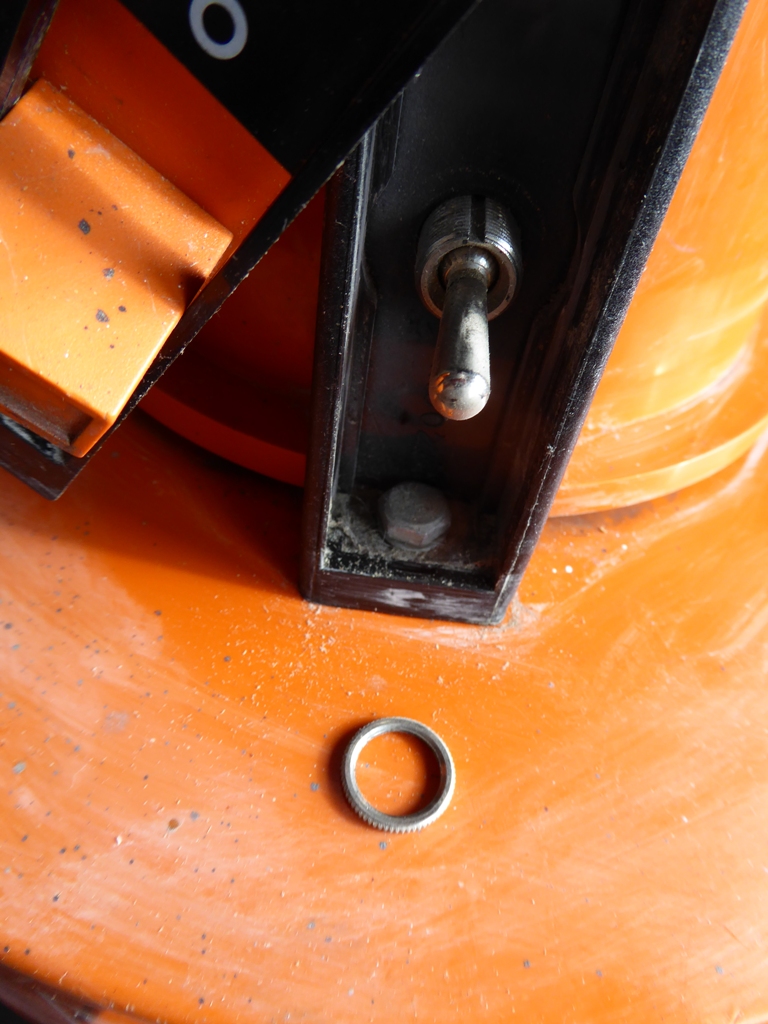
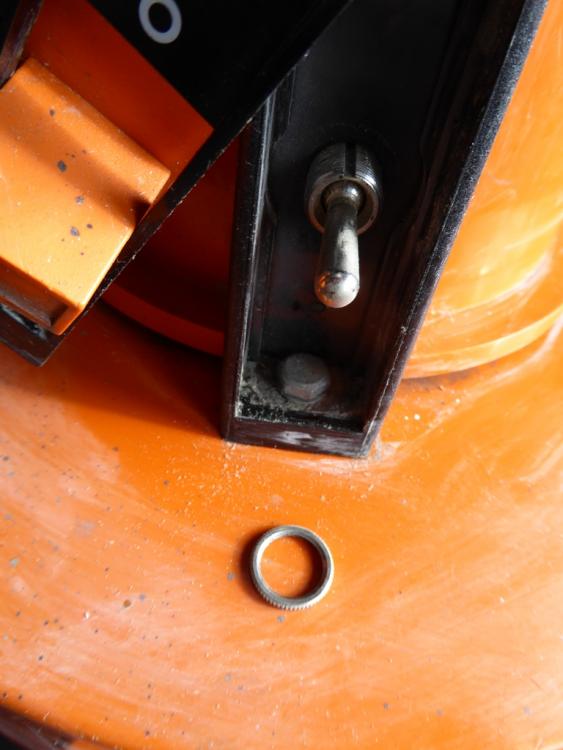
Guess what? You know I wrote in this post: that I was going to strip the ancient Vax to find out where the ominous noise was coming from? Well, I started by removing the switch cover, to gain access to one of the bolts that holds the motor cover and handle on, as the noise seemed to be coming from the motor. This is what I found as I removed the cover: Yes, that's right, the nut that holds the switch in place had completely unscrewed itself. The odd noise was the nut vibrating inside the housing. I've screwed the nut back on and the thing is working fine, no funny noises or whatever and loads of suction. I'll just give it a good clean, treat it to a new set of filters and with luck it'll see me out.....................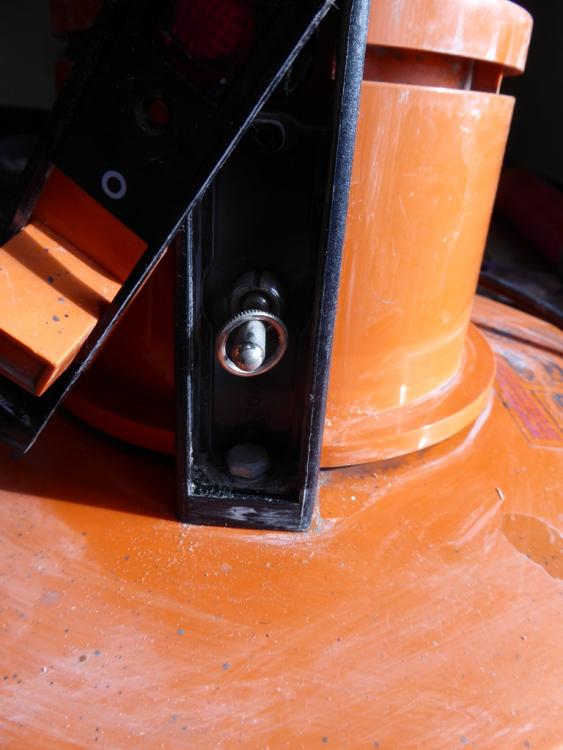
-
Vacuum cleaner recommendations?
Jeremy Harris replied to Jeremy Harris's topic in Kitchen & Household Appliances
Given that Dyson's are so badly made, I wonder why they get such rave reviews online? Everyone I know that's ever owned a Dyson has moaned about the really poor build quality, and it makes me wonder if a lot of people just don't feel they should complain because they paid twice as much for a Dyson as they would have for a far more reliable vacuum cleaner. Out of curiosity, I'm going to completely strip down our 30 year old Vax 121, to see just what state it's in. It's a bit battered and bruised externally, as it got relegated to being my workshop vacuum around 20 years ago, then got moved to the new house as the site vacuum, where it's been seriously abused. The new one should arrive tomorrow, so there's nothing to be lost by stripping down the old one to see what's making the odd noise. -
Vacuum cleaner recommendations?
Jeremy Harris replied to Jeremy Harris's topic in Kitchen & Household Appliances
Your experience with Dyson mirrors ours. SWMBO bought it on the basis of the advertising hype, and it really was the most crappily designed and made bit of junk I've ever encountered. It certainly had reasonably suction, when new, with clean filters, but it was a complete PITA to empty and change/clean the filters. Ours also started to just disintegrate after a year or so, and I glued bits of badly made stuff back together for a time to keep it going, but then the nut came off the end of the motor fan shaft and the motor burnt out. By that stage just about every part of the Dyson had already cracked or broken in some way, so I just binned it. Nothing would induce me to go near them again, as far as I'm concerned they are just over-hyped, poorly made, very expensive junk. The sales techniques make me think that Dyson had lessons from Kirby - how to sell a mediocre product for a premium price........... All the reviews I've read in the past day or so seem to show Miele to be very good. The use of bags was one thing that put me off, though, together with the price. Whilst I'm on the topic, the Vax cordless vacuum cleaner is very good. We bought one for the new house, which has mainly hard flooring, with a few rugs, and it does a very good job. At half the price of the Dyson cordless I'd say it's probably equally as good, bearing in mind that none of the cordless models are anywhere near as powerful as a corded cleaner. -
We didn't bother with RHI, either, it was completely pointless and would have cost us far more than we would ever have got back via the payments. For us the payments would have been around £80 a year for 7 years, the additional cost of using an accredited supplier/installer/product so we could claim the RHI would have added way over £2k to the installation cost. So, we would have been paying out over £2k up front in order to save less than £600 over 7 years. We would have been nuts to even think about the RHI. FWIW, I'm convinced that RHI is only really aimed at older houses, with a relatively high heating requirement, not new houses than will inevitably need a lot less heating.
-
As @PeterW says, MVHR is pretty weak at providing heat, even with a post heater. Our Genvex can, in theory, provide around 1.5 kW of heating. In reality, because MVHR only moves a small amount of air (one house air change every 2 and half hours or so) the ability of heated MVHR to distribute heat is fairly limited. OK for just maintaining a little bit of heat, but not a great deal of use for warming the house up from cold.
-
I'd say, from experience, that you certainly don't need heating, as such, on the upper floor, and only very modest heating in the slab. The exception would be that it is nice to have some very gentle warmth in the bathroom floors, and the cheap and easy way to do that would be to fit some low power electric heating mats under those floors to provide a tiny amount of comfort heating of the floor itself, nothing more. Low power heated towel rails will need to be used in moderation, as they can easily over heat the bathrooms. We fitted electrical outlets on the bedroom walls, so we could fit small panel heaters if needed - they aren't needed at all, so I'm glad we didn't go to the expense of fitting heaters. UFH would be a massive over-kill for the first floor, and you only need a very tiny heat input to the ground floor slab. We run our ground floor UFH with a flow temperature of around 24 to 25 deg C, and the heating only comes in for around an hour a day in pretty cold weather. We have a stupidly big ASHP, a 7 kW model, for our 130m2 house. A 3 kW ASHP would have been plenty big enough, with lots of spare capacity, had one been available. Our worst-case heating requirement, with no one in the house, and nothing in the house switched on and providing waste heat, our house needs around 1600 W of heat when it's -10 deg C outside. In practice, we never need that much, as two adults chuck out around 200 W, plus there is always stuff on, like computers, TVs, cookers etc that put out a fair bit of heat.
-
Not that many roofing material suppliers seem to offer a long term warranty. We've found that the Iko slates haven't faded or degraded at all in about 4 years, and I'd suggest they are easily OK for 20 years plus.
-
Vacuum cleaner recommendations?
Jeremy Harris replied to Jeremy Harris's topic in Kitchen & Household Appliances
It was from Vax, selling via Amazon: https://www.amazon.co.uk/Vax-C88-AM-PE-Compact-Cylinder-Vacuum/dp/B00KIMBLRQ/ref=sr_1_138?srs=1638859031&ie=UTF8&qid=1507572169&sr=8-138 Bear in mind this is the small 2 litre unit - I was deliberately looking for a small model, as I've decided to have a go at making a proper cyclone dust extractor/vacuum for the workshop, as it seemed to make more sense (plus it will be a fun project to build...............). -
To ferrule or not ferrule and where to grommet
Jeremy Harris replied to MikeSharp01's topic in Power Circuits
I'd also very strongly recommend binning the banjos on any SWA glands and using Piranhas. They are massively easier to use and give a far better long-term earth connection, IMHO. You will need a crimp tool to crimp eyelets on to the earth leads on the Pirana M4 screw connections, though, but they are a doddle to install and make working with SWA almost pleasurable. Also, remember that any external SWA gland needs to be a waterproof one, with a boot. Piranhas and external glands are here: https://www.tlc-direct.co.uk/Main_Index/Cable_Accessories_Index/Glands_SWA/ -
Vacuum cleaner recommendations?
Jeremy Harris replied to Jeremy Harris's topic in Kitchen & Household Appliances
Thanks for the offer, Nick, but SWMBO has decreed that a Henry looks "too industrial"................. I took the car in for a service today, and whilst kicking my heels around town popped in to the new appliance "super store" that's just opened. By luck they had a range of (not particularly cheap) vacuum cleaners that you could have a go with, and one was the Vax C88-AM-PE (different name in the shop, but same part number on the unit, so same spec) that @dpmiller suggested. I was impressed, it's relatively small and light, has loads of suction, and looks a bit less industrial than a Henry. So, I came home, did a bit of surfing around, and bought a new one for £60, with the 6 year manufacturers guarantee and it comes with the rotating brush head (not fussed about that, but it might be useful for cleaning the car). Pity the price in the store in town was massively greater than the online price.................. It should be here by Thursday, so if I get a chance before we shoot off to our favourite holiday hotel for a few days R&R (this one: http://www.burghisland.com/ - the cocktails would probably appeal to @Ferdinand...................) I'll try and post a review in this thread as to how it compares with other machines we've had, ranging from the crappy Dyson to the superb old Vax 121 (I reckon the suction of the Vax C88-AM-PE is on a par with the ancient Vax 121, from my quick test).- 81 replies
-
- 1
-

-
- vacuum cleaner
- hoover
- (and 1 more)
-
Does this Condition Remove PD Rights?
Jeremy Harris replied to Ferdinand's topic in Planning Permission
FWIW, our original (draft) decision notice had this as a condition: I assumed that this permanently removed PD rights at the time, so I wrote to the planning officer and asked if he would consider removing it, He emailed me straight back, saying it was a bit of standard "boilerplate" text they tended to use in decision notices in our area and had no problem with removing it in our case, especially as we were covered by the restrictions of the Conservation Area and the AONB anyway. I've not read of the four year limit of clauses like this; anyone know where that's written down, by any chance? -
I found that I was locked in to one self-build insurer when I tried to renew our original policy. There seemed to be a bit of a scam going where once one self-build insurer has given you cover, you can't switch to another insurer; as soon as I mentioned the previous insurer I was told to renew with them and that the other companies wouldn't quote. It was either a stitch up, to keep you paying a high premium, or it was because all the companies I approached were using the same underwriter. After half a dozen goes I gave up, reluctantly paid a small fortune to renew the existing policy and vowed never to do business with Buildstore again.
-
Vacuum cleaner recommendations?
Jeremy Harris replied to Jeremy Harris's topic in Kitchen & Household Appliances
Thanks, 1500W sounds like a sensible amount of power. IIRC, the old VAX is either 1200 W or 1400 W, and has great suction, when the bag and filters are clean. My wife wouldn't ever use the VAX (probably why it's still working after 30 years) as she reckoned the suction was too great, and tended to stick the head to the carpet, I did show her the small suction reducing slot control, but she seemed to always forget to use it. It also did a passable job of washing fitted carpets, not quite as good as the professional machines, but not bad, I've always been amazed by the capability of the old VAX. It was thoroughly abused during the build, and used to clean up lumps of plaster, concrete dust, loads of sawdust and never once complained. Before that it was used as the shop vac in my old workshop, sucking up wood, plastic and metal swarf, without any problems. The only modifications I made to it were to change the standard filters for some cut from a left over roll of hob extractor filter fleece and change the standard paper bags for reusable, washable bags (a very worthwhile mod, it increases the suction a great deal I found). The failures have been bits of old plastic going brittle, in the main. I've had to repair the plastic filter support grid a handful of times now, and replace both the bucket catches, but that doesn't seem bad for a machine that's worked hard for some many years. The Henry type machines look similarly robust to the VAX, but less cumbersome. I had noticed that all the contract cleaners when I was still working used Henrys, so that must speak well for their reliability when used heavily. -
Help with Completion Certificate on Existing House
Jeremy Harris replied to AliG's topic in Building Regulations
How long ago was the work done? Last time we encountered this problem when selling a house, we just paid a one-off premium for an indemnity policy, IIRC it was around £150 or so. That was for no record of building regs compliance on two extensions that the previous owner had built - should have been picked up by our solicitor when we bought the house but wasn't. -
The plant pots should be fine. How many downlighters are still likely to be using very hot halogen bulbs? We have a few, but they all have LEDs, and they just run a bit warm, rather than hot. They need a space behind so any insulation isn't directly touching the fitting, but seem to work fine in the larger can-type fittings, that are close to being sealed anyway.
-
Vacuum cleaner recommendations?
Jeremy Harris replied to Jeremy Harris's topic in Kitchen & Household Appliances
Thanks for the update and PM, saved me pressing the button on something that probably isn't up to the job. I'll have a hunt around for deals on the C88AM.