Jeremy Harris
-
Posts
26430 -
Joined
-
Last visited
-
Days Won
360
Everything posted by Jeremy Harris
-
Yes and no. Harvey have an article that makes a lot of sense: https://www.harveywatersofteners.co.uk/water-softener/faqs/how-much-sodium-added-water-during-softening Frankly, we drink softened water and I both regularly monitor my BP and keep track of my daily sodium intake, and it's nowhere near the recommended limit. That does depend a great deal on diet, though, and I've been on a low sodium diet for around 30 years now.
-

Recommendations for a Bug Zapper
Jeremy Harris replied to Ferdinand's topic in General Self Build & DIY Discussion
I agree, but as @Ferdinand says, it's a matter of where the bugs are, and what they are. Also, we have two or three bats that fly around our garden every night, and each one of them will be consuming around 3,000 insects per night, so a few dozen insects zapped because they are being a nuisance inside the house isn't likely to make any significant difference to overall numbers. -
Because gypsum (which is what plasterboard is, mostly) is a problem if it ends up in landfill. When buried in landfill with organic waste gypsum (calcium sulphate) releases a lot of hydrogen sulphide, which, as well as being toxic, is also very smelly (it's the "rotten eggs" gas).
-
Recommendations for a Bug Zapper
Jeremy Harris replied to Ferdinand's topic in General Self Build & DIY Discussion
I have one of the hand-held ones that looks like a small tennis racquet. Fantastically satisfying thing to use, as it produces a loud crack, with a small flash and puff of smoke when you manage to hit a fly with it... -
The very worst tap that I have ever bought, bar none, came from Victoria Plumb. It was part of a package of stuff I bought from them when I refurbished the bathroom in our old house. The tap literally fell apart after about 18 months use, from internal corrosion. When I replaced it I cut the thing open and was amazed to find that it was made from some sort of zinc alloy (the stuff commonly referred to as "shit metal"). This had corroded away so that in places all that was left was a paper-thin layer of chrome on the outside holding the thing together. There was no way that it was compliant with the water regs, I'm pretty sure it was probably a bit of nasty Chinese tat they'd imported.
-
Fan Coil Units for use with a (cooling) ASHP
Jeremy Harris replied to ProDave's topic in Air Source Heat Pumps (ASHP)
Doing some quick and dirty sums shows that quite a bit of heat could be shifted by one of these things, if they are water source heat pumps, rather than just fan coil units. If the incoming water was at 10°C and the outlet water was at 40°C (so a 30° ∆T), with the SEPA 10,000 litre/day limit, then in theory one of these could pump out nearly 350 kWh/day. That's roughly 14.5 kW of heat pumping power that's available, which is a heck of a lot. We're finding that 2.5 kW is pretty impressive in the recent hot weather. If these water-cooled units are just really a fan coil unit, with no heat pump, then that reduces the cooling capacity a fair bit, but it would still be pretty useful. If a fan coil unit was fed with water at 10°C and had an outlet temperature of around 18° (assuming that there may be a couple of degrees difference between the water discharge temperature and the air discharge temperature) then for 10,000 litres per day that still equates to a cooling power of nearly 3.9 kW. -
Fan Coil Units for use with a (cooling) ASHP
Jeremy Harris replied to ProDave's topic in Air Source Heat Pumps (ASHP)
Might work well for those of us next to a stream. Just needs a pump and filter plus a bit of pipework. The flow volume would have to be kept down to less than 20,000 litres per day, though, as that's the limit before needing a licence from the EA (not sure about SEPA or NIEA, but suspect it's much the same). -
Not a good idea to run surface/rain water drainage to a treatment plant, as they are not intended to take large volumes of relatively clean water. The treatment plant will have to be massively oversized in order to cope with the volume of surface water drainage, and as a consequence it will have way too few nutrients to maintain a viable aerobic bacteria colony. This means that during dry weather the foul drainage will not be adequately treated and the unit will end up discharging effluent that is well above the permitted limits. Best to ensure that only foul and grey drains lead to the treatment plant and that the surface water and roof run off is dealt with by soakaways, perhaps with some form of attenuation system in order to comply with the SuDs requirements.
-
A great deal depends on what you personally feel is uncomfortable. The threshold temperature for overheating in PHPP is critical, as, by default, it's set to 25°C. We don't like the house to be warmer than about 22°C, and prefer the bedroom to be around 20°C. If you change the overheating threshold temperature to a lower value then the number of days when there is an overheating risk increases pretty dramatically. The same applies to SAP, as that also significantly underestimated the overheating risk for our build, and a part of that is the threshold temperature assumption that SAP uses.
-
Fan Coil Units for use with a (cooling) ASHP
Jeremy Harris replied to ProDave's topic in Air Source Heat Pumps (ASHP)
The point @NSS makes is a good one. Good insulation and a structure with a high decrement delay only slows down the rate of heat transfer, it can never stop it, so if there are a few days where the mean temperature is above a comfortable level then the house will still get too warm. That's pretty much what happened this week. -
Welcome. I'm afraid the range of ground work cost is massive, and very site-dependent, so it's really hard to give even a very rough estimate. Our site was probably near the upper end. It's small, and cut back into the bottom of a hillside, with no mains water or drainage available, only mains electricity. We had to dig out around 900 tonnes to level the site, and build a pretty hefty retaining wall. The cost of the basic groundworks, excluding the foundations for the house, or the borehole for the water supply, but including the treatment plant for sewage, came to about £55,000. The borehole for water cost about £6,000 in the end (bit of a saga). Electricity connection cost about £3,500. The house foundations were included in the package we bought, but were probably around £12,000 (for a 130m2 1 1/2 storey build).
-
Sand Filter for Grey Water Storage
Jeremy Harris replied to Barney12's topic in Rainwater, Guttering & SuDS
BOD = Biological Oxygen Demand It's one of the primary reasons for treating effluent by aeration, as by aerating it, aerobic bacteria use up most of the nutrients (and stuff like washing machine and shower effluent has a fair concentration of nutrients) during treatment. Doing this means that the discharged, treated, effluent doesn't have the potential to reduce the oxygen level in wherever it ends up, so is more or less harmless. The reason that fish die when effluent ends up in rivers is almost always because the BOD of the effluent is high, which promotes aerobic bacteria growth in the river, which then uses up the dissolved oxygen, so the fish suffocate. -
Yes, if you have RHI energy metering that is more or less the way that COP is measured. There will be some errors, but it's probably near enough. The COP you're getting seems about right, perhaps a little low, given that I suspect your house isn't that energy efficient, so probably has a fairly high peak heating/hot water demand. The key to getting a high COP, as mentioned earlier, is making sure that the ASHP isn't asked to produce a high temperature differential (between outside air temperature and water flow temperature). Hot water provision is usually the main culprit for driving COP down, especially if it's set to a high temperature. 55°C is as high as is needed, and you can probably get away with setting it to 50°, or even a little lower, depending on how hot you like your showers. I run our shower at 38°C, and have found that the thermostatic mixer valve needs about 45°C at the hot water input in order to work properly, so that's probably around the lower limit for DHW. Do you know the flow temperatures that your ASHP is using for heating and hot water?
-
I couldn't decide on the pattern for our drive paving, so drew up the whole drive in Autocad and made several different versions, with different angles and layouts. When I gave them to the chap that laid the drive he couldn't believe that anyone would spend hours drawing the layout of block pavers before laying them...
-
OK, that makes sense. I too have an energy meter on the ASHP power supply, that chucks out power, PF, frequency, voltage, current and accumulated energy, and that deals with the input side OK. When off, our ASHP draws nothing at all that I can measure, it seems to completely shut down, although the controller draws about 1 W or so. I found that most of the errors I was getting were with measuring the output, as it's not at all easy in practice, due to the lag in the response of temperature sensors. The flow and return temperatures, together with the mass flow rate of water through the unit, need to be measured fairly accurately to get an indication of the COP, but even then I wasn't that confident that the results were accurate to better than maybe 10% or so. Averaging over time doesn't work as well as I thought it would, as it takes ages for the heat to soak out of the pipes, so the output measurements are never that good.
-
Sand Filter for Grey Water Storage
Jeremy Harris replied to Barney12's topic in Rainwater, Guttering & SuDS
The milk crate in a chamber system worked well, but it was dealing with high volumes of cooking fat (loads of cavers having big fry-ups for breakfast). It was easy to clean, just hoik the crate out, burn the fat off and put it back again. Not exactly environmentally friendly, though... -
Out of interest, how are you measuring COP? I spent a fair bit of time measuring the water flow rate through our ASHP (not as easy as I thought it would be) and then used this, together with the differential temperature between flow and return to calculate the output power. With an energy meter on the electricity supply I was able to obtain the COP at any instant by comparing the input power and output power. It was a bit of a PITA to do, especially as the output power turned out to vary a fair bit at times, and those variations lagged behind the variations in input power. I'd be really interested if you have come up with an easier way to measure it, especially if it's capable of logging COP over a reasonably long period.
-
Sand Filter for Grey Water Storage
Jeremy Harris replied to Barney12's topic in Rainwater, Guttering & SuDS
I think you'll forever be backwashing a sand filter to try and keep it clean. Do you need to filter down to that fine a level, though? A easily removable and washable mesh debris filter would work OK for keeping leaves etc out. When you say "grey water", if this has shower waste then it's really foul water, I think (shower and bath water is deemed to have some faecal content), plus grey water that comes from a washing machine will have a high BOD, so really needs treatment before going to a soakaway. If building control were OK with it then I guess it's fine, but my experience of trying to store/treat grey water is that it can get to be a messy and smelly job (pretty sure it's the relatively high BOD that creates much of the problem). Grease capture needs some form of grease trap. These can be purchased easily enough, as I think they are mandatory for places like restaurants now, as pre-treatment before discharge to a sewer. We made one for the caving club drains, using a brick chamber fitted with an old metal milk crate. This would clog up with fat and every month or two the crate would be pulled out and put on a fire to burn off the grease. Worked OK, but the commercial units are probably a lot easier to fit and maintain. -
Foundation over sewer. Piles close to the sewer.
Jeremy Harris replied to Patrick's topic in Foundations
I agree, but it can't be that hard to do, as we still have houses with cantilevered floors locally that date back to the 16th century, and they seem structurally OK even after all that time. -
Foundation over sewer. Piles close to the sewer.
Jeremy Harris replied to Patrick's topic in Foundations
I can't see why a cantilever like that won't work OK. Plenty of designs around where part of the house is cantilevered out over a void, like this Grand Designs one:
-
Whole life cost, which is very dependent on the amount of hot water you use. Say you buy an ASHP for DHW and it costs £2,000 installed (reasonable guess for a cheap one) and the alternative is an immersion heater at a cost of around £25. Used at 55°C the ASHP will probably run at an average COP over the year of between 2.5 and 3. If you need 5 kWh per day of hot water (about what we use) then with a COP of 2.75 around 1.82 kWh/day of electricity would be used. Around 3.18 kWh of electricity would be saved per day, over using an immersion heater. A saving of 3.18 kWh/day is around 1,160 kWh/year, which is a financial saving of about £175 a year in electricity cost, over using an immersion heater. For this use case the ASHP would take just over 11 years to recover the capital investment, not accounting for any interest that may have been accrued had that money been invested. The question then is whether or not an ASHP would last for about 11 years without needing repair or replacement. If it would, then it might make financial sense, It's a judgement call as to whether it's worth investing in an ASHP to supply just hot water like this, especially as there are other factors, like lost interest, variability in electricity cost (using E7 for the immersion and ASHP reduces the cost saving) and environmental concerns.
-
The render board battens will be on the line of the studs. We have the same, battens on the outside that the cladding is fixed to. MBC usually chalk lines down the membrane on the outside of the house to highlight where the frames are for whoever fixes the battens, plus there is a line of staples running along those lines too. The outside battens have to be fixed to the frame studs as there's not enough "meat" in the outer boarding to fix to.
-
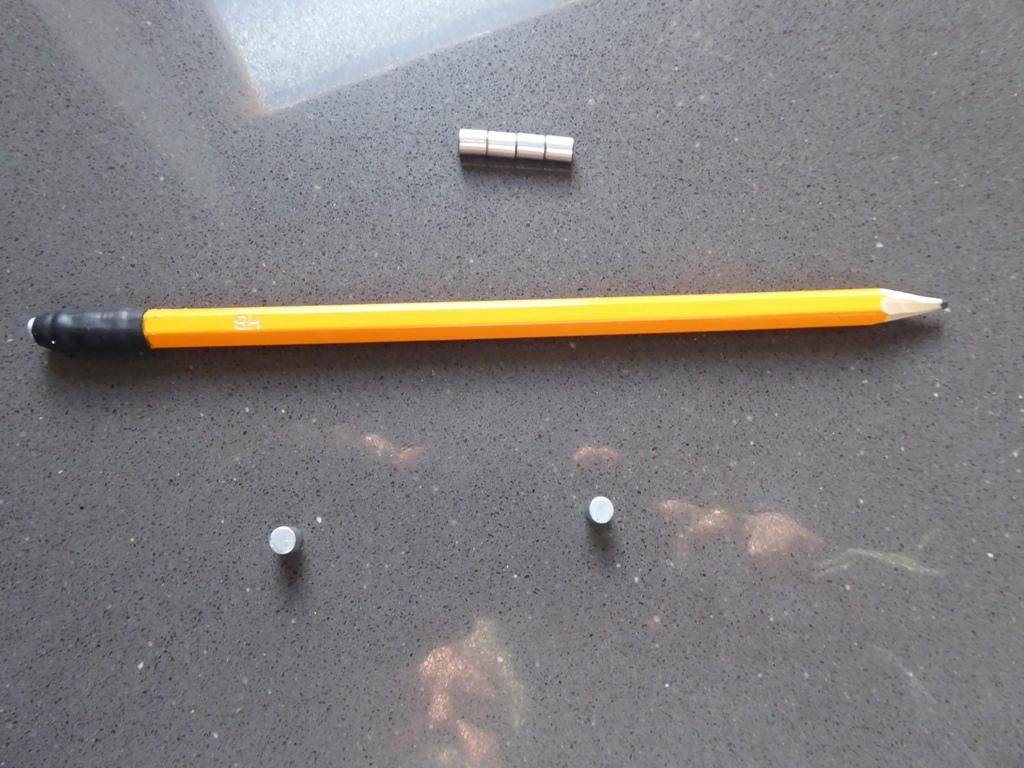
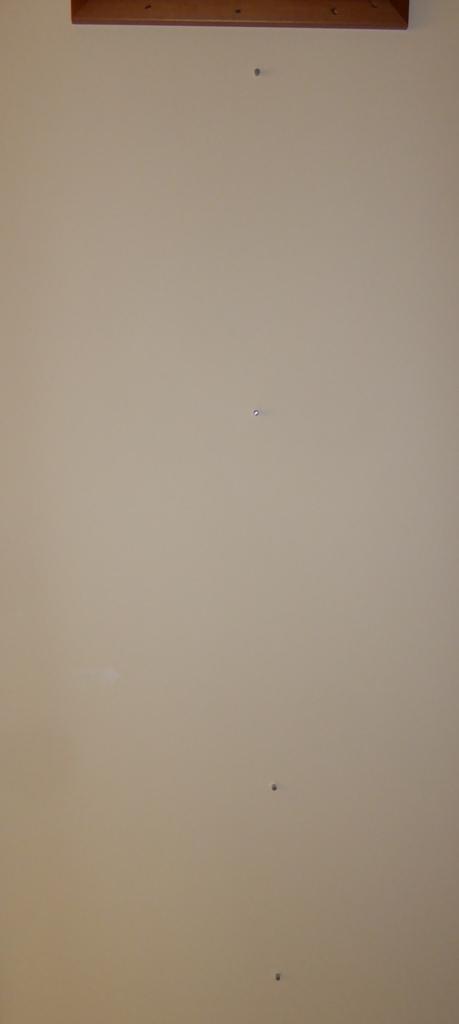
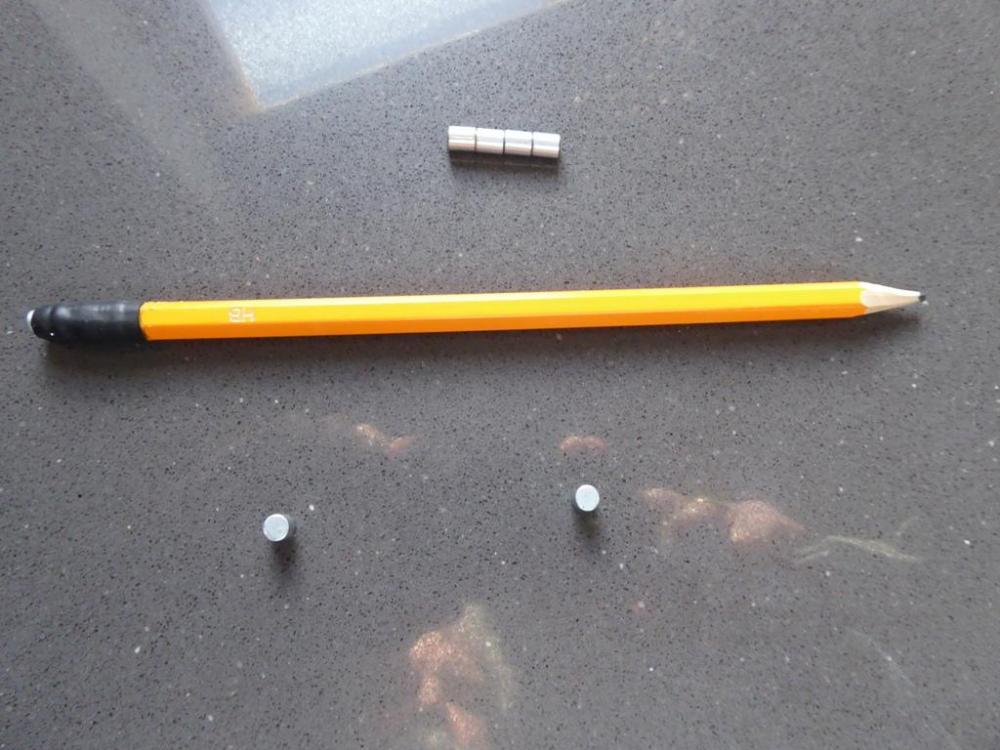
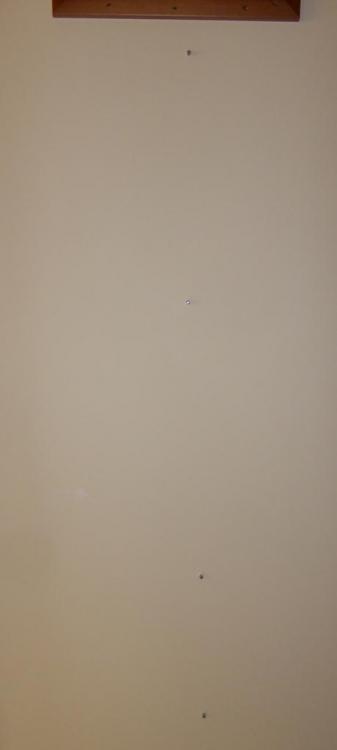
+1 to this. I use both techniques, I use the stud finder to locate the rough position of the studs, then use some small neodymium magnets to find the plasterboard screws. These screws will either be more or less on the centreline of the studs, or there may be two screws side by side where there is a plasterboard joint. Here's a photo I took a while ago showing the magnets marking the centre of a stud (the magnets are the small dots in a vertical line under the picture frame): I also have small magnets fitted to the end of pencils, handy for finding screws in plasterboard as well as picking up screws that have been dropped:
-
I agree wholeheartedly. I know I bang on a bit here about the risk of overheating, and how solar gain is a significant problem for a well-insulated and airtight house, but that's because I've spent far, far more time and money trying to resolve overheating than I have on heating. Heating is a complete non-issue for us, if push came to shove a small fan heater in the hall would keep the whole house more than warm enough in cold weather. The reality is that we have to cool the house, either by passive means, like the solar reflective film and window overhangs, or by active means like floor cooling and air conditioning, for a far greater proportion of the year than we spend heating the house. Every time I see a new house design that has acres of glass, the thing that immediately springs to mind is the overheating risk that may pose.
-
Interestingly we have some 6-16-4-16-6 units and they are notably poorer, thermally, than the 4-20-4-20-4 units, enough that we can feel the difference stood next to them in cold weather. All our glazing is SGG Planitherm, argon filled, with two low e coated internal panes. One thing I very much wished I'd done is specify a much lower inward IR transmittance glass for the outer pane, definitely not the low iron glass we have, which lets through loads of unwanted heat, so much so that I've had to apply solar reflective film to it.