
Nickfromwales
-
Posts
31376 -
Joined
-
Last visited
-
Days Won
345
Everything posted by Nickfromwales
-

Upgrading rafter ties to proper joists
Nickfromwales replied to SimonD's topic in Garage & Cellar Conversions
I'd just use 2 pieces of timber, put together (sistered) so you can install them 'telescopically'. Clamp, and construction screw these together, and then infill the short pieces to make 2x full lengths per joist. Dead simple. -
Cutting tiles in place....en-suite remodel
Nickfromwales replied to Munchincocopops's topic in Wall Tiles & Tiling
Pretty much. Then use a flat colour-matched trim to go from tile > tile to hide the cuts. Have the flag of the tile trim folded back over the cut (existing) tile if the cuts are 'less than great'. Ceramic and porcelain are two very different beasts, so I hope the wall tiles you need to cut are ceramic. Caveat is that they shell at the edges much easier than porcelain, so good luck anyway, and cut slowly. Do your first trail cut appx 10mm away from the actual line you are working to, so you can see how difficult they are to cut and what the finish is going to look like. Your biggest battle will be, the removed tiles will want to take the plasterboard with them, so I think this is where your plan will seriously unravel. If the tiles don't separate from the plasterboard, then prepare to re-tile the whole room. Don't buy tiles until you are ready to tile!! -
Indeed. FWIW, to the OP, this has been thrashed out here previously, and yielded much the same results.
-
Vaillant ashp (my battle with).
Nickfromwales replied to zoothorn's topic in Air Source Heat Pumps (ASHP)
The nation is on the edge of their seats. -
Vaillant ashp (my battle with).
Nickfromwales replied to zoothorn's topic in Air Source Heat Pumps (ASHP)
No it won't, a 30kw oil boiler would cook you alive in there. Accept this as a fact because I have installed gas and oil all my life. It's not a hobby, it's fed and clothed us, and if nothing worked I wouldn't have a career out of it would I? Part 1. Please stop ignoring the fact that I live in a near identical house to yours, it's a little frustrating for you to keep dismissing direct and factual information. My gas boiler doesn't ever output more than 12-14kw, because my house is never allowed to go "stone cold" each day (in winter) and only ever runs at its max output when producing instant hot water (it's a combi boiler). To shut down what the buffoons who fitted this have stupidly said to you, because it is absolute and total fecking nonsense, you can listen to and rely upon what I am saying to you, because I happily consider myself to be an 'expert' in making homes comfortable. I've been fitting oil boilers / gas boilers / electric 1 and 3 phase boilers / ASHP's and GSHP's for around 30 years. Installing MVHR etc for over 10 years. Wiring things for over 36 years, including the QMII before it's maiden voyage out of Southampton. Listen to me, and all the other people on here, most of whom know more than I do and have all got ASHP's or gas boilers, and they all work. **************** Part 2. I have already offered a solution which was to run the heating at night on the setback temp, the one you said you'd ask the engineer to implement for you so we can run at least one months TRIAL of the heating. I suggested times for the heating to go between comfort and setback, I said go for 15oC setback (this would not overheat you, but it would also allow the rest of the house to not go "stone cold"), and you can define these to suit your wishes; I suggested 22:00 - "setback" 07:00 - "comfort". This is how I use mine, but with a very small difference in temp between night and day. I do this because it is cheaper to not let the house go "stone cold" every night. FACT. The above methodology of going from setback > comfort > setback > comfort and so on, is done by you having the heating "ON CONSTANT" vs it going "ON/OFF", but it will cycle the heat in only to replace what is lost to the clouds eg it won't be overheating you at all, just keeping you at the lowest temperature that you will accept (the one where you cant see your breath at night). ************* Part 3. The extra room stat would take command of the times and temp, and would avoid you needing to learn how to make these changes on the fixed controller that came with the ASHP. I suggested this as: a) it needs to be moved b) moving it requires cable / time / labour / higher cost (even though I'd insist your "expert" should move it for free as it's their laziness that has resulted in it being in the wrong place) so you'd be spending money moving a thing you still fear or cannot manipulate. c) the units like mine are very easy to use and to program / make changes on. These have simple timeclocks which are no more difficult to set than a digital alarm clock. This means as you trial and error different temps at different times, you can make these changes without any "experts" needing be in attendance. The one that you have now just becomes an installer interface for making fundamental changes (such as the 40-45 flow temp settings and hot water temp setting) Lets get heating cracked, and then the installer tomorrow can better time the hot water to suit you. Think today what times each day you need the tank hot and ask him to set these times. -
I may have to take you outside and thrash the information out of you. Wales vs Scotland it is..... 🙄😆
-
Vaillant ashp (my battle with).
Nickfromwales replied to zoothorn's topic in Air Source Heat Pumps (ASHP)
I'm trying to see the good in that........ My late dad once told me (probably many, many times) if I had nothing productive to say......... I'm not a wet blanket btw, just a mod on a popular forum where everyone's welcome. Let's allow Monday to happen, and have a day of rest here. -
Vaillant ashp (my battle with).
Nickfromwales replied to zoothorn's topic in Air Source Heat Pumps (ASHP)
The man's a little lost. ..........why he's come here, to try and get a grasp of WTF to do. @zoothorn is a tough nut to crack, but I doubt that is by choice people. Let's take this off the boil and let Monday happen, and then old Zoot can come back with some of what was discussed. For anyone running out of patience, lift your hands off the keyboard and go do something else. Other forums operate boxing rings, we do not. -
Probably a fictitious house that never actually existed, and you're posting from a padded cell (like me).
-
Shower tray fitting on wood decking
Nickfromwales replied to G and J's topic in Bathrooms, Ensuites & Wetrooms
"Simply" any better? Just........an alternative suggestion lol. Just saying. -
Thanks. Any uPVC ones offering this?
-
Vaillant ashp (my battle with).
Nickfromwales replied to zoothorn's topic in Air Source Heat Pumps (ASHP)
#cheapdate -
What if you fitted the 150mm of rockwool and it was way better?
-
Let me rephrase..............boyo. Do any uPVC manufacturers state that their product has been airtight tested, as some of the bigger players kinda suggest at least?
-
Effective Insulation to Save on Energy Bills YBS SuperQuilt Trade is a high-performing multifoil home insulation. It has a built-in vapour control layer when fully taped and sealed using ThermaSeal Foil Joining Tape. It’s been specifically designed with the tradesperson in mind due to its flexibility, high quality, and ease of installation. SuperQuilt Trade ensures your home retains more heat during the winter and maintains a cooler temperature during the summer, creating an ambient temperature all year round. It can be used on walls, floors, lofts, ceilings, roofs, conservatories, and many more! SuperQuilt Trade’s R-Value is up to 2.84 m²K/W which is the equivalent of 125mm of Mineral Wool. It’s made from 19 layers of thermally efficient layers. It is 40mm thick however compresses down to only 10mm during installation, saving on cost, space, and installation time compared to Kingspan and Celotex. YBS SuperQuilt Trade contains no floating or harmful fibres. It requires no PPE such as masks or goggles to install, unlike traditional mineral wool.
-
What happens if the remit is for these to be (and remain) airtight / as airtight as possible, for 20+ years or more. Does uPVC then still get put on the menu?
-
I've just spent a lot of time with a number of clients, detailing just this (with Norrsken units), and I haven't recommended going for the drip edge to be below outside hard landscape in any one, as that then means any wind-driven snow or heavy rain will be testing out how well you sealed under the 5mm gap under the threshold On the masonry one (75mm cavity) we used Bosig Phonotherm at 25mm thickness to sit atop the external masonry leaf, and made it the same width as the slider threshold. Long brackets are used to fix into the inner leaf of masonry at each side. Same at the head, or they can drill into a steel or masonry (or timber) lintel.
- 1 reply
-
- 2
-

-
Shower tray fitting on wood decking
Nickfromwales replied to G and J's topic in Bathrooms, Ensuites & Wetrooms
Bucket of water and a sponge, is all you need. Wash your hands and tools frequently, but if you've done the job properly you should not see any tile adhesive after fitting the tray, whatsoever. It should all be under the tray only, so if it's looking like it's going to ooze out everywhere, you mixed too much up!! Remember you do not put tile adhesive under the lip that runs around the tray underside, the adhesive stays away from those so they can move / flex, you just silicone these gaps later on. -
Vaillant ashp (my battle with).
Nickfromwales replied to zoothorn's topic in Air Source Heat Pumps (ASHP)
Because your salespeople and installers just wanted the path of least resistance and an easy sale. Your original split system would have been capable of chucking out way above 65°C maybe even higher. The monoblock, even a shit one, will be able to do 60°C, so if you put that on and set the room stat to 19.5° like mine, (nobody’s mentioned you being 23°!!!!!), and you have 12 radiators, then….. Your house will heat up. As does mine, which is also a sack of shit in wales with stone walls and feck all insulation. It will work, so please stop saying it won’t happen as it absolutely will. It’s the laws of physics which “ye cannae change, Jim”. 12 rads at 50°C flow temp will get your house warmed up just fine. Try it. -
Vaillant ashp (my battle with).
Nickfromwales replied to zoothorn's topic in Air Source Heat Pumps (ASHP)
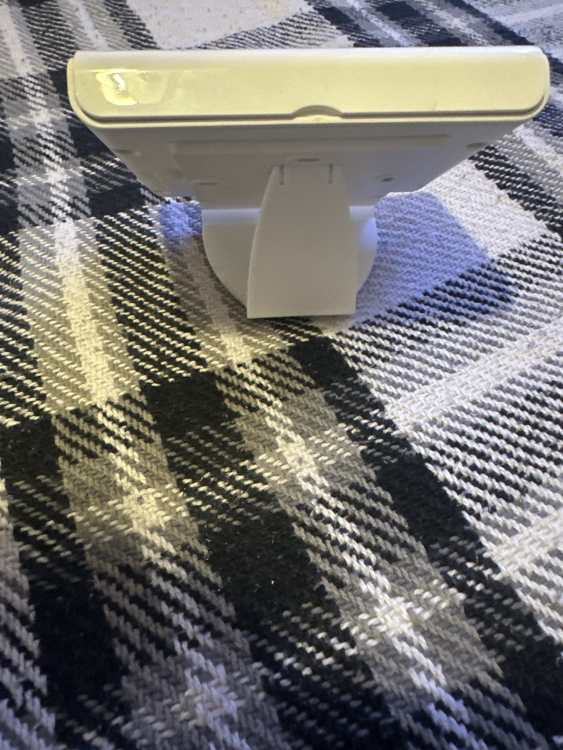
It would be your room (house) thermostat, the thing you are referring to moving with 30m of cable. You can add a wireless one and leave the factory one in situ as just a dumb display / end user interface. Should be a 30 mins install max. This you can take with you room to room, so if you want to be comfortable at night, take it to the bedroom and plonk it near an internal wall away from any doors or windows. If you spend your day in the sitting room, plonk it in there all day. It's moveable as its wireless and battery powered. This is my one.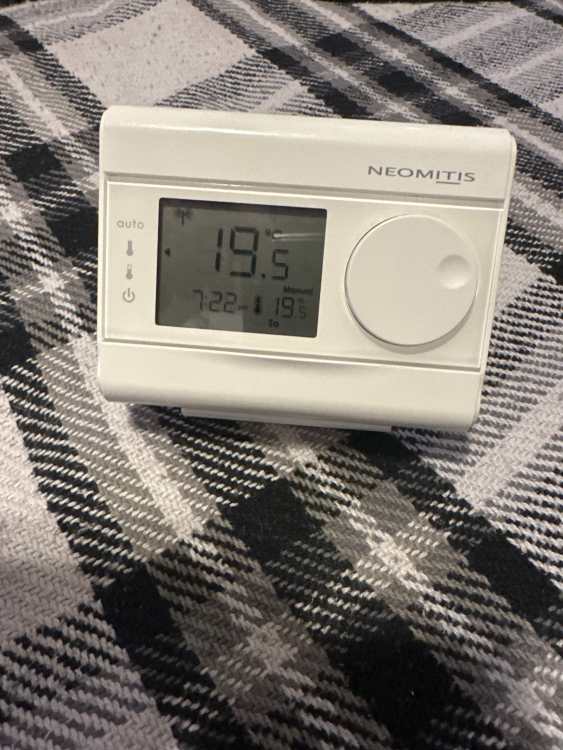
-
Vaillant ashp (my battle with).
Nickfromwales replied to zoothorn's topic in Air Source Heat Pumps (ASHP)
Why not go and buy a wireless room stat, from Screwfix or Toolstation, and ask them to fit it whilst they are there, then you can leave the other one where it is and zero cables to run. If he says no, just take it back and refund it. -
Shower tray fitting on wood decking
Nickfromwales replied to G and J's topic in Bathrooms, Ensuites & Wetrooms
🤐 -
Shouldn't the VCL finish behind the battens? If they're service battens, or is there additional insulation going in between?
-
Shower tray fitting on wood decking
Nickfromwales replied to G and J's topic in Bathrooms, Ensuites & Wetrooms
Is it a stone-resin tray? If so, use flexible tile adhesive, it takes much better to the tray, and as you say using said mixture to scrub and key the underside so get a great bond. -
Shower tray fitting on wood decking
Nickfromwales replied to G and J's topic in Bathrooms, Ensuites & Wetrooms
Nobody sane!