


Temp
-
Posts
10690 -
Joined
-
Last visited
-
Days Won
43
Everything posted by Temp
-
VAT on Polish imports?
Temp replied to KTB's topic in Self Build VAT, Community Infrastructure Levy (CIL), S106 & Tax
The answer he got from hmrc depends on what information he gave them. If he missed some detail then he will get the wrong answer. I suggest you ask in writing on the HMRC VAT help forum. Make sure you tell them you are a self builder employing someone on a supply and fit basis and that the supplier is doing the importing. I agree with others. He should pay the VAT and reclaim it by deducting it when he makes his VAT return. He must zero rate the windows and installation to you because you cannot reclaim VAT paid in error. The only exception would be if you ordered the windows yourself from Poland with the "help" of the installer. Perhaps not consciously - check the small print in the contract. Is it all with supplier/installer or do you have a contract with the Polish manufacturer? -
If it was a simple phone issue he would be contacting you to let you know. Write to him signed for and keep copy. Be careful what you write about him online until this is resolved.
-
Remember they have access to Google Streetview and satellite images.
-
Power Flushing A Modern Gas Boiler System
Temp replied to Onoff's topic in Boilers & Hot Water Tanks
Do they even need one? Many times just draining and refilling a few times is all that's needed. Remember to put some corrosion inhibitor in for the last fill. Corrosion products are what cause the blockages. -
12 Meter Test Sidewall to Main Elevation Query
Temp replied to Hawkwind1879's topic in Planning Permission
Well done! -
I would fit boards to the long walls (3.5m) and run joists across the short way (2.5m). Think I'd probably use mini joist hangers to attach joists to the wall boards. No need to tie into the existing ceiling if they are large enough. That woukd also minimise noise transmission.
-
Detached garage foundation insulation - worth doing?
Temp replied to Kelvin's topic in Garages & Workshops
40mm isn't great. If you are likely to heat it I definitely look at perhaps doubling that or more. Would it be easy to add insulated plasterboard later? 100mm+ in the floor. Consult the supplier before you do the slab but Ideally arrange for it slab to be slightly smaller than the building and a bit above ground level. That way water can't pool on the top of the slab and possibly run under the walls. Instead it drips off onto the ground surrounding the slab. Alternatively make it bigger and raise the building on a brick course. Either way plan for how water will be prevented from running under the door. Perhaps look at how they recommend doing a Part M level access front door on a house. -
If you change your mind and go for oil beware they don't modulate down like a gas boiler - there is an argument for using a thermal store instead of just a DHW tank with oil.
-
Bricks are surprisingly porous/not waterproof so there is always a slight risk of water bridging the cavity when CWI is inistalled. I've also heard the graphite coated bead system is less likely to allow this to happen but I've not read any proper studies. If the outside of your house was rendered that should pretty much eliminate this risk.
-
Heatmiser Neostat v2 temperature sensor problem
Temp replied to Ultima357's topic in Underfloor Heating
Are there any electrolytic capacitors in there? Any with bulging tops? I would try replacing them with a good quality high temperature replacement.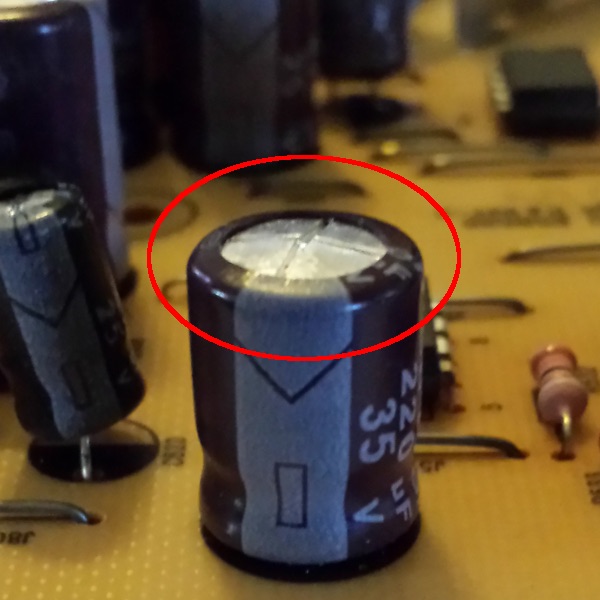
-
If building that close check how the Party Wall Act applies. I know it applies when excavating near neighbours buildings but I haven't looked to see if it applies to garden/retaining walls.
-
Stains On Wooden Floor Caused By Underfloor Heating?
Temp replied to stanmoor's topic in Underfloor Heating
Do you know anyone with a moisture meter? Would be interesting to compare the different colour areas to see if the wood gas a higher moisture content. Interesting that it looks drier under the rug? I might have expected it to be the other way around. Eg rug prevents moisture evaporating. -
Do i need to level floor before tiling ?
Temp replied to bob the builder 2's topic in Floor Tiles & Tiling
I've just laid 60cm * 40cm stone in a bathroom. Floor was perfect but the stone varied quite a bit in thickness. Was using a big notch trowel but found it very difficult to judge how much adhesive to back butter the stone with. Kept using too much on the thinner tiles and finding I couldn't press then down far enough. Hard work lifting, cleaning and starting over. If they had been uniform thickness I could have done the floor in a day but it took me about three days. The varying thickness made the tile levelling system much less effective as well. I'm only a DIY tiler but Im fussy when it comes to tiling and it's got to look perfect. Perhaps it wouldn't have been such a problem for a professional. Edit: Oh and I used double the adhesive I calculated. -
Can they afford to fix it? Retaining walls can be pretty expensive. How high is it? If its dangerous Building Control might intervene. Possibly more likely if the site is an open green space that children can access rather than a fenced off building site but worth a try. https://assets.publishing.service.gov.uk/government/uploads/system/uploads/attachment_data/file/246863/130510_-_Circular_Letter___Walls__Final_.pdf . See also.. https://www.northampton.gov.uk/info/200011/building-control/1695/building-control-guidance---dangerous-structures
-
Just found..
-
I've used PTFE tape a lot in the past but don't find it very good for those joints where you need it to tighten with a fitting pointing in a particular direction and or up against tiles. Things like ceiling rose or hose outlets, body jets, some towel rails etc I've seen a YouTube vid where someone said sealing thread or cord was better for this. I don't think they were talking about hessian cord. Google finds.. Flomast Pipe Sealing Cord https://www.screwfix.com/p/flomasta-pipe-sealing-cord-80m/2272v Locktite 55 Pipe Sealing Cord https://www.bes.co.uk/loctite-55-pipe-sealing-cord-160m-12555/ Has anyone used this sort of thing?
-
Perhaps have a look at some of the options here.. https://www.greenspec.co.uk/building-design/internal-insulation/
-
This is what I was referring to.. https://www.trowers.com/insights/2020/may/tax-implications-of-the-temporary-letting-of-new-residential-units In short it appears your intention matters. If you intend to build both units for sale as dwelling then you reclaim the VAT. Definitely on one, possibly on the other if is going to be sold or occupied by a relative. However if you or your "company" build one with the intention of leasing it out and then do lease it out you either can't reclaim the VAT or may have to repay the VAT if its been reclaimed already. And you have to pay VAT on rental income. People have been caught out by this but there are ways around it. I believe by selling the property to another entity so the first transaction is a sale not a let/lease.
-
https://www.lathamssteeldoors.co.uk/fire-rated-doors/fire-rated-cottage-door/ Fire rated steel door. Not seen it in person.

-
I'm not sure this is true. If presented with a zero-rating certificate, I believe suppliers can opt to zero-rate their supplies. If not, by running the build through a VAT-registered company the VAT can be reclaimed on a quarterly basis, which is better for cash flow than the self-build reclaim scheme. I've never heard of suppliers zero rating materials to self builders. I only really mentioned self builders purchasing materials because even when they have a Builder most seem to end up buying somethings. Some get a builder to construct the house to water tight stage then take over themselves and switch to hiring trades.
-
ICF Foundation Details - Thresholds
Temp replied to Jenki's topic in Insulated Concrete Formwork (ICF)
Ah yes OK. My mistake. -
ICF Foundation Details - Thresholds
Temp replied to Jenki's topic in Insulated Concrete Formwork (ICF)
I'd get it specified by an SE. The weight of the ICF walls and roof is on the very edge of the slab supported by the insulation which is compressible. The reinforcement distributes the load over the wider area of the slab. -
2 years later and planning is approved - my long battle
Temp replied to miike's topic in General Self Build & DIY Discussion
Well done @miike I had a similarly frustrating time, also partly due to staff quitting. Sometimes you just wish you could bang their heads against a wall or at least get compensation for them messing you about. Sometime after we finished building our house a planning officer came to our site for unrelated reasons. He complimented us on the house, which his department previously rejected for over a year, and said he thought "we" (meaning the planning department!) "had done a good job there". I had to bite my lip. -
ICF Foundation Details - Thresholds
Temp replied to Jenki's topic in Insulated Concrete Formwork (ICF)
I've not built in ICF but looking at your drawing... The 100mm slab probably has to be reinforced? Right to the edge? What stops you putting a DPC/DPM between the insulation and the slab? I don't understand the "moment" you refer to. Your EWI looks too thin? About 50mm? Presumably the outside will be rendered? Not all render is approved for use below DPC. Perhaps think about a brick plinth detail or some other solution? Plan ahead for level entry door threshold and drainage to avoid it looking like an obvious ramp added as an after thought. Building Control will have a view on all of this probably. -
I've just had a 10k NTC fail so make sure your sensors whatever they are can be replaced or install spares.


