


Temp
-
Posts
10690 -
Joined
-
Last visited
-
Days Won
43
Everything posted by Temp
-
Architect or tile manufacturer? Who knows best?
Temp replied to Jubilish's topic in Surveyors & Architects
I believe this is the tile. The lead soaker would cover the indents at the top but not much more or it would be visible. Is that enough to ensure its waterproof on a low pitch?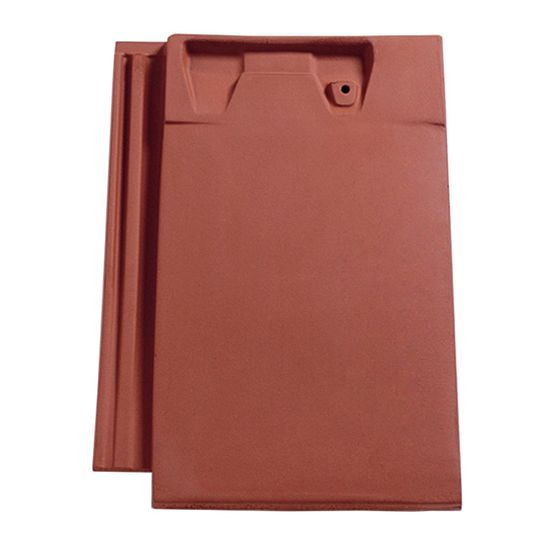
-
Conversions are zero rated BUT last I looked the procedure for getting there is different to new build. New build: Builder/company zero rates everything to the self builder. Any materials the self builder purchases himself are standard rated but reclaimable by the self builder using the reclaim scheme. Conversion: Builder/company 5% rates everything to the self builder. Any materials the self builder purchases himself are standard rated but reclaimable by the self builder using the reclaim scheme. Likewise the 5% charged by the builder/company can also be reclaimed. HOWEVER.. The self build VAT reclaim scheme is only available to people building or converting a house for themselves or a family member(?) to live in. It's not available for people doing a build for sale/profit. Some websites tell me the self build reclaim scheme is not available on a holiday let but is available on a second home ( https://www.cronertaxwise.com/community/vqotw-diy-claim-for-a-holiday-home/). I think it would be hard to argue the house next door to yours is your "second home" but why not. Properties built and rented out longer term (eg on an assured tennancy agreement) are not zero rated at all. If VAT has been reclaimed on one of these it may well have to be repaid. This has to do with the difference between zero rating and exempt. VAT on rental income: My understanding is that if a holiday let is owned by a VAT registered business that reclaims the VAT on construction then they will also have to charge VAT on the holiday rental income. A private individual renting out the same property may not have to charge VAT? You should also check the situation regarding the CIL exemption for self builders and apply for it correctly or risk loosing it. I am not an accountant. I do not accept any liability for this information! Check it out yourself.
-
What about the 10 year warranty? Dont companies normally need to pay a fee or be a scheme member to issue them? And don't they require companies to fix problems first? Even if you don't plan in moving within 10 years I thought mortgage companies expected a warranty?
-
Architect or tile manufacturer? Who knows best?
Temp replied to Jubilish's topic in Surveyors & Architects
I've got a feeling not all interlocking tiles can be done with soakers. The soaker messes with the way they interlock. Perhaps get a few samples and do a mockup? Generally flat tiles must have lead soakers not just a flashing strip over the top. Pantiles can get away with just a strip on top if it's wide enough to cover one hump in the tile. Their guide on low pitch roof also says.. -
Should all quotes include a VAT number?
Temp replied to jayc89's topic in General Self Build & DIY Discussion
Is this for work on a new house or an extension or refurbishment? If it's for a new house or qualifying refurbishment the whole lot should be zero rated to you. Request a new quote which includes zero VAT before you accept it. If its for an existing completed house or extension then they should charge VAT if they are registered. Many new companies that are not registered will still put "+Vat" on their quotes because they think they won't get they work if people know they are a new outfit. -
Calculating for the use of sand for a thermal store.
Temp replied to Marvin's topic in Boffin's Corner
Use Helium. It's specific heat capacity is over 5000 🙂 It's volumetric density might be an issue. -
https://www.pv-magazine.com/2023/01/02/residential-thermo-acoustic-heat-pump-produces-water-up-to-80-c/ French startup unveils new residential thermo-acoustic heat pump French startup Equium has developed a heat pump core that works on acoustic waves and produces hot and cold air. Equium manufactures the core and works with another company that integrates it into heat pump systems. The units are scalable from 1 kW to 3 kW and are designed for residential applications. The novel heat pump can purportedly reach higher temperatures than existing heat pumps, without the need for refrigerants. It works with a high-fidelity (Hi-Fi) speaker powered by electricity that creates an acoustic wave in a closed-pressure vessel filled with helium. The acoustic wave causes the gas to compress or expand, displacing heat from a lower temperature to a higher temperature, or vice versa. The heat pump core is filled with water, which absorbs or releases that heat. “The acoustic wave does the work of compression and expansion of the gas that produces heat or cold, respectively,” Philippe Loyer, a product manager at Equium, told pv magazine. Loyer said the heat pump can generate domestic water at up to 80 C. He claims that one of the key benefits of the acoustic heat pump, in comparison with traditional units using refrigerants, is its ability to reach very high or low temperatures. “Traditional heat pumps use refrigerants with a temperature phase. They a have temperature limit, which is the temperature of the changing phase from liquid to gas of the refrigerant,” said Loyer. “In our core, the helium stays in gas form. Because helium remains a gas until -300 C, we can achieve higher temperatures inside our heat pump core.” The heat pump purportedly works with all external heat sources, including air sources from -15 C to 50 C. Given that its core is filled with water, it works best as a water-source and geothermal heat pump. To be used as an air-source heat pump, the unit can be equipped with a fan that transfers the heat from the air to the water, according to Loyer. The heat pump has a coefficient of performance (COP) of three to four, which means that it produces 3 kW to 4 kW of heat for each kilowatt of power it consumes. Equium is targeting 8 kW to 10 kW of thermal power for its heat pump core, Loyer said. It has a 30-year lifetime, with an easy installation process. The acoustic heat pump also offers better modulation than traditional units. “We have the same efficiency as traditional heat pumps, but we have better modulation thanks to acoustic transfer,” said Loyer. Traditional fixed-output units cycle between on and off multiple times a day, switching between zero and maximum capacity to achieve the right temperature balance. But the new heat pump modulates its output to continuously provide the desired temperature. “The output regulation of a classical heat pump is very energy consuming. On our acoustic system, the regulation is very easy,” Loyer explained. “If you want less power, you can just decrease the volume of the Hi-Fi speaker, to 10 decibels (dB), 20 dB, or 30 dB for example.” Equium claims that the heat pump system is completely silent, despite the use of a speaker to generate the acoustic wave. The level of noise is reportedly lower than 30 dB – the equivalent of a whisper. “The sound our system produces stays confined inside the core, so you cannot hear it from outside,” said Loyer. Equium is now conducting field tests for its thermos-acoustic heat pump. It expects to launch it in the second half of 2023.
-
Noise requirements and planning consent
Temp replied to JamesPa's topic in Air Source Heat Pumps (ASHP)
It wasn't built. The Home Secretary called it in and said the impact on a nearby village would be too great. -
Noise requirements and planning consent
Temp replied to JamesPa's topic in Air Source Heat Pumps (ASHP)
No this was another one. -
Council Tax Blow!
Temp replied to richo106's topic in Self Build VAT, Community Infrastructure Levy (CIL), S106 & Tax
My Aunt died about a year ago and the executors are still dealing with the estate which includes selling the flat. I believe they have been given an exemption until the flat is sold. -
Council Tax Blow!
Temp replied to richo106's topic in Self Build VAT, Community Infrastructure Levy (CIL), S106 & Tax
Perhaps not if the previous owner died? -
I like Fusion 360 and they still have a decent free personal license.
-
I was told beware the gear oil in French vans
Temp replied to CalvinHobbes's topic in General Self Build & DIY Discussion
We have Fiesta and SMax. I used Forescan software to add cruise control to the Fiesta but while doing that I noticed there appears to be an option to set the mileometer! Although I've not tested it for obvious reasons. If it works it would appear possible to buy a new Fiesta, never get it serviced and after say 2 years 11 months wind back the clock and send it for its first MOT. So a three year old car with just 17k on the clock could have done 50k or more with no or perhaps just one service and it would all look in order on paper. -
Noise requirements and planning consent
Temp replied to JamesPa's topic in Air Source Heat Pumps (ASHP)
Normally the background is averaged over a long period. I would suggest a week minimum. For bigger developments a month or more. I was involved with a wind farm planning application and they had monitors at about a dozen sites around the area for a few months. Indeed. Not all of the home owners that volunteered to have noise meters were made aware that the should notify the company when there were unusual noisy activities such as temporary building work or crop harvesting next door. One owner was told by the consultant collecting the data that it was very quiet when the wind was blowing from the north or west. The company chose to dispense with that companies services when it came to the appeal, meaning residents couldn't challenge the expert on that statement. The expert just said it wasn't something he had looked at. Residents asked repeatedly for the noise data but the company delayed providing it until it was close to the appeal. This despite statements by the government they should do do. Residents couldn't afford their own noise expert to process the data anyway. -
Build-to-border or not to build to the border
Temp replied to BristolBuild2020's topic in New House & Self Build Design
If your house wall isn't going to be the retaining wall then you will also need to build a seperate retaining wall on your side of the boundary. I suspect you might need to leave a bit more than 1m for that. I think I would approach the owner next door and ask if you can help him out by excavating part of his land as well so you don't need to build a retaining wall. -
Council Tax Blow!
Temp replied to richo106's topic in Self Build VAT, Community Infrastructure Levy (CIL), S106 & Tax
You are obviously only liable from date of purchase. When did you take the roof off? I would offer to pay 300% from date of purchase to date roof was removed and it became uninhabitable. LESS the £300 pcm from the date it became uninhabitable. But first check with the rate is for an uninhabitable property and the definition of that. -
What are my PD rights after planning has been granted
Temp replied to RichyC's topic in Planning Permission
Does the existing house have Permitted Development Rights? If so you could probably build it first under PD before implementing the PP you have been granted. However you should take advice from a planning consultant. Ask him to confirm that building a summer house now under PD would still allow the granted PP to be implemented. He might say go for it or suggest getting it all confirmed by submitting an application for a Certificate of lawfulness before you commit. -
What are my PD rights after planning has been granted
Temp replied to RichyC's topic in Planning Permission
They have to give reasons... https://www.planningportal.co.uk/planning/planning-applications/the-decision-making-process/what-to-do-if-your-application-is-refused-or-delayed It will be on the decision letter. -
According to this they only went into liquidation on or around the 20th October. That was when the board resolved to appoint liquidators. https://www.checkfree.co.uk/Company/02771581/FLIGHT-TIMBER-PRODUCTS-LIMITED/Company-Details/ Scroll down to the pdf documents filed.
-
I would work out which way the wires go in the ceiling and/or how much slack cable there is, and which way the joists run. If you get lucky making a hole 20cm to the left and moving the wires might be easy There are vids on YouTube about repairing plaster board.
-
Noise requirements and planning consent
Temp replied to JamesPa's topic in Air Source Heat Pumps (ASHP)
In that case perhaps you can appeal that the condition doesn't meet the 6 tests in the NPPF. Necessary, reasonable etc It might be worth telling the planners you could install one under deemed consent and see if they will amend the condition to the 42db test in MCS020 to avoid the cost of an appeal. -
Noise requirements and planning consent
Temp replied to JamesPa's topic in Air Source Heat Pumps (ASHP)
https://www.drplumbingandheating.co.uk/how-noisy-is-an-oil-boiler/ To get below 25dB with a Q of 4 (Ground and a wall like most oil boilers are installed) the assessment point would have to be around 15 meters away. -
Noise requirements and planning consent
Temp replied to JamesPa's topic in Air Source Heat Pumps (ASHP)
In which case I think you will have to appeal the condition. I think I would argue that its unreasonable because existing properties are only subject to the 42dB Permitted Development limit in MCS020 where as you are required to meet an unachievable 25dB. Perhaps also point out it means its unlikely that heat pumps could be installed on any new property in large areas of the district contrary to... and cite any low carbon neutral policies they have. Do the sums for a gas or oil boiler. Could they meet the 25dB condition? Can you find any recent developments that have installed heat pumps without this condition? Expect them to argue 10dB under is a common planning condition. Google found this from one Authority. https://www.google.com/url?sa=t&source=web&rct=j&url=https://images.reading.gov.uk/2019/12/EC024_Note_on_EN17_Noise_Requirements.pdf&ved=2ahUKEwj1_Prv0Z_8AhXagVwKHS06C14QFnoECBEQAQ&usg=AOvVaw2BS5fHNtPmmQBiZ5g54u1k Probably worth considering a planning consultant that has noise experience? -
Noise requirements and planning consent
Temp replied to JamesPa's topic in Air Source Heat Pumps (ASHP)
The MCS says you must assume background is 40dB at the assessment point and that your ASHP mustn't increase that to more than 42dB. However because of the way you add dB that means the heat pump can't be more 40dB minus 2 or 3db. Eg it must be below background. Say 37.5dB at the assessment point. Following the MCS calculation process it would go something like.. Step 8: 40-37.5=2.5dB Step 9: Look up 2.5dB in the table 7 on page 22 and it says you need to add 2dB to the background. 40+2=42dB Step 10: Compare the result (42dB) with the limit of 42dB. Its just OK. Therefore 37.5dB is just OK. I might be a dB or so out as I haven't checked how you are meant to round up/down in Step 9. -
Noise requirements and planning consent
Temp replied to JamesPa's topic in Air Source Heat Pumps (ASHP)
My son is studying acoustics and is on his industrial placement year. He tells me this 10dB below background is more common in London and other cities where background noise levels are higher than the 40dB assumed for the MCS calculation. This could be easier to meet if background noise levels are indeed higher. Edit: I think you will need to measure background noise levels. Perhaps try a mobile phone app first. Depending on how marginal it is then perhaps rent or buy a sound level meter to do a more accurate check. Cheap and nasty ones on Amazon are £20 but only accurate to +/- 3.5dB. TLC have one at <£50 which is +/- 1.5db. HSS website says they have them to rent. This would give you an idea if its remotely possible to meet the condition. If its really marginal you will need to employ a consultant because its critical to your planning permission. That condition could be enforced if a neighbour complains a some point after construction.

