


le-cerveau
-
Posts
524 -
Joined
-
Last visited
Everything posted by le-cerveau
-

Paddle or Shoe Valves? (Now Ball Valves)
le-cerveau replied to le-cerveau's topic in General Plumbing
Peter/Nick, it is not a PHE but a hydraulic separator, to separate the ASHP pump for the UFH manifold pumps, ASHP manufacturers instating (they have looked at the layouts). That should overcome the cool pull problem, the Manifold pumps also have the job of pulling from the TS. There are two manifolds as there is 4km, 20-24 ports worth, of UFH piping (400m2 house). Have considered a MVHR preheat coil, would just put a pull from the TS with its own pump and thermostat and let it get on with it by it's self. The final valve layout will most likely change before it is finalised, I suppose the ultimate question is: 3-port valves (paddle) that should provide a 100% seal or multiple 2-port valves. I know Jeremy went with 2-port for the 100% seal vs 3-port leaking? -
If you are prepared to take a stand you can challenge the BCO as the Building regulations are not enforceable only recommended, see my post: The only enforceable bit is: Means of ventilation F1(1). There shall be adequate means of ventilation provided for people in the building. (2). Fixed systems for mechanical ventilation and any associated controls must be commissioned by testing and adjusting as necessary to secure that the objective referred to in sub-paragraph (1) is met. The rest is should so if you can provide adequate means of ventilation and prove it then do it yourself, however the Building Regs are a good guideline.
-
Paddle or Shoe Valves? (Now Ball Valves)
le-cerveau replied to le-cerveau's topic in General Plumbing
Peter Tried to answer directly to questions. I am trying to keep the number of motorised valves to a minimum by using 3-port and 1-way valves, hence the question about paddle/shoe valves. An alternative would be to replace the 3 x 3-port valves with 6 x 2-port valves. -
Paddle or Shoe Valves? (Now Ball Valves)
le-cerveau replied to le-cerveau's topic in General Plumbing
My design has 3 x 3-port valves, I could replace with 2-port valves but that would mean 6 valves so I was reducing the number of moving parts! The controls will be bespoke anyway as nobody does an off the shelf system that does heating/cooling and Thermal Stores (that I know off), my design is based loosely on Jeremy's, rough layout (at the moment) below..jpg.5a506b6a1b057230f563718d97f80bdc.jpg)
-
Whilst I am still working out some of the more difficult questions: Does anyone know if the claimed no leaking ‘paddle’ type valve is better than a shoe valve? Pictures taken from Danfoss literature: I am looking to utilise 3-port valves to control my heating/cooling system so it has to isolate the UFH from the TS when there is no heat call (constant circulation) and also isolate the TS from the ASHP when cooling. All literature on valves shows some leakage but the Danfoss literature claims the ‘Paddle’ valve seals 100%. As anybody got experience in these and does anybody else make ‘paddle’ type valves?
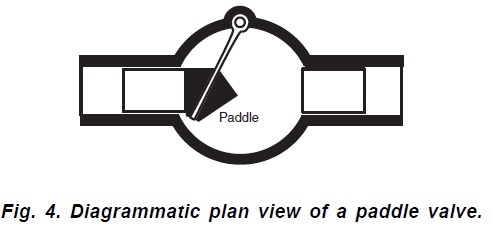
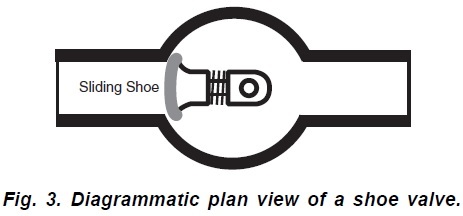
-
Nick, The dotted line is a stratifying plate, the example is an AKVATERM tank, it is not a tank in tank one, a Thermal Store. Yes the 1/2 tank question is relevant, however the base question is relevant about 4 port vs 3 port mixers.
-
Renting is not a game for the faint hearted. We have 2 properties that are rented out and they couldn't be different: 1. Same tenant for over 8 years, pays, looks after the house, it just ticks over. 2. Lots of tenants, we had to evict the last ones, that took time, money and a complete house overhaul after (cost), we also changed agents at the time because the previous ones were worse than useless. We will just be above break even on that one this year (last tax year) because of all the issues. The letting agents can be hugely different, we have one (the new one in the second property) who is proactive and on top of it (small company). The other one, which also had the second property originally (different office national company) are hopeless. They don't understand simple instructions, blindly accept quotes for repair work, you spend a lot of time monitoring what should be simple and have to keep a copy of everything. For example the en-suite shower tray needs work and the quote says "hack away plaster", I don't expect anybody to do any hacking and the house is fairly modern and plaster boarded! As we live in rented accommodation (Military) we are aware of it from both sides and one house we had (non military house, open market rent), the owners lived over the road! This caused no end of problems as they tried to do the maintenance themselves and came a cropper because of it. Before we moved out I dutifully filled in all holes I had made, painted over etc (never a perfect match but it is a rental house). We cleaned the house, moved then came back about a week later for the handover, during that time the owners had been in the house (don't know what for, but obviously in the house) so during the inspection, all the 'damage' that they wanted to claim for against us (I would call it usual rental wear and tear) was completely written off as they had been in the house whilst we were not there so we were not liable for anything! Recently the government intrusion has increased, Tax breaks are reducing and it is getting harder for the small landlord. To sum up: You can make money but beware of the work it involves (and additional stress). Once it is rented you will never want to live in it again and you need to think of it as an asset not a home. Be prepared for more Central Government involvement.
-
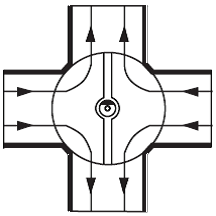
Whilst I deliberate over the tank design: In my 1 tank design I have included a 4 port mixer from the TS : The Lower part of the TS being around 40oC the top being 60-80oC (load dependant), however my UFH only requires around 23oC, so the plan was to take it out of the store at around 30oC and let the manifolds do the rest. However a 4-port valve with actuator will mix some from the top some from the middle and some from the bottom (I think) to achieve the desired output utilising a valve like this: This means that I am utilising high grade (expensive) heat when I don’t need to. Would it be better to use 2 x 3-port mixers as follows: The first mixer isolating the top (hot) part of the tank unless there is a drop in the lower part that needs boosting, then the second mixer doing the final blend with the bottom/return leg. Would this be more efficient? Also I could use thermos actuators (no electricity). Potentially I could do away with the TMV’s on the manifolds if I put the second mixer to the desired temperature, but that is for another day. Thoughts please.
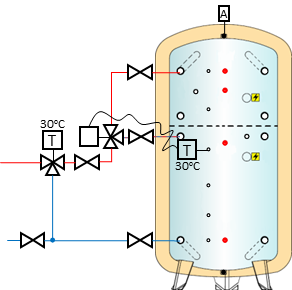
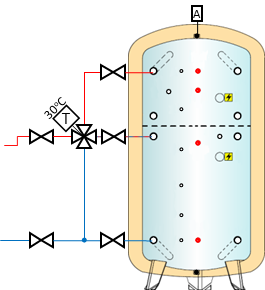
-
Nick, thanks, I know it is not a simple question.
-
I have just updated my Blog posts with the actual .pdf's rather than links to ebuild (that still worked!)
-
This is similar to what we are planning and I now have planning permission (see my blog). We didn't go off OPP as there was/is an existing house, we are just replacing, so went straight for (on advice) Full Planning Permission. Ours is over twice the volume though the same basic footprint. It will depend on what you are planning, what is nearby, we are on a street so has to blend in with the existing houses. From my blog you can see I went to our Architect with over 20 pages of ideas and diagrams of what we thought, so if you have a vision put it down as others have said. Cost wise I am also using 20% as my contingency figure and pricing everything at full RRP (so if you can get a discount, order from Europe, it is a bonus) That way I have a realistic idea of what it should cost (eye watering). I would recommend sitting down by yourselves writing it all down and drawing it out, then leave it for some time and come back to it and review it, we did this for the best part of a year before engaging our architect, and as you say you are in no hurry don't start spending too soon!
-
I have been working on schematics and the one tank option has less control valves attached (although that is the latest design and has accumulators shown). 2 Tanks.pdf This is the older Buffer and TS layout (Utilising coils to separate the 2 systems). 1 Tank.pdf This is my latest TS only layout (Showing a AKVATERM AKVA GEO tank, but any suitable TS would do). Both should work, it is just a question of which way to go.
-
Yes, at least 9 kW and possibly twice that although on 3 different faces (ENE, SSE, WSW) so not all generating at full capacity at the same time. I was considering Solar Thermal, but the general advice on the forums has been to go for PV and dump excess power into TS when possible.
-
I am moving towards finalising the design of the Heating/Cooling and DHW system. The house will have UFH/cooling supplied from an inverter ASHP that can also cool the floor (and supply cool water to an MVHR duct cooler), heat load of 3.4kW over 419m2 from PHPP. However we have a high DHW requirement (after long discussion on the previous forum) I have got it down to 27 L/m at ∆T of 44K with a usable capacity of ≈400L. (5½ bath house). I was looking at having a separate buffer tank for the UFH (200-300L) which could also pre-heat the DHW (a la Jeremy's layout, just bigger) followed by a Thermal store (300 – 500L) to supply the DHW (We have Mains Gas so boiler power). This would separate the 2 systems (recommended by most on the forums) and allow me to run the TS at variable temperatures (50oC – 80oC) depending on required loading (low occupancy – high occupancy), whilst eliminating the Legionella problem with a UVC at low occupancy. I would also cross connect the heat generators so the ASHP can provide low grade heat to the lower part of the TS and the boiler can supply the Buffer during ASHP high load/failure. However I am now considering just one larger Stratified TS (750 – 1000L) to cover the whole system. This would make plumbing and specification easier and theoretically the thermal losses from one large tank should be less than 2 smaller tank. eg. AKVATERM AKVA GEO 300 64W AKVATERM AKVA GEO 500 75W AKVATERM AKVA GEO 750 89W AKVATERM AKVA GEO 1000 96W So the 300 + 500 gives me 139W (although the 300 would be at a lower temp so less loss). Yes I know losses will be higher but as a guideline. I have been looking at the Sunamp Stack but it is only available as a complete stack 40kWh and would not support the low temperature of the ASHP (requires high temp to charge > 58oC). What would the collective experience go for with regards separate tanks and giving individual (if cross connected) systems vs one all singing (overall lower loss) tank?
-
We have a wayleave for the pole at the end of our garden so if they are replacing the wires down the side of the house I might be able to negotiate with them. Not sure on what sort of wayleave but my mum (lives there at the moment) gets a discount on her bill. I will need to investigate next time I am there.
-
As part of the preparation for our re-build next year I have been making enquiries about the electricity supply. The current house is supplied by overhead lines (single phase) and there is a power line running down the side of the current house; see Topographic Survey.pdf (from my blog). I made enquiries about, disconnection and establishment of a temporary site supply, followed by re-connection to a 3-phase supply. I am looking at 3-phase because I may install an ASHP, the PV total capacity will be 9kW or more (up to 20kW split ENE, SSE, WSW so easier to split over phases. Also the kitchen if at full load would require 24.9kVA (2 x induction hobs and 4 ovens). My mother is in a wheelchair so the kitchen will be split level with duplication! Ordinarily the house will draw very little power but I would rather be prepared for the worst. I got the quote from the DNO of £15K + vat. The biggest chunk 10K being the replacement of overhead lines with insulated conductors rather than the current open wire ones. After a few questions it would appear that this is separate from the 3-phase issue and has to be done anyway as we are building within 3m of the current open wire overhead lines. Has anybody else come across a similar situation?
-
Thanks, it works. I have copied my 3 original Blog posts from ebuild. I now need to update where we are.
-
Initial post date 21 Jan 2016 The initial brief for the house was: Passivhaus standards U-value of walls of 0.1W/(m2.K) Passive slab floor with 0.1W/(m2.K) low U-values, typically 0.85 to 0.70 W/(m².K) for the entire window including the frame, Triple glazing with built in blinds. Underfloor Heating with individual room/hall/passageway controls Mechanical Heat Recovery Ventilation with demand control Ground Source Heat Pump and Solar water heating Photo Voltaic Tiles (not panels) Rain Water harvesting Waste Water heat recovery Whole downstairs wheelchair accessible including garage, all on same level Lift to first floor, wheel chair compatible and enclosed Central Data Distribution USB charging sockets in all rooms (built in to 13amp sockets) LED lighting throughout Sun tunnel to windowless rooms Building wide WiFi with repeaters as required There were 20 pages of elaboration and ideas after this. One important point to note is that the house is on mains gas so this will need to be factored in as I go. A couple of key early decisions the main structure will be ICF (exact type yet to be decided) and the first floor will be concrete (pre stressed or cast in situ). The main reason being I have a 10.5m span on the ground floor so there is nothing else that will do this sort of gap other than steel. I want the large open plan space so this is the consequence. See the plans with dimensions below (Pre planning roof alteration but doesn’t matter): GF-plan.pdf downloads: 57 FF-plan.pdf downloads: 44 We want integral blinds in our windows and the only people who do this internorm so we will be fitting KV440 throughout except the little window in the walk-in wardrobe that doesn’t need blinds so that will be a KF410. I have been unable to find any other manufacturer who does integral blinds and meets Passivhaus standards. We definitely want underfloor heating, however after reading Jeremys blog, I am not convinced by individual room controls, whole slab/house temp control (more work and investigation required). MVHR, a no brainer, however I was looking at demand control, utilising humidity sensitive extract valves, I have found 2: Helios AE range and Aereco BXC, put these in all extract rooms coupled to a constant pressure system, but this can be finessed later as long as I make the initial allowances for ducting the finer details can be done later. Ground Source Heat Pump and Solar Thermal, there are probably going to be binned, GSHP is expensive and we have mains gas so why, and Solar Thermal, again reading Jeremys blogs PV makes more sense. As for PV tiles well wait and see what I finally put on the roof, either way it will be in the roof not on. Rainwater harvesting, I would like to put in but not essential, even if I only managed to capture half the roofs rain sensibly. Waste Water Heat Recovery, the ground floor shower will be a problem, getting a horizontal unit 120mm high in the slab with the correct wet room fall (wheelchair access) and then fall to the soil stack all in the slab without compromising the insulation. The 4 upstairs showers should be easier and can possible be paired together requiring just 2 vertical units. I still want to fit them. Obviously the whole ground floor is wheelchair accessible with a lift to the upper floor, so I can design in the lift and have it flush, no annoying little (50mm) ramp on entry. Central Data Distribution, the whole house will be flood wired with network cable, TV points, phone points, etc, with a central hob (node zero) in the attic. USB charging sockets, might as well, they are readily available and gets rid of a lot of wall warts. LED lighting, low energy no brainer. Sun Tunnel, I am having second thoughts as all the ones I find have horrendous thermal properties. Building wide Wi-Fi, goes with the network wiring, the repeaters will be designed in wiring in place to cover the whole house. This was my initial list and current thoughts on them, there are a lot of other issues as well such as DHW flow rates, cold water accumulator to support the bathrooms, Earth Air Heat Exchangers, Micro CHP, I could go on. I will quiz the collected knowledge for advice once I have researched what I can on the forums/blogs and then raise each one of the main topics as its own blog entry once decided. We will not start the house build until 2017 and as such we have this year to sort out the detail. It will also be a contract job (I am currently in the Netherlands) so I want to get the specification tied down a tightly as possible to avoid those changes (that cost), We are looking at putting it out to tender towards the end of the year so I have until then to get the specs right. vfrdave 21 Jan 2016 05:17 PM For wide wifi coverage try the ubiquiti access points, they give good coverage and seamless handover if more than one access point in use. lecerveau 22 Jan 2016 09:31 AM This is one of the AP's I was looking at last year. However as I will not build until next year and these will be one of the last items installed, I am in no hurry to decide, plus the rate of change in the IT world will probably mean there will be another standard beyond ac and other options by the time I come to purchase. The important thing is to allow for multiple AP and I am thinking 4, 2 per floor basically at each end of the house. Probably overkill but with solid construction and a concrete first floor, I would rather be safe in my provisioning of Network Access Points with PoE ready for the AP's and if I don't have to fit 4 then no great loss. PeterStarck 22 Jan 2016 10:31 AM Your ideas are interesting because our wall/roof and floor U factors are the same as yours, as are the windows. We have decided not to have heating and to keep systems as simple as possible with our design. We looked into ground/air heat exchangers as part of the MHRV and a host of other technologies and found we couldn't justify using them. This is partly because we live in the south east of England and the weather isn't extreme enough. It will be interesting following your blog. Good luck with the build. ThomasFroehlich 22 Jan 2016 09:20 PM Regarding the Blinds for the windows. Have you considered the option of using Roller blinds with a hidden box above the windows which are not visible from the outside so that you have blinds on your fixed and openable windows and not only on the openable ones like for your second floor bedroom? lecerveau 23 Jan 2016 01:56 PM Thomas, we had considered roller blinds, and we actually have them in our current house here in the Netherlands, that is one reason we want blinds in our windows. They are brilliant for blackout and shading, however they rattle in a strong wind. We only have the one small window without the build-in blinds, we are not overlay fussed and if it needs a blind an add-on in the wardrobe would be acceptable. We may will however still consider external roller shutters for the windows instead of the internal ones as internorm also offer that option. ProDave 24 Jan 2016 06:22 PM Re blinds in windows, Nordan also do them. We briefly considered this, a house up the road has them, tripple glazed with integral venetian blinds. It sounded a good idea so I went and had a look, and I did not like the detail. Basically it was a 2G window, then a blind on the OUTSIDE and a third separate and openable pain on the outside (openable when the main window is opened inwards) The BIG problem with this arrangement is the cords that operate the venetian blinds have to pass through holes in the 2G frame. Once I pointed out the shortcomings of this system, SWMBO agreed integral blinds were no longer on the wish list, and we have gone for Rationel triple glazed as they were only slightly worse than internorm in terms of Uw, but half the price. 1anR 24 Jan 2016 07:17 PM I don't wish to put you off Internorm, that's who I'm going with for my window package and for me they were cheaper than Rationel, but aren't their integral blinds only on opening windows? ie. between the 3G unit and a 4th pane that you can open once the sash has been opened. Norrsken do an option with the blind inside the 3G unit so can be on fixed sashes also. Personally I viewed this as a warranty issue, but have no experience to back this up. My final decision is to go with concealed venetian (Hunter Douglas) external blinds, but I do also like the external roller solution. samuelsimon 30 Jan 2016 01:04 PM PeterStarck, on 22 January 2016 - 10:31 AM, said: Your ideas are interesting because our wall/roof and floor U factors are the same as yours, as are the windows. We have decided not to have heating and to keep systems as simple as possible with our design. We looked into ground/air heat exchangers as part of the MHRV and a host of other technologies and found we couldn't justify using them. This is partly because we live in the south east of England and the weather isn't extreme enough. It will be interesting following your blog. Good luck with the build. Hi Peter. Have I correctly understood your new build will have no heating system? PeterStarck 31 Jan 2016 10:42 AM According to the PHPP our space heating requirement is very low and can be met by the Genvex Combi 185. This provides warm air through the ventilation ducts by a built in EAHP. If the temperature remained below -10C for any length of time I would just use a small fan heater. TerryE 05 Feb 2016 11:20 AM There is little point in having internal zoning in a house of this spec, as the effective internal U values are on order of magnitude higher than external ones. Pumping heat or cold air into any one room is just going to imbalance the rest of the environment. Also designing your cooling solution is going to be as important as your heading solution.
-
Initial post date 21 Jan 2016 Our planning application took just over 3 months, however there was a lot of work done before this. As I said previously over an extended period the plans bounced back and forth between the Architectural Technologist (AT) and myself, with the occasional face to face when I was up at the existing house. The initial submission consisted of the topographic survey and photographs I posted last time, a OS map (very out of date, but required), Application form and Design and access statement and the following: GF-Plan.pdf downloads: 24 FF-Plan.pdf downloads: 23 Elevations.pdf downloads: 28 Site-Plan-Final.pdf downloads: 23 During our discussions with my AT we made the following, considered obscured glazing on the SW 1st floor windows overlooking the neighbour, but didn’t put them in the submission. I was considering PV in roof and Solar Thermal in roof but put on the submission PV panels on the roof and Evacuated Tubes on the roof. The reason being they are the most obtrusive and if we fit what we want it is less obtrusive or if they tell us it looks wrong we can change to something more sympathetic. The reason for all this is to have something to offer the planners when they object and be seen to compromise. We got various comments from immediate neighbours and some who are not immediate but still commented anyway. To summarise they said it was overbearing, overlooking, shading, out of character, would decrease the value of their properties, create dust and noise during construction. The decrease value of their property is nonsense and nothing to do with planning as is the dust and noise during demolition/construction so easily discounted. Out of character, no two houses on the street are the same, bungalows and houses, detached and semi, rendered, brick, stone (slips I suspect) and timber clad and roofs the same, slate, tile, concrete panels you name it (no thatch). We deliberately kept the house in line with the others both sides and it is a 2 storey up slope of us and a bungalow down slope. Our front aspect was designed to go from 2 storey down to single storey over the garage (cat slide roof the AT called it). That left overbearing, overlooking and overshadowing. We were informed by the planning authority that the application would likely be rejected on these 3 points and they also talked about the 2 storey/1-storey elements. That would completely negate the design so we opted for a delay and re-submission of amended plans, also giving us time to rebuff some arguments. Overlooking: The house to the SW, we installed obscured glazed windows in the first floor to solve that problem (was in the original thoughts but left out to enable the compromise). As for the bungalow we deliberately put the first floor bathrooms on that side to prevent this problem and the high level window in the built in wardrobe was only put in to break up what would have been a large blank wall. Overshadowing (right to light): This was an issue for the bungalow who wanted to sit in their garden and we would be denying them light, however I suspected that it was not a major issue so I did some quick calculations, and utilising some useful web applications, the most useful being www.findmyshadow.com (others are available) plotted out some rough shading diagrams for the existing house and the new house against the bungalow (dimensions from my topographical survey) and summarised my findings on the file below (which was submitted to planning) Shading-diagrams.pdf downloads: 21 The basic crux being: March we would bring them into shade 1 hour earlier. April 1600 we would start to introduce shade but the existing house did so from 1700 ish. May Old and new introduce Shading from 1800 but the cottage produces it’s own shade from 1900. June-Aug Sun too high to impact Sep similar to April October similar to March Nov – Feb Sun so low no change over current house. So some quick work and effectively we negated the shading argument. That left the overbearing argument. The issue here is that there is no central government guideline on what is and isn’t overbearing! Many local authorities use the right to light 450 rule as their guideline on acceptable development, mine has none, so we utilised this as a frame of reference. We altered the design, lowering the roof line by 750mm and trimming the eaves, we also put a Hip roof on the SE and SW ends, reducing the roofline further, and re-submitted: Elevations-2.pdf downloads: 15 This was still nocked back so we arranged a site visit with the planning officer. At the time I was (still am) living in the Netherlands and with my mother away on holiday the house was empty so I arranged to mome over for the meeting. This was disappoint as it was not the planning officer (the one that matters) but an assistant and an assistant to the assistant! After explaining our thoughts (I held my tongue for a lot of this) the basic problem was that the planning officer didn’t like it! After a discussion with my AT we decided that, there being no reasonable objections, we would stay on track, give them a diagram explaining what may be overbearing and if necessary go to appeal. We submitted the following: Elevations-Final.pdf downloads: 16 Site-Plan-Final.pdf downloads: 16 And my AT sent a long, comprehensive e-mail to the Planning Officer detailing how we could counter all of their arguments. This e-mail is not included on the planning site (I suspect because it sets a president) but to summarise: The existing house (extension) was already inside the 450 line from the bungalow window by 1280mm and the new house only 710mm longer (thick walls) is at 410 so we had an argument that it was not significant. We also quoted other planning authority guidelines on acceptable development. Another site visit was conducted, only 1 week after the previous (I did not attend this time), this time with the planning officer (decision maker) and we were granted permission less than a week later. The full public story is available here: http://planning.alle...let?PKID=133973 The moral of the story is You need full details and facts before you start (the topographical survey negated many arguments), be prepared to compromise so plan for it, but be prepared to stand your ground, many objections are baseless and irrelevant and just because an official “doesn’t like it” doesn’t matter it is what is in the rules and guidance that matters. DeeJunFan 21 Jan 2016 03:15 PM Good post, a lot of effort put in but it goes to show with the right information you can achieve a lot. Site-Plan.pdf
-
Initial post date 08 Jan 2016 My plan is to knock down the existing bungalow and re-build it with a 2 story house. This blog will be a record of the journey (hopefully), I will pass on any lessons (good and bad) and also ask the wise collective for advice (some of which I may take). The first question is why? We have a perfectly functional 4/5 bedroom bungalow that my mother lives in. I own the house (having bought my sister out of her half) and I wish to build a house to retire to. I am currently in the Royal Navy so have never lived in one location for more than 3 years, been in many houses and have an idea of what is good an what is not. Our children (10 and 12) consider this house and the other grandparents as homes but not the houses we inhabit! One important factor is my mother is in a wheelchair (not that she lets that stop her) so the house if fully accessible, as you can see from the existing photographs, ramps all round. Existing Photographs.pdf downloads: 42 The bungalow itself is a 60/70 build, extended on the back (obvious from the photographs) with the garage re-build also, however, there are mice under the floor boards (in the old part), there is an internal level change between old part and extension (gentle slope), there is damp in the chimney breast (penetration from above) and it leaks like a sieve, yet suffers from horrible condensation and mould. So it would be a not inconsiderate sum to put right and the house would still be not ideal, so we have decided to knock down and re-build. We are going 2 storey to provide additional space for the whole family, Ourselves and my mother plus space for my sister and her brood (4 boys) to visit (they live in the USA) as it was her home at one point. So initially I created lots of ideas, basically the overall plan was to keep the same footprint, fill in the cut-out bit and make it 2 stories, we filled in slightly more than the cut-out but the frontage was the same. I also created about 20 pages of specifications (my brain dump/wish list). We than sat down with a local architect (Architectural Technologist) who did the garage re-build for us. The overall concept is a modern, efficient house, build along Passive House lines (Insulated slab and walls, warm roof, MVHR, UFH,……). His first statement was for us to have a professional topographical survey done; this has paid dividends as it is exact, covers the neighbour’s extremities and all the surrounding ridgelines that were essential when battling with the planning department. He then took my drafts and my 20 page specification and turned it into a viable plan, after a couple of iterations over the next 6 months. The major one of these being to push the house 3 feet to the SW to take if off the boundary and any 3rd party issues, it also move the house further away from the power lines that run down the side of the plot, hopefully simplifying build issues that would be associated with them. Topographic Survey.pdf downloads: 31 There were several iterations, subtle changes but this is what we ended up with. GF-Plan.pdf downloads: 39 FF-Plan.pdf downloads: 34 Elevations.pdf downloads: 39 Site Plan.pdf downloads: 26 I will stop there for now. The next post will by my battle and ultimate victory with the planners. ferdinand 08 Jan 2016 12:40 PM This sounds like an architect who is worth the money. I trust you are some way up the hill, unless you want the continued Navy experience. lecerveau 08 Jan 2016 12:58 PM Yes the architect was well worth it (more in the next post). We are well up the hill, over 20m higher that main street (Google flood pictures), if our house floods there is a lot of the UK under water! gravelld 12 Jan 2016 04:56 PM Thanks for introducing me to the term "Architectual Technologist". Can an AT handle the aesthetic parts of architecture as well? On what sort of projects would you not employ one, anyone know? joiner 13 Jan 2016 09:54 AM From my own experience of ATs, as long as you've done what any sensible person would do with an architect and seen examples of their work (and hopefully spoken to their customers - who they will happily have referred you to) and like it, then - again in my experience over a considerable time and a number of different jobs - to all intents and certainly to most purposes you won't tell the difference between an AT and an architect.
-
I mean on this site.
-
Calvinmiddle, I will be using the same design concept as JSHarris, it will have between 20-24 loops, all permanently open to re-distribute heat/cool as required (Passive Haus principal). Control will be done either by the TMV or some other isolation method, still in design stage. Jeremy, read your ebuild blog and other bits and was aware you had this issue. Jack, be very interested on how your conversations go.
-
Question, how do I start a blog?
-
I have the same issue with Part M1. Although the house will be fully wheelchair accessible (my mother is in a wheelchair), the following could be prohibitively restrictive: Services and controls 1.18 To assist people who have reduced reach, services and controls should comply with all of the following. a. Switches and sockets, including door bells, entry phones, light switches, power sockets, TV aerials and telephone jacks, serving habitable rooms throughout the dwelling have their centre line 450-1200mm above floor level, as shown in Diagram 1.5. b. Consumer units are mounted so that the switches are 1350-1450mm above floor level. Again there will be areas where this will be inappropriate or unfeasible, and I want to make sure I am on a sound footing when I 'disregard' the guidelines.
-
I have a question about what is and isn’t enforceable in the building regulations and subsequent guidance. This covers Under Floor Heating (UFH) and control. Our house (after debate on ebuild) will have one UFH zone (Passive Haus) but has a usable floor area of 419m2 (PHPP figure) and I am looking at the following for Part L1: And the Domestic Heating Compliance Guide: In the Building Regulations it states that Reasonable provision shall be made for the conservation of fuel and power in buildings by:….. Such that it is legally enforceable with the ‘shall’. However in the Domestic Heating Compliance Guide states that Dwellings with a total usable floor area of greater than 150m2 should be provided with at least two space heating zones each having separate on/off timing controls and temperature controls. Also the guide is full of ‘should’! I have worked with contractors (in my previous job) whilst refining a multi billion pound specification (military procurement) and they place a great deal of emphasis on Should and Shall, in that I want a Shall to ensure I get it and they want a Should to ensure that they won’t be held to account if it does not perform up to spec, basically Should cost money. So in the same vein a building inspector cannot insist that my house has two or more UFH zones as, as far as I can see, it is not legally enforceable and only a guideline! I would appreciate you thoughts on my dilemma!