
Dreadnaught
-
Posts
1819 -
Joined
-
Last visited
-
Days Won
5
Everything posted by Dreadnaught
-

Heating oil prices for the next 20 years
Dreadnaught replied to Nickfromwales's topic in Boilers & Hot Water Tanks
Oil is a widely traded commodity. Theory states that the price in open markets with huge turnover encompasses all information, both about the present but also future trends too. There are, of course, professional traders of oil. In the wider market, the prices of oil futures contracts represent real monetary bets on the future oil price (for hedging purposes and speculation). They are the best indication of what that group thinks about the trend in future oil prices but they are quite short term. In reality, with such a widely-traded commodity, anything longer is really just guesswork. (In anyone on this board thinks otherwise, they would do well to keep quiet and financially trade on their knowledge instead ?). The gas price is closely correlated to that of oil, as are a range of other oil-related products such as industrial plastics. Don't fall into the simplistic trap of thinking that oil is inevitably a dwindling resource and so its price must inevitably rise in time. Things are more complex than that. For example, a rising price leads to more oil exploration. A case in point is the rise of fracking in the US. Even people within the industry didn't predict it. This is shown neatly by the newly constructed and hugely expensive gas-liquefaction plants at US ports that were completed just before the fracking boom. They were were designed to import Qatari liquified gas by ship. With the advent of US fracking they were expensively all flipped around ready to export gas rather than import it. Nobody guessed it. For your purposes, I imagine that your best bet is to use the current oil price in your estimates, with scenarios for swings not only up but down too. -
AndyT ( Andy Trewin ) formerly of Sunamp
Dreadnaught replied to Nickfromwales's topic in General Alternative Energy Issues
These: https://ecopartnersuk.com? -
Good point. Perhaps insulation is not needed therefore, unless her cooling system achieves considerably greater levels of cooling.
-
Vivien is having a duct-air cooling device for summer cooling. I imagine that is why her ductwork needs insulation.
-
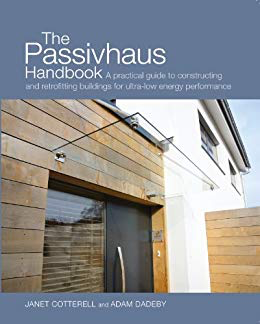
@Onoff, this might be a good introduction: https://passipedia.org/planning/airtight_construction And this from Bere architects might help for more detail: https://www.bere.co.uk/research/airtightness-report-a-practical-guide-to-achieving-airtightness-in-passive-house-buildings/ Personally, I found this book, Passive House Handbook, to be helpful, if he likes reading books:
-
Just to be clear. A powered PoE-switch vs PoE-powered switch are, in some senses, opposites. A powered PoE-switch has a power supply from the mains and can provide PoE to multiple ports. A PoE-powered switch has no external power supply, is powered itself by PoE, and passes PoE through to only a single output port.
-
@pocster just to be clear, you're aware that you don't need a powered PoE switch to run a PoE AP? Every AC Lite has a PoE power injector in the box. You can power the AP from a power socket nearby using the injector. A PoE ethernet switch is entirely optional. If you use the power injectors, you can use a cheaper un-powered ethernet switch. Your choice. A powered PoE switch can power as many devices as there are powered ports on the switch (some switches have some powered ports and some un-powered ports, they are labelled accordingly).
-
Nigella visiting every other Thursday?
-
One further thought, if you want to spoil your tenants with WiFi coverage outside in a garden or open space, there are waterproof APs made be Uniquiti.
-
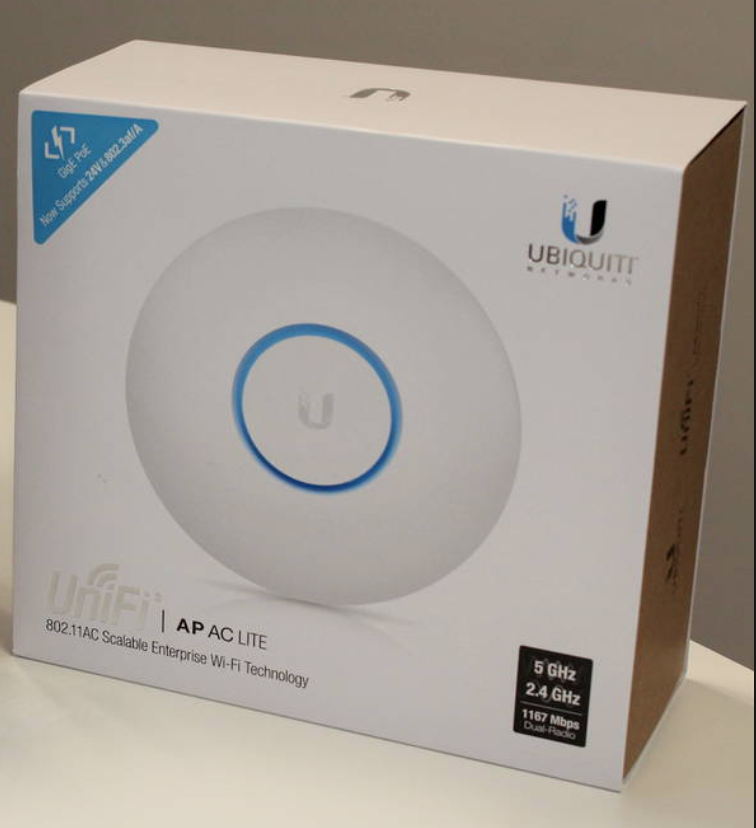
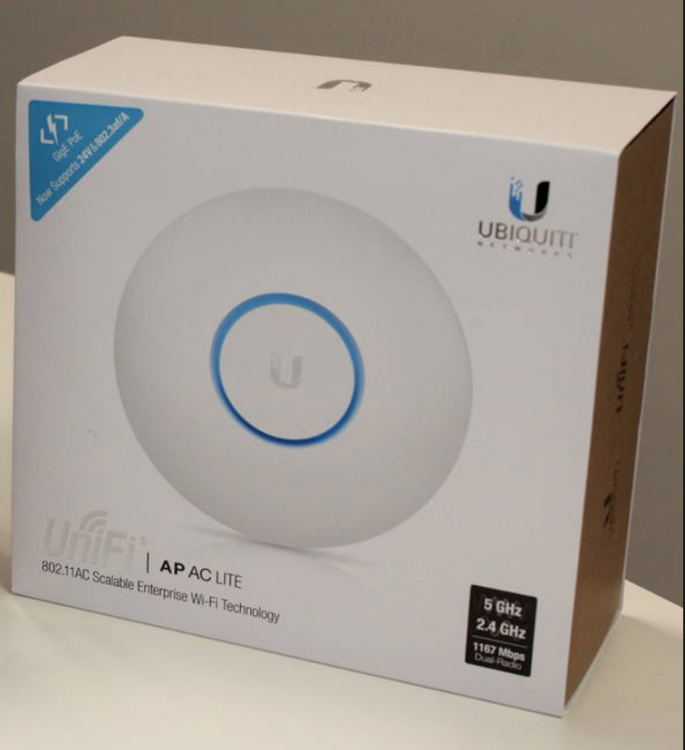
Newer AC Lites, including all those currently sold, also support 802.3af/A PoE as well as 24V PoE. But do beware of that if buying second hand. There's a sticker on the box of the newer model, see the top left blue triangle:
-
It wouldn't enable you to reset the modem provided by the ISP (which you will still need). I would recommend a remote activated smart switch as a solution for that except for one huge flaw. The smart switch wouldn't work when the internet is down (unless it is connected to the 3G network; I believe there are some switches that do).
-
You can access everything about the wifi network. You can see who connected, how much data they are using, you can set all sorts of limits. Importantly, if you need to reset the network (fixes most problems) you neither have to visit nor instruct a simple-minded tenant what to do. You can reset it all remotely from you beach in a far off place (yes I remember your lovely photos ). Its entirely optional. Perhaps start without it.
-
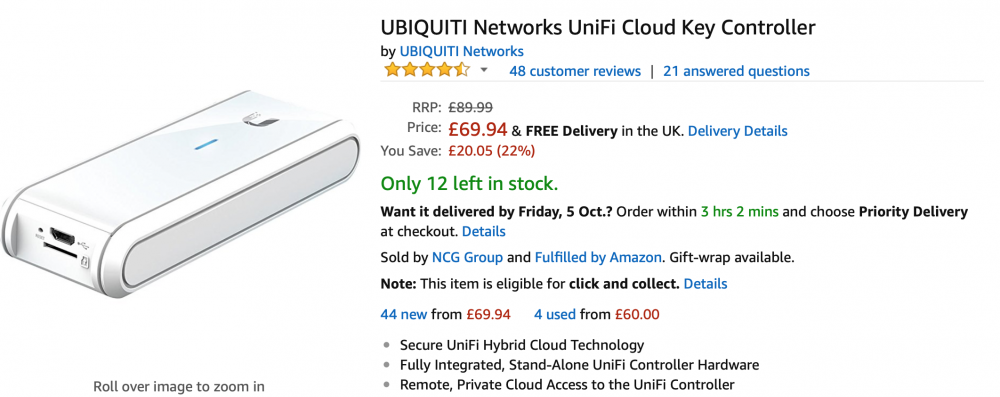
Yes. You don't need to "daisy chain". Just make sure the various APs are on the same ethernet network somewhere. Yes, roaming will be automatic. If you want remote access, add this to the network somewhere. Its entirely optional. Its not needed for initial setup. Its only for remote access (and pro-level monitoring).
-
Good point. I forgot to mention PoE. Keep in mind that a PoE injector is included in the box with every AC Lite.
-
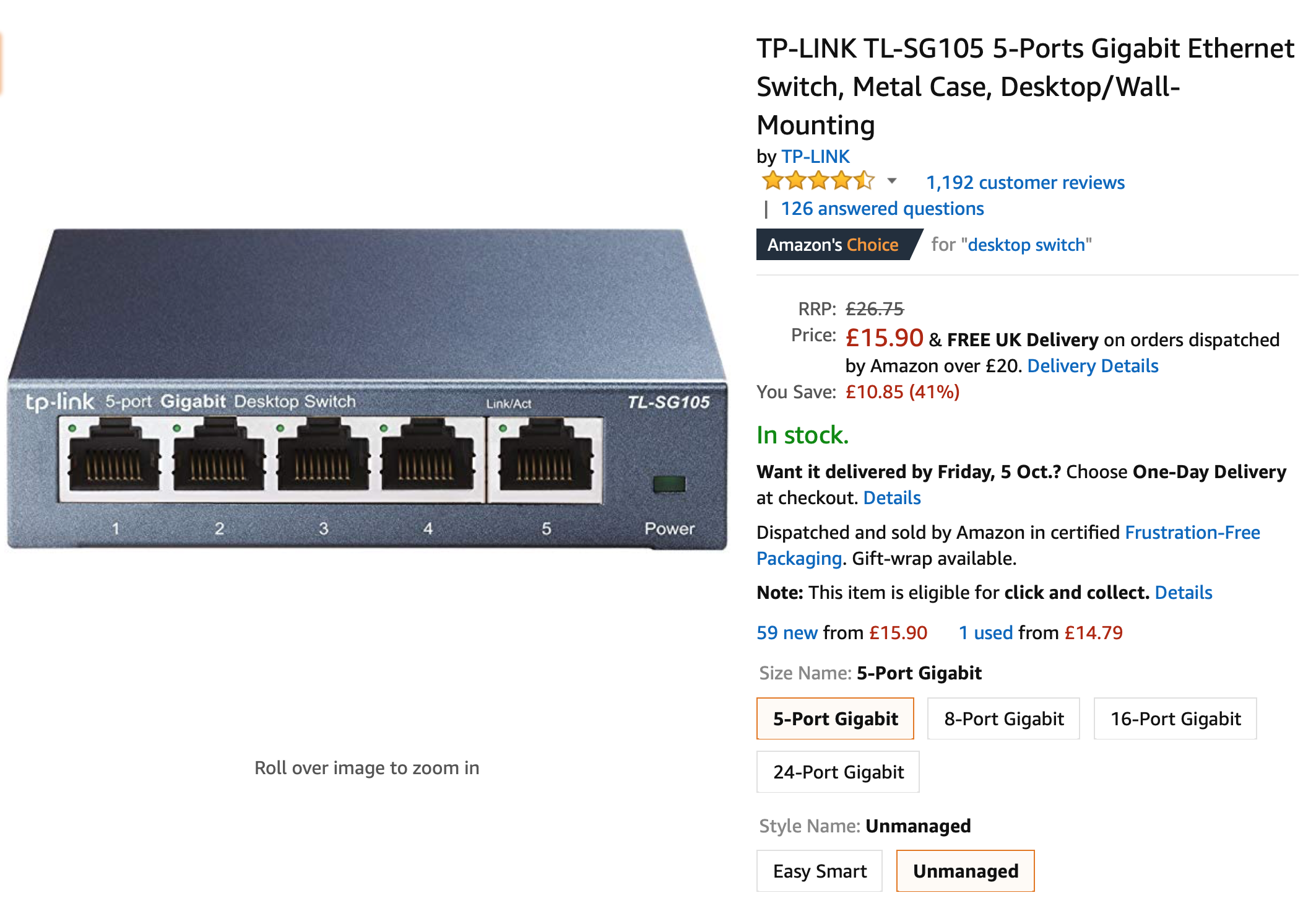
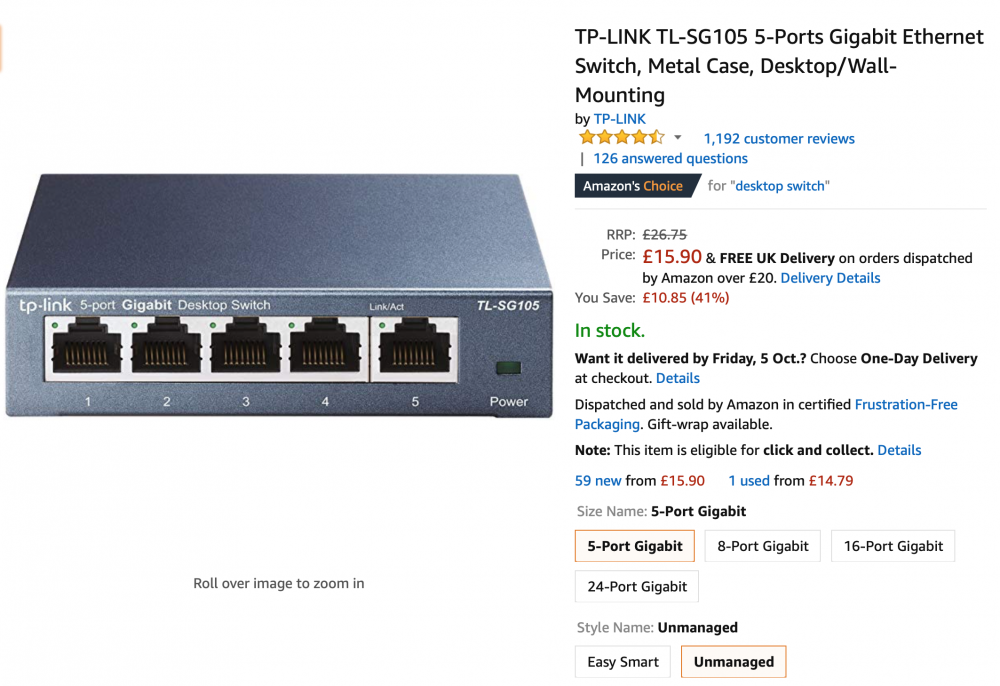
Probably. If you intend to run multiple devices from a single ethernet wire (e.g. CCTV camera and an AP) then all you need is for the cable to plug into an ethernet switch first, which acts as a junction box. There are loads available but something like this would do: Also keep in mind if you are without an ethernet network that you can use Unifi AC Lites using Powerline through your electricity wires. I don't have much experience of Powerline. I hear it can be a glitchy but it certainly can work.
-
Oh and one last thought. I would imagine in this day-and-age and for an HMO, complaining about WiFi will be a perennial pastime for your tenants. I would think that investing in a good Wifi system (ethernet wired, not wireless, and mounted in the ceiling away from prying hands) would pay-off many fold. Add in remote management and you have solution that could well make your life easier. Not to mention that good WiFi could be a selling point for prospective tenants. In your case, I would avoid consumer solutions and instead go for a commercial solution like Ubiquiti Unifi. Its widely used professionally, including for large deployments. Every professional installer you speak to will know all about it. It takes a little getting used to be once setup its really just fit-and-forget. You can DIY-it easily. And its not expensive. Just a thought.
-
Oh, and wifi extenders don't really work because roaming fails. The multiple dumb routers do not hand off the WiFi connection between themselves. The user ends up connected to a distant router when a better one is nearby but neither the router nor the connected device does anything to remedy the situation. (And that is to ignore the reduction in transmission speed of using a single frequency for both extending and data transmission.)
-
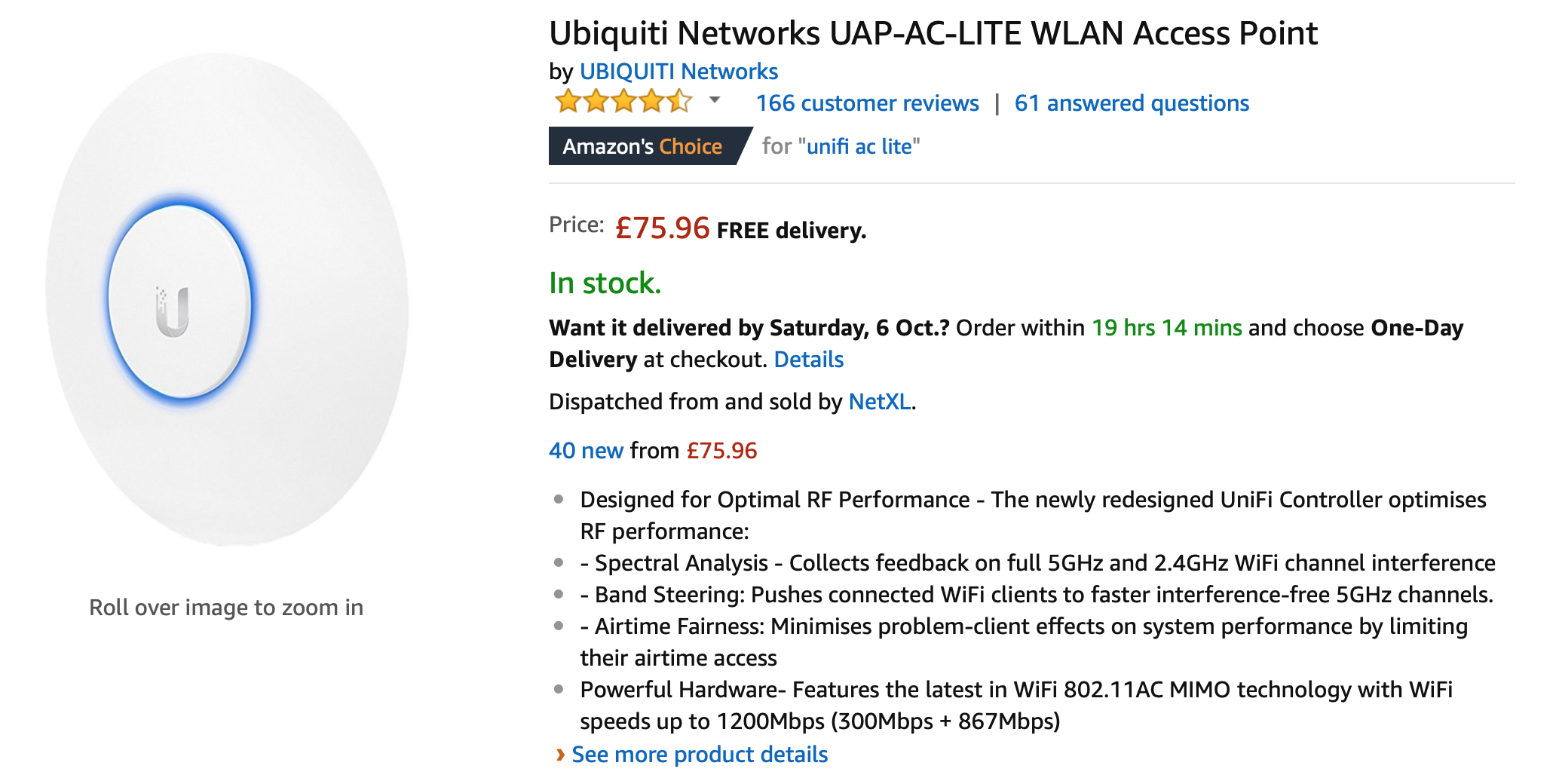
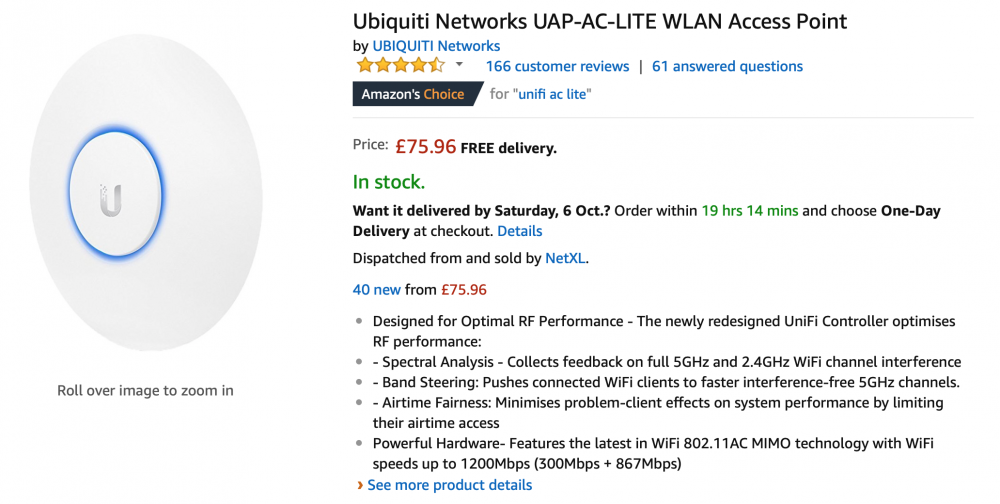
Best solution, if achievable in your circumstances, is Access Points (APs) connected by ethernet (not wireless). APs ideally should have seamless roaming, like Unifi AC-Lite (below) or similar. They are not very expensive. About £70 each. If you go with that approach, you don't need anything else. You can turn off the wireless transmitter in the modem provided by the internet provider. It does take a tiny bit of technical knowledge to set up such a system up but I assure you that its very easy and there are people on here who can troubleshoot for you. For an HMO, you can also manage the network remotely with a little extra cost (about £70). An example of a suitable AP (you would need at least two):
-
Welcome, a very interesting build. We like photos
-
@dnoble did you see the design and installation manual here? http://www.bublshop.co.uk/files/pdf/pdf2040.pdf. (Credit to @le-cerveau for the link, https://forum.buildhub.org.uk/topic/2845-sunamp-heat-battery/?do=findComment&comment=102379)
-
Which ASHP are set up to cool
Dreadnaught replied to Triassic's topic in Air Source Heat Pumps (ASHP)
@Ed Davies that's a good point. It reminds me of @TerryE's comment in his excellent posts about using the slab as a heat store posted in Boffins Corner. He mentioned that the low-wattage UFH circulation pump was over time fundamentally just another kWh of heat going into the slab. -
Interesting. I suppose the use of such a system does present a conundrum. With a well-insulated airtight house of modest size (I don't know if that is what you are considering), the energy demand for space heating is rather low. Energy demand for domestic hot water can often be similar of higher than for space heating. But a heat pump struggles to generate heat sufficient for domestic hot water (DHW). A 34º SunAmp preheat solution for DHW is one solution. Or a multi-stage heat pump but then the CoP suffers. I assume this would also apply to a w/w heat pump. Might you have access to much more energy than you need? Or perhaps you are considering a less energy-efficient home and therefore could use copious hot water at 34º for space heating? I assume a w/w heat pump would however offer a few advantages as well as access to copious energy, much better CoP in summer and winter compared to an ASHP for cooling and heating. (And there is the question, of course, is if the extra cost is justified for the benefit.)
-
Which ASHP are set up to cool
Dreadnaught replied to Triassic's topic in Air Source Heat Pumps (ASHP)
Why is that, I wonder? It is because the system is always optimised for heating? If so, I wonder how. -
What a lovely location! I am curious, how would this work in practice? Would the blades be in the bed of the main river? In a rivulet? Or might the water by piped from the river and back through a tank (or some such contraption)?
-
@canalsiderenovation, I tracked it down. It wasn't Grand Designs, it was this: https://www.houseplanninghelp.com/hph182-extracting-energy-from-watercourses-by-generating-electricity-and-extracting-heat-with-justin-broadbent-from-iso-energy/ Extracting energy from watercourses by generating electricity and extracting heat – with Justin Broadbent from ISO Energy. A podcast by Ben Adam Smith, the House Planning Help podcast. Have you listened to it?