
Dreadnaught
-
Posts
1806 -
Joined
-
Last visited
-
Days Won
5
Everything posted by Dreadnaught
-
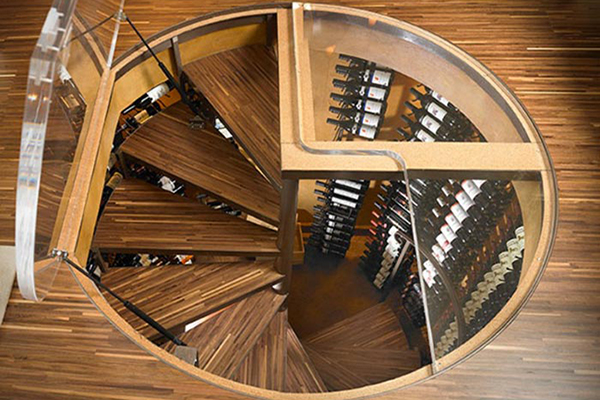
Wine cellar maybe
-
Find someone with soil muck-away nearby and offer to take it free-of-charge (delivered)? It could save them the disposal cost.
-
Welcome to BuildHub, Julian. I am not too far away from you in Cambridge. I have planning permission and will be starting my build in the coming months. Good luck with your planning permission, there is a wealth of knowledge on here.
-
 In addition to "liability for damage to site or neighbouring properties" which you mention, there is also third-party liability relating to human injury and death. This is a huge issue which I think should be very clearly defined. Will the TF company have full control of the site during their phase of your build, for example? It is linked to CDM 2015 of course. I think I too would want a contract for such a major phase of work.
 -
I will be choosing GU10s, and fitting them with Philips Hue GU10 bulbs to provide lighting automation. The idea is that if I sell up the incoming buyer does not want (to pay for) them, I can take all the Hue bulbs with me as I leave to the next place.
-
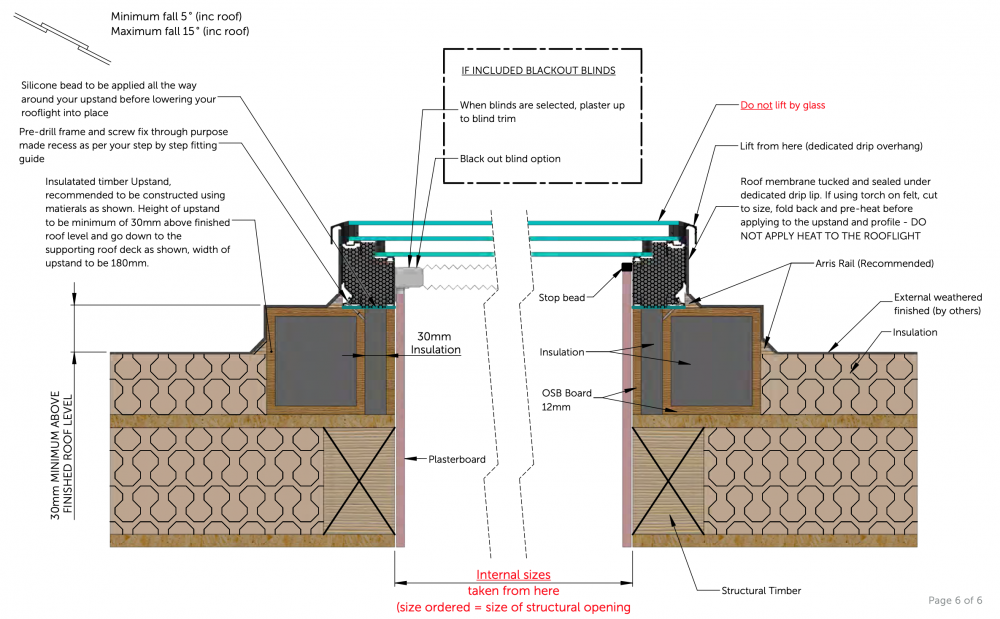
The type of insulation is not specified but I had assumed it was PIR. As I understand it, the inner leaf of insulation is intended to be continuous with the insulation inside the rooflight frame, and forms a thermal break. The weight of the rooflight is supposed by a combination of the exterior box frame and the interior single free-standing piece. It took me quite some puzzling and chat with the rooflight company before I worked it out. In reality, I don't think we will follow these details too closely. Instead we will make something simpler but still much thicker than the typical upstand (including the one typically deployed by my timber-frame designer). In my case I have nine rooflights, and almost each one will require a different upstand. Quite a complex design job and probably the only part of the overall frame design that really does require 3D.
-
SIP garden room foundations plan - am I on track?
Dreadnaught replied to Hamish's topic in Garages & Workshops
At the sole plate, for my timber frame we chose to split the sole plate in to a pair of battens, rather than a single piece of timber, so as to eliminate the cold bridge there. In my case I am having I-beam walls which will pumped full with cellulose insulation. (I'm having an insulated raft foundation.) -
I am designing the upstands for my rooflights now too. Mine are from a different company but are also triple glazed and are passive-house certified. I also have a PIR roof of similar thickness. This is the upstand detail that I am following but my timber-frame designer and architect are converting it into something buildable offsite by my timber-frame manufacturer:
-
Not helpful to you, but I saw one other exact example of this when visiting other builds. In this case it was for patio doors from a bedroom leading on to a flat roof. In that instance, the warranty company chose to specifically carve-out the issue from the warranty cover. I think the self-builder chose to continue without any remediation of the problem and I haven't heard whether the issue has subsequently caused problems.
-
Sizing a boiler for UFH and greedy hot water guzzlers
Dreadnaught replied to MrsDeS's topic in Boilers & Hot Water Tanks
More generally, and not being any form of expert, I found that having a (paid) M&E adviser in the planning stage of my build has proven to be invaluable. A few hours of hourly-rate advice from an expert has impacted on so many areas, not only the choice of a heating system, but everything from penetrations through my concrete raft, to lots of other issues that had knock-on consequences elsewhere. I had picked up a great deal of knowledge by avidly reading this site (thanks everyone!) but that adviser was able to assist in unpicking all of my half-thought-through ideas and string together a coherent concept. I considered it money well spent and my architect complimented me on the approach. -
Building timings during Covid19
Dreadnaught replied to puntloos's topic in New House & Self Build Design
I am at the stage of discharging planning conditions so I can start. It has taken almost 12-weeks and I have only just had the first one discharged (of nine). I have just sent them a two-week "deemed discharge" notice for the rest, which might focus their minds (… or might not). That's an indicator of how slow things are in my neck-of-the-woods (Cambridgeshire). -
Discharge of Conditions took 23 weeks - refund?
Dreadnaught replied to Tony C's topic in Planning Permission
Did anyone keep a copy of this example letter above ↑. I cannot seem to access it any more and keen to prepare my own letter now. -
Building an iron age round house ?
Dreadnaught replied to Waterworks's topic in General Self Build & DIY Discussion
An iron-age roundhouse on wheels maybe? And only need to comply with the static-caravan requirements. Commendable aspiration. (I remember the 1970s BBC series too). -
"LoopCAD is a Windows program only". No Apple Mac support. ? I wonder if there is a friendly LoopCad-user out there who could see themselves willing to help a wretched and neglected Apple Mac user? Would love to design my loops. ?
-
Off topic (sorry), what is "facing"?
-
@Field_of_Dreams, yes. On all of those points I turned out that it was possible for my tree specialist to draft the Method Statement to accommodate whatever I wanted. I was quite surprised and pleased. It seems almost anything is possible and, so long as you choose a good expert, he can make almost anything work. I do not know if all of the tree experts are like my one, but he was recommended to me by another self-builder as someone who would "be on my side", which I am now coming to appreciate.
-
Hi @Field_of_Dreams, oh yes, what in particular interests you. In general I have found that most things are possible, they just need to be framed in the right way for the council tree officer. And moreover, its all well and good to have a detailed arboricultural method statement (AMS) but I get the impression that the reality on the ground is likely to be flexible. Having said all of this, I am still waiting for the council to sign-off on my planning conditions, which includes the AMS that was drafted for me by my tree specialist.
-
The piles support the entire insulated raft, across the full floor area of the dwelling. There is no separate ring beam. The raft has the edges thickened, which act like a ring-beam in terms of supporting the exterior walls. And because the majority of the raft will be quite thin by the standards of concrete foundations (just 100mm for most of the raft) there will also be reinforcing cross thickening to form structural ribs in key areas. I have also specified in my build that none of the internal walls be structural, which is quite easy to do as mine is a bungalow, and gives great flexibility.
-
I might add that my foundation build-up will be as follows. Bottom to top: Blinding Heave protection, 220 mm, such as "Heave Stopper" or "Jablite" or "Cellcore". The thickness of the layer is dependent on the physical characteristics of the clays. PIR insulation, 200mm (100 mm for the edge thickening ("ring beam") and ribs). Also to contain various water supply pipes. Reinforced concrete. 100 mm (200 mm for the edge thickening ("ring beam") and ribs). Also to contain under-floor heating pipes. Quite a thick set of foundations. The insulation is usually EPS but I was able to choose PIR to make the build-up thinner because the insulation is not load bearing. As I have learnt, PIR would probably support the weight just fine but it has not be characterised sufficiently well that an engineer would be willing to specify it if it were load bearing (or, more to the point, his liability insurance would be willing to insure it). PIR can be only used when not load bearing, at least at present.
-
I am having an insulated raft over shrinkable clay, albeit with screw piles. It is currently being designed for me by a specialist engineer in Ireland. Edited to add: oh, and I inherited a soil survey from the seller of the plot, and everyone concerned with the foundations has asked to see it.
-
Its an understandable question but, no, the tops of the screw piles, which are capped, are embedded in the concrete raft, so that the dwelling's weight is fully transmitted through the piles and does not bear upon the ground (and so the tree roots are happy). The issue of thermal bridging from the piles is occasionally raised. It is a marginal thermal bridge that can be taken into consideration in the overall thermal modelling. The piles can be sheathed with insulation for some of their depth if needed (not in my case).
-
Understandable concern but consider that the water pipes buried in the raft are continuous, no joins. I suspect and hope that the chance of a problem is remote. And attaching those pipes to the steel mesh when the raft is being constructed doesn't cost much. I have mains gas in the road in front of the plot and for a long time assumed that I would connect to it. But with the arrival of electricity tariffs with overnight electricity as low as 5p/kWh for a nighttime window, I have been persuaded that installing an ASHP is a better solution, especially for the long term.
-
It seems so long ago that these decisions were taken, I can barely remember now (!) Thinking back, I bought the plot with planning permission already in place (I subsequently resubmitted and changed it) but that already specified the screw piles, which were chosen principally for their minimal impact on the tree roots of the protected trees that neighbour the plot. I chose the insulated concrete raft after looking at the alternatives, such as beam-and-block or timber cassettes. I liked that a raft can be used as a form heat battery, with embedded underfloor heating within it; an approach used by some of the other members on this forum. And it of course gives a solid-feeling floor with no bounce or flex.
-
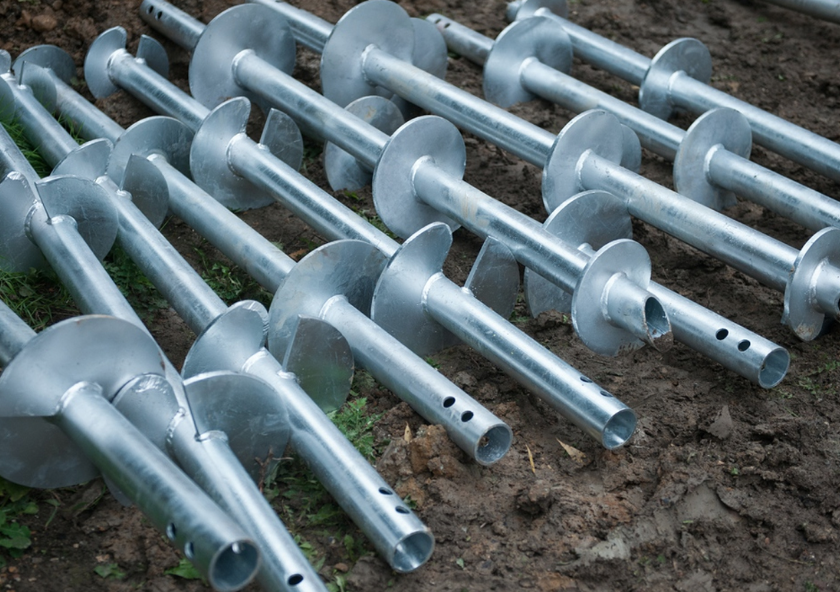
No, yours aren't screw piles from the sounds of it. With yours, they will drill a hole, remove the auger, and then fill the hole with a metal cage and concrete. With screw piles, the steel pile itself has a screw ending. It is torqued in to the ground and left there; no concrete involved. See picture below. For mine, above the screw piles I will have insulated reinforced concrete raft, 100mm thick, with 200mm edge "beam" and cross-ribs, all tied in with the screw piles. The insulation under the raft, which is often EPS, will for mine be PIR. It is all being designed for me by a specialist in Ireland.
-
Welcome to BuildHub Herbie! What type of piles are you going for? I will be using screw piles for my build in Cambridge (once restrictions are lifted).