Miek
-
Posts
396 -
Joined
-
Last visited
Everything posted by Miek
-
It makes sense from an economy of scale standpoint and if you live alone you may only need to run it once a week at most. Whether it makes sense is up to you really...
-
If energy efficiency is important and you can make use of it then get a big capacity machine. I went from a 7kg load at 1.4kWh per wash at 40 degrees. To a 13kg load at 1.2kWh per wash at 40. So twice as efficient. I have kids so can make use of the big drum. My last £150 machine is still going at 15yrs old, replaced the pump for £15 quid. Bargain.
-
More boring steel beam drilling questions
Miek replied to Conor's topic in RSJs, Lintels & Steelwork
https://www.orbitalfasteners.co.uk/products/18-x-55mm-versadrive-carbidemax-tct-holesaw-hmt-101030-0180 I've used these , very good quality and fast drilling even in stainless but costly. For only 3 holes I'd use a HSS starret holesaw. Don't push hard and use cutting oil -
Stagger drill the holes. If you can get an 8mm hole , then go to 10, then 12 , then 14 then 16mm that saves a lot of cutting force but takes a little longer. Good HSS drills should easily drill an RSJ
-
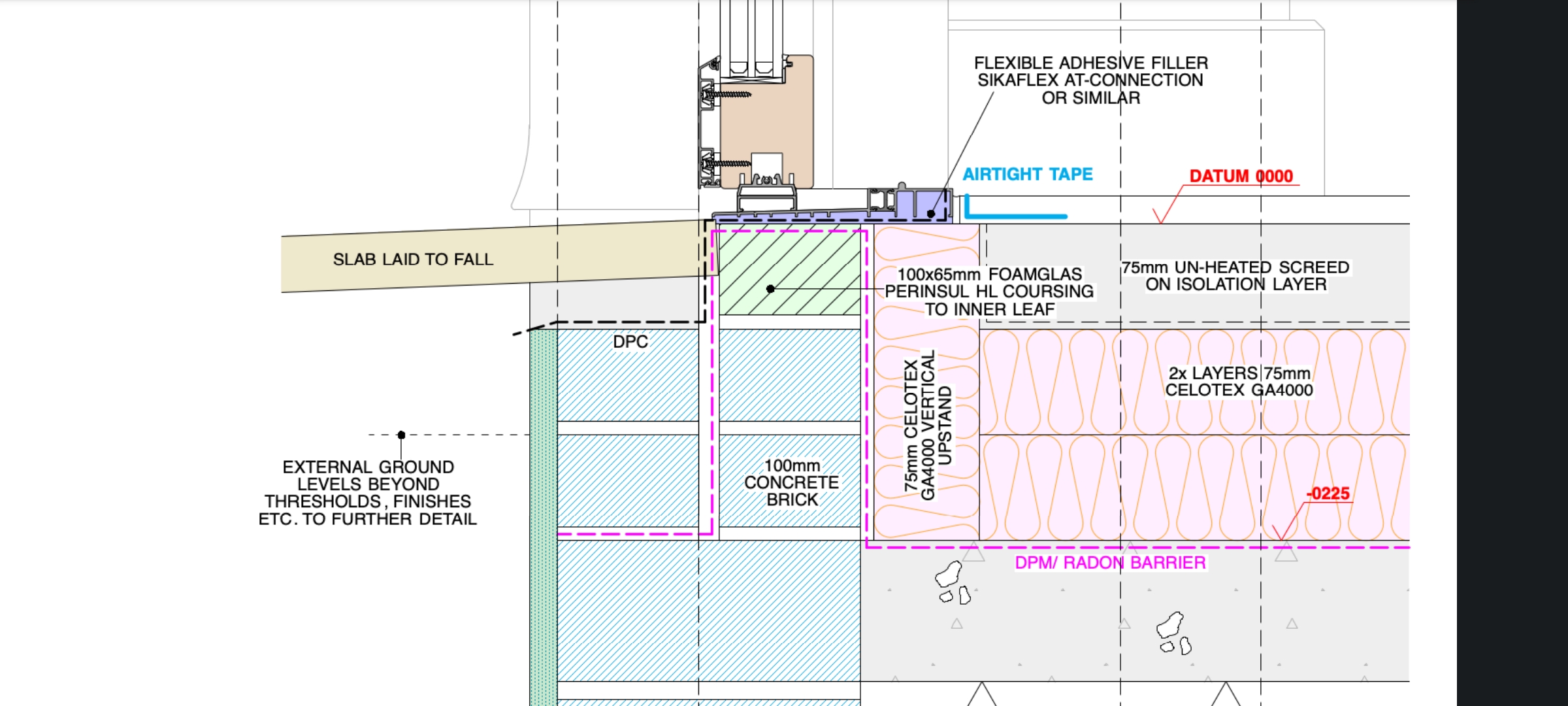
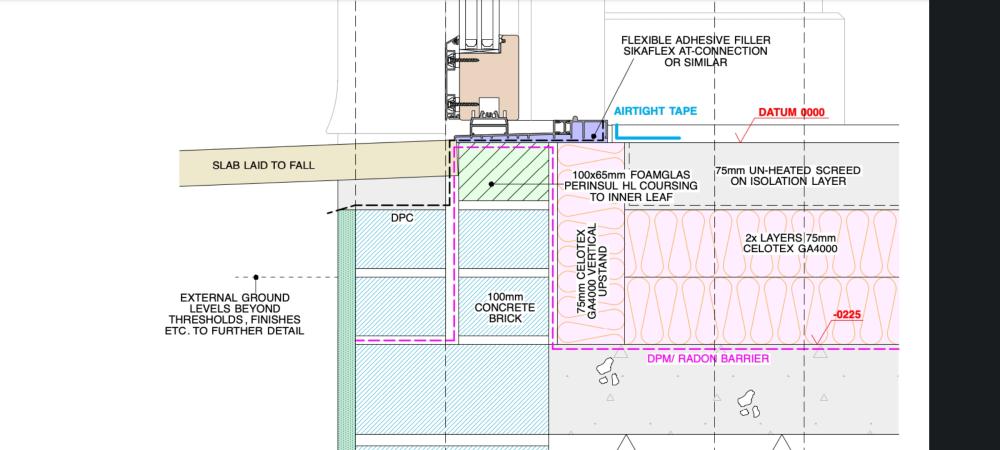
One solution which might work.
-
Closing the Cavity - Fixing Large Aluminium Sliding Doors
Miek replied to Lift span's topic in Brick & Block
Into the block outer skin. I have a 300mm cavity so hanging on the outer skin made sense for me but it depends on your cavity width and placement of the window within the cavity. -
Closing the Cavity - Fixing Large Aluminium Sliding Doors
Miek replied to Lift span's topic in Brick & Block
This is how I fixed my big sliding door too. But the manufacturers may take a different view which might affect the warranty so worth checking. -
First Floor air tight membrane advice
Miek replied to richo106's topic in General Construction Issues
Some thought should be given to how the light fittings will work too. Lots of folk on here add a service void which helps maintain the airtight layer, but this also adds cost. -
I wouldn't worry about slab moisture, the moisture you can see is more likely to be coming from the screed or the atmosphere IMO.
-
Close the revels with PIR cut to a snug fit. You dont need dedicated closers , especially retrofitting.
-
It's better than 'mastic' or silicone. Lasts longer , has a very wide range of movement, and is breathable.
-
Single-Room MVHR - Any Thoughts Please
Miek replied to GraHal's topic in Mechanical Ventilation with Heat Recovery (MVHR)
The Vent Axia Tempra is a single room heat recovery unit. It replaces stale air with fresh air that has been heated by the process of heat exchange. So efficient is this process that up to 74% of the heat from the extracted air is reclaimed. That's the claim under ideal conditions. I've never measured the temps . It's a lot better than a plain old extractor, and you can see some condenation dripping externally so it must be recovering some of the latent heat. https://www.extractorfanworld.co.uk/vent-axia-403835-12v-selv-lo-carbon-tempra-lt-heat-recovery-extractor-fan--timer-long-heat-exchange-3904-p.asp -
Single-Room MVHR - Any Thoughts Please
Miek replied to GraHal's topic in Mechanical Ventilation with Heat Recovery (MVHR)
These units are not counterflow heat exchangers so are far less efficient at recovering heat. If you think about the cycle, as soon as the fan reverses, cold air starts to cool the core and carry the heat indoors, the more cold air passes over the core the more heat it looses until its as cold as the outside air temperature , then its just blowing in cold air. They are better than an extractor fan but nowhere near the efficiency of a counterflow heat exchanger. I have a vent axia single room heat recovery extractor fan, its a counterflow design and it recovers some heat but it's also quite noisy. -
In principal this could work well but as always its in the detail. Possible issues are - the two different systems for heating have to have the same coolant and same pressure. So if Solar thermal then probably propylene glycol mix at upto 1.5bar roughly, if it were drainback then much lower pressure. This would have to work for the other heating source too. It's likely you wouldn't run the two simultaneously , especially if it's solar input IMO, but if you did then the input with the highest flow rate requirement will dominate. Solar has very low flow rate, whereas a HP could have a much higher flow requirement.
-
Cut of the O ring and measure with calipers? Croeso..
-
Imagine the stagnation temperature of you panel, its over 200 degrees C so the O ring had to be very high temperature resistant. I dont know for certain but Viton might be better than EPDM, I would have look on line and do a bit of research. Those thermomax panels are really high end kit, lucky you
-
Is this a pressurised or drainback system. If pressurised, what's the pressure? Is there any pipework that could airlock? Check all valves are open. Photo of your pump station please 🙏. Must be something simple...
-
Does the flue come out of the back of the stove in to a T piece? Occasionally the end cap can drop off the bottom when it gets hot and kills the draw of the flue. Maybe a long shot but one I've seen happen..
-
DIY ground mount for solar PV - what size key clamp pipe and fittings
Miek replied to Bramco's topic in Photovoltaics (PV)
Driving the 48mm pipe down almost a meter will be challenging in hard ground if done by hand. Make sure you have a good pilot hole made with a bar first. Get hold of a big bolt (M36 or so) and drop this into the top of the tube to protect the tube from deformation and drive it home with a sledge. You could hire a tool to do this but success almost entirely depends on your soil type. -
I know what you mean, I barely trust myself !
-
Probably the most expensive silicone available, but it does work.
-
Calculating ducting size
Miek replied to jayc89's topic in Mechanical Ventilation with Heat Recovery (MVHR)
2 pipes Into one plenum/vent -
Calculating ducting size
Miek replied to jayc89's topic in Mechanical Ventilation with Heat Recovery (MVHR)
BPC gave me this general advice for 75mm ducts Do not place valves above showers (Outside shower area) · Place the Kitchen Extract Valve near the sink, not above the cooker. · Kitchen, Bathroom, En-Suite and Utility Valves require a double duct run. · If the duct run is greater than 15m, double the ducting. · If the duct run is greater than 20m, triple the ducting. · If the room is greater than 20m2, the valve requires a double duct run. · Do not exceed runs of 30m. -
I go 12 turns. Or use LS-X
-
Just realised you might not have a nail gun in which case screwfix nails are fine. I'd use 90mm long.