SteamyTea
-
Posts
23860 -
Joined
-
Days Won
200
Everything posted by SteamyTea
-
If you know when the system was fitted, it will be possible to work out what scheme it is on and what the payments are.
-
A thermal store is an insulated box with something in it to adsorb the energy, then a hole to let it out again in a controlled manner.
-

Blade cutting depth for track/plunge/circular saws?
SteamyTea replied to MJNewton's topic in Tools & Equipment
The less blade protruding the less force there is on the saw base plate. This is a safety issue. I set the depth to maximum as it 'pulls' the work piece onto the base plate better. Do get a rougher cut. Opps, thought it was a hand held circular saw you were using. -
What @ProDavesays. Basically you want to dump the power into appliances. Then use Economy 7 as your back up option for winter.
-
My new hob has odd labels on cable
SteamyTea replied to SteamyTea's topic in Electrics - Kitchen & Bathroom
Thanks That looks better than Wagos and a bodge. I was very reluctant to pull the cable out. Shall pop out to Screwfix fairly soon. -
My new hob has odd labels on cable
SteamyTea replied to SteamyTea's topic in Electrics - Kitchen & Bathroom
Yes, what I thought. I have to jiggle the wires about a bit as they come out of the wall socket/cooker switch into the wall, then reappear about a metre away behind where the cooker was. I am reluctant to pull the old cable out with some string attacked to it, and then pull the new wire though (I am on my own so will be tricky really don't want to cut the wall open and then repair it). So intend to fit a new wall box and connect to the old cable below the hob. -
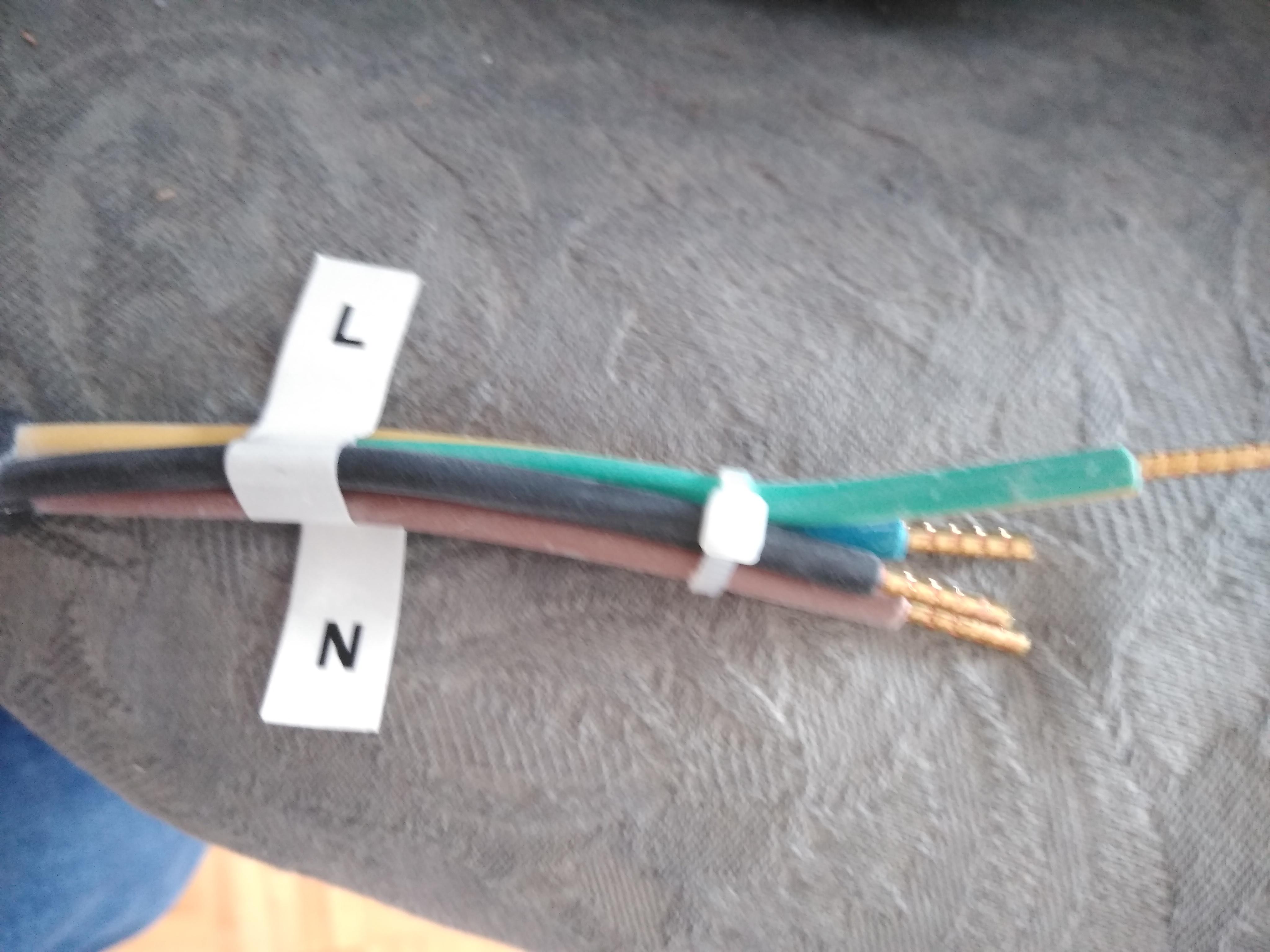
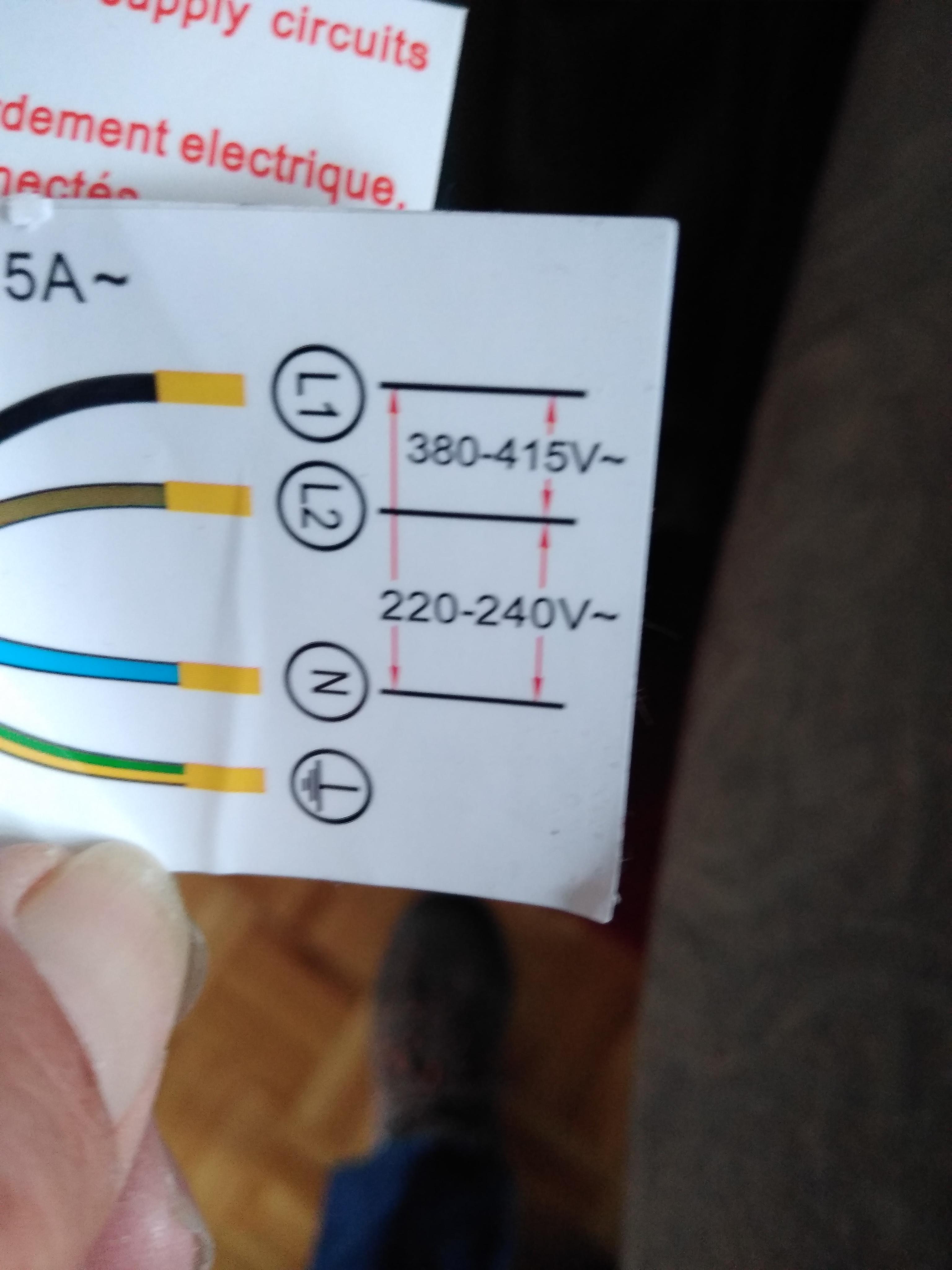
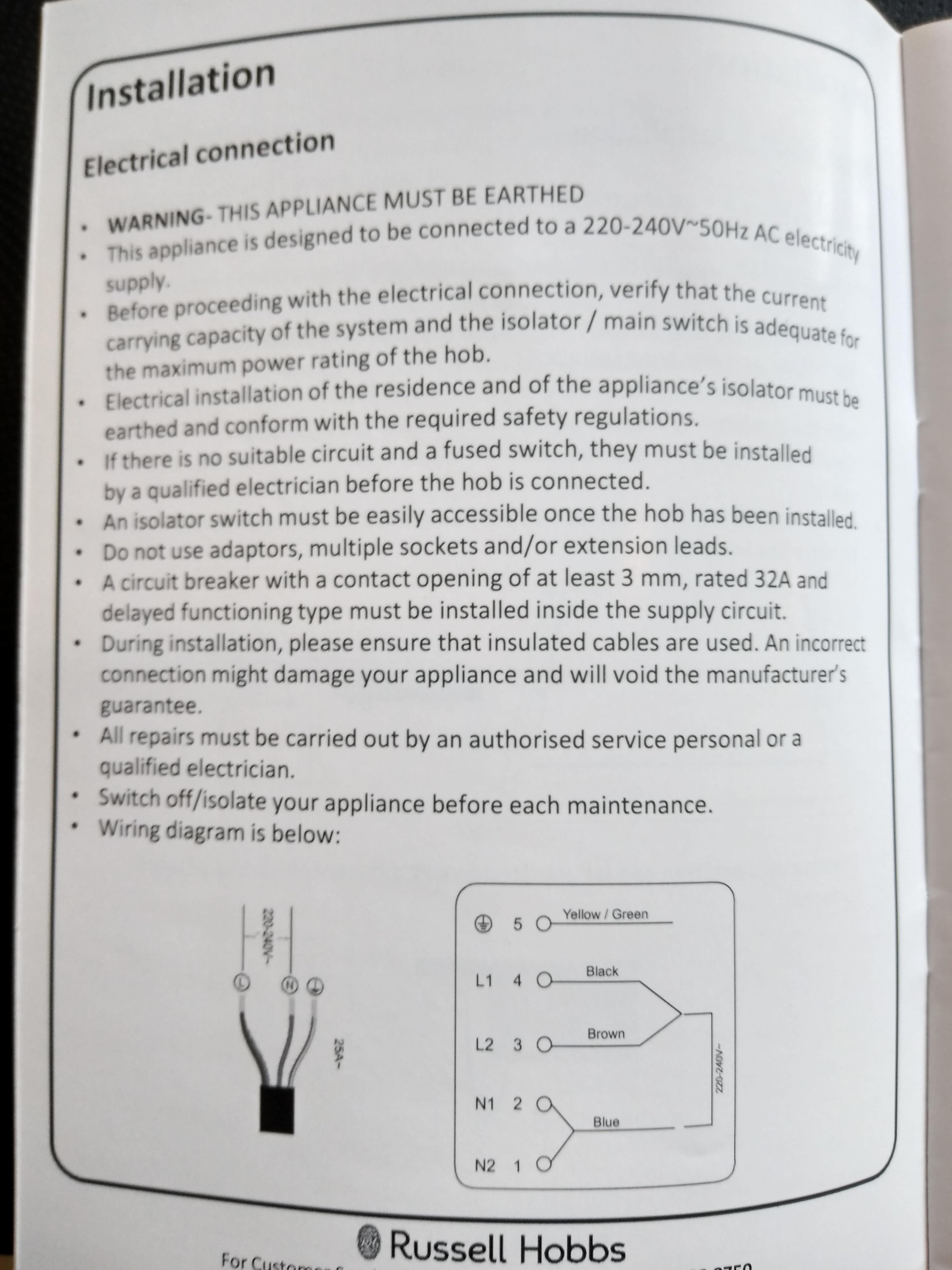
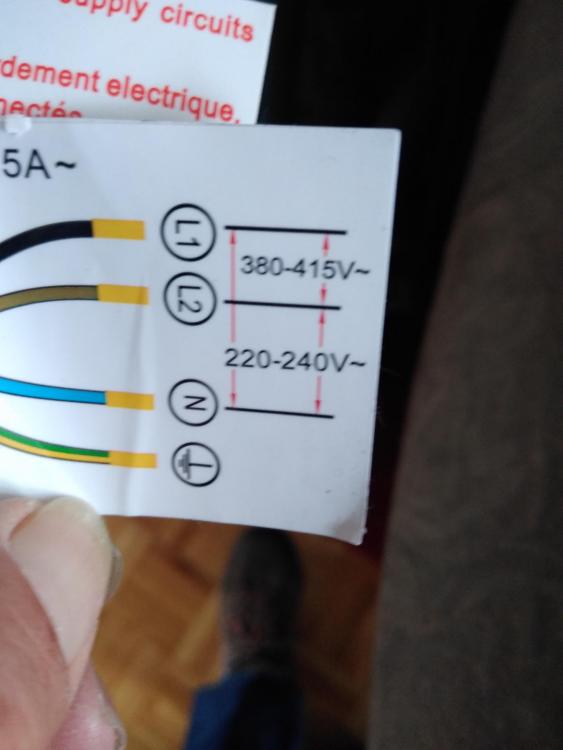
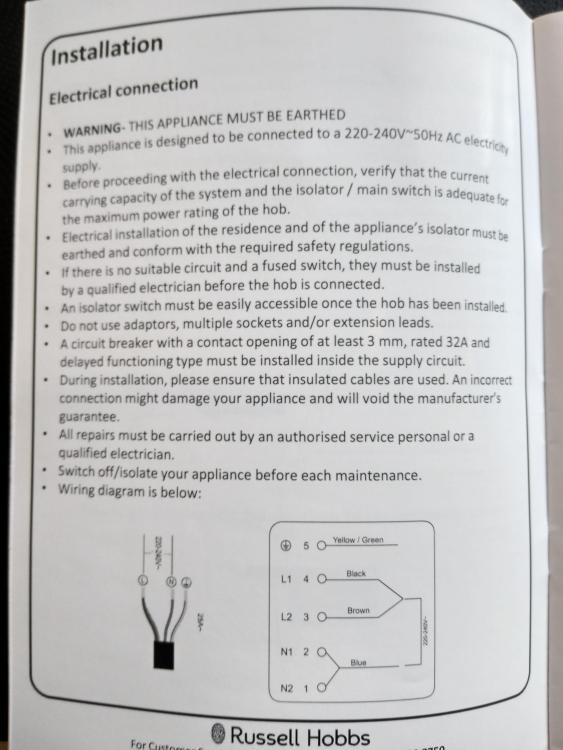
I can usually work these things out, but just to be on the safe side I want to double check before I pump 7kW into it. My new induction hob has 4 wires, blue for neutral, black and brown for live and an earth. The blue is labelled N, the black and brown are taped together and labelled L. But, in the wiring diagram it shows Black as L1 and Brown as L2. L1 is 380V to 415V, L2 is 220V to 240V. The instructions show only 3 wires on the diagram, with 220-240V between the L and N, but next to it it shows L1 and L2 connected together (and the neutrals). Now i think that L1 and L2 do need to be joined (so have ordered some Wago connectors). Does anyone think differently?
-
Builder in financial trouble
SteamyTea replied to Gem77's topic in General Self Build & DIY Discussion
No, it was a small, 1 bed, place about 30 metres from the harbour. Was actually £103k. Or about £20k more than my place. There is Cornwall, and then there is the real Cornwall, the bits people don't visit, or even know about. -
Builder in financial trouble
SteamyTea replied to Gem77's topic in General Self Build & DIY Discussion
Could have bought a holiday home in Mousehole for that. -
Builder in financial trouble
SteamyTea replied to Gem77's topic in General Self Build & DIY Discussion
If you have not already done so, pay with a credit card, then you get section 75 protection. (terms and conditions may apply, check them) -
Read that as hand shandy.
-
Probably to keep it simple, there may also be a difference in the fluid circulation between the outside heat exchanger and the inside pump units that for splits and monoblocks. I suspect that split units were originally designed as air conditioning units for high rise flats, where the external heat exchanger is on the roof. On that basis, I suspect that monoblocks were designed to be a replacement for traditional boilers, or furnaces, and have been designed not to scare plumbers too much. I personally cannot see a problem with it being a fair distance from the house, some houses are quite large and there is no difference. Juts make sure everything is insulated properly.
-
The thermal losses will probably be the same, so the loss of CoP is probably similar. Any pipework needs to be very well insulated if it is to be buried in the ground. Keeping pipe runs as short and straight as possible. KISS
-
GRP (God-awful Rubbish Period)
SteamyTea commented on canalsiderenovation's blog entry in Canalside Bungalow Renovation
I would run the sheets to within a few inches of the edges, then to fill the height difference between the top of the sheet and the original GPPed roof, with a bit of 1/4 round timber in. This will make it very easy to 'wrap' the new GRP around. Any timber that is laying on the old GRP roof will need to be tanalised (or made from anything rot proof) just in case there is some residual moisture. And those edges need to be ground back and the new GRP laid on top. Should not need to change the flashing/trim. I don't think this roof will fail and I suspect that the bits that look like they have delaminated are really just where it cured before it was rolled down. Out of interest, how much have they charged for the GRP part of the job? -
Is there really a problem putting monoblock ASHP a few extra meters from the house, surely it is just a case of properly insulating the pipework, which you will have to do with a split system anyway. The more important part is the routing from where the pipework enters the house and to where it is distributed to the UFH/Buffer, Thermal Store, UVC or whatever.
-
The reason that air is not used is for safety. Air expands, water/oil does not.
-
Yes, misread it as £.
-
Driving home last night I heard something on the radio about the wine industry wanting no tariffs to help our wine exports. I don't know the size of the wine industry in the UK, but I suspect it is smaller than fishing, which at 100 million is very small (GDP is around 2.7 trillion).
-
GRP (God-awful Rubbish Period)
SteamyTea commented on canalsiderenovation's blog entry in Canalside Bungalow Renovation
Can you have a secondary roof, with a fall, built over the original one? Basically a large wedge of timber and OSB3. -
DIY Solar Panel Installation
SteamyTea replied to Triassic's topic in Regulations, Training & Qualifications
Usually it is the inverter. These are built in and if commissioned properly (we wary of SMA inverters as they can lock you out of you fail to get the country number correct). There is usually a certificate with the inverter that states all this and a copy has to be sent to the DNO. -
GRP (God-awful Rubbish Period)
SteamyTea commented on canalsiderenovation's blog entry in Canalside Bungalow Renovation
While it may be watertight, I would not be happy with that amount of pooling. If the builder/roofer/GPR person suggest covering it in shingle, you know what to do. -
Seems harder than GRP, but then I have never tied to EDPM a roof.
-
Clearing up my end of the country, so I can stop working on the window surround repair and go out.
-
Back to basics I think. PV will deliver its power to the closest load, even if that load is greater than the PV can supply. The difference just gets supplied by the grid. It is not either/or, but both. What you can do is get the PV to initiate that ASHP i.e. when then PV is generating above a set level, say 5 amps. Some inverters have a relay dedicated to this. Or you can just put the ASHP on a timer, say between 9:30AM and 4:30PM, and rely on averages to offset your imported energy. This can be seasonally adjusted to take into account different hours of daylight. Ideally you need to do both i.e. switch on once PV is supply above a limit and between set hour (times PV generation s higher i.e either side of noon and adjusted for your array azimuth). That way you reduce short cycling of the ASHP (same apply to resistance heater in reality, adding a couple of Wh to an element every few minutes is going to reduce the life of the element, just that it is a longer life and a cheaper part to replace. I think there is too much emphasis on high temperatures for the legonella cycle, do some research and find a proven domestic case that has been caused by the DHW system, then decide.
-
DIY Solar Panel Installation
SteamyTea replied to Triassic's topic in Regulations, Training & Qualifications
Contact your local DNO and they will tell you what they need.