SteamyTea
-
Posts
23860 -
Joined
-
Days Won
200
Everything posted by SteamyTea
-
Only available in Spanish then.
-
Pumping to a height of 200m would be a bit costly. And, as the Cornish Sea Salt company found out, you need permission from the EA to change the salinity of our coastal waters. But no permission needed to put dog shit in it. What is needed, and would be useful, is a monitoring system that sensed irradiation and wind velocity. That could predict when the sun may come out. No need for a weather service then, people in the UK only know, or care, about two types of weather, sunny or rain.
-

Corrosion of standing seam aluminium roof
SteamyTea replied to Muddy's topic in Roofing, Tiling & Slating
Not read in detail all the above, tl;dr. What state is the stainless in? Some grades of stainless disintegrate in the absence of oxygen. So the problem may be the interface between the aluminium and the retaining clips. I am no chemist, so can't give a break down of the reactions involved, but strange things happen in chain reactions and they are not always obvious. -
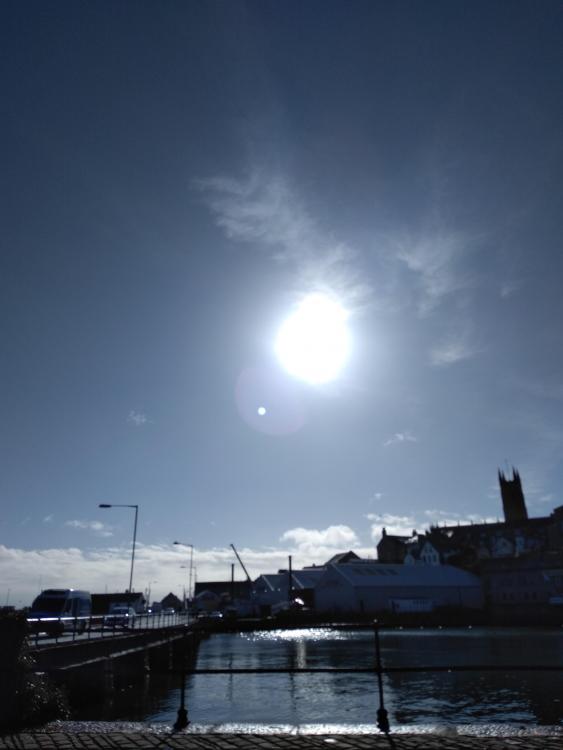
Great down here
-
I have kept out of this for various reasons, but it seems to me that the ASHP fitted is undersized. Where and what loss calculations done by the installer. These used to be part of the MCS protocol.
-
You had the flattest site in the whole of the West Country. The curvature of the Earth is almost greater.
-
I was in the Middle of Lidl yesterday and they had a laser level for 25 quid.
-
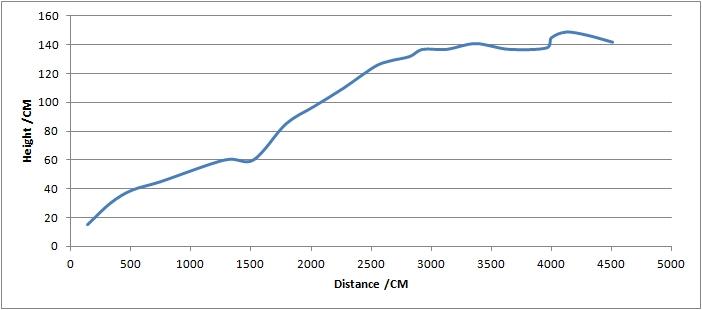
How are you measuring. The easy way to do it is to stick in some stakes so that they are the same distance above the ground, they use a leveller to measure the height of each stake. You need to do this on a grid as mentioned earlier. You can make your own leveller with a hosepipe, bit of clear pipe and a tape measure. Start with the highest point and work downhill.
-
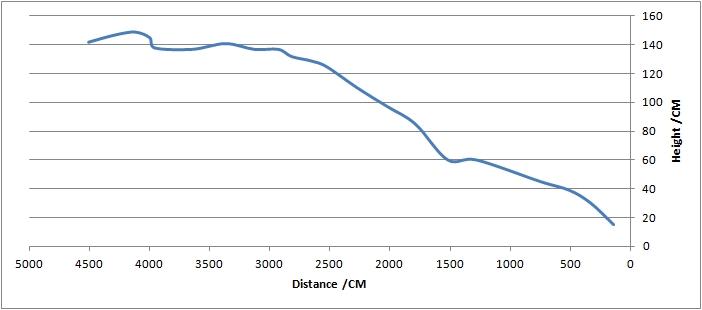
You can reverse axis in Excel Though I suspect this is not what you meant.
-
What like this
-
Your mum really should put your crayons away.
-
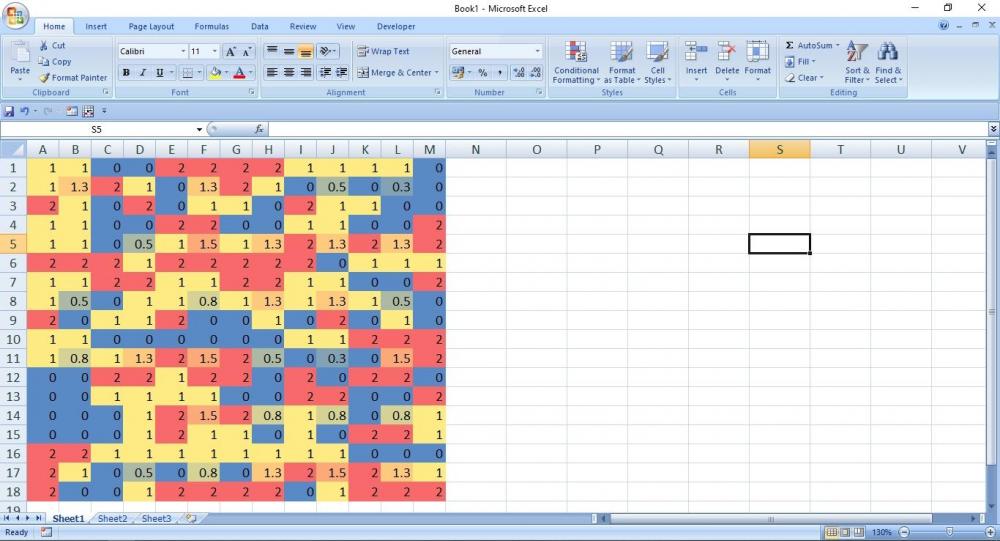
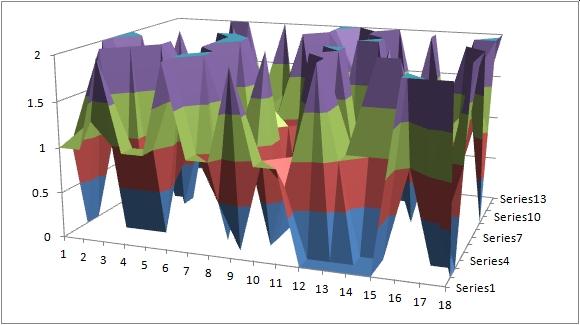
Something like this. Just punch in the numbers, use conditional formatting to colour in the cells after they have been resized so that height and width are equal. Or chart it.
-
YES ! ?? That sort of talk can only go down south in the Pocster household.
-
Some don't think so. You child killing, farmer starving, water thief.
-
No it isnt, depending on the road chosen it is Bude, Bodmin or Saltash. But I agree, the inner parts of Cornwall are ugly, but it is hard to sell the place to dog owners if the old piles of mining slag look worse than dog shit on Porthemmet beach. I pay to clean up the mess.
-
Yes we all remember you mooning.
-
No, The Horror that is Cornwall.
-
Yes, me.
-
I pay more in standing charges. And that is before taxes on it. Fuel poverty is a myth, water poverty is the financial killer. I am now going to drive my car to town, get a coffee and complain that the world is not as good as it used to be. That will probably cost me a tenner in all. (we are so lucky in the UK that we still have choices, some are good ones, some a bit silly)
-
I should have put a borehole in and 'piggy backed' the SWW sewage system. They charge the majority for getting rid of the water, but base it on my imported water. Fresh, clean drinking water costs me £1.9101/m3. Getting rid of that costs me £3.16958/m3. 2 thirds more. Now get this, I have a fixed charge of £38.20 a year for my drinking water, but £53.85 to get rid of it. 41% more. All that so that people can have clean beaches for their dogs to shit on.
-
Is heat pump technology improving?
SteamyTea replied to chrisgeller's topic in Air Source Heat Pumps (ASHP)
The Carnot cycle, you can't get better for a heat engine. You have mentioned a fair few negative things, reinforced by @PeterStarck's comments. What it is really down to is having a system correctly sized and installed. A kW is a unit of power, if your house need say 3 kW to raise the temperature by 5°C, then it matters not if that power is supplied by a heat pump, an oil or gas burner, or even an open fire. What will change in the energy input, this is where heat pumps win. They use less 'imported' energy as they get the majority of the needed energy locally (the air or ground). As for price to install, people tend to change traditional systems bit by bit, but this just masks some of the costs. Add up all the costs over a 25 year period and they are probably similar. And what narks me is that people often talk about 'payback' of a heat pump, but that never gets mentioned when talking about traditional systems. -
That is to do with reducing attenuation. Which is another factor in sound propagation. It is why there is a large reducing in sound levels between 1 m and 2 m away, the surface area of the 'sphere of sound' is greatly increased, which reduces the energy per unit area. Realistically, any half decent ASHP is not going to make much noise. @joe90's air blower for his sewage was a bigger problem.
-
This is the biggest problem. It is why I don't have PV, and ASHP and a Sunamp. Just not worth it for my usage. Using an inch less water in the bath gives me a bigger saving than all that, but that is partly because my water costs me more than the price of heating it.
-
The dB sound scale is non linear though. https://www.britannica.com/science/sound-physics/The-decibel-scale
-
That's because they don't look at data. Once cleaned up that data should give you a pretty decent idea of what is happening at different times of the day. Then you could change behaviour to optimise the storage i.e. if little solar stored during the day, go out that night to a friend's house. Generally what happens is that you will use less energy overall, which makes the system seem to perform better.