


SteamyTea
-
Posts
23847 -
Joined
-
Days Won
200
Everything posted by SteamyTea
-
The 'exploding' demand for giant heat pumps Published 7 hours ago Share IMAGE SOURCE,MAN ENERGY SOLUTIONS Image caption, This MAN heat pump system in Denmark is one of the biggest in the world By Chris Baraniuk Technology of Business reporter There are 2.5 million litres of water in an Olympic-sized swimming pool. If for some reason you wanted to bring it from a pleasant 20C to boiling point, German firm MAN Energy Solutions has a heat pump that could do it. And it would take less time than Kenneth Branagh's film version of Hamlet. "We can do this in less than four hours," explains Raymond Decorvet, who works in business development at MAN Energy. "Or we could freeze the whole thing in about 11 hours." Theirs is among the largest heat pump units in the world. Heat pumps work by compressing gently warmed refrigerants to raise the temperature of these fluids. That heat can then be passed on to homes or industrial machinery. Heat pumps require electricity to work but can produce around three or four kilowatts of heat for every kilowatt of power they consume, making them highly efficient. Plus, some designs can provide cooling as well. Heat pumps are increasingly popular with some home owners but domestic devices are relatively small and tend to have outputs of several kilowatts or so. MAN Energy's biggest commercial heat pump is thousands of times more powerful - with a total heating capacity of 48 megawatts (MW). It can produce temperatures of up to 150C and heat thousands of homes, not just one. The company recently installed two of these machines in the port city of Esbjerg, in Denmark. In this installation, the heat pumps' CO2 refrigerant will absorb a small amount of heat from seawater. Compressors boost the temperature of the CO2 and the system can then transfer this heat, providing water of up to 90C to a district heating system serving 27,000 households. IMAGE SOURCE,MAN ENERGY SOLUTIONS Image caption, Industrial-sized heat pumps are a thousand times more powerful than domestic versions "The demand for district heating is exploding," says Mr Decorvet. An urgency to move away from fossil fuels is leading to a rush - particularly in Europe - for bigger and beefier heat pump systems that can power entire towns. But who has the biggest, megawatts-wise? It might seem like a relatively straightforward question but it is actually quite tricky to answer definitively. Not least because heat pumps don't tend to work at maximum capacity all the time. In Esbjerg, MAN Energy's heat pumps will run at about half their potential output, for instance. And trying to compare the world's largest heat pump systems is difficult because, often, they are made up of multiple smaller heat pumps chained together. Take the district heating system in Stockholm, Sweden, often referred to as the largest heat pump set-up in the world. This is probably true, it has a maximum capacity of 215MW - but that total is the sum of seven heat pumps, two 40MW and five 27MW devices, a spokesman for energy provider Stockholm Exergi explains. Elsewhere in Sweden, Gothenburg has a 160MW heat pump system that consists of four units. Two of them are actually bigger than those in Stockholm, with capacities of 50MW each. They have been in operation since 1986 and probably hold the title of the most powerful individual heat pumps currently in use, though they are clearly rivalled by newer devices such as those made by MAN Energy. Last year, German chemicals firm BASF and MAN Energy announced their intention to build a 120MW heat pump that would, reports suggested, be the world's largest. It would have provided heat for industrial uses at a site in Ludwigshafen. However, it was not to be. "BASF has decided not to proceed with the project," a spokesman told the BBC. The firm is exploring other potential heat sources instead, which it hopes will be more economically attractive. IMAGE SOURCE,GETTY IMAGES Image caption, In countries like Sweden big heat pumps are used to heat whole districts Size isn't necessarily everything, notes Dave Pearson, group sustainable development director at Star Refrigeration. Efficiency matters and he argues that ammonia - his firm's choice of refrigerant - helps to make heat pumps particularly efficient. Veronika Wilk at the Austrian Institute of Technology and colleagues have studied the use of heat pumps for industrial applications, to provide heat in pharmaceutical, food or paper factories, for example. So long as they don't require very high temperatures beyond 200C, companies are increasingly turning to heat pumps, Dr Wilk argues, because it allows them to move away from natural gas, which has become extremely expensive following Russia's invasion of Ukraine. But industrial heat pumps tend to be merely several MW in capacity or so. You are more likely to spot truly giant heat pumps in a district heating system, such as those mentioned above, says Dr Wilk. "The beauty of district heating is that you can decarbonise a lot of households at once," she adds. IMAGE SOURCE,AIT & KRISCHANZ Image caption, Veronika Wilk points out that district heating can decarbonise a lot of homes in one go There are many other examples of heat pump-powered district heating systems springing up. In Vienna, a 55MW system using three heat pumps is due to go live this autumn. The machines will harvest heat, around 6C, from treated wastewater, explains Linda Kirchberger, division manager asset decarbonisation and new technologies at Wien Energie. The treated water used to go straight into a river. "Now it does a detour and we take it through the heat pump system," she says. The system will lift temperatures from 6C to 90C and the heat will go on to supply 56,000 households. In 2027, Wien Energie plans to double the system's capacity with three more heat pumps, reaching 110MW in total. While still impressive, and weighing more than 200 tonnes each, these individual units have a capacity of less than 20MW. The manufacturer, Johnson Controls, confirmed to the BBC that its largest heat pumps have a maximum output of 28MW.A similar system, also using heat from wastewater, is planned in Hamburg, according to reports. It will have a capacity of 60MW, though this too will rely on multiple heat pumps linked together, a spokeswoman for Hamburg Wasser, the water company involved in the project, says. But keep an eye on the future. In the Finnish capital Helsinki, a plan is afoot to construct a gargantuan heat pump system with a total capacity of 500MW. This will likely be comprised of multiple units, as in Stockholm, Gothenburg and Esbjerg, but Helen, the energy company behind the scheme, has not yet revealed how it will all come together. MAN Energy is one firm bidding for the contract. A spokesman declined to explain exactly what configuration of heat pumps would allow the company to provide 500MW of heat. Mr Decorvet says, simply, "I hope we are going to win."
-
Can you get rid of it when you get the triple glazing put in?failing that, can you get insulation on the outside, basically box it in.
-
Avoid anything that is PVC if your Lego blocks are polystyrene.
-
Careful, could be other things, burst water pipe, blocked gutter, blown render (what happened to my house) badly fitted window. @Pollyanna, your roof has a good angle for winter PV production, which way does it face and how much shading does it get on the sunny side?
-

Basic Heating Control Understanding Help
SteamyTea replied to Shaun McD's topic in Air Source Heat Pumps (ASHP)
Won't the thermostats/blending valves behave a bit odd if they see a cooler temperature entering? -
Is that downpipe flooding the area?
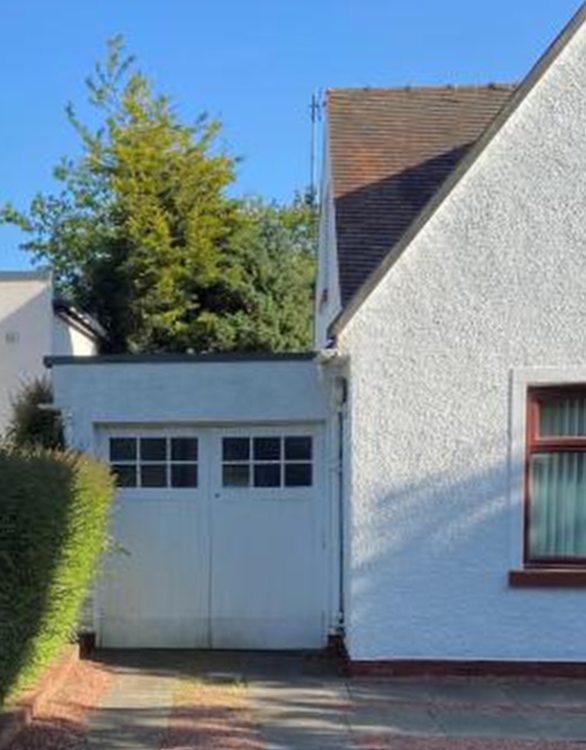
-
Cleanliness is next to godliness. It also caused an explosion in Christianity. https://www.bbc.co.uk/sounds/play/m001mc70
-
Basic Heating Control Understanding Help
SteamyTea replied to Shaun McD's topic in Air Source Heat Pumps (ASHP)
Unless used for cooling. (I may have missed something posted up earlier about this, the beach wear is a distraction). -
ASHP, how to decide - I just don't get it!
SteamyTea replied to Jimbo37's topic in Other Heating Systems
They nearly did. https://energysavingtrust.org.uk/a-brief-history-of-the-electric-car/ Probably failed because no one wanted to by a car from a yamyam called Parker. Should have stuck to pens and driving Lady Penelope about, 'My Lady'. -
Is the thumping caused by a lady from Ealing. Maybe she don't have too many feelings. If she laid on her back, observed the crack. She might fix it by sealing.
-
ASHP, how to decide - I just don't get it!
SteamyTea replied to Jimbo37's topic in Other Heating Systems
Not that crazy. No worse than a green roof in reality. -
Thermal Bridging Psi values for Isotex
SteamyTea replied to Piers's topic in Insulated Concrete Formwork (ICF)
More seriously, have I remembered how to calculate PSI near enough correctly. If so, it is dead easy to set up a spreadsheet and calculate. I think the ∆T will be the inside air temperature, minus the median value of the ground and the outside air temperature for the perimeter. -
Not adults until they pay the bills and have to put right their own mess from their savings.
-
Thermal Bridging Psi values for Isotex
SteamyTea replied to Piers's topic in Insulated Concrete Formwork (ICF)
Yes, and. -
Basic Heating Control Understanding Help
SteamyTea replied to Shaun McD's topic in Air Source Heat Pumps (ASHP)
There is, but it is based on mass flow rates. Luckily in the case if water, mass and volume are equal mathematically. They have in here, frequently. -
ASHP, how to decide - I just don't get it!
SteamyTea replied to Jimbo37's topic in Other Heating Systems
The electrical generation industry started, in earnest, planning and building windfarms 30 years ago. It takes the first decade to get though planning, then it was relatively small scale stuff employed, then the moratorium happened that forced the wind industry to develope techniques to cost effectively install at sea. Last year wind power generated more electricity than gas (I think). Now wind is the cheapest form of electrical generation, whether the fossil fuel industry likes it or not. Increasing solar generation is going to be the next target for growth, not nuclear, tidal or biomass, the economics don't stack up for them. Just looked up when Delabole Windfarm was built. 1991. It was proposed in 1989. So 2 years to get though planning and constructed. That was 32 years ago. What the (expletive deleted) is wrong with us in this country, we have really lost the plot on planning and infrastructure. -
Not where I was, the smaller button how fallen off, leaving a white lever will a ball on the end, I was too scared to touch it, I saw the mess on the seat rim. One can never trust anything that bleeds for a week and does not die.
-
Basic Heating Control Understanding Help
SteamyTea replied to Shaun McD's topic in Air Source Heat Pumps (ASHP)
No. You can calculate, pretty accurately, how warm a wall will get from sunlight by using PVGIS. A wall is just like anything else left in the sun, it gets warmer, this reduces heat losses, or may actually increase room temperature. It all depends on the make up of the wall, the exposed area and orientation, hence my NW and SW corner example. There is also cases where you want rooms at different temperatures. A kitchen, used solely as a kitchen, probably needs a lower base temperature, than a living room, which may, in turn be higher than a bedroom. Bathrooms probably have the highest temperature due to usage (lots of 40°C water, and the need to be kept dry after use. Some of that heat, heat is the old term for energy, will travel though the walls into the adjoining area i.e. a bedroom or landing. Changing the spacing of the UFH pipework for the same delivery temperature and flow from the ASHP/Boiler allows for different room temperatures and losses/gains. This is why a room by room heat lose calculation is done, you can take into account the usage and the seasonal variations. As an example, image that you have one loop that does the living room and downstairs cloakroom. Water enters the pipe at say 35°C and exits at 30°C. The cloakroom may only have 3m2 of exposed wall, the other 3 are inside the house. The living room may have 3 exposed walls, with only one within the house, so 50m2 exposed to the outside. Depending on which way the flow goes, the cloakroom may be getting water entering the loop at either 35° or 30°C, so may be either too hot or too cold if the pipe spacing is the same as the living room. The problems start when designers just put in standard UFH pipework spacing and control it all by having multiple loops, each with their own thermostat and flow controller. This is simpler to design, but harder to installer and a pig to control effectively. You may well find that a fixed spacing will work well enough, but without knowing the details, one cannot be certain. So do those calculations, they are easy enough, just tedious. It is what spreadsheets are for. -
Thermal Bridging Psi values for Isotex
SteamyTea replied to Piers's topic in Insulated Concrete Formwork (ICF)
Depends on the methodology used I think. The formula is pretty simple, just converting an area thermal loss to be expressed as the perimeter length, as I understand it. So if a wall 10m by 2.5 m wall looses 10W.K-1. [That is a U-Value of 0.25 W.m-2.K-1] The perimeter is 25 m so 10 [W.K-1] / 25 [m] = 0.4 W.K-1 This is added to the 10 W.K-1, so 10.4 W.K-1 I think the problems start in defining the U-Value of the perimeter. The easy way is to take the thickness of the wall, rotate it though 90 degrees, and assume that is the perimeter 'area'. So it basically adds the wall thickness to the exposed area. So in the above example, assuming the wall is 0.15 m thick, that will add an extra 0.75 m2 to the surface area, with a U-Value of 0.25 W.m-1.K-1, that is an extra 0.19 W.K-1 losses, giving a total of 10.19 W.K-1. That is different from the initial crude calculation, but in the same ball park, but when you back calculate, 10.19 [W.K-1] / 26.2 [m], for the new perimeter length, you get a value of 0.39 W.K-1 extra losses, so all is well. The difference may well be in the surface losses due to air flow, but I can never remember those values. Your perimeter length may change depending on your wall design i.e. single, double or triple storey and where/how, joists and beams are connected. Window and door openings (expletive deleted) it up as well as they really need to be added as well. The ADDED is the important bit, we get very used to multiplying area by U-Value by temperature difference when calculating thermal looses, but the perimeter losses are an extra loss, so they are additional. (I may be talking out my arse as it is now a good 15 years I since last looked at this, as part of may BSc, but I was thinking about it the other day, I know not why.) -
How to assemble cement mixer drum please?
SteamyTea replied to akash's topic in Bricklaying, Blockwork & Mortar
Any help seeing how it comes apart. -
ASHP, how to decide - I just don't get it!
SteamyTea replied to Jimbo37's topic in Other Heating Systems
So you didn't actually buy it. If you look at purchasing price parity prices, there is not much difference between place in the developed world. Exchange rates and product taxes can often make a difference. -
ASHP, how to decide - I just don't get it!
SteamyTea replied to Jimbo37's topic in Other Heating Systems
We should go back to a state owned energy company again, many people want it. Then we could have something similar to this, after a decades wait. -
PV on a flat roof, how far from the edge?
SteamyTea replied to Smallholder's topic in Photovoltaics (PV)
It is electrons repelling each other. The Coulomb Force. -
PV on a flat roof, how far from the edge?
SteamyTea replied to Smallholder's topic in Photovoltaics (PV)
Not for these 3 Matthys Levy, Mario Salvadori and Kevin Woest https://www.amazon.co.uk/Why-Buildings-Fall-Down-Structures/dp/039331152X -
PV on a flat roof, how far from the edge?
SteamyTea replied to Smallholder's topic in Photovoltaics (PV)
Was working in London then, quails eggs and unpronounceable salad stuff.



