flanagaj
-
Posts
1349 -
Joined
-
Last visited
-
Days Won
5
Everything posted by flanagaj
-
Ok. I will see if I can find another SE who is local to us.
-
The technical architect didn't provide details and the SE was as much use as a chocolate teapot
-
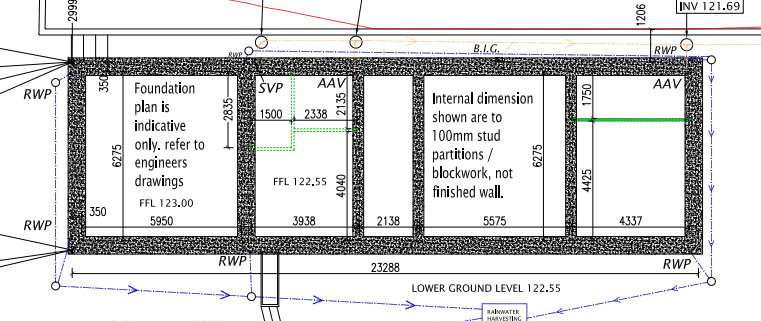
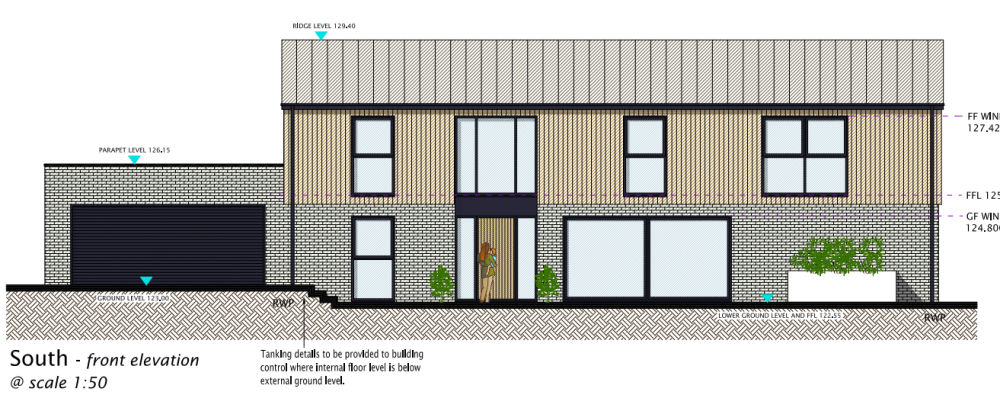
The attached single storey garage of our house has a finished floor level 450mm higher than that of the house and I am trying to work out how best to do the footings. My original idea was to simply dig the footings of the garage to the same depth as that of the house and then just have an additional two course of blocks. I mentioned this to a builder and he said that nobody will want to be in the trench to do the blockwork and instead I should just pour an additional 450mm of concrete. So I am a bit confused as to how to proceed. I have read on the NHBC guide about stepped footings, but not sure how this works with the adjoining cavity wall that is shared between the garage and the house (see below)
-
In the end I went with Sany SY16C and it arrives Thursday. I am still trying to muster up the courage to tell the other half 😂 she just doesn't understand! I have been thinking about all of the jobs that I will need a small machine for to build the house and it's loads. I currently have a skip which is due to be returned soon, and there is a pile of wood and a tree stump. No chance I can lift it in by hand. Even though the hire of a 3 ton machine was only £280/week, by the time I factored in the £55 charge each way for delivery and collection and the VAT. You are suddenly at £500 for a weeks hire. I am also contemplating a one ton dumper, but I think I may wait before having that conversation.
-
Yes. The Liugong machines are cheaper, but not significantly.
-
Unfortunately, our site is quite tight on space and a large machine is not practical. Limited to 1.7 ton
-
I am just struggling to find one for 8-10k inc vat. Those supplied by dealers all seem to be price fixed at 12-14k. Ideally, one that has been used by a self builder would be ideal.
-
On that very topic I am thinking of getting a Luigong 9018 1.8 Ton Mini Digger. 7k and half the price of a Kubota. From the searches I have performed they seem to get positive reviews too.
-
I am paying nearly £400 in vat for a 16 ton grab lorry. Is there any way to get rid of it cheaper than that. Being winter too, it's bulked out by about 30% as well.
-
The tank was full with clean water when we moved in. I’m going to buy some muck muncher sachets. it seems to have settled down now, but it was a shock to see it this morning. I have also reiterated to the wife that you don’t need a massive amount of washing up liquid.
-
This is exactly what I am planning on doing. If I get the levels right, then the recycled concrete hardcore that sits outside the dwelling will be the sub base for the paths and patio that surround the house. I was going to wait, but I might as well just get cracking.
-
Not sure if anyone else has a Graf, but does your lid have a seal in it. I opened mine this morning by undoing the bolt in the lid and there is no seal. Seems strange, especially considering that the lid on the distribution chamber does have a seal.
-
Smells fine. It's only been in operation two days.
-
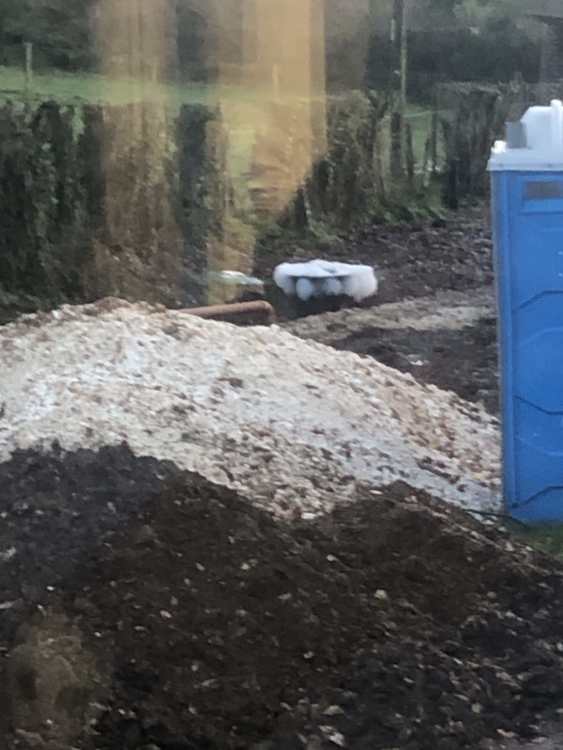
I looked out of our static caravan this morning to see the below 😞 can anyone advise. We have a 7PE tank and it’s just my wife and I.
-
On our first night (there was a frost) I was freezing with two duvets and a blanket. Still, it should warm up in about 5 months time 😂
-
We do only have one. It's on top of the cupboard that houses the boiler. Where would you recommend I placed another one?
-
After a full on week of getting the following jobs done. We’ve finally moved in. Given we have to hand the keys back to the rental on Monday, it’s been cutting it fine. 1) caravan foul drainage connected to the sewage treatment plant 2) water supply to shed for washing machine 3) installing Starlink. This was very easy 4). Fitting a skirt to the static from salvaged 18mm shuttering ply 5). Making some steps. So glad I never burnt the pallets. They are perfect. I won’t miss the hours drive each way and my commute to London is now 45 mins instead of 90 mins, plus our daughter is moving into her first home shortly and she’ll be 7 minutes away. A new chapter has begun 😃 ps - site currently resembles the Somme
-
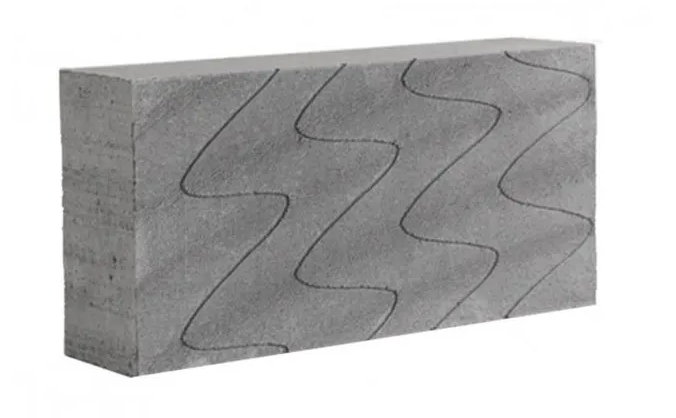
Ok, thanks. I always thought that Aircrete blocks looked like below. What are you using in the above image?
-
I am just going back through my estimators quote and am trying to workout where the 3.6N Aircrete blocks they have specified are used. The quantity seems to indicate that they have specified them for the ground and first floor cavity walls and only specified the 7.3N blocks for the internal ground floor blocks walls. Is this normal practice or can you use 7.3N blocks for for everything internally and avoid using the expensive Aircrete blocks?
-
Insulating a shed for laundry room?
flanagaj replied to flanagaj's topic in General Self Build & DIY Discussion
One last question. I've got a week off work and was going to knock up a pent style out building using 4*2 and shiplap cladding. As I'll need to disassemble it when the house is built, so it can be relocated, I didn't want to make it too heavy, eg, cladding / batten / tyvek / OSB / timber frame / insulation/ vapour barrier. Therefore, I was wondering, whether I could do cladding / tyvek/ timber frame / insulation. This would enable me to remove the insulation so I could get to the fixings holding the walls and roof together. I've priced things up and for £1000 you can definitely build a suitable out building. -
Insulating a shed for laundry room?
flanagaj replied to flanagaj's topic in General Self Build & DIY Discussion
Yes. It's already insulated underneath. I just need to knock up a skirt. -
Insulating a shed for laundry room?
flanagaj replied to flanagaj's topic in General Self Build & DIY Discussion
Unfortunately, I am limited on space and time too. I was thinking about erecting a carport style covering with clear roofing sheet, so that you could come out of the static and down to the outbuilding without having to brave the elements. The only issue I see is the location of the flue pipe from the boiler. Wonder if it could possibly be changed so that it goes vertical and through the corrugated roofing sheet? Anything to make life more bearable during the wet winter months is going to be worth it.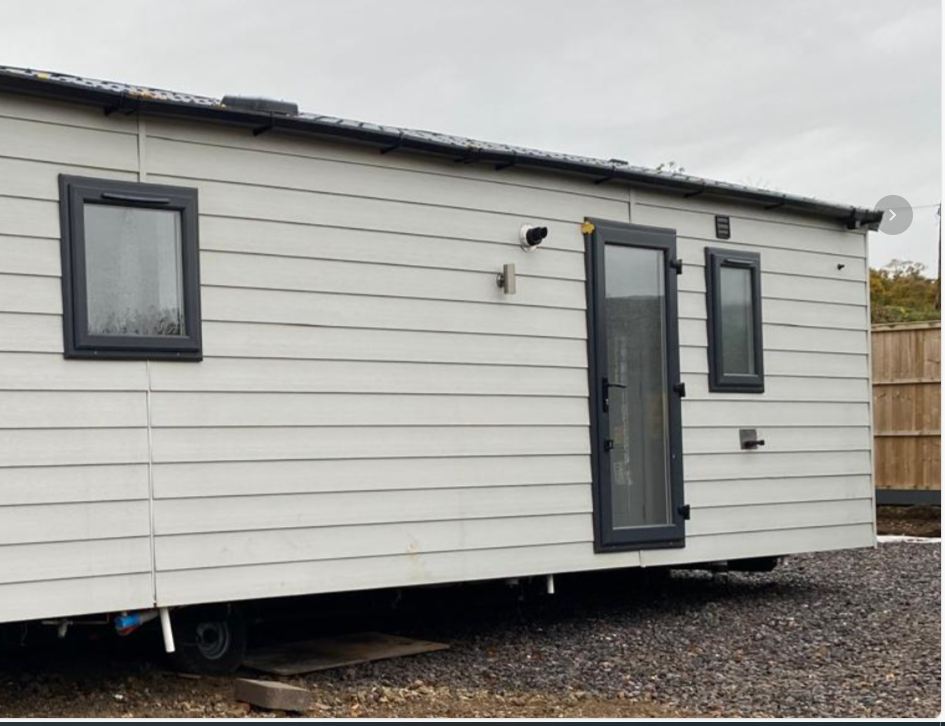
-
Insulating a shed for laundry room?
flanagaj replied to flanagaj's topic in General Self Build & DIY Discussion
We've got until the end of the month before we've got to be in the static. Sods law that it's set to rain for the next two weeks. -
Insulating a shed for laundry room?
flanagaj replied to flanagaj's topic in General Self Build & DIY Discussion
Do I need to use a vapour barrier and if so, is it installed on top of the insulation or between the word and insulation? -
I am planning on having a shed, like the one below outside the entrance of our static caravan. It will house the washing machine and tumble drier and enable me to change out of dirty clothes before going into the static. My concern is how best to insulate it as I'm concerned about pipes freezing?