flanagaj
-
Posts
1349 -
Joined
-
Last visited
-
Days Won
5
Everything posted by flanagaj
-
Using ACO drain for guttering downpipe?
flanagaj replied to flanagaj's topic in Rainwater, Guttering & SuDS
I also like the idea of a large tank as if the soakaway ever failed, I could simply fit a submersible pump into the tank and sneakily pump it out onto the road, which then flows down to a very large pond which always has loads of capacity. Hoping it would never be required, but it's a useful backup. -
Using ACO drain for guttering downpipe?
flanagaj replied to flanagaj's topic in Rainwater, Guttering & SuDS
I still need to size it, but thinking 5000 litres. -
Using ACO drain for guttering downpipe?
flanagaj replied to flanagaj's topic in Rainwater, Guttering & SuDS
I dont' think the TA even though about that 😞 A sump before the tank makes a lot of sense. -
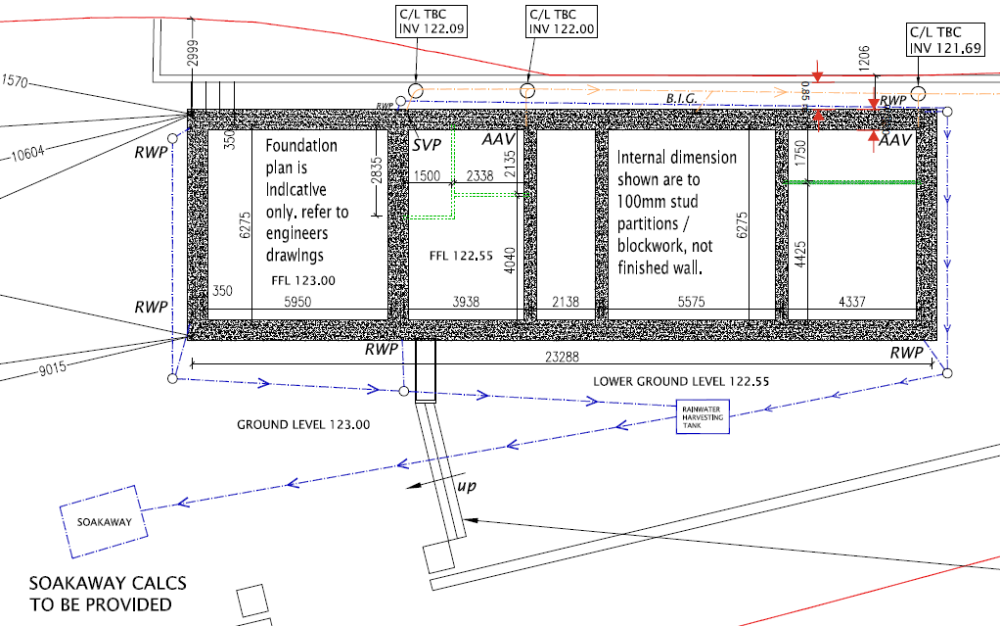
We have a level threshold around the whole house and therefore we need to install ACO drainage. As space is tight down the back of the property, I was wondering whether the downpipes from the guttering can feed into the ACO drain, instead of having to have a separate pipe system for the guttering downpipe. The tech architect who did our drawings has drawn an ACO on one drawing, but then seems to have drawn standard underground 110mm pipe for the guttering.
-
So that is quite straightforward should I need / decide to go down that path?
-
Ok, I think I was over complicating matters, by thinking I could run the UFH above dew point and run the fan coils at a much colder temperature to really make the bedrooms cool, but I suspect that running it at 16-17 degs is perfectly fine and will create a nice cold room for hot summer weather.
-
This is exactly what I had recently with an ASHP installer. With regards to your configuration. Do you run your fan coils at a different water temperature to that of your UFH when you are in cooling mode?
-
Can I ask those who have done whole house ASHP for DHW, heating and cooling who did your system design. I have decided that I want UFH downstairs and ceiling mounted fan coil cassette units upstairs, but I want to install the system myself, except the ASHP or the parts that I cannot install myself. I suspect that if I simply give my plans to a ASHP company and get them to supply and install, it's going to cost a fortune, hence why I am keen to get a system designed, so I know what is required. I could be over analysing this, and it's a simple case of understanding the heat loss calcs for each room and then simply purchasing the appropriate fan coil unit and running the pipework to the unit from the plant room and if appropriate putting in condensate drains.
-
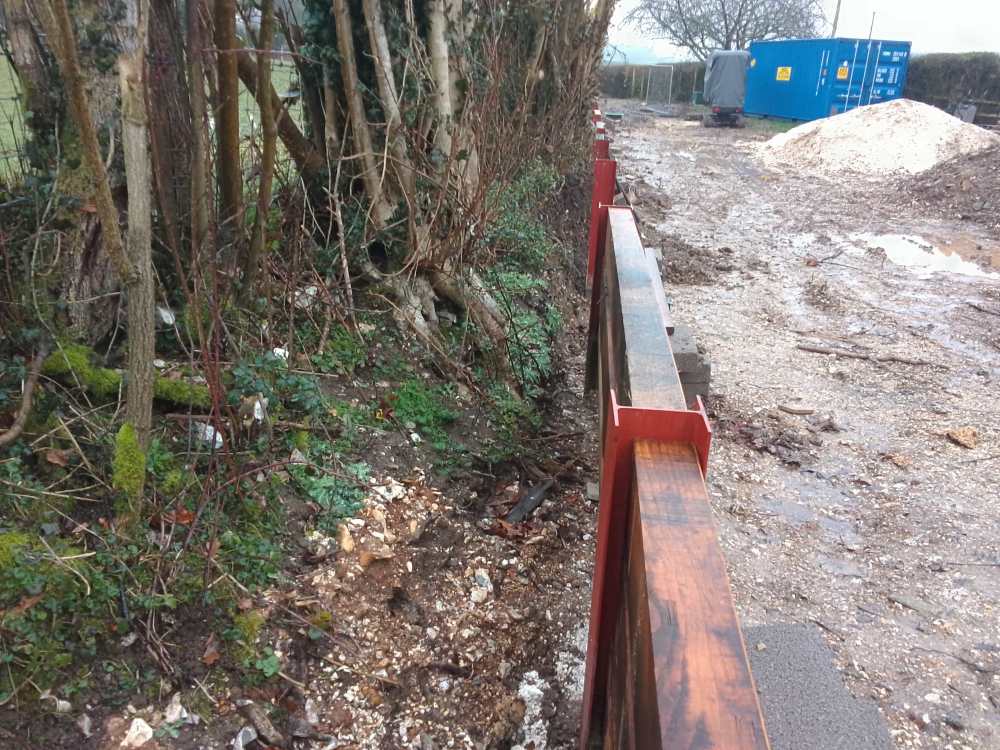
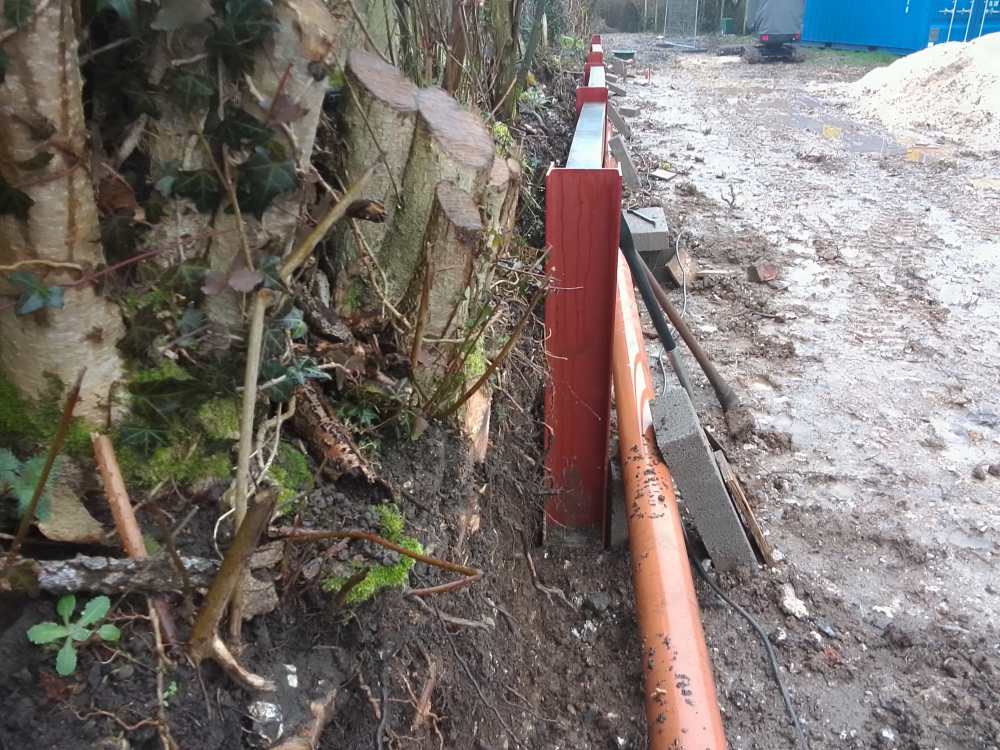
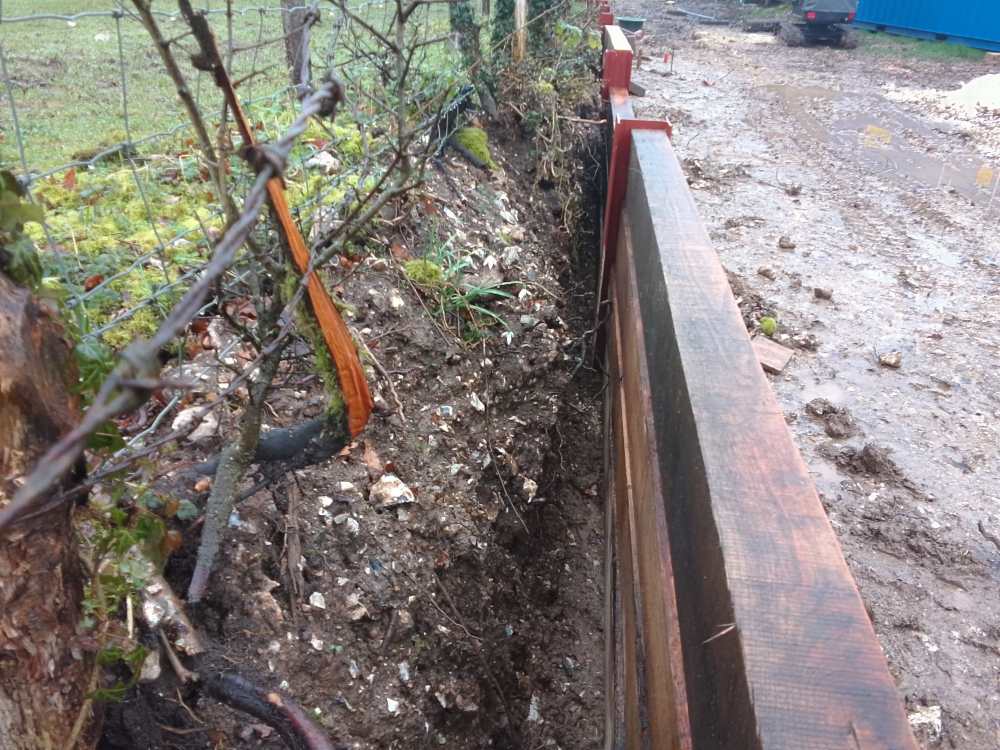
I've put in a oak sleeper retaining wall. The sleepers are installed so that they'll slightly below the gravel path. The will allow me to put hardcore / gravel underneath them so they are not sitting in soil. I keep hearing that I should install a french drain behind the sleeper, but as you can see from the images below, that is nigh on impossible due to the boundary and hedging. If I was to excavate a trench between the steels and fill that with rubble, would that suffice? I was also contemplating putting a 6mm steel plate behind the sleepers so I could bolt (stainless) each sleeper to it to help keep them inline and reduce the possibility of bowing. I wasn't sure whether the centre plate should also be concreted into the ground? The was is not very high, but just don't want it looking a mess. In hindsight, I wish I'd just ripped the neighbors 'hedge' out and had a block wall installed, especially given it's down the back of the house and future access with an excavator will be nigh on impossible.
-
I've been asleep at the wheel on this one and should have realised I need to put in another VoC. Due to a pain in the xxxx neighbour, I put the steels in for our retaining wall set forward 400mm to avoid ripping out all of their hedging to the boundary. This has meant that to maintain a reasonable width path (900mm) on the far corner of the property, I need to pull one corner forward 400mm. At the same time, I'd like to raise the ridge height 200mm so that FFL is a bit higher than the surrounding ground level. The houses on the land are all orientated differently and set back from the road by different distances. So I don't suspect it will be refused, but I suppose I don't have any options but to wait the 8 weeks for it to be processed, before making a start?
-
I'm curious how the banana links can wear as they are fixed to the pin so in theory can't? Mine have a lot of play, but assumed that was normal. The same goes for the quick hitch. The pins are pretty loose in those holes too. I'm only fettling as the weather is so xxxx and thought I'd spend a few quid getting my new toy ready for action.
-
Pressing the new bushings in should be straightforward using a threaded bar and a socket. I could be wrong and it requires way more force than I'm thinking it does.
-
Thanks all. I did look at the cold chisel option, but it looks like the lip on the inner edge is only a few mm and as a result it will be difficult to get anything to stay in contact without slipping off when you hit it. I didn't know whether a blind bearing puller will do the job, or whether the bushings are so tight, that you won't have any chance of being able to get them out with one.
-
The excavator I recently purchased is a bit slack on some of the bushings and I want to replace them. I don’t have an oxyacetylene torch, welder or means of cutting them out. Does anyone have any experience of doing this. It looks like a job that could be a right xxxxxxcx if you don’t have the right tools or do it via a specific approach. it’s a 1.8T machine and uses 30mm pins.
-
Is anyone actually building at the moment?
flanagaj replied to flanagaj's topic in General Self Build & DIY Discussion
I am most likely going to use a man and an excavator. Just so things can get moving and trenches are not left open for too long. I am now wondering whether to go with a beam and block floor over a ground bearing slab. Given I am binning having a power floated floor and am going with conventional screed and then either tiles or wood, it might be quicker and might be better suited to DIY installation of the radon membrane. -
Is anyone actually building at the moment?
flanagaj replied to flanagaj's topic in General Self Build & DIY Discussion
Some good points there Nick. Haven't really planned any of the stuff you mention, but now is a good time. -
Is anyone actually building at the moment?
flanagaj replied to flanagaj's topic in General Self Build & DIY Discussion
So I am not alone in waiting. The sound of the heavy rain on the metal roof of a static caravan is akin to being waterboarded and remaining positive is hard work. -
We have been in our static caravan now for nearly two months and haven't even started our self-build. The weather has just been so rotten. It's been either very cold, or throwing it down with rain. Are people literally just carrying on in the rain and pumping out filled trenches .... to enable things to progress?
-
I had an SE do the calcs for the steels, but I'm confused as to what they mean. He has specified 254 * 102 * 22 UB. Whilst I understand a UB works for the inner steel, I don't see how you use a UB on the face brickwork side, or why it requires a UB as the load of the external face is much less as it's not supporting the roof or floor. Does anyone have any advice on what steel design you would normally use for a ground floor 4.4m sliding door. Estimators specified a Catnic https://condell-ltd.com/catnic-cx150-100-4800mm And I understand how that works as it is shaped for a cavity tray to easily be fitted and the exterior brickwork to have the required weep vents, but two parallel UB lintels would not work like that. 25578 - White Cattery Lane, RG26 5TN.pdf
-
Visqueen contract design service 😮💨
flanagaj replied to flanagaj's topic in General Self Build & DIY Discussion
Do you have a drawing to hand as I am struggling to understand how you do this? On reflection, is it just a simple case of making sure that the top level of your sand blinding coincides with the top of the block level for your sleeper walls? -
Visqueen contract design service 😮💨
flanagaj replied to flanagaj's topic in General Self Build & DIY Discussion
It would need some thought regarding the internal sleeper walls as you obviously cannot run the membrane across the whole ground floor area, if you have internal sleeper walls. -
Visqueen contract design service 😮💨
flanagaj replied to flanagaj's topic in General Self Build & DIY Discussion
This is an interesting approach. Given BC have signed off level thresholds around the perimeter of the house, I am keen to understand this detailing further. It's the detailing with regards to the level threshold that's confusing me. I did find the below, diagram, but it's for a conventional 150mm lower outside floor level.
-
Visqueen contract design service 😮💨
flanagaj replied to flanagaj's topic in General Self Build & DIY Discussion
That was my thought too. -
We are in a Radon zone and require 'basic' protection. I contacted Visqueen to ask if they offer a design service, so I can understand the junction details. They came back an said they do offer a design service and it's £3000. I'm going to ask if they have added an extra zero by mistake 😂 I doubt they have, so I thought I'd ask what did those of you do who also found they needed Radon protection measures. I might consider an alternative supplier, if that's how they treat potential customers.
-
Can't find a brickie (Hampshire). Any suggestions?
flanagaj replied to flanagaj's topic in Brick & Block
Finally! I might have had some joy. Found a brickie who has quoted me on m2 rates and his work looks very tidy too. Rates are £23/M2 blockwork and £55/M2 face brickwork. Those numbers do align much more with the estimators quote.