flanagaj
-
Posts
1349 -
Joined
-
Last visited
-
Days Won
5
Everything posted by flanagaj
-
I've actually found a surveyor in Southampton who is coming out tomorrow afternoon to mark it out with a total station. Given the cost and associated implications of getting it wrong, it's a no brainer.
-
This week is looking nice and dry with daytime temperatures in the region of 14c-18c, but with low temperatures overnight. If the concrete is poured in the morning and I cover the trenches with a concrete frost protection blanket, will that suffice and ensure that the concrete doesn't suffer irreparable damage.
-
I've already had the site levelled 200mm below finished floor and 1m wider than the dwelling.
-
This is really helpful. I hadn't thought about multiple visits and assumed they just came once to set out and that was it, but it makes complete sense for them to mark the concrete footings for the exact location of the wall position.
-
So armed with profile boards, Pythagoras theory ... My wife and I attempted to set out the profile boards for our house this weekend. The net result of our efforts was zero and we've concluded that it's beyond our capabilities and just too risky to get wrong. If it was a small footprint on flat ground, then it would be fine, but we've got a 450mm height delta between the attached garage and the house. Plus, the house is 24m x 7m, which means the slightest discrepancy on any of the angles will result in a significant error. So I'm now wanting to know what specialist I need to employ who can accurately set out the building, eg, mark the position of all internal and external walls and also erect timber profile boards. If anyone can recommend anyone in Hampshire then can you message me.
-
😂we've got quite comfortable in our static caravan
-
I really need to hire a pump as otherwise, there is going to be a lot of manual raking
-
I have just called around to get a quote for 24m3 of C25 and have quotes from £120/m3 to £191/m3 Given that concrete is something that you don't want to get wrong, is there anything I should be aware of here as that is a massive difference.
-
It was quite fortuitous. I heard a knock on the door and the BCO was stood there. Turns out, that he got the wrong Thursday, but he was ever so helpful and fully understood about inspecting the rear trench and allow us to crack on.
-
So, on that basis it should be viable to pour in one hit
-
Plan was to pump the footings in one go. 24m3 of concrete. Is this not possible?
-
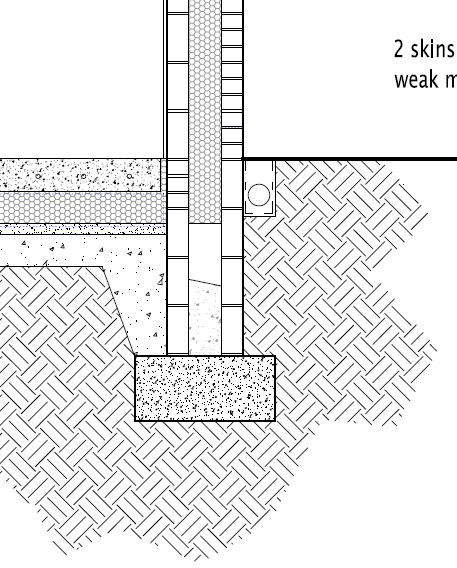
I have started to realise that using the TA recommended by my brother in law was not the best decision. He has drawn the footings as below (300mm strip) My plan is to increase the depth of the footing by another 225mm. This means I would have effectively 3 courses of block below FFL. I want to avoid having to put soil pipe through the trench and ideally want to have the pipe go through the blockwork via lintels. Otherwise, I need to get some oversized pipe in place for when we pour (next Friday). The invert level of the lowest IC is 550mm below FFL, so I cannot go too shallow, otherwise, I will have to put the soil pipe through the trench footing.
-
Can I ask why you had the vertical rebar in the foundations?
-
I eventually found a chap with a nice 2022 3CX JCB. He graded the whole site today and has told me he'll pull the footings in 2 days next week. Can you tell me a bit more about the other points. Especially, around the concrete line pump. I have calculated that I need 25m3 of C25 concrete and the furthest point from the truck will be 16m, so I assume a pump is the way to go. Will building control be happy to inspect the footings before they are all fully completed as it will be difficult to go back over the rear footing once it has been pulled and the other footings are done.
-
Yes, but they are not very clear.
-
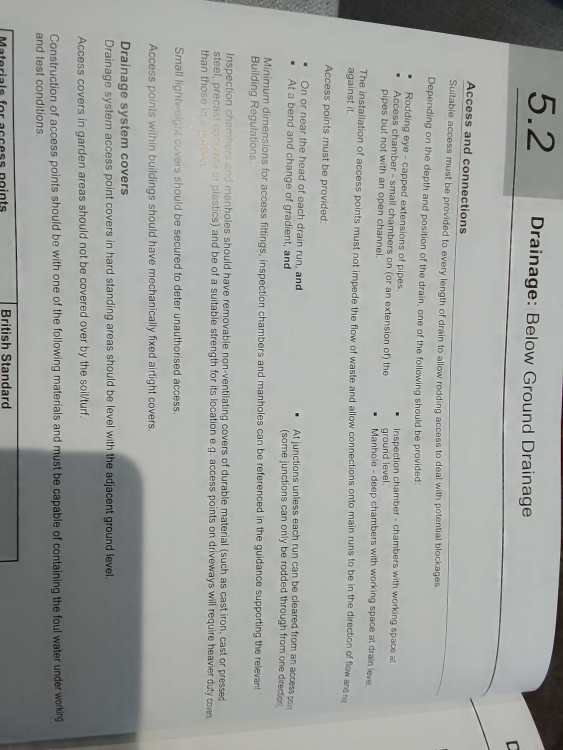
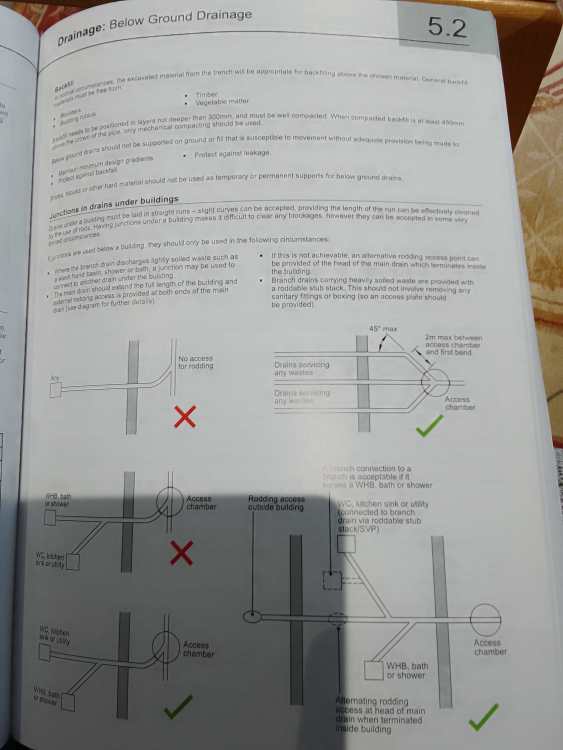
I am slightly confused. I thought an IC is used for rodding the main drain run, but to also be able to rod the branch line pipework that connects in to the IC. If I remove the two IC to the West of the building, how would you rod the branches?
-
I'm going to bin off the chap I've lined up. He like many, are mainly landscaping / patio contractors. So probably not the best choice for getting footings pulled quickly.
-
Point taken. I think I've chosen wrong people for this job as there are telling me 10 days all in. I agree with you. It's a 2 day job with a decent machine. One groundworker who I didn't use, recommended i pulled and poured the garage first and then pulled the house footings and then joined the old and new footings with rebar resin bonded into the earlier poured footing.
-
I've got a 3 ton dumper. Hadn't considered a 5 ton machine as that would make quick work of it.
-
Ouch. That looks like a world of pain.
-
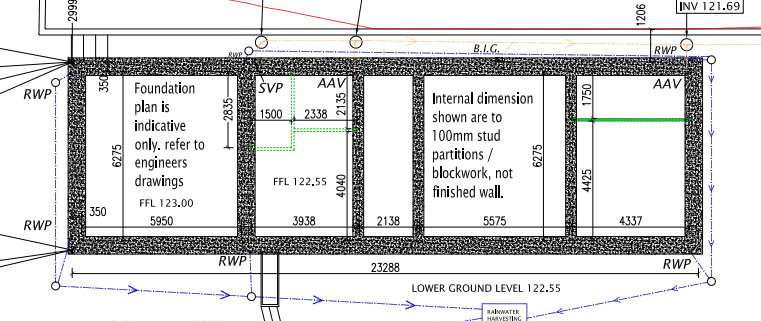
My original plan here for excavating the footings is as follows. 1). Pull the North footing to depth. 2) Pull the 6 vertical footings to within 1.5m of the South footing 3). Pull the south footing 4). Join up the remainder of the vertical footings with the south footing If I do this or do get the groundworker to do this, it would mean that the North footing will be exposed for a few days before the concrete is poured. Would people do it this way or would you pour and shutter multiple times to avoid leaving footings exposed for a few days?
-
Sorry. I am due to start tomorrow and have 2.7t excavator arriving in the morning.
-
I haven't got anything booked in so no big deal if we postpone
-
We are due to commence development tomorrow, but the weather forecast is looking wet and now I'm wondering whether to just get started and deal with the consequences should any arise, or do I push it back and accept more delay. Just not sure what to do.
-
😂 I'm not sure what people were thinking.