saveasteading
-
Posts
10107 -
Joined
-
Last visited
-
Days Won
82
Everything posted by saveasteading
-
Oh there certainly is, especially in steel. In the day job we mostly look at tables of the properties of materials. Someone has done the complex maths, combined with experiments, and the properties of standard steel sections, for example, is already done and published. That save lots of time. If you want to look at the principles of everyday steel design, I have a book in front of me Structural Steel design to BS 5950 by Morris and Plum. It was published in 1988 so you might find it second hand and explore the maths...Gus will know if it is superseded. It is very accessible but uses the published tables. Behind it is much more complex maths which you will find if you want, but it is the stuff of academics and not used as everyday. BUT I studied this stuff and am qualified. But I have forgotten most, and so only work on simple beams and subcontract to people who do it as the day job. Then there is concrete, which is done more from first principles because of the infinite variety. Actually I am wrong. First principles involves serious calculus and again leads to tables that are used for real stuff. And, for example, the Sydney Opera House is not out of books at all. Buy a couple of books I say. You will look at beams and portal frames differently. Oh and another difference is that a surgeon works in a familiar environment with a fairly standard subject. But every construction site is different, even for a repeat building. and wet and windy or hot and dry. This sort of stuff? Elastic section modulus Equation (9.10) may be written in the form σx,1=MZe,1σx,2=MZe,2 in which the terms Ze,1(=I/y1) and Ze,2(=I/y2) are known as the elastic section moduli of the cross section. For a beam section having the z axis as an axis of symmetry, say, y1=y2 and Ze,1=Ze,2=Ze. Then, numerically σx,1=σx,2=MZe
-
Good point. But do we know that? If the rock stratum is reasonably horizontal, perhaps not.
-
about 15 years? Thanks all. I will rummage through the tins and choose anything that looks right but also take up some wood screws. Or sticky tape round the box and timber tie. It struck me as a BH thing that I'm asking for advice on 2p worth of screws while discussing someone's piling project to save tens of thousands.
-
I'm wondering why they wouldn't stop when they hit the rock.
-
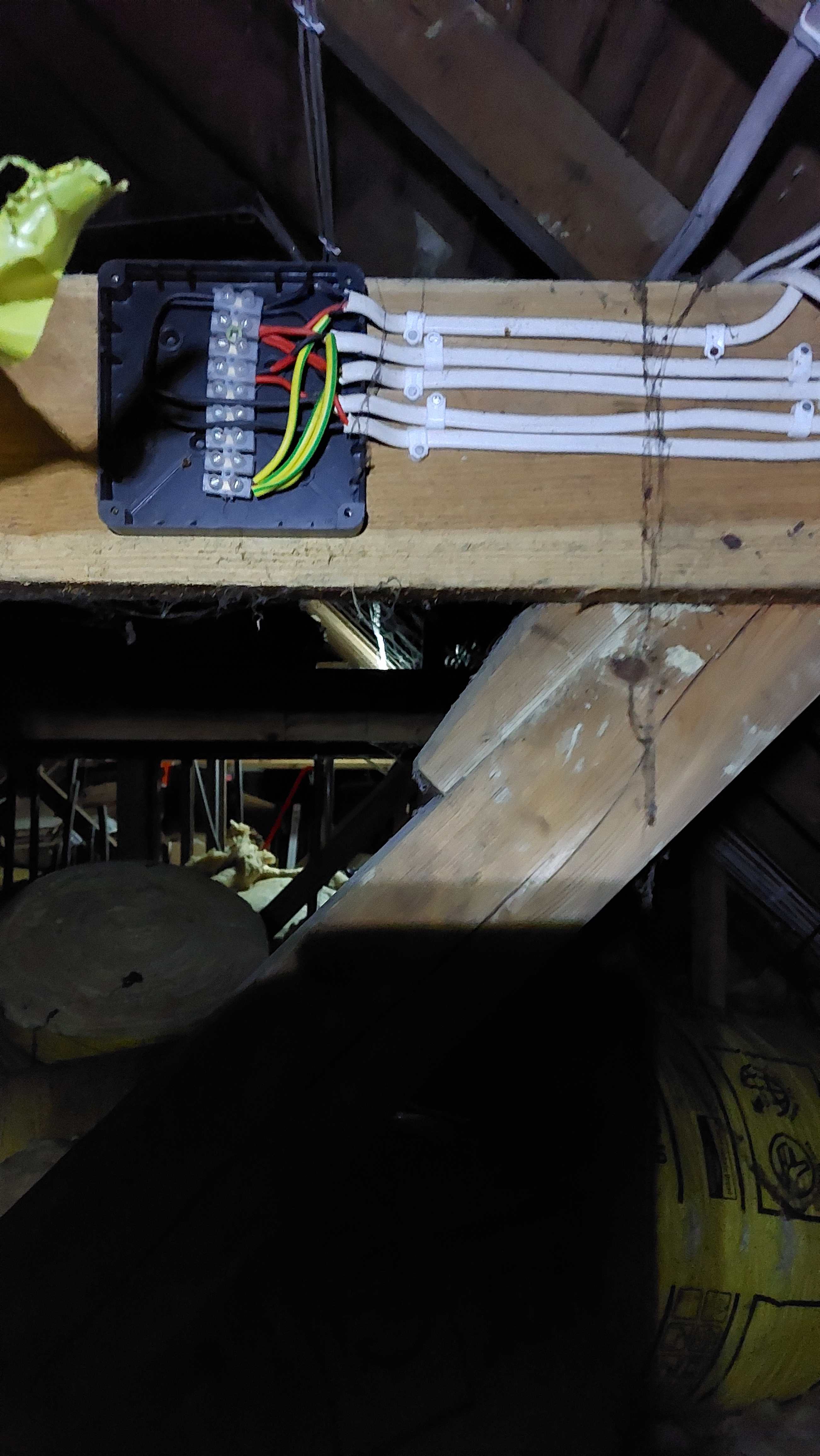
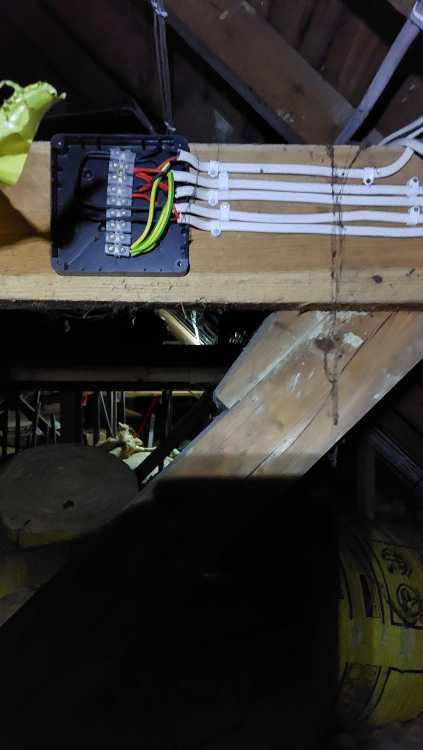
What a mess I found in the attic, of electricians and plumbers offcuts, empty boxes and reels, and insulation not replaced. Then I saw the cover for this sitting on the insulation. Looking up I saw that the cover had never been fitted. More than somewhat dangerous.There are no screws. To save me going up with my boxes of mixed, handy screws, are these going to be standard sizes in thread and length?
-
You absolutely need the ground report to be emailable, because they will want to see it for a quick look before any other discussion. Their sales people are technical specialists who will know from a glance what they can offer. I should say, that your Engineer cannot know the relative costs of all options, or how they affect the total build cost, and I often changed the process from what the clients' original designer had suggested. And presumably you aren't paying them enough to do this management for you. So get on the phone to the pilers....with the ground report ready to ping to them.
-
Keller. I used keller loads of times, especially on poor ground. Esp vibro replacrment. Bullivants have interesting alternatives too.
-
I've had a lot done so let me try to help. I'm not disagreeing with anything above. 10m is a long way indeed. That doesn't seem right for a domestic loading, so a completely different piling method may be better. These will be end bearing and the ground above must be very poor. Do not discount the big companies as they have knowledge and various options that are not end bearing. You say 10m long but it is on a very steep slope. Is the underlying solid surface the same slope then? If the ground is so poor and sloping has anyone checked that it won't all slide downhill? Piles don't like bending. The photo from @ProDaveis like a building I did 25 years ago on decent ground. Just pads and columns up to a common level. I used plastic pipes for column shutters too. It's still there. The bits you see are not necessarily by the piling company, but a groundworker, so cheaper. We really are guessing though without the ground report. It says 'download failed' .
-
 There must be 200m of cable up there. I will cover this area though as it clearly appeals. Expanded metal is a good idea. We can hear scurrying in the attic today, but the bait is going uneaten. Maybe there is plenty of food outside and they just come for the warmth and to multiply. At least they will not eat cable before the blue wheat.
 -
Having had a crawl through the attic I notice lots of gaps in the armaflex type of pipe insulation. I could feel the heat off some. Some is ancient, black, snd disintegrating. Another type is better but isn't keeping shape, so falling off. Te best looking, grey stuff spears to have shrunk in length. I intend to retain what I can, with small infills, and replace the worst. There seem to be many qualities and prices available. Advice please on brands. I'll probably then get quotes for a lot with a thought that by the box should be much cheaper.
-
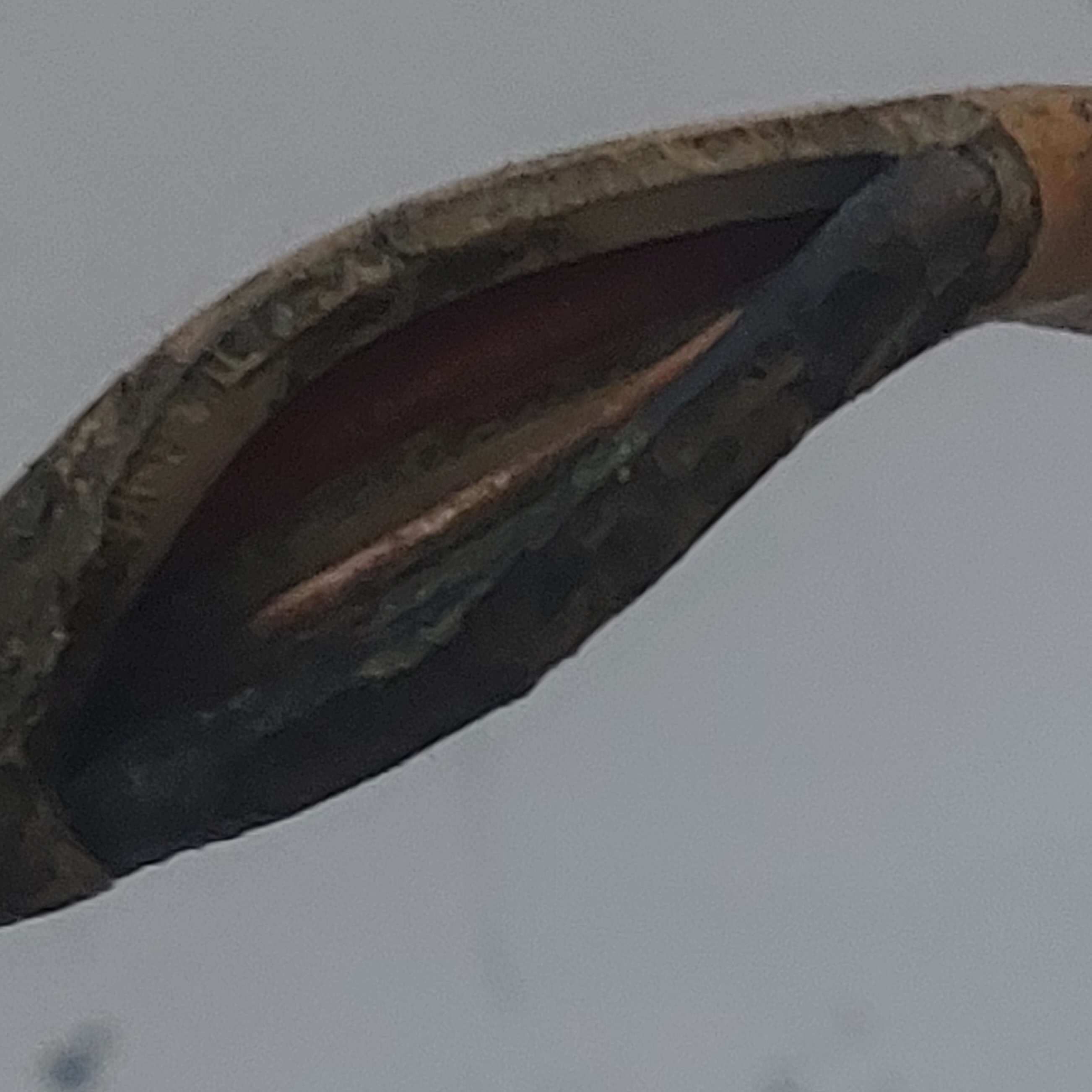
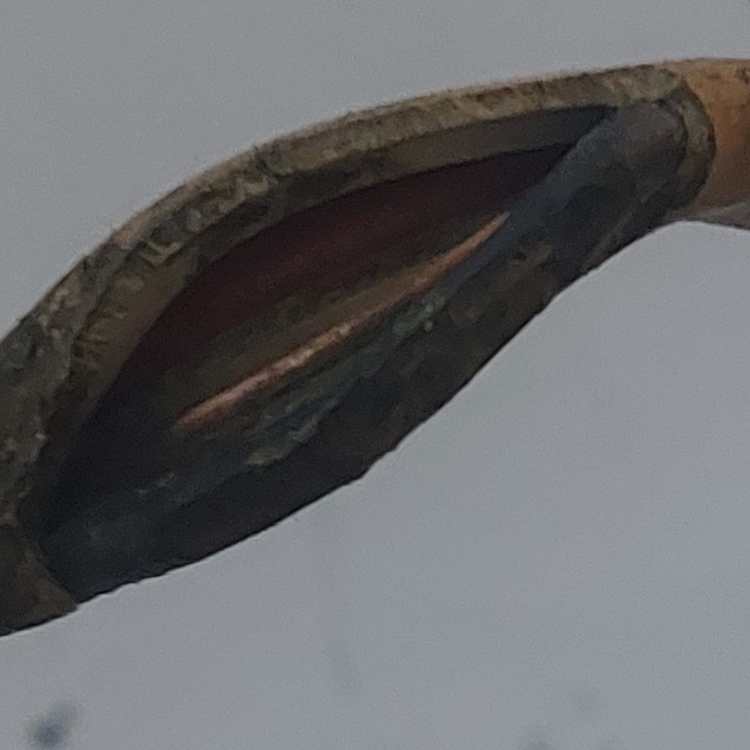
Sorted. I replaced a section of that gnawed cable, being the least disruptive course of action. It works. Although I can't quite see it, I think the black cable is through to copper. The earth shows some corrosion, white spots not green for some reason. Thus we surmise that water got in there, and was shorting earth to neutral. The red looks to be intact. The only sign of water is the black staining, but a single well aimed drop would be enough. It might have dried out and worked for a while but it is done now. I'm going back up another day to look for a leak (it is tiles on sarking board). I will put some barrier over this area to shield the other blackened cable. Also I noticed that the last electrician up there to connect a toilet fan had not put the insulation back. Someone else's job I suppose would be his view....they are like that here. I'm putting a plumbing query on a new post.
-
Spellchecker disaster !!! Tay Bridge of course.
-
Interesting point. I was amazed to get £5k and £10k accounts ag merchants just for asking (as a private individual). I get great prices when I ask the rep for a quote. The local BM is proving better than the national one. But in the shop I get no discount at all, and won't.....I guess I'm paying for the facility and stock cost.
-
Well. I've got a few minutes. Once upon a time there was Engineering. Making war engines such as trebuchets and battering rams. And associated stuff like tunnels and defences. This was Military Engineering. Extending this to non military use was then known as Civil ( ie not Military) Engineering. That would be drains, roads, bridges. Perhaps castle-like buildings with big open spaces. There may be some unis where you study a degree in "Structural Engineering". (Others will tell us I expect.) Mostly, uk at least, it is called Civil Engineering and you learn the lot. Experiments with materials and hydraulics, structural theory and design, drainage, roads, geology, management of construction.etc . Mine included building science which i enjoyed most.( heat, light, noise, airflow) Later in real life you are likely to tend toward Civil or Structural specialisation. You can study and be examined after s dew years, for one or both institutions. In my case I designed structures and pipelines and buildings as if an SE. The examination for SE though was high end maths without the books and colleagues to refer to. My very clever ISE colleagues took 3 shots at it because their subjects didn't come up. So I stuck with Civils. Civils also tends to include more management. I presented a real life structural project, and the exam was essays and a heavy interview on design efficiency and the morality ethos of the profession! So I am qualified to design and to approve structures that I would struggle to understand. I maybe did once but I'm out of practice. But I don't, and that's the point really. To the extent that I employ an SE when necessary, but only one who will tolerate my interference. Hello @Gus Potter Hence. Most practices say that they are "Civil and Structural Engineers". Coffee finished. Up to the loft!
-
If you ask your local merchant for the price of a box of 12, it may plummet.
-
A short article on the anniversary. Bad engineering, bad construction and bad poetry. The latter didn't kill anyone. https://blog.engineshed.scot/2017/01/11/132/
-
Everbuild is a brand owned by Sika, whos products are top end, but at much more manageable prices than Sika. Everything I've had has been really good. Only an expert who has tried and compared the products can say for sure. Try it.
-
And any groundworker can paint 'civil engineer on their van'. Same to some extent with 'doctor'. An extended degree in anything would get a doctorate.....but I think the NHS and public know the difference. Strangely 'Architect' is protected even though the aesthetics of a building won't kill anyone. But the profession sells itself strongly. I don't always correct being called a Structural Engineer, (I kept to the Civil path,) as there is some recognition. Ask the public what is a Doctor or Architect, and all will know. Lawyer? Structural Emgineer? I think so. Mechanical/ electrical/ chemical? The same applied to trades of course. Electricians at least have standards with certification but I know this gets abused.
-
Introduction post. This is Paul doing a barn conversion.
saveasteading replied to PaulFC's topic in Electrics - Other
the width is a practical matter. How narrow a trench can you work in?.....bedding the cable in sand, backfilling and compacting , placing a yellow warning tape. In a road, the narrowness will reduce the cost of rebuilding a road surface. In a field it doesn't matter. -
It's in the nature of Engineers to do the job rather than play for power. Plus as a Chartered Civil Engineer we have vowed to put society first. client next ( and by implication ourselves lower). "maintain lifelong competence, assuring society that the infrastructure they create is safe, dependable and well designed." I don't know about other Engineering professions.
-
Introduction post. This is Paul doing a barn conversion.
saveasteading replied to PaulFC's topic in Electrics - Other
Over agricultural land should be easy, and the farmers will know contractors to do it. Do you supply the cable in this scenario? That's £9/m. Duct or sand. marker tape is cheap. Kiosk too. -
Start with this very accessible book and see how you get on. About £5 second hand. Maths is essential for Engineering, but not vice versa. Of course there is a big overlap where the Venn diagrams cross. 3 or 4 years at uni then min 3 in the real world to get qualified. There's a lot to learn, but knowing the principles and the right terms is a good start. If I remember, there isn't much Maths in this, but principles. The New Science of Strong Materials (or Why We Don't Fall Through the Floor) by J E Gordon
-
It is hard work, and very few people will do it. Dig a holeto the bottom of the footing. Get into the hole and dig under the foundations and down to the new depth, handing up earth all the while. earth to garden or skip. Pour concrete in the hole and pack it up super tight under the footings. Pay for the concrete and the small load premium. move on an repeat. Because it is difficult to pack up tight, the house may settle a mm or so. If there wasn't really a problem then this may cause differential expansion when the ground recovers. Your Engineer says it isn't necessary He knows the ground in your area.
-
Boiling and banging pipes
saveasteading replied to saveasteading's topic in Boilers & Hot Water Tanks
Radiators all have thermostats plus there are room controllers in 2 distinct circuits, each with a hot water tank. Port valves? I don't know. On further investigation, I half recall that the radiator nearest to the boiler is on its own loop, for some reason of keeping a circuit open during maintenance????? may be wrong. That was the hot one. Others seem to be on and off without issues. Since my first post and turning the room heating (only) back on it has been working nicely. I haven't touched the controls. I will continue this for completeness and only turn the water heating on when necessary and then after a decent test period. -
well done, that is always the best. it is liquid running water you are looking for. you have a leak. Imagine the cost of such multiple inspections, and the additional premium for being responsible for all workmanship and all consequences. That red circle does look favourite as a problem. I don't like the gutter chucking uphill and clashing with other running water downhill. But there is definitely regular extreme wetness at the left end of the bottom gutter. If not from the gutter then from the confluence as you neatly describe it. In looking for leaks I start from the end point. so that is the left gutter end and support. water generally takes predictable routes following gravity, so straight up the slope is likeliest. My kneejerk solution is a metal flashing from gutter left, to underside of the flashing above it. And another catching all the water from the red circle confluence. Plus the red circle gutter could do with being cast away from the circle onto an area of complete tiles, using an additional downpipe and shoe. This will also m ove it slightly from the lower confluence.