


saveasteading
-
Posts
11094 -
Joined
-
Last visited
-
Days Won
98
Everything posted by saveasteading
-
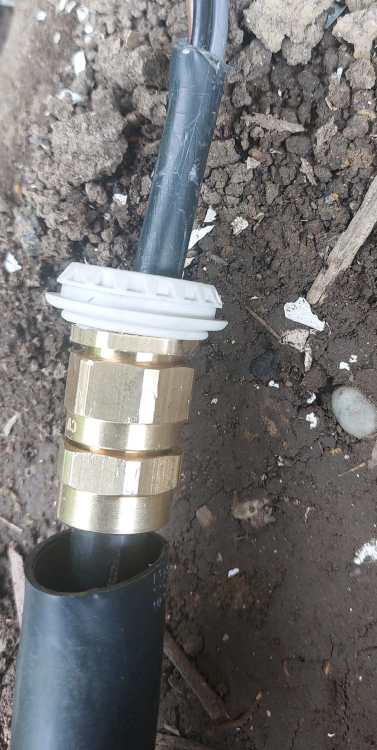
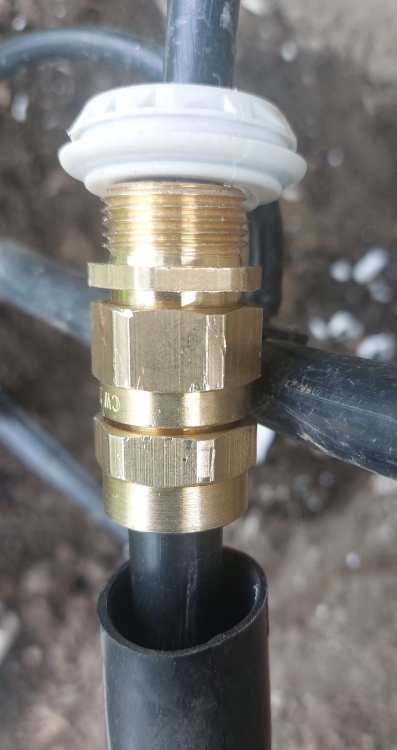
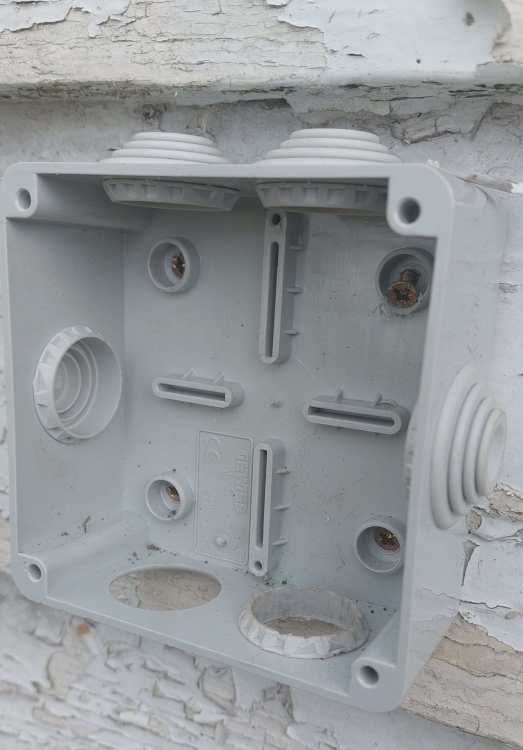
My first time hands on with SWA. I've done one end of this cable into an existing box. Slow but successful. At the other end the grommet is deeper than the thread and I can't tighten it. If I take the next diameter off the grommet for depth, the fixing goes straight through. The grommet doesn't compress either. Am I doing something wrong or is there a trick?
-
 The quality can be very different esp ease of connection. I once had SF (or was it TS) that were very cheap but very difficult to insert. The optimum is likely to be from a smaller drainage specialist. At the steading we found onevery locally that brought in a German brand. The price was much lower than SF or the local (and keen) BM. The joints were easy. Keep looking.
 -
In case it helps. I once (business not private) had a quote for a new transformer required for our client's new truck garage. ie a lot of power needed. One of these big ones with a fence round it. 200k or so, I can't remember. Because it had so much spare capacity we got the cost halved. This was negotiated by a specialist who does nothing else.
-
I thought they were push fits (and a bit scary to use). so you push then tighten?
-
And they want paying for that? Grrrr!
-
It's density you need from the board. The blue board is a quarter heavier than the grey, for twice the price. 2 layers of normal board is better sound proofing and you can lap the joints. You will lose 12.5mm more room and have more work.
-
Soil pipe penetrations through slab - which way up?
saveasteading replied to Dunc's topic in Foundations
Not really. The main purpose is that the reinforcement is at the intended position. When the slab tries to bend under load, the steel goes into tension and takes the load. It needs concrete all around it and so be off the bottom. The supports can be concrete as shown, or butterfly shapes, or can be plastic usually in wheel shapes. For a ground bearing floor slab it isn't going to matter. Pre-guessing @Nick Laslett likes the convenience. And that lots, as shown, allows walking over the mesh. -
Soil pipe penetrations through slab - which way up?
saveasteading replied to Dunc's topic in Foundations
In what way please I'm interested to learn? My comments after yours. -
That is for fire, not corrosion although it would have the secondary benefit. The coats of intumescent paint that expand in heat absorb moisture. The top coat seals it. So for just corrosion don't use intumescent. @spinny a fire under these unprotected beams might destroy the house, but such an event is unlikely.
-
Better than not thinking about it and keeping the problem. Asking the right questions. Keep doing so of your builder and BH.
-
Week 8 - And pause... or not.
saveasteading commented on Benpointer's blog entry in Contemporary build in north Dorset
Is that the SW term for Wallie Dug ? -
No. Rust can continue to form, deep in until failure.(except Corten, which is very different). It would stop rusting though if the dampness is stopped. However, as best practice, and to remove any concerns about it , treat it as proposed. Another option is bitumen paint. The advantage being applying it in tricky corners. But stuff like plasterboard won't stick so well. Do ensure that the source of dampness is permanently resolved. Any clues on that?
-
Ideal drainage pipe gradient advice needed.
saveasteading replied to SteeVeeDee's topic in Waste & Sewerage
I had a uni module of 'building science' (heat, light, sound) and it included materials science. It made me interested in such matters. A text book comes to mind...'The new science of strong materials, OR why we don't fall through the floor.' We only build houses to keep us warm, dry and safe from wolves. Then we want it to not fall on us. The rest is art. -
What effect do they have on the results? For interest, not to keep false figures. I'm wondering if the consultant has enough knowledge to have an expected outcome to compare to. ie does that look right?
-
Drilling hole through existing foundation
saveasteading replied to LSB's topic in General Construction Issues
We have a walk-in shower drain with pipes as high as possible. This exits at a few " above ground level and thereafter is contorted to meet the main 4" pipes. At present I have removed the rodding point so that it waters the tomatoes. The whb is watering a courgette to great effect. The drainage isn't pretty there but I could have tried harder by burying pipes asap rather than leading them above ground. -
Advice on bathroom heat strategy
saveasteading replied to SomethingSensible's topic in Air Source Heat Pumps (ASHP)
We have an old, primitive house with no floor insulation. Despite that we installed an electric blanket type under the tiles, with time control. Also an electrically heated heated towel rail, for which we simply push an 'on for 2 hours' button. as required. Theoretically that is inefficient with 1. using straight electricity, 2. heat loss through the floor. But all works well. With cosy feet all feels well with the world, and neither heat source is on for long. -
Ideal drainage pipe gradient advice needed.
saveasteading replied to SteeVeeDee's topic in Waste & Sewerage
It's a personal preference (and so for my own buildings is easy, but not so much commercially), but I like to limit movement. Movement joints can be much reduced, especially in masonry. Bricks expand after manufacture, as they absorb moisture. Blocks shrink as they cure then dry. Sometimes they were made only days before delivery. Thus a cavity wall is severely stressed and needs joints. Buy them early and store in free air and the situation disappears or at least lessens. With concrete, cracking is reduced through limiting the water content, and stopping evaporation. Judicious use of mesh or fibres helps too. It will shrink and crack but much less than it might. eg I haven't ever had cracks in large areas of floor tiles. OR in some situations you let concrete floors or walls craze, then finishes cover it.. -
Drilling hole through existing foundation
saveasteading replied to LSB's topic in General Construction Issues
Agreed, avoid macerator. They are last resort, noisy and add lifetime maintenance. Drilling downwards is easy, but horizontally is not. Plus a 100mm perfect hole is not what you need. 150mm with precision is getting specialist and also needs a big access pit. As @Oz07, cut out a generous gap and later infill again. Agricultural concrete may be on the softer side if you are lucky. Or can the pipes emerge above floor level? -
It is assumed that residents have diminished hearing, and that hearing general activity is a positive. And staff want to hear any noise, for quick reaction to any issues.
-
I would hope that the brief includes that the remedial work, design and works, when finished, are not apparent in any way. In any future sale, a surveyor should not see any signs of problems, however well sorted structurally and functionally.
-
Resilient bars are very effective. You also need some soft insulation ( rockwool), and some density ( 2 layers plasterboard. Sound will still creep in at the edges so sort them too. The standard details in the plasterboard spec sheets are very useful and have been lab tested.....without edge ingress though. Do not, as I once did, assume that nursing home standards are appropriate...they assume hearing loss in residents... you need semi-detached sound blocking.
-
Underground cable advice please
saveasteading replied to Lincolnshire Ian's topic in Electrics - Other
If you have the luxuries of space and time, then working with an open trench, or part, removes these risks entirely. -
Underground cable advice please
saveasteading replied to Lincolnshire Ian's topic in Electrics - Other
I've seen cables sticking in ducts, resisting the winch tension.... scary. Had to dig another draw point. You must not have any wobbles in the duct. None, zero. -
Rear extension and nasty neighbours!
saveasteading replied to Millymu's topic in House Extensions & Conservatories
Great advice above. There is some territory defence instinct in us all. Try to rise above it. As insurance, and I think some comfort, i would recommend keeping a diary. Just a blank hard-backed book and only use it when there is something to record. Mundane or passionate as appropriate.Eventually this will also become your site diary. Being blank allows you to make no entry or write a paragraph or whatever. A gap in dates in itself shows that nothing was worth recording in your opinion. Such a record can be amazingly powerful in any future formal argument. Allows you to relax and not carry this mental load at all times. -
Or that part of France or what the Mayor thinks. I've been involved once and it was surprisingly informal in a good way. Local contacts helped. Discuss with the selling agency...they might have into or contacts. I was going to say that you always have Saniflo as the worst case, but not if M. le Maire ne ce l'aimez pas. Rearrange words as necessary.




