


saveasteading
-
Posts
11094 -
Joined
-
Last visited
-
Days Won
98
Everything posted by saveasteading
-
 There are, or used to be some very large water tanks I designed for a hospital and a coal mine...probably both now built over. Plus some holding back the North Sea which I know are still there or we would all have read about it. Plus a couple of bridges and basements. So any questions on concrete retaining walls design or construction are welcome now or at any time, but in a new thread. How would I find this thread?
 -
I recall my dad made his own and made triangular timber brackets that folded out as hefty supports. These can be as long and sturdy as you like. Old door hinges used i think (no purchases would have been necessary!). Plus you could have a leg to support at any position, probably nearer the loose adge., and this could fold down or be inserted.
-
Larry and Mo think it's easy, and moan about not getting 1/3 share, until on their own, when it grinds to a halt at best.
-
Turn the speed down, don't press too hard and let the blade work. If I can do it, so can anyone. I did 4 of 150mm with one layer of mesh in an hour and no pain. The drill was nothing special in weight or Watts, just smooth.
-
Services issue post purchase with inaccurate PEC
saveasteading replied to DC5's topic in Party Wall & Property Legal Issues
OK. I can't remember where we hired it, but our groundworker used it for the first time and successfully. OR there is the grave digging type excavator, which is like a chainsaw for ground. -
Really? In my experience of a 3 person gang. The lead bricky (or other trade) sometimes can read a drawing and manage. The second bricky seems good until left in charge. The labourer no chance. The potential need for a foreman will depend on the gang, the complexity and the client.
-
Services issue post purchase with inaccurate PEC
saveasteading replied to DC5's topic in Party Wall & Property Legal Issues
Better still is a special plough that slits the ground and the pipe rolls out behind it and the ground closes again. Used one once for a water pipe of about 100m , and it took hours not days. -
Potton Homes(Kingspan) out of business
saveasteading replied to Post and beam's topic in General Self Build & DIY Discussion
It can suit client , contractor and supplier, all 3, for the client to pay for goods direct. That is easy for some things like a TP, or a load of bricks. Not so straight forward where there is a skill in measuring and risk of errors, eg window sizes, or roof panel lengths. It has to be discussed really early in the process. -
Running MDPE pipe through drainage field
saveasteading replied to flanagaj's topic in Waste & Sewerage
Can it run over the top? -
I said I'm out so should maintain that. Briely then, in the retaining wall picture the base is fixed so doesn't rotate. The top deflects outward, so the inner face is in tension.. However the pc retaining wall does not apply acc to the orangy sketch All that load goes onto the skinny columns which fall over.
-
Easiest with threaded rod and epoxy. Presumably there is a datum for each wall that is simply measured off. Alternatively use strings or fancier laser type stuff. The bolts are measured as a cluster relative to that.* For height use steel shims set to the height required. I preferred to set sacrificial nuts on the bolts, lowered to the level, thus typically four bolts support the column until it is grouted underneath. Happy to expand if you explain which bits in particular. Perhaps on a new thread. * although skilled in theodolites etc, I prefer lines and tape measures. It also means that the building usually has an edge beam by that stage, so it's easy access and to mark out. If the perimeter is built then it's even simpler.
-
Sounds best to me. Safer as no long trailing cables. Plus I recall once having power provided at a box 40m from the project, 110v transformers there then yellow cables to the building, and drills were barely turning.
-
Your logistics is back to front. The reinforcement works best in tension, so centrally or inside. The reason I suggested block is for construction and avoiding shuttering. Try cavity 2 x 100. Infill slowly with concrete if you want. Sorry. I see you're playing. I will duck out now. Just be sure never to let children play in there, and knock it down before passing on the property.
-
No that's wrong. 16mm I might believe. You need to get expert help and I can't condone your friend trying to guess stuff that is complex. Actual numbers are rather important.
-
It is the "sense check" first, and proofs following if needed. Exposure to lots of projects tells us how components react and what size to expect. Do we inherently understand triangulation though? Or learn it either in lectures or handling on site, or both.
-
Decommissioning an old brick septic tank - DIY or not?
saveasteading replied to jumbletons's topic in Waste & Sewerage
No. Nature will clean it. -
I'd never heard of this despite building 300+ steel buildings, so thanks fof widening my awareness. The website is vague about why it is supposedly so good , and even what the coating is made of. Can one if you tell me briefly? That's for a window sills manufacturer to decide isn't it? It might depend on the folds and how much the coating stretches.
-
I've designed and site worked on loads of such walls, for bridges, reservoirs etc. They are serious engineering with the shuttering and supports costing more than the concrete. The sideways load from wet concrete is huge. You will also need 2 layers of reinforcement. And tying them to your superstructure, which holds up the other? Blockwork is more appealing. Is there a reason why you fancy or need concrete walls? If it's a grain store, the grain acts like a fluid, trying to knock your wall over.
-
To my mind the building in question fails this on simple inspection. What if one of those columns moves...the building is inherently precarious. We may move to discussing disproportionate collapse , and Limit State Design. And to rely on damping is playing games on such a huge building. Of course we must experiment, but test it first and overdesign if anything. Interesting to read that the steel fabricators made changes without consultation. On entering the portal frame construction world, i was shocked to see portal frame buildings being erected on foundation bolts that moved to wherever the steel bases were. These are in cones and are grouted up after. The tolerances were huge: 30mm typically? So when I had control I had all bolts cast in solid, in the right position to a few mm, and heights likewise. Concretors hated having to get it right, so I became an early adopter of epoxy fixing: drilling into solid concrete. The steel went up beautifully thereafter. Perhaps the ridges were 30mm out as @Gus Pottersuggests, but that is trivial in a 30m span. A squarely lined up frame goes up much better too and there a lot of bolt holes to line up.
-
Anybody else seen a garage where the jacked vehicles clashed with a roof frame, so the garage cut the bottom angle out? It's amazing it stands up, but one day it will fail....and no insurance.
-
found it. Rawlplug M8 x 50 Rawlnut, Flexi-plug Rawl P/No. 09-533 RNT-M8/50 SCREWS NOT INCLUDED £1 each... go on spend £5 Or a big bag at screwfix. Suddenly it doesn't seem so exotic and wise. Rawlplug Rawlnut Flexiplug Lightweight Fixings 10mm x 40mm 50 Pack (281VC) Either these or put something solid on the underside, steel or ply, for the tek screws to bite.
-
Wall cracks, advice very much appreciated
saveasteading replied to Mike Hawkins's topic in Brick & Block
apologies. yes specifics for the op. Your info of building on windows is added to my cynicism bank, though, thanks for the pic. -
Wall cracks, advice very much appreciated
saveasteading replied to Mike Hawkins's topic in Brick & Block
ouch. i confess that i didnt know this happened. At least the structure wont fail, just the facade. I'd expect somerhing like this image, pehaps without the insulation. I thought this was standard. You might find yours as a plate about 10mm to 20mm behind the mortar face. Or have one brick gently removed for inspection behind it. Repointing. The cracks may close a little when the ground becomes damp again, esp on clay. So don't fill the cracks until springtime. Do you know what the ground is? Clay, sand whatever How far are any hedges or trees from the front right corner?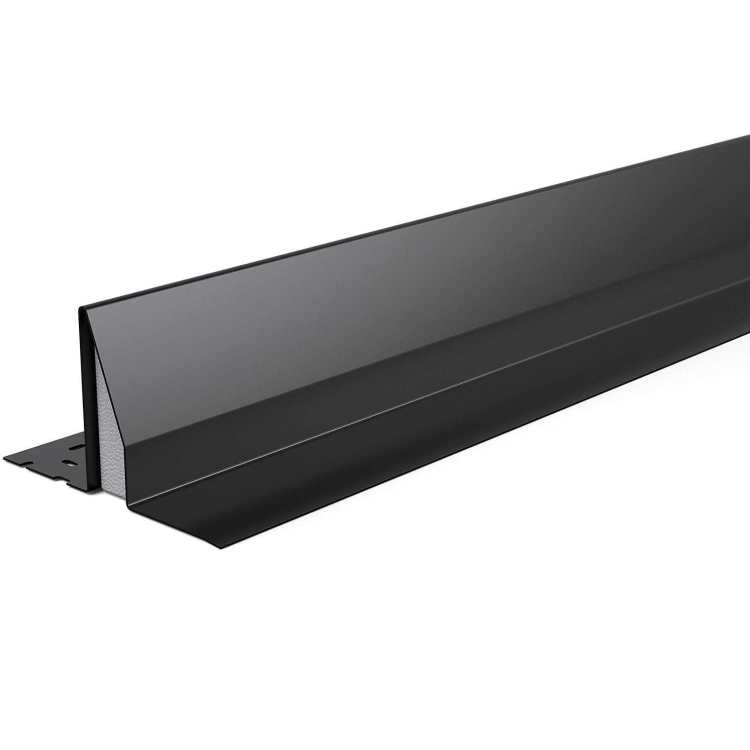
-
I've been to the Lindab factory. Very impressive quality and processes. Robots drive around carrying stuff. Hardly a person to be seen. They will have a robot making these for a few Euros, so you can stop feeling guilty. Seriously, the most impressive thing for me was the outlets. They are made in saddleback shape by bending the plate material in both directions simultaneously. I imagined whatever silent scream steel molecules make. In use, because the outlets are the scoop shape, they carry very much more water away than a standard rectangular outlet, hence the gutter doesn't fill so much.




