
-
Posts
10645 -
Joined
-
Last visited
-
Days Won
90
Everything posted by saveasteading
-
I think both. There should not be condensation under the composite cladding, so MVHR should be irrelevant. I should add that I have found reps, even at exhibitions, to be rather ignorant of their own products, as well as their aspect of building. I expect this is because there are very different skills in selling and technical understanding, and they may not have been briefed on what doesn't suit in selling. Easy though if your product is wonderful. How so? The cladding sits on a steel purlin but then there is the layer of foam. The only link to the outside is the screw that comes from outside and into the purlin. On some cladding systems even that is partly concealed on the outside. Some very approx sums: About 3 screws per m2, and they are say 8mm diameter on the outside 50mm2 per 1000x 1000mm: ). 0.005% But heat on the inside is contacting the screw not the head, so even less. Composite is good. You can also use built up systems, where any thickness of fibre insulation can be added. This may be the only option if the roof is thick (and heavy) and there is no crane access. PIR is more idiot proof but more difficult at details. PIR is almost impossible to change if damaged by , say, a falling branch. On cladding: I recommend only buying top quality products. This may be an unfamiliar name but big on the continent, or a big name. The cladding you see in agricultural adverts is usually much lower quality, in thickness, galvanising and colour coating (product and thickness). Only PIR or rockwool type filling is suitable, and cheaper products may have a more flammable material. Also there is 'non prime' cladding': 'seconds'..don't go there for a house. For plain metal sheeting, some suppliers offer the best down to the worst.....depends what the client wants. More than you wanted to know at this stage perhaps, but important if looking at prices.
-
My understanding is that the grants are only for changing an existing boiler to alternative energy. So not for a new self-build or conversion. I hope I am wrong . Also, I have found in the past on similar government "deals", that the approved companies charge so much more, that you might as well use a non-approved company that charges less, and integrates it with the rest of the work. There are proper , experienced experts on here, that will know for sure, and I hope to be told that I am wrong.
-
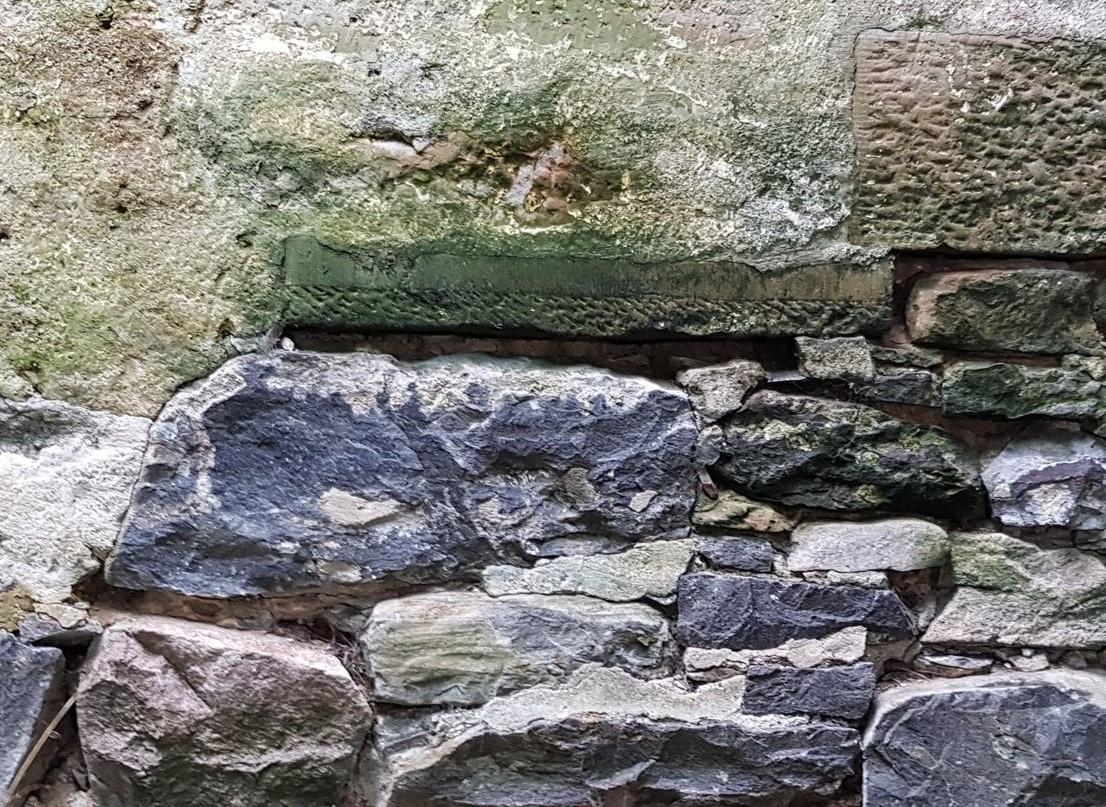
The bituthene liner seems to be an accepted detail for a solid wall. I only found it in a blog by a self-builder in Aberdeenshire, and it seemed 1. to be a standard procedure and a great idea. 2. to be accepted by Building Control. We have not submitted the design yet, and welcome any comments from anyone who has done it or knows more. There seem to be several manufacturers and specification levels. As it is not a dam or water tank I think the thinnest will do fine. Adhesive is applied to the wall first, then it is stuck on to the bottom metre. it should overlap with the dpm at some stage, and underside of slab seems appropriate. This photo seems to be inside a water tank or retaining wall , and there is still a concrete slab and dpm to go in. The cheapest I have seen so far is "Hyload" £186 inc VAT for 15m roll, and including primer, so at about £10/m is a considerable cost. Probably tricky to fir to a masonry (not very flat) wall.
-
This is nonsense. As stated above there are difficult details but the roof is not one of them. I have experience of exposed double skin, and composite roofs, in buildings for people use. Never had any condensation, Theoretically there is a cold bridge through the screws, but this is a tiny area and contact. Even used in a swimming pool, and had no issues...as long as the environment is in control it will be ok. Steel columns go into concrete and cannot have a thermal break. All you can do is insulate the steel itself, and the losses through steel then concrete, then earth are small, to negligible. You could calculate it and see how little it mattered. If concerned you can expose the outsides of the pads and insulate with polystyrene, but I wouldn't bother, and the money is better spent elsewhere, especially on airtightness, and especially at joints and junctions.
-
Soil pipe across neighbour land broken by them
saveasteading replied to ashthekid's topic in Waste & Sewerage
Photo? -
It doesn't matter what buildings the neighbour has, as they could build nearer to the boundary. From inside, will we see plasterboard on your walls? Will the columns be visible? btw it is very unlikely that the foundations are big enough for the new-build rules...they are huge. But the SE can probably see that there is no real risk, so has sensibly let it go. I was told, by national experts on fire, that the rules for protecting steel are way over the top. The concrete lobby was trying, with some success, to get the steel industry to box every steel member with concrete, to make them less competitive. So the steel industry came up with these relaxations....which are mostly unnecessary. Basically if you have a solid wall that is non-combustible from the inside, then the risk of spread to the neighbours is gone. Also your 4.5m allows any fire through windows to vent to the sky. If the neighbours ever build close to the boundary then they have to protect you. Visqueen: would have to see more details. Do you mean the bitumen sheet that Visqueen and Bituthene make, or polythene? On my project there will be polythene under the slab and bituthene for a metre up the wall, to compensate for there being no DPC in the existing wall.
-
Soil pipe across neighbour land broken by them
saveasteading replied to ashthekid's topic in Waste & Sewerage
They break, it they fix it, promptly and properly. Otherwise where does your sewage go? If it isn't suitable for your new project then that is an entirely different matter, and not their problem. Would need to know more to help with the suitability for your works. Any clues about why it is not appropriate? -
I know about new steel buildings but not if these rules apply to conversions. If it was new, then it has to be built such that it does not allow the spread of fire across the boundary. For that, it is necessary to either: 1. protect the whole steel frame with either intumescent paint (very thickly and probably expensively, or plasterboard/masonry/whatever. OR 2. Use an extra strong column and very big foundation so that it stands in place* whatever the fire condition. AND fire-proof the wall internally on that face. ie your building is allowed to collapse internally but one wall stays and the neighbour is protected. A few openings are allowed, depending on distance to boundary. Option 2 is pretty well impossible as a retrofit, as the steel is lighter weight than required, and there will be normal or light footings. Assuming it is an agricultural building, it will be much lighter steel than would be required if it was new for domestic. So anything partly towards this is a compromise. If your construction is a fireproof box within the structure, and you can't see any steel, then that may suffice. Jargon for the discussion that BI may throw in. Boundary condition, Constrado. If the BI lets you have any relaxation on the above then that will be good news. However, if I was your Engineer or BI I wouldn't be terribly worried as it is single storey. Depends a lot on the construction. *This is not to stop your building falling into the neighbours. That does not happen as steel buildings soften and collapse vertically or crumple inwards. It is to keep the wall standing as a fire barrier.
-
finished floor heights and units, ufh
saveasteading replied to Martysmarty's topic in Floor Structures
Touché.. I never thought of that! -
Sorry: I am confused. The drainage you show from the garage: is this a toilet? For that you wouldn't need a big pump, just a saniflo. The house drainage appears to go direct to the treatment tank, but you mention that the pump takes house water, from 'further down the line'. Why?
-
finished floor heights and units, ufh
saveasteading replied to Martysmarty's topic in Floor Structures
Pedantry or precise use of terms, as you choose but: It is not an expansion joint, but a contraction joint. All concrete and screed shrinks when it cures. More or less according to water content and reinforcement. Expansion joints are for use outdoors where it may heat and expand (back to where it started usually) If in doubt, movement joint covers everything. I would tile under and either side of the appliances as suggested above (in case of any leaks), and tile to the feet of the other units. Then plinth goes on top of tiles, covering up feet of units. You can even use cut or other old tiles under the appliances. BUT if you change the kitchen there might be awkward gaps. Unless silly expensive, it may be worth tiling the whole area. There is a bonus to doing the tiling first: the kitchen fitters will put the worktop at the right height, and the legs are all much the same height. -
I can see that an end target makes sense. Otherwise the construction may never be completed. The intention of planning and building permissions is to get projects done and used, not sitting as unused boxes, and potentially eyesores and noise sources with a caravan on site forever. As ProDave says, there seems no trouble in getting an extension when there is any good reason. A complex project as a self-build may be one good reason. I am sure that they also have to be 'reasonable'. I am of the opinion that we will not apply for a warrant until ready to hit the ground running, but get on with preparation. ProDave, there is provision for partial occupation too, isn't there?
-
The other comments about pipe runs and inspection chambers are correct. Best read this for your own satisfaction, then to achieve approval. https://assets.publishing.service.gov.uk/government/uploads/system/uploads/attachment_data/file/442889/BR_PDF_AD_H_2015.pdf I can't cut and paste from it but see clause 2.13. The rules have been relaxed. It used to require a chamber at every change of direction horizontally or vertically. Now it says to avoid too many access points, but must still use them at changes of gradient. There is more advice at 2.19 and 2.20. This is good advice because chambers themselves can restrict the flow. However, you must minimise bends and keep them large radius. As others say, you can improve this design. 1.43 says you need a testing chamber. I think that could be anywhere down the line. Marsh sell them but advised me that they are easy to build on site. I am concerned that a building inspector might interpret the need for access and avoiding changes of direction differently, as it is vague At some stage I suggest you bite the bullet and get it approved before building and burying. I think I would own up to the issues, then stress that this will be cleaned fluid, free from solids, and in small quantities. Another worry might be the pump. What happens if it fails? If it is approved for the job and has storage then fair enough. I have a practical tip for later. However well the groundworker installs the pipes, there is a strong chance of a local error that slows the flow and causes a blockage. Using a laser level does not make it right. So after they have gone home, so that they are not offended or distract you, lay a golf or snooker ball at the top of the run. Give a tiny push if necessary. If it runs al the way you should be ok. If there is a problem, then this test is easy to understand and to be accepted when you show the groundworker. Don't hesitate to come back to the forum with your proposals.
-
Retrospective warranty?
saveasteading replied to Dylan121's topic in New House & Structural Warranties
Most houses don't have warranties, and many new houses do that don't deserve them. I don't know what the logic is on mortgages. Is it that an old house is proven but a new one is not? Mr Punter's idea is good but the consultant will not issue a warranty, and will have lots of conditions, eg have not seen the foundations. For perspective I saw 3 incomplete houses by a major developer pulled down, and started again, because the foundations were not deep enough (and they had not troubled the building inspector to visit). Their logic was that underpinning would have to be declared, and that would be a bad show on a new house/ mortgagers might back away. ie A building is a risk. I would sort this out entirely before completing the purchase, or get a big discount. Or find another way of borrowing...the land has value.... a bank loan may be available. -
Sorry to hear of your problems. I think we know where the water table is! It is at the surface of your puddle, and the tank of course wants to float. When you pump it out does it fill again from the bank? The water table may rise when the hole is filled and in winter. Placing these tanks is difficult, and as ProDave says, it requires patient pouring in stages. That is a very big hole, and of course you don't want to fill it with concrete. This can be avoided by putting a shutter round the tank to keep the concrete to a reasonable thickness. If you have spare boards or metal cladding it can be left in sacrificially. Then you can backfill in gravel or earth, either concurrently or later. You can do the same shutter thing with gravel/earth. OR you could possibly use a very dry and stony concrete mix, and some shuttering, and shovel it in to place. That would also need some continuity of pour and perhaps bars to link it to the base. That right hand pipe looks odd. presumably that is a temporary arrangement. BTW I go to your supplier as my first choice , because I have found the product and technical advice to be so good, and have also used 2 other bigger names. Once the tank is in operation it is full of water and should be stable along with the concrete ballast, and a lot of backfill above. You then must be cautious if ever pumping it out completely, so best not to. If you need any more advice it might be best to tell us what went wrong, and what the current stage of construction is/ a photo of the drained situation. Do this privately if you prefer. Best not to slag any company on here as it is all searchable on google.
-
Can you lay the insulation to follow the slab shape, with cuts in the insulation so that there are no voids, and the same steps are then showing on top of the insulation? Then the floor screed will simply be thicker in places and take up the level. Extra screed but barely any extra labour. Unless the area is one open plan area, there will be division walls and changes in level may be of less importance than it seems. What is the logic of only 50mm insulation? Presumably this is not a suspended ground floor, and so it is only to keep the heated floor from convecting downwards to a lower floor. Small gaps and changes in thickness are then also much less significant, with a warm room below.
-
If it is prestressed (with the hollow cores) then there is always a hump in the middle. This is a pain, but you have to work with it.
-
getting initial concept ideas from architect
saveasteading replied to shetland's topic in Surveyors & Architects
No problem, I didn't think that. The discussion has grown into the larger one it now is, and I was reacting to the subject, not you. -
getting initial concept ideas from architect
saveasteading replied to shetland's topic in Surveyors & Architects
But you cannot avoid doing it. You cannot forget a good idea once you have heard it. I had a client who did this and couldn't see that it was a problem. He showed me the competitor's drawing and I could see my (unmistakeable) ideas on it. I walked away, the others got the work, and some things went rather wrong...tough. Also clients who wanted free design. Most understand the problem when explained. To put it into context, as already stated above, the original idea can be the most important thing. As an example, one client, with their Architect in the room, asked if we could develop the design and build for a certain price. I said, yes but not like that. I was straight and said I wouldn't tell them at this stage. They nodded to each other and said we were not competing but negotiating, based on a reference. With trust you proceed, and we did. (turning the building 90 degrees saved 50% for complex reasons, plus other stuff.) I would always talk through a project on the phone, but only agree to meet half of the enquirers, then only proceed any further with about half of them after meeting. I reckon the reason your contacts have not come back is along these lines....you have put them off by asking for free design. Can I suggest that any architect that says yes to your original terms is not the one you need, and will cost you much more in the long run. Even find references and approach just one.....it is a bold step but it can work. One more warning. some architects will quote low but exclude a lot, then you have to pay for all sorts of surveys and specialities. a list of exclusions is essential. AND although you can seldom do anything about it, ask for a guide price to total cost or instruct your strict construction budget. It will go over, but maybe will be watched better. Shockingly: I once told a potential client's architect that his design was impossible for the budget, and he said 'don' worry, the client always finds more money'. I walked away....it cost a lot more. Good luck with your new, softer approach. -
Anybody come across this before? It claims to be equal to 25mm polystyrene , and at £4/m2 could be a contender when looking for just a bit more. It is just bubblewrap with foil.
-
"Premium" vs "standard" loft conversions
saveasteading replied to Adsibob's topic in Lofts, Dormers & Loft Conversions
I wouldn't choose aluminium anyway, as it starts off looking industrial, then fades and gets blotchy with air and pollution. Also consider that the copper effect is often stolen by thieves of little brain. Then it needs a sign saying 'not copper'. If you start off with the intention of using Lindab, or similar, then they and your designer can make it work, just don't leave the detail as an afterthought. -
How to repair a steel enamel bath chip
saveasteading replied to Adsibob's topic in Bathrooms, Ensuites & Wetrooms
If it is just a chip then I think there is bath repair paint. I had such an issue recently and could only find white enamel gloss, self-priming/rust killing. It is slightly different shade of white (brighter) but will probably mellow. The main thing will be to stop rusting and it seems to be adhering fine. I applied 3 coats with a tiny brush. First to minimum thickness, in stipple motion to ensure coverage, then 2 more within the chip. it needed this thickness anyway. Cost was £2 for a small tin of paint which would have done the job 200 times, plus children's paintbrush. -
"Premium" vs "standard" loft conversions
saveasteading replied to Adsibob's topic in Lofts, Dormers & Loft Conversions
I detest internal gutters. The purpose of the building is almost entirely to keep the weather out. All gutters will leak or overflow at some stage, and into the garden is a better idea than into the house. Where is the rwp going? Through the building is not only an added risk and intrusion, but can be noisy. And the other points above are also valid. Have you asked the builder what the extra cost will be? It may surprise you for such a short length. Perhaps the architect will subsidise the extra cost, and do the first cleaning for his own experience. Agreed re Lindab guttering and pipes. They are a different class and a feature, and worth the extra cost, which will be a fraction of the internal gutter.. -
The new buy price equates to about 12 weeks hire. Then the hire company charge you for repairs/ missing parts/ cleaning. Or you keep yours or sell it for about half price. some on line are very slender and diy, but the good ones are sturdy and as you would hire. If you live in a populous area, then you can be the one who buys for the 'half price' and it is paid off in 6 weeks.
-
Presumably second hand. That seems to be about half the prices i looked at.