
saveasteading
-
Posts
10897 -
Joined
-
Last visited
-
Days Won
94
Everything posted by saveasteading
-
 There are special adapters available for this. A butt joint between the internal and external lengths of steel, bolted together in some clever, non-continuous way. I have prodded them at exhibitions but could not get a cost indication. ahhh. found one using the interweb. over to you.https://www.farrat.com/structural-thermal-break-connections?utm_term=thermal break pads&utm_campaign=Thermal+Breaks-Leads-Search&utm_source=adwords&utm_medium=ppc&hsa_acc=5261485987&hsa_cam=13260167897&hsa_grp=122980897859&hsa_ad=523953648699&hsa_src=g&hsa_tgt=kwd-382966641357&hsa_kw=thermal break pads&hsa_mt=b&hsa_net=adwords&hsa_ver=3&gclid=Cj0KCQjwwNWKBhDAARIsAJ8HkhcB8DpTz-Xk9vOiET718z4T9BDTbmE1D1TFVqfLh4KgC1rURMVP-EIaAqGlEALw_wcB
 -
Pallets are worth nothing if you want to sell them. Suppliers charge you a deposit for them ten wont take them back. Therefore there are lots of them unwanted, especially by merchants and on sites. any builder would rather give them away than skip them. just beware of the very clever minimalist ones that are made of very skinny timber and mdf, cardboard/chipboard.
-
If you have not done this sort of thing before, then this is not the one to start with. At least get an experienced builder to do the propping and column work, and you can assist. There is the window, too, and so there isn't much wall there anyway. Perfectly doable but you don't know how much you don't know....yet. Think of the worst that could happen. Now ask your house insurer if you would be covered.
-
Prop the wall up on both sides. There are special fittings to go into the mortar beds/ Remove brick corner , dig hole and fill with concrete. Fix column, bed wall onto column. Remove props gently while holding breath. Move on to next area. Standard work for skilled builder. Scary for novice, and rightly so. What is above? another floor or a roof.
-
If I remember rightly it is likely to shatter. If fixed by some sort of adhesive, I would want an additional gutter support near the join. Cast iron gutters are still made, and seem to be pretty standard.
-
I don't really understand the question. Do you mean removing the brick corner and replacing with a steel column? Underpinning is horrible and expensive. Much easier to dig a hole from above.
-
Accuracy of Building Control drawings?
saveasteading replied to Codydog's topic in Surveyors & Architects
Hooray. you are my first, although I won't count if you mean that it was too small. But would you turn down something because you hadn't done one, and you might not know all there is to know? My bugbear was sports halls. So many badly designed buildings, as if nobody had ever done one before. Not knowing how much they don't know. Actually it was good for business when the architect had done ignorant or expensive designs because we could sort it, But it shouldn't be necessary. -
Loading requirements for ASHP
saveasteading replied to Tony K's topic in Air Source Heat Pumps (ASHP)
ok, thanks. Best we chat it through non-technically with SSEN, as we have a useful contact after 12 non-helpful referrals. ie all we want is 20kVA by whatever means? -
Loading requirements for ASHP
saveasteading replied to Tony K's topic in Air Source Heat Pumps (ASHP)
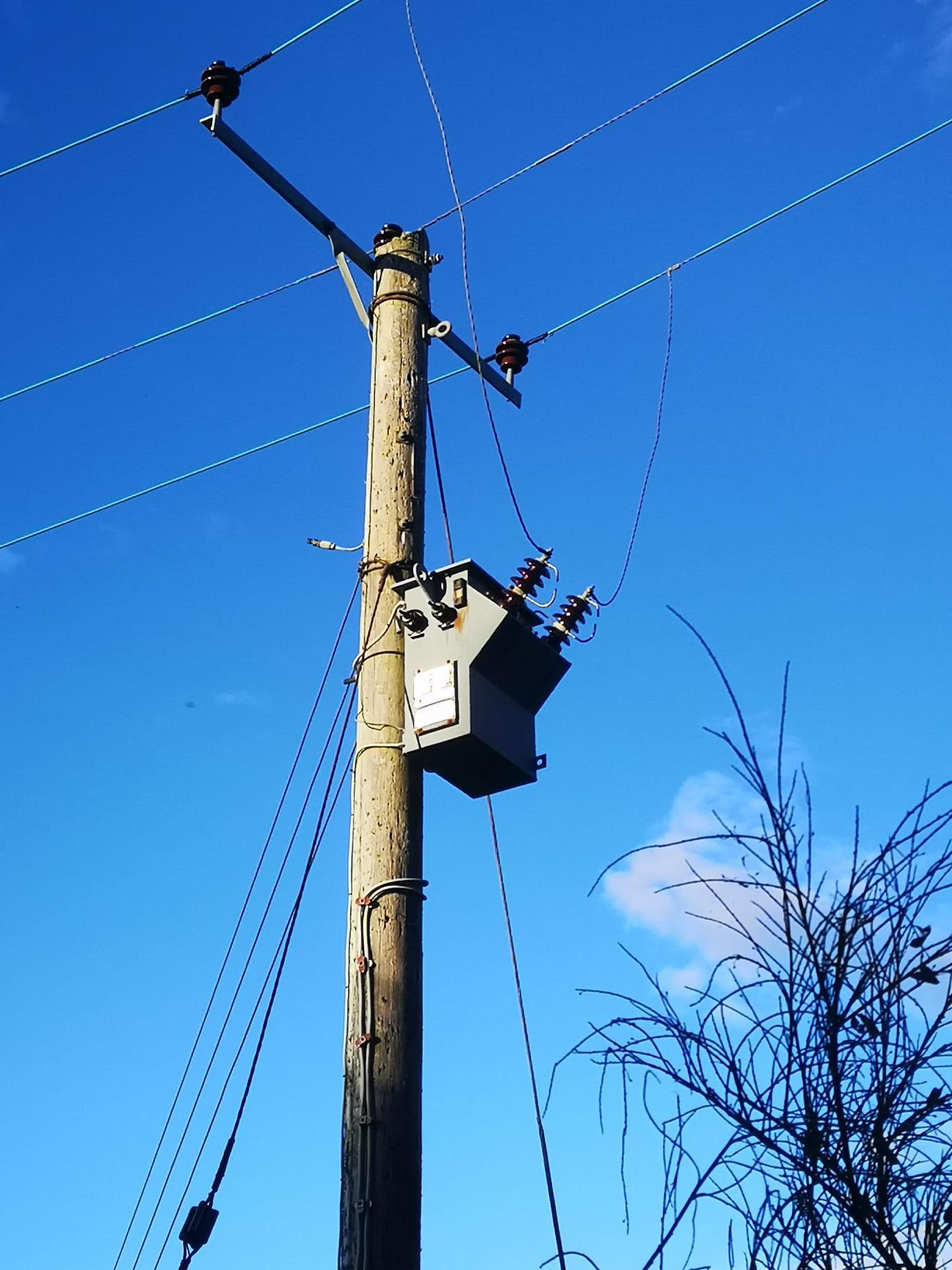
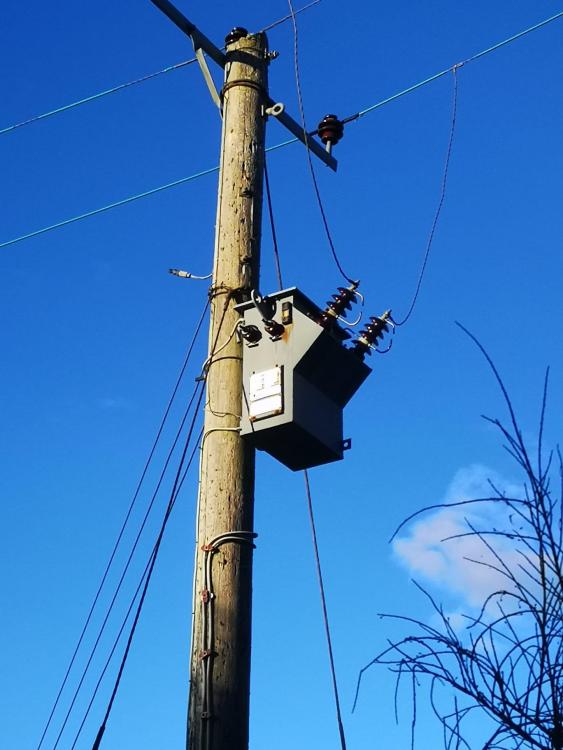
Thanks. How do you do that? Is the transformer just to step down from huge voltage to domestic? Unfortunately I may know the answer, as we applied on a different site that fell through. They wanted £15 k to provide a new transformer, where there was none, and bring in 100m of cable and 2 new poles. So we think the transformer is about £10k, and then the cable. We have an enquiry in for an upgrade but it will be a long time in getting a quote. Do we need 3 phase though? 350m2 of floor area, quite high ceilings but will be well insulated and airtight. I was thinking we needed 3 phase for domestic + 15kVA ASHP, +water pump, but perhaps that second wire is live and gives us double the power...or could do. Do you mind explaining what 2 phase is for? After many years of sparkies failing to explain, I think I understand why 3phase is clever and efficient, but 2? Is it just 2 supplies in one tidy cable? -
Scottish Standards state Standard 2.13 Every building must be provided with a water supply for use by the fire and rescue service. 2.13.3 Alternative water supply Where no piped water supply is available, or there is insufficient pressure and flow in the water main, or an alternative arrangement is proposed, the alternative source of supply should be considered as appropriate by the fire and rescue service. As we are 2 miles from the road and have a private supply of 10 dribbles per second, can anyone advise? is it a problem or; Does the fireman think that it is a single house so no problem. Do we need a tank of water and how much to suggest? ( 1 or more IBC linked) There is a burn but it is wide and shallow and 70m away. 15m lower, so I think is no help. Actually well water supply is between 3 litres / minute now and 12 l/minute in winter, so no problem in supplying domestic water, but quantity and pressure, no.
-
Loading requirements for ASHP
saveasteading replied to Tony K's topic in Air Source Heat Pumps (ASHP)
-
Read this site for a few weeks, and search back for any key words that seem relevant, and you will learn an awful lot. Someone put up a first principles checklist a few weeks ago. We all welcome photos of the site, for context, but it is best not to publish personal or location details, for many reasons and as all this is findable in online search.
-
Rubble is usually free if you can collect it, and if you have trailer and towbar.
-
Accuracy of Building Control drawings?
saveasteading replied to Codydog's topic in Surveyors & Architects
I think there is a big difference between small domestic and anything else. The former is to the regulations document, quite detailed for England, and to generally accepted practices. Anything bigger needs special details. My career has been heavy civils and commercial building construction, and the full drawings went to the inspector, with the absence only of setting out (ie where on the site) and externals. With a growing relationship with the same independent inspector, we came to know what he didn't need or want to see. On this hub we are mostly doing small domestic of course. Any answers to 'do any Architects ever turn down a commission?' -
Accuracy of Building Control drawings?
saveasteading replied to Codydog's topic in Surveyors & Architects
I am afraid so. I used a capital A consciously. If you are one, then the thing is that you don't work with the others. I was careful with my wording and stated 'specialist contractor' by which I also imply some standing. Anyone disagreeing with that? I speak from experience of some Architects having a go at anything, and some very serious errors needing to be sorted. I mean basic physics, keeping the weather out, building reg's and design principles for the function. Designing to a budget is another matter for another day. But good and less good, a or A...do they ever say 'no, it is not something I am familiar with'? Nor am I. An interesting discussion though, from which I learn that there are very different experiences. Thank you for writing. -
Stud wall over unreinforced slab
saveasteading replied to WWilts's topic in General Structural Issues
It is a commercial detail, especially in clear span portal framed buildings where the deflection can be a lot. WWilts, allow for 1/180 of the span. eg for 3.6m joist above, allow 20mm gap. Sounds clever, but I will have to think about it. You try it first. -
1. The simple solution if it appears reasonably stable. 2. Build a block wall with hollow blocks and reinforcement up through it, and put drain holes through it (or a special block as below right if you so choose. It is possible to tie the wall back into the hillside with anchors (platipus) and cables. i saw them in a fencing shop even. Backfill with rubble, as loose as you like (not gravel as it will move if the bank does) what is the worst if the bank slipped significantly? What is on and above it?
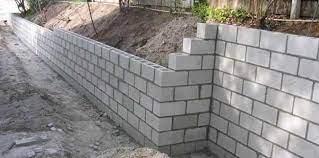
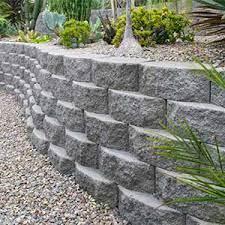
-
Stud wall over unreinforced slab
saveasteading replied to WWilts's topic in General Structural Issues
As the floor will deflect as soon as furniture goes in, as well as with personal movement, it would load the screws and then the wall (or bend the screws) The proper detail would be to fix an inverted channel to the ceiling, then build the wall within that but short of the top of the channel. You could fill the gap with foam rubber for sound. That way there is no solid connection of wall to upper floor. the channel could be a proprietary one, which would disappear under the plasterboard, or made of 2 Ls instead, to give you temporary access for building, or made of wooden battens, which would be ugly or perhaps could be hidden in the ceiling. Search for 'deflection head'. -
Accuracy of Building Control drawings?
saveasteading replied to Codydog's topic in Surveyors & Architects
As most self-builders are genuine amateurs, it behoves the professionals to make it very clear what they are doing or not. This may not always be to the liking of the client, and they may not appreciate that they will soon be 'on their own' unless they pay more. They may not be 'listening'. The unhappy clients on this blog seem usually to be of considerate disposition. I wonder how badly the others get on. -
Stud wall over unreinforced slab
saveasteading replied to WWilts's topic in General Structural Issues
Good plan. A book-case will probably put more load down than your wall. First jump up and down on the floor, and if you don't break it, neither will the stud wall. One caveat though. if you build the stud very tight to the ceiling, and it is under joists, then it will take a lot of the upper floor loading. It may still be ok but better to leave a gap from stud to ceiling and fill with flexible material. There are details for this. -
Accuracy of Building Control drawings?
saveasteading replied to Codydog's topic in Surveyors & Architects
In a great deal of situations, the tradesperson knows better how to do it. Specialist builders know a great deal about their type of work, whereas Architects will agree to design anything (I mean that, as I am unaware of an Architect ever declining a commission due to lack of experience. Also I have met many an Architect who isn't too great with numbers. So it depends on skill levels, and there are plenty of Architects who have these abilities. On the other hand, I know a very skilled and conscientious Architect who is often only instructed to obtain planning permission, and is then paid off. The builder and developer together then alter layouts and details to suite the marketplace, leaving the Architect none the wiser. BUT it must be made clear what is expected, we don't know the exact situation here, but it should e the expert, ie the architect, who makes it clear to the client what they are getting and not getting. So how does the builder know what to build? Full circle. -
Accuracy of Building Control drawings?
saveasteading replied to Codydog's topic in Surveyors & Architects
Good point. I forget how little input some architects are engaged to do. So if paid for planning only then he is right that it is not down to him. -
Accuracy of Building Control drawings?
saveasteading replied to Codydog's topic in Surveyors & Architects
Do you mean deliberately vague or plain wrong? I'm surprised to hear that as my view has always been to present drawings to the BCO that we could build from. If you don't know the dimensions you can't design/order/ build/properly. Once worked with (against) an Architect who was keen to offload as design and build, and promptly deleted all the dimensions from his drawings. That was for the best as it happens, but the attitude shocked me. So thanks, I will bear that in mind in these discussions in future. Re this post: the beams were too short, meaning that they now span further than intended? Ditto the roof structure. Increasing a span can be a significant change as the strength is not a linear change but related to the square of the span. May well be ok but do get it checked by SE. -
Easy peasy then. take out 3 edge blocks. scoop some sand out to be 10mm lower, smoothing up to zero to make a dish, or not as you choose, then relay.
-
https://www.marshalls.co.uk/commercial/paving/permeable-paving I don't know if they are the same module, and it will be a hassle getting just a few. To take blocks out, the first one is tricky, prising it up with skinny screwdrivers. Then the neighbouring blocks are easy BUT you must avoid them spreading into the space or they never go back in. So kneel on a board. Now we know the circumstances, a little bodge sounds pragmatic. If the edge blocks are on sand (not concrete) just try these. 1) bash the centre edge one down with a timber. if it settles by 5mm the puddle will follow. 2) otherwise take it out and try to re-lay it lower. 3) or rake it out and infill with whatever is lower and looks ok to you...split block/gravel/ concrete with a dip in it.