
saveasteading
-
Posts
10895 -
Joined
-
Last visited
-
Days Won
93
Everything posted by saveasteading
-

Airtight seal from footing to timber sole plate.
saveasteading replied to saveasteading's topic in Building Materials
Yes that works, but it isn't normally a great idea to have such a big tolerance. The washers need to be very big and sturdy. I was assuming that the sole plate will be in long timbers, to minimise joints, so more chance of error. Doing this myself it wouldn't be a concern, but I can't see our contractor being thrilled with this. I like the idea in principle, better than shot-firing down which I think is the norm, and will give it more thought. Had more thought. Let the chippy fix it any which way, then drill through the plate, into the concrete and fix studs with epoxy. -
Expect nothing from them after it is yours. NHBC standards are not the same as their warranty obligations, so expect nothing from them either. You might find a delightful site agent who will be pleased to sort these things out....or not. If not then tell whoever is your formal contact, in writing.
-
I had no intention of a direct connection until last week, and the discussion here convinced me otherwise. I was going to duct in air to the floor or wall adjacent to the fire so that it could get air without causing a draught. This would also allow use of a £600 stove instead of a £1,200 one with a duct in the back. After consideration and reading the rules, for now we have chosen to provide a connected supply, because there won't be uncontrolled draughts in the room ( all the time, as it can't be closed) , and the fire will take what it needs without trying to take it from the room. The spiral ducting is not pretty so will be buried in the floor. Behind the stove I had expected to use a sturdy pipe supplied with the stove, but they don't seem to exist. 6 months to find a 60mm internal diameter tube with bends. Re hearths. There is another advantage, in catching burning bits that fall out, before they bounce onto your knees, or onwards to the Persian carpet. You could have an occasional hearth , making a U shape in angle iron, so that it could be lifted away out of season.
-
Garden fence 'adjacent' to footpath / road - Advice
saveasteading replied to ChrisOli's topic in Building Materials
Yes. I f you were to write a polite message saying that you intend to comply, but would like to know what would be acceptable, so that you can adapt or rebuild as appropriate. Then it is also on the record that you are not ignoring them, and being reasonable, and there could be good progress for all parties. -
Airtight seal from footing to timber sole plate.
saveasteading replied to saveasteading's topic in Building Materials
No problem then: in the foundation rather than the slab. How do you get the bolts in exactly the right position for holes in the sole plates? I ask this with much experience of bolting steel plates to foundations to precise dimensions, but with theodolite (or string-line) and templates essential. Most contractors work to 50mm tolerance on the bolts, such is their uncertainty of lining up properly. Nice idea I would like to explore, if there is a technique to share. Our current plan is to build the footings with hollow blocks and J shaped bars from the concrete footing through the blocks and infilled with concrete. Then it needs straps screwed to timber studs, and bolted to the slab/footing. Your small bolts could be cast precisely into the concrete infill of the wall IF the holes could be precise enough in the sole plates. Drilling holes to fit over the bolts sounds tricky though. Oversize holes and big washers paerhaps. Interesting, but seems over the top here, as there will be studs at 600cc and a lot of nails, plus the external board for stiffness. If you tried to lift the completed wall by crane, the failure would be the bolts at the concrete interface I am sure. ie the bolts would pull out of the concrete with little cones of concrete attached. This rod will be passing through noggins and insulation, so will be tricky. I would also want to revisit the nuts after the structure has had time to settle and shrink. Rods and connectors are readily available online at much better rates than the usual suppliers. I use a supplier to the M and E industry who use the rods to hang cable trays. -
Garden fence 'adjacent' to footpath / road - Advice
saveasteading replied to ChrisOli's topic in Building Materials
Adjacency may not be the main issue. There is often a presumption against any structure, bank, wall, fence over (I think) 4'6". I expect this varies by region and authority. Being non-adjacent will give more chance of approval. I your case I would think the issue is of overpowering the footpath, so best imagine what height and distance back would resolve this. -
Airtight seal from footing to timber sole plate.
saveasteading replied to saveasteading's topic in Building Materials
It's personal: have had m and e people squirt it into metal cladding voids and it came out of lap joints and ruined the cladding, and a replacement sheet of cladding is always a different shade. It can be bridging gaps and causing dampness too. I can imagine it squirting everywhere as you place your panels, but perhaps this make is more controllable. A heavily reinforced slab I assume, or theoretically the bolts will pull lumps out of the slab in wind uplift. I don't follow though, how you can slot a sole plate over pre-fixed bolts protruding from the slab , so i am probably misunderstanding. Radon: Apologies if you know: it is very local, defined in big squares, and if you are on the cusp on the radon maps, £5 well spent on a certificate if it turns out that you are in a nil radon spot. https://www.ukradon.org/radonmaps/ -
Airtight seal from footing to timber sole plate.
saveasteading replied to saveasteading's topic in Building Materials
Had a browse to see what pu adhesive really is. A lot of choice, and little indication ow what suits, although being suitable for outdoors has to be a good sign. Came across this one which is very cheap....any reason why? It appears to be suitable even for sealing joints in concrete paving. Soudaflex 40FC PU Sealant (310ml) (12 Reviews) £3.48 inc VAT -
We like drawings on here. Is there any problem with concrete erosion/ steel corrosion from being near the sea?
-
I have a friend who built his own house in the Bahamas. For hurricane resistance there were standard local details, which basically meant use wood and a certain number (neither more nor less) of nails. This gave it the right strength and flexibility. It has withstood a couple of hurricanes ( as did the crazy paving steps into the sea that I did...pleased with that while other docks were washed away.. Materials were all from Florida, with anxious waits for the boat to turn up.
-
This depends on being designed for storm quantities of rain, both to the drain and to wherever it outfalls, and rigorous maintenance. Please ensure that for any failure of the drains there is an overflow / slopes that will take the water away. AS Thorfun says, this has been discussed but come back with your own comments.
-
Airtight seal from footing to timber sole plate.
saveasteading replied to saveasteading's topic in Building Materials
Expanding foam. I see it as a last resort when a proper detail has not worked. The gap will realistically be 0 to 5mm , so I'm not sure it can be applied properly anyway. Polythene, yes this will work as the airtight barrier, except where it doesn't at any horrible interface. I now wonder whether a memory foam strip (basically draught strip), should be fixed under the plate, and squashed into place. I wonder what the specialist timber frame people recommend/do. -
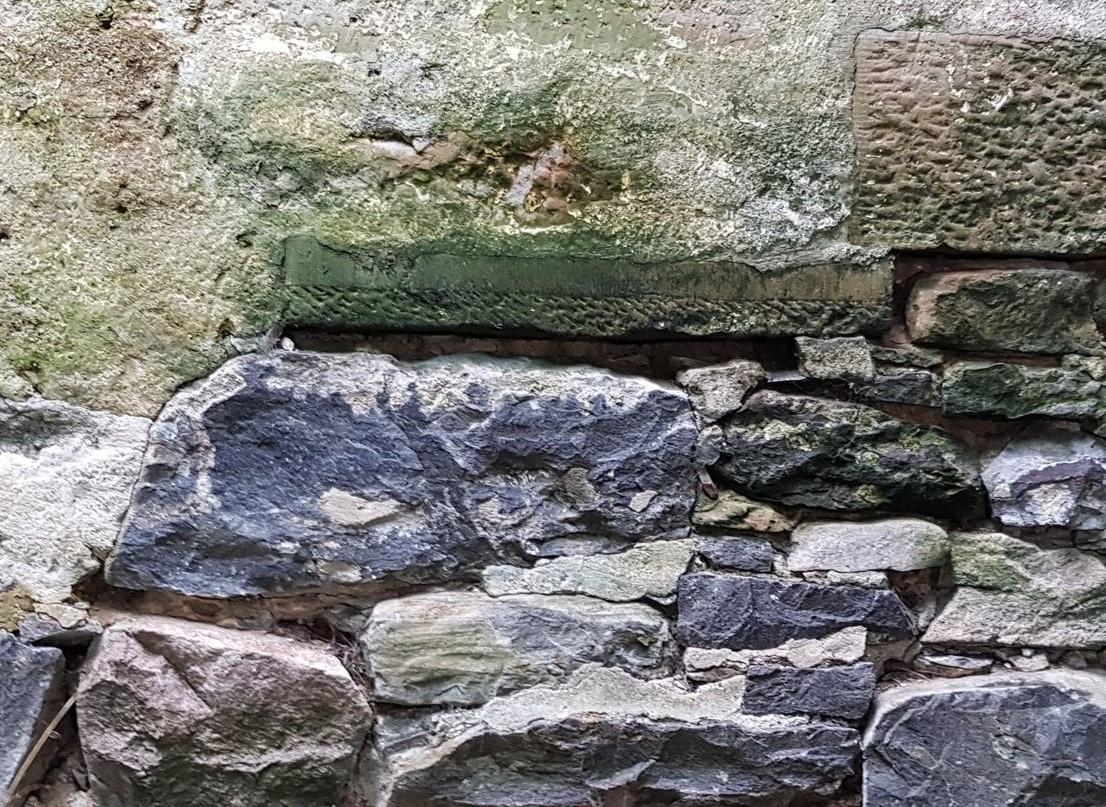
I am imagining the interface between the top of a block wall and the spiked down sole plate. I see in my mind a lot of gaps, equating to draught and heat loss. Is there a recognised way to seal this? I am thinking a strip of bituthene that might compress when the load is applied.
-
How does your garden grow?
saveasteading replied to recoveringbuilder's topic in Landscaping, Decking & Patios
Just put cardboard on it and cover with soil. The grass will die , the cardboard becomes compost. -
How does your garden grow?
saveasteading replied to recoveringbuilder's topic in Landscaping, Decking & Patios
The Garden of England has a lot of heavy clay so it is not a certainty. -
acrow props in a hurry near Inverness
saveasteading replied to saveasteading's topic in General Self Build & DIY Discussion
Thanks, but we needed size 4, and have now ordered them online, coming Tuesday they say. £50 each and £60 delivery. That equated to about 5 weeks hire so will be useful throughout and then sell..eventually. worth bringing yours by the looks of things. We already have some size 3. they are hydraulic, and absolutely beautiful to use, without the need to belt the pin to get a decent pressure. I recommend this product and can refer anyone interested. Unfortunately they don't do size 4, and that is the need to reach our roof ties and hold the building up (and ties to hold it down) But thanks again for the consideration. -
How does your garden grow?
saveasteading replied to recoveringbuilder's topic in Landscaping, Decking & Patios
If you have loppers then you can get a lot of very good kindling (or make a heap for critters) and meanwhile reduce the bonfire to a fraction. If burnt inefficiently you will then get a charcoaly ash that is great for the ground and plants. We will then praise your green credentials. (remember to cry 'come out you rodents' before lighting the fire. -
How does your garden grow?
saveasteading replied to recoveringbuilder's topic in Landscaping, Decking & Patios
Beans need lots of light and lots of water. Bottom better for water but will shade what is behind. Up the slope i another option. -
This is the depth from the cover, so make sure that your site is not lower than this, every mm is counting with your numbers. Let's assume that the land at your site is the same level. The drain has to go underground and the minimum will be 400mm if you are clever enough with the layout. that is leaving you with 1.15m, and things are getting tight. If I was your Engineer I think I could show that a 100 pipe can go at that sort of slope, because the volume is small and the building reg slopes are a bit cautious. In fact the smaller pipe might run better over that long distance. It is very much cheaper to do this gravity drain if you can. 90m of pipe from your own 'gathering' manhole, a proper manhole at the connection, which the water company will want to approve, and a couple of intermediate inspection chambers for rodding. you cannot afford to lose any height from the property, so lowering the floor would create an issue, whereas lifting it will help. re treatment tank/ septic/ cess tank: these terms are much confused. The building regulations are well written on this subject and I recommend reading several times. My second choice is treatment tank, because it costs much the same as a pump and connections. (it has to be a big tank in case of failure) , it is all yours and you don't have pay sewage rates. Although it is correct about digging a 1m hole, you can try a hole nearer the surface as a quick guide.
-
Smell coming from external sewage pipe occasionally
saveasteading replied to mfmcdonagh's topic in Waste & Sewerage
good thinking -
VAT abolished on solar panels insulation and heat pumps
saveasteading replied to Radian's topic in Building Materials
anybody got the daily mail take on it? -
The Scottish 'too fast' fail is a higher rate than the English fail....fair enough perhaps because of the water quality on average. So what is the solution here? Taken below the level that might reach the loch, or into a denser stratum?? Fortunately ours passed in sand, so is ideal. Ours is glacial sand yours ancient dunes?
-
Fails because percolation is too fast through the sand?
-
acrow props in a hurry near Inverness
saveasteading replied to saveasteading's topic in General Self Build & DIY Discussion
Thanks. None available in size 4, but will try Gap. -
How does your garden grow?
saveasteading replied to recoveringbuilder's topic in Landscaping, Decking & Patios
Should be fine as I have heard of them often enough. You don't ever have to buy a packet again because you just let the last few pods grow to maturity and harvest the fat beans for next year. The beans I grow with most success have reddish brown beans with grey specks. I have no idea of the name as they are on 15th generation now.

