

saveasteading
-
Posts
10890 -
Joined
-
Last visited
-
Days Won
93
Everything posted by saveasteading
-
 Ours for reference. There is now more pipework but the same space taken up.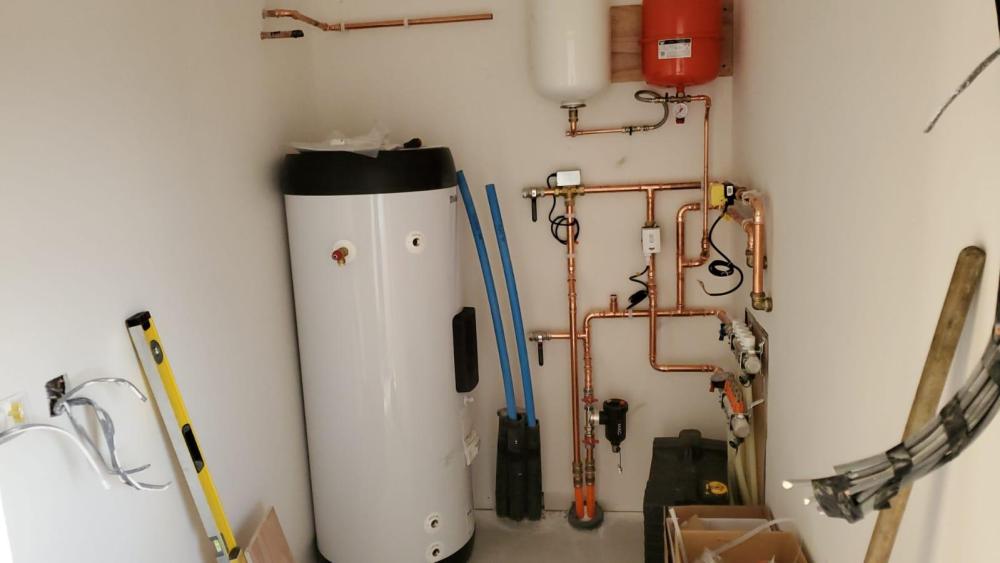
-
Did you have any breakdown or maintenance issues? That would be my concern, especially having seen our (business) groundworker suffer when his bargain purchases broke down. The worst was losing a track, and he wrote it off and gave it away to any collector.
-
But when they do! I had the pleasure of working outdoors in the Highlands for a few years. Midges were an issue for short periods, and I had to traipse through the heather then stay put, so attracted millions. I found that a smouldering piece of peat to waft around was better than any commercial repellent.
-
Recommendation/support for build system
saveasteading replied to matt58k's topic in Insulated Concrete Formwork (ICF)
Someone here once suggested paying just a minimum deposit that made the card company liable. I'm sure they would not accept a multi thousand pound risk for a £200 sale. With a contracting business turning over £3M we never had our bank suggesting we take card payments. So I expect it is policy not to sign up contractors. Yet at TS (or was it SF?) they sell card readers to anyone.....I should read the small print as I am confident there will be a liability exclusion. -
OK so get your permissions and think again. Remember that a basement of 3m x 4m loses the stair area. Allow an extra £30k compared to above ground construction. Plus ground and weather risks, so avoid doing it in winter.
-
On our project we used a groundworker at first. They were good workers and machine operators and had whatever the highland is for blarney. Some things that passed bco and our family team were not actually good, and they also got greedy. And they knew best! The second half was all done by my son in law in the digger, and my daughter plus friends and family. They had been reluctant to fire the groundworkers but realised what a good decision it was when they did it themselves. So half the slab (grade, fill, stone, concrete blinding, pir). Specialist did ufh and the screed. Then all the drainage with me(*) on site first week, after which they were utterly confident. From " we can't possibly do it" to " I am so glad we did it ourselves". They hired a 5T digger on and off, and an occasional dumper. I still think that was the right move, anyway there seemed none to buy cheap. Can anyone diy? No. Apart from the sheer hard work and being good with the machine, it is often in rain and mud. Can you do the levels and other controls? Most can't and they don't know they can't. The trench went to 1.6 deep. More than that would have needed a bigger machine. The site was sand so never soft or muddy...beware mud. Saving over 170m2....simplifying the design saved £12k or more. Diy saved another £20k or so. NB things go wrong, even when planned. Mud is your greatest enemy. You would need to study the subject before starting and throughout. There is a lot to learn. Muck away? Avoid it as the cost is high. Strip topsoil and vegetation to one heap and it will compost to half the volume, then spread it on completion. Earth....surely you can change some topography. Don't forget how much comes out with drainage. Worth many £k. In any case it is well worth shifting the earth (spoil is the jargon) away from the working area immediately. *for clarity: surveying and construction is what I have done for decades. Always with groundworkers but heavily supervised. I wouldn't want to be a groundworker but would if there was nothing better to do. If you feel confident then you will probably be fine. Don't rush it.
-
What stops you making the ground floor bigger?
-
Recommendation/support for build system
saveasteading replied to matt58k's topic in Insulated Concrete Formwork (ICF)
The commission taken by the card company is significant, so the supplier might want to add a percentage. I also wonder if the card companies might decline the business due to the high risk. -
Do you have a specific need for a basement, such as shortage of land, extensive wine storage, Putin style bunker, etc? We don't need to know which. I ask because the cost of a basenent is about 3, maybe 4, times that of an enlargement of the area at ground level. To this you add the in life risks of drainage problems. Gus' advice is of course good. Although a soils investigation company will be professional, they don't design the building, and you may have carried out too much or too little testing to suit an eventual SE. If you build at ground level you may only need a small pit and a site inspection.
-
I've had a few lidl/aldi tools that were a bit feeble. Others good. So I would want to see reviews. Sanding can be tedious and slow with poor kit. For economy I would prefer wickes stuff which can be basic but works. I always wondered if this was Draper with a different label as it is similar in target market. Next jump to a big brand. Double the cost, probably better and faster.
-
Yes I do that. Drill a horizontal hole right through first, to find the starting point on the other side
-
Most of which are right, but not necessarily what you want, or choose, to do.
-
help identify this damp/condensation patch
saveasteading replied to johnhenstock83's topic in Damp & DPCs
I don't think you answered my query on the previous floor covering. If there was an impermeable covering of vinyl fog example, it would have concealed any dampness -
Digger ran over generator lead
saveasteading replied to CalvinHobbes's topic in General Self Build & DIY Discussion
Better yet a flock of sheep. I always liked sheepsfoot rollers, because you could see it was working, and when it was complete. Also it has grip.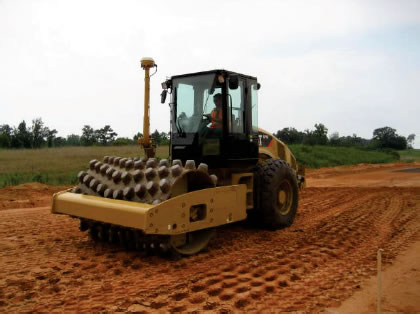
-
Digger ran over generator lead
saveasteading replied to CalvinHobbes's topic in General Self Build & DIY Discussion
I have told staff to expect the operator to try these things on. They can be convincing. But the Engineer gives a 12 year warranty and the driver will never be seen again. Then I hear back that they did, indeed, try to lay fill in 300 layers and not even run the roller over it. At the risk of being preachy, because some first timers will get this bs: The whole point of a caterpillar track is to spread the load over a large area, and to not sink. So the pressure is about the same, perhaps less, than under a wellie. They are putting a light crust over loose fill. It may settle under completed paving or floor slabs to expensive effect. I fear it must be common. Put the pressure explanation to the reluctant operator ( think on why you have tracks rather than wheels) and see a momentary blank, then a slight self doubt, then a return to cockiness...."I've been doing this for years." "OK you aren't getting paid until you dig it out and do it properly" they do understand. -
Digger ran over generator lead
saveasteading replied to CalvinHobbes's topic in General Self Build & DIY Discussion
I think it is a feeling of power and importance, sitting up there. They also seem to know a lot more about Engineering than I do. Did you know for example, that rollers are unnecessary and it it is ok to put in 500mm of fill as long as it gets tracked over? And that all drains go at 1 in 60, or " just off the bubble" regardless what a drawing might say....and that he can judge that by eye from his cab......and it is ok to refill an overdug trench and.....etc. -
Yet another idea. Firstly if you go with the oversized hole, check there is no advice on the tube against this. My instinct is to use the least amount of resin for quick transer of load to masonry. To overcome that concern, there are mesh inserts which i think have some flexibility. I would do the opposite. Use a smaller pilot hole, then check it for level by torpedo level on the bit or a dowel. Then the next bit can be aimed up of down as appropriate. The smaller hole also makes it easier and more controllable with a normal drill.
-
Digger ran over generator lead
saveasteading replied to CalvinHobbes's topic in General Self Build & DIY Discussion
Not something i would ever hire, this being one of the reasons. Unless you need it on a reel, it is cheapest to buy the cable and the ends. Cables, string lines, marker pegs and tapes are invisible to plant operators. -
You are right. Wierdly that came into my head in the shower this morning. Note to self :If a number is surprising, check it.
-
Unless they get a tree root through the joint....then they fill with roots.
-
You will have the trenches redug before the bco visits again. As long as the existing footings are as deep as your new ones, you don't have to worry. Have you considered getting friends or family to have a concrete party. One mixing at the front, barrow round, level off. A few hours and it is done.
-
It isn't generally realised that the sewage charge is usually based on mains water used, and about doubles the cost. Harvested water goes free! If you can send your rainwater to soakaway then you should be able to get a discount .
-
Photographs and more photographs of the trench, in detail and in context. Not for here but to prove it was started.
-
help identify this damp/condensation patch
saveasteading replied to johnhenstock83's topic in Damp & DPCs
In the words of Sherlock Holmes and ProDave When you have eliminated all which is impossible then whatever remains, however improbable, must be the truth." I'd suggest airing the place until it is naturally dry then see if that is sorted. Might just be a wet slab from the building works. What floor surface was there before? -
So 2 minutes at 17 litres is 34 litres or 1/3 of a day's recommended amount. A good shower head should use far less water to good effect. Therefore I would say to try the lower setting first. Water costs about 3p / litre I think, allowing for supply and disposal.


