saveasteading
-
Posts
10890 -
Joined
-
Last visited
-
Days Won
93
Everything posted by saveasteading
-
Agreed. Fancy epoxy stuff will look worse unless it is all overpainted. Even sand and cement will probably stand out as the concrete face is high in cement. Use that if you must with a primer and addition of unibond.
-
 Then it looks to me, and I think @Onoff , that you could dispose of the hopper, install a grating drain along the wall , and connect it to the pipe. aco is thc best known name but cheaper types will do for your situation.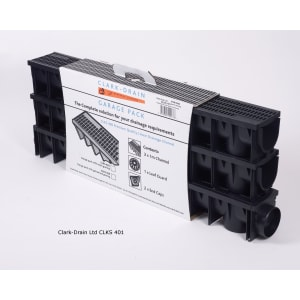
-
The product will depend on the type and size (especially depth) of hole, and I'm not sure of that from the pictures.
-
Sorry no. This meeting is striving for higher standards and changing the status quo.
-
Not much point doing beautiful new flooring that stops suddenly and awkwardly. But what do you mean by units? Like kitchen units or built in wardrobes?
-
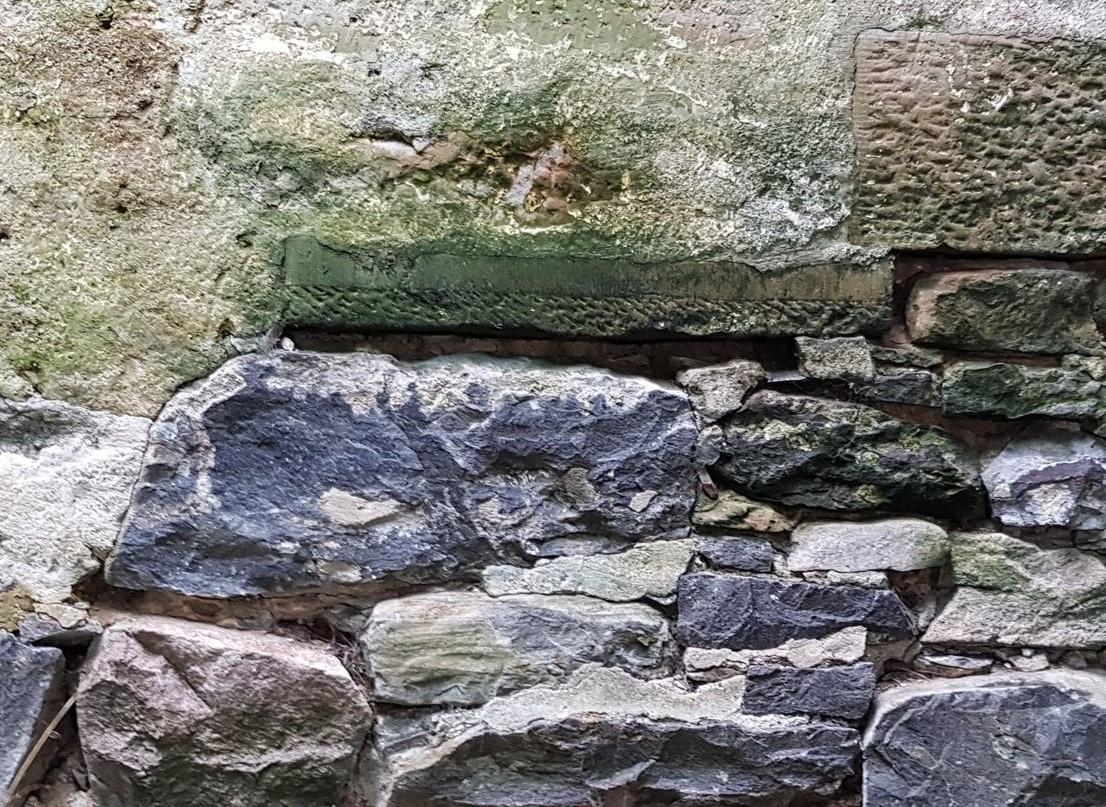
I don't understand the problem. Can you make it clearer what concerns you? I'm guessing these are coin sized bits flaking off the face , but shouldn't be guessing. What age is the house? In passing, I hope the new paving slopes away from the wall.
-
Where does the drain with the hopper go? Did it take water from the downpipe and you have turned it away temporariliy? In other words is that drain shown for rainwater and your proposed drain also for rainwater?
-
..will be the next resource taken from Scotland to support England. A way of transporting wind energy to the big cities.
-
Ok I see that. The bottom outlet is a few mm off the wall, so it splatters scalding water against the wall, safely and visibly. I recall now seeing them in copper. An oversized pipe seems wise to reduce the pressure.
-
I have started a new thread rather than hijack one. This was my proposal for the most misguided design, claiming (shouting out look at us) to be sustainable. I have seen it perhaps 20 times without the rotors ever moving. I read that if they all did rotate at optimum speed, then it could power 2 or 3 kettles in the flats below. What would that have cost? Allowing for the fancy shapes, the loss of floor space, plus the kit itself, can I guess £30M at current costs? I am not going to analyse it but have considered the absence of snow load as a positive. Of course it is crazy and somebody paid for it. It probably got through planning by ticking the windmill box. At a similar time the London boroughs were insisting on alternative energy, so at least one new blocks was built with, and proudly boasted of, pellet boilers. These required 2 lorry loads per day in Central London. Never used of course and the 'backup' gas kicked in. @SteamyTea suggests that a green roof would have been crazier. I have little time for them either, but don't think it us in the same league for cost or negative benefit. A green roof would have added perhaps £2M, in direct cost plus strengthening the structure but add for annual maintenance. But it might have had some marginal benefit if sensibly designed. Any other suggestions of craziness small or large?

-
Explain please as I have never seen this. A primitive safety valve where the joints are weak so that it comes apart?
-
That got me looking. It seems that the committee (BRAC) making changes is mostly of representatives of building inspector associations. Not expert in design. Plus 3 persons in total appointed by BRAC for England and BRAC for Wales, after consultation with the Secretary of State and Welsh ministers, to represent building users, construction sector clients, participants and/or consumers generally. Then they invite experts from the industry. I once met an ultimate (academic) expert in one aspect of construction and so also one document in the regulations. He was consulted but the opinions were opposed by the representative of a particular industry, and so the regulations were a compromise, wasting millions annually. BUT the green part of the regulations is what matters, and we can argue about the rest. And we self builders can do it right.
-
Now I know how old illegal septic tanks get away with it......
saveasteading replied to ProDave's topic in Waste & Sewerage
There have been several attempts by the EU to get old systems replaced. Correctly I would say, especially above aquifers. I bought a house with a 1m3 brick chamber going to soakaway. A demand came from the water company to replace it. After research i found that proof of long term use killed the requirement. Of course I expect it was the hidden powers in our society that had this killed off. People in big houses perhaps. Or the water companies themselves, in the knowledge of their own abuse. Registering allows sepa / EA to find suspects in the case of a big spill. I had a client who had a small oil spill which reached a river and the EA traced it exactly to them from a few miles downstream by oil analysis. Similar may applying for sewage? -
Help with force / weight units...
saveasteading replied to vcps2021's topic in General Structural Issues
Expanding on @MikeSharp01. If you bought a lot of doors that weighed 60kg each and propped them up, around a room so that each one had 1m2 around it.....then that would be one door per m2 .....or 60kg/m2. That is a lot of load. But you won't have these heavy doors spread around tge room It is a very good question esp as we can get into bad habits of using shortcuts. So in conversation your SE might say kg/m2 the first time , but then abbreviate to kg after that. Also saying kilogrammes one time and kay gee another. In writing it will always be more correct. A pocket door is on runners with a moving load. Leave that to the SE. As @SteamyTea says, we also mix weight and force. Sometimes carelessly. So kg is weight and N (Newton) or kN is force from the weight. Don't worry about it. Keep asking your SE and also on here. -
You may have noticed I have occasionally disparaged the sale of small turbines, and their promotion by "green deal" type quangos, about 15 years ago. There were even lots of EPC points for them. You may be sworn to secrecy, but am I wrong? Even a tiny bit? Turbines cf green roofs mentioned elsewhere: I may open another thread.
-
My favourite response to an efficiency suggestion to a subcontractor was ," if it was a good idea I would have thought of it years ago". It is now a standard method.
-
Yes and worth discussing for completeness. It is especially helpful when people can be steered away from hokum. Many, I am cautious about saying most, people don't understand " energy in = energy out".
-
15m of dense glacial sand, topped with 50mm of granite grit. It's not going anywhere unless washed away.
-
Opinions on best way to drop a ceiling
saveasteading replied to Thorfun's topic in General Construction Issues
Except that it is permanent so the floor bends a bit, but just once and stays there. If anything it reduces bounce from movement. -
Thanks for the link. I would prefer that the pointing was weaker than the slabs. This seems to be harder, and almost like concrete repair mix. Thinking that through leads me to lime being better than cement. So you have nudged me towards lime on the swingometer, which has now been extended past cement to resin. On the other hand, the slabs shouldn't move as long as water doesn't get through.
-
The @ETC detail perhaps doesn't work for your construction, but the principle is correct. This has been done before but the detail you showed us suggests that it is idea no 1 for a new invention called a house.
-
Planning officers are not especially technical. They may welcome advice such as yours and change these rules. For example, I have explained to planners why their drainage hierarchy and strategy was flawed. A shocked silence was followed by realisation that this was suddenly obvious, then an invitation to present my own strategy with planning applications, with explanations.....and they always accepted these. I doubt that they alterered their guidance, but that would require the cost of consultants....the ones I was saying were wrong. But try, or tell them that you are substututing Am2 at B output, with Cm2 x D output. They will be happy. Seriously, they often welome sensible technical advice.
-
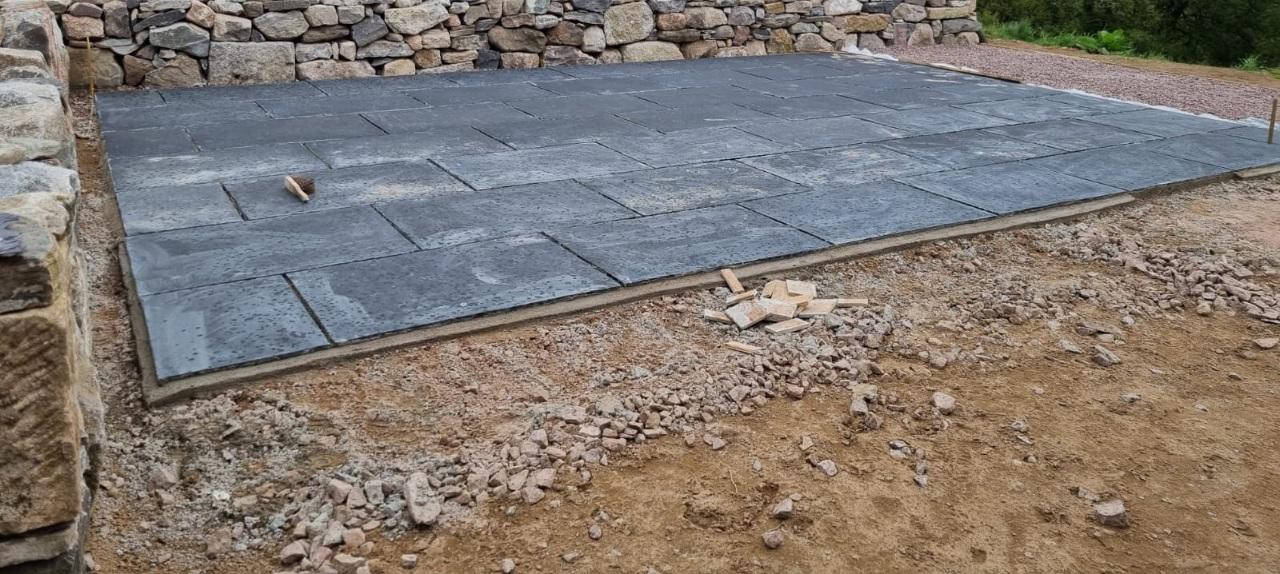
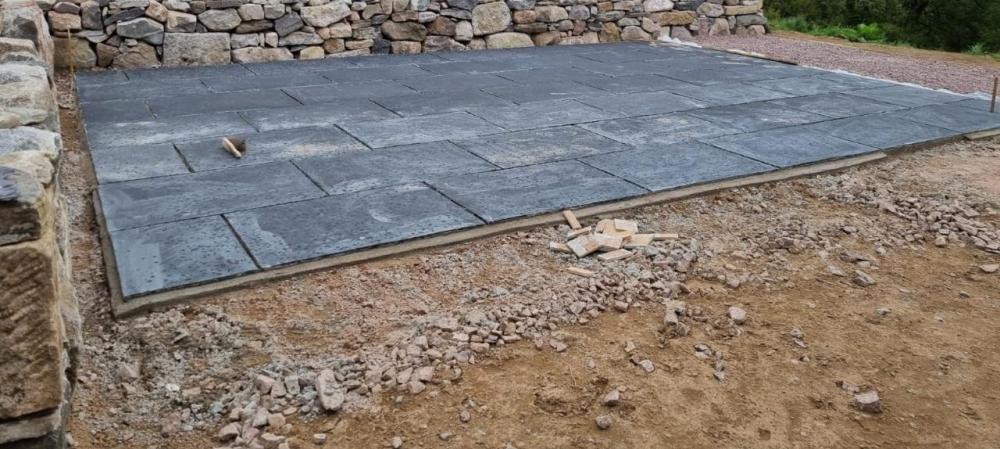
The team are laying patios and footpaths using limestone flags. These have been laid on substantial mortar of 1 cement, 3 lime, 10 sharp sand (solid, not dots). But for pointing, would lime have any advantage over cement?
-
OK standing seam v visible screws. Plusses No screw penetrations that might leak. No screws on show. Aesthetics. Can resemble old fashioned zinc or lead roofing. Negatives. Very difficult indeed to repair if damaged by, say, a branch falling. Some types require special equipment adding to the above. Very difficult to join lengths (not important on most domestic roofs). Tricky to seal around openings. Tricky to seal at ends (without screws or rivets) Some require special tools. In transport they don't stack neatly so there is lots of air and packaging. Getting a replacement is expensive. Fitted cost is more than a screwed system. On very big roofs they need lots of expansion allowance. Penetrations for flues etc need flashings to be screwed into the cladding and must be through the flat which then needs reinforcement. I offered standing seam to clients and they never accepted it due to the cost. Some wanted SS until they heard of the saving for screwed. Ie if we were picking up someone else's design, it was apparent that they hadn't been informed fully. Yes sometimes a screw can fail, but it is easily replaced. I reckon 1 in 10,000 required a return visit to replace. On a house there will be a vapour barrier beneath to catch any drips until nature seals it again. Fortunately I never had to repair someone else's ss roof. But did on walls. The damaged sheet can't be replaced without very extensive dismantling, so we had flashings made and screwed over the damage. I'd be interested to hear of real life competitive quotes for ss v screwed. But I think most users favour one and don't price both. My guess is that a 200m2 (on slope) will be £20/m2 difference ie £4,000.
-
Nothing wrong as such, but I will explain in what is likely to be a short essay later.