saveasteading
-
Posts
10890 -
Joined
-
Last visited
-
Days Won
93
Everything posted by saveasteading
-
That is not always the case. There is a builder out there who is simply very good at it, efficient and not greedy. They can be cheapest and also very good. They choose their clients carefully. Finding them is your challenge.
-
ASHP, how to decide - I just don't get it!
saveasteading replied to Jimbo37's topic in Other Heating Systems
This may be the craziest bit of sustainability bling ever. I heard it could power 2 kettles if the wind was the right direction and strength. The extra cost must have been many millions. Perhaps sponsored by the oil industry to ridicule wind power.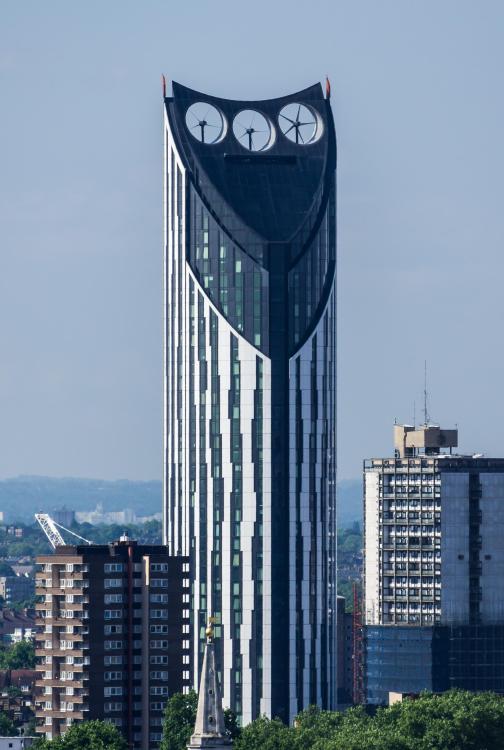
-
Chippy did our roof cladding. Good job too. It wasn't standing seam because I don't like it for various reasons. We bought the material.
-
Removing the contractors' risks always helps their confidence. They may talk big about supply and build, but they may well be nervous. So buy the blocks/ timber/ boards. Then keep an eye on the wastage. I was an estimator on big projects for many years. Price safe and there is no job. Price low and you lose money. Get it just right and still the project managers will complain....to which my response was that I have to assume a high level of competence. These PMs were educated, intelligent and knowledgeable but would always resist helping with a quote....too scary. So imagining being a tradesperson moving into fofmal quotations for whole projects...firstly there is no reason why they should be good estimators, secondly they could lose money. One other thing. Every new construction project is a one off. A unique manufacturing operation, in a field. People who work in offices or factories don't tend to appreciate that fully. I think everyone on bh says that the second project would be much easier. We here help with the first, if we can.
-
This one doesn't. I don't like this at all. Edge bearing with a skinny slab is new to me and I can only see problems. If there is any differential movement the slab will become suspended, and crack. Cold bridges too. And a dolly course, whatever that is. Seems a right mess to me, overcomplicating everything. Apologies if it is your own drawing. Radon barrier is no different to dpm in principle.. you can use laps and seal them. So it can be dressed up the edge block and over it, and at the corners fold like wrapping paper, or cut and seal.
-
All good advice. Houses move. I would send a polite note to the contractor though, putting it on the record and asking what their proposal is.
-
ASHP, how to decide - I just don't get it!
saveasteading replied to Jimbo37's topic in Other Heating Systems
I don't steal or murder. Some other people do. I will continue to not steal and not murder, even if they won't. I try to reduce materials, energy use and limit pollution. Some other people don't. I will continue. -
ASHP, how to decide - I just don't get it!
saveasteading replied to Jimbo37's topic in Other Heating Systems
Example Few question the process. We were a steel subby on a big contractors site. They were deliberately overdigging foundation pits, shuttering the size required and pouring concrete, then removing the shutter and backfilling with gravel. I mentioned to the project manager that this was wasting materials, time and money. His response was that this was on the drawing and they were getting paid for it. I'd say 30m3 of muck away, 30m3 of gravel, and all the work, all pointlessly. To me that is unfirgiveable waste, but most sytems only count skips as waste. Overdigging trenches is very common. The client is usually paying for the extra concrete. Self builders don't often have lots of timber offcuts at the end of the job. Big contractors do, but will have a certificate that shows it didn't go to landfill. "Use less stuff." -
ASHP, how to decide - I just don't get it!
saveasteading replied to Jimbo37's topic in Other Heating Systems
It has been the case ever since "sustainable design" became fashionable and attracted grants, (about 20 years ago?). The quangos set up to support "green construction" only knew about wind turbines, solar panels and reducing landfill. My company entered sustainabilty competitions. Our premise was for no bling, only proven technologies, on-site drainage, and, most importantly, integrated and efficient design ("use less stuff"). Judging panels were split between full support and utterly not understanding. One judge said we were cutting corners and not generating power on site. This improved a bit in a few years, and the turbines were seen to be useless and so on. But design is still usually linear. Client - architect - engineer - qs - builders. Few question the process. That was great for my business and any similar who had everyone in the same room, and we would make radical revisions at any stage. The overuse of materials could be 30% which is an awful lot of carbon. Self builders have the opportunity and desire to build efficiently. Efficient design , qusetion everything, insulation, airtightness . Be prepared to refuse alternative energy. Site control of waste (including overuse) on site. -
Welcome @RussH. Many builders don't have the skill to prepare an accurate estimate, and are scared to provide a quotation, even with detailed drawings. So they guess or decline....worst they pitch very high just in case. They won't want to engage someone to cost it for them either, as there is a fee and it is expensive to pay this out and not get the job. Chicken and egg. But that is the reality. Our groundworker estimated realistically*, then claimed lots of imaginary extras, so it was get rid time. Our joiner used an estimating service for the timber frame. My analysis showed multiple over-measures. Joiner agreed to a revised price and it went well. Don't forget that all these elements have to be integrated, so the foundations must suit the superstructure, and so on. Keep asking. There is lots of experience on here. (* I include estimating as a skill, it must be an extra worry not having the experience)
-
An adjustable fan! Sorted. They tend to have speeds where they thrum. Play with it.
-
Or your brain will soon filter it out, if you let it. When it twigged that distant road noise was like distant waterfall sound, it stopped mattering so much. What does your air system sound like?
- 30 replies
-
- 1
-

-
- mvhr
- mvhr ducting
- (and 1 more)
-
ASHP, how to decide - I just don't get it!
saveasteading replied to Jimbo37's topic in Other Heating Systems
Of course not. £20k more to buy it in Britain through their UK office, than buy in France and ship over, after allowing for double handling and admin. If it had been a contract requirement then we would have had to pay the uk price. So it became uncompetitive and I redesigned with a conpletely different strategy. They lost the sale. Most big projects are specified by the SE and the contractor has no choice. All the tenders will allow it and the client pays. I spoke to EU contractors I knew. They pay less on many products. The same used to apply to cars, maybe still does. -
Firstly, how is the box supported? Are there attenuation pads between it and the joists (or whatever supports it). Even then, there are screws which may carry the noise through. Secondly, the pipes are ideal for carrying sound around the house. Jfb has it right. Ideally the manufacturer would include this or have it as an option. A plenum ( bigger air space) next to the fan would probably be enough to kill noise. Sound will bounce off the pipes, but if you break the shape, it will become random and disappear. A baffle might also help, as sound isn't good at getting around corners ; Unless they are smooth pipe corners that is. It would be essential to make the box and junctions completely airtight. @jfb what size was your box and how did you form the junctions?
-
ASHP, how to decide - I just don't get it!
saveasteading replied to Jimbo37's topic in Other Heating Systems
Yes, but from China to UK or China to EU much the same. Well then, as one example, I found that a steel permanent shutter system was 20% cheaper in France. Arranged for it to be delivered to a continental trading partner to bring over. Still 15% saving, or about £20k in current terms. It reached a late stage, and somebody told them where it was eventually going, and they cancelled it unilaterally. Presumably they thought we had to use it in a designed building and they would keep the money now and on future uk jobs. So we changed to pc planks. That was in EU times. Only one example and I have discussed it with EU contractors. We pay more. -
PV on a flat roof, how far from the edge?
saveasteading replied to Smallholder's topic in Photovoltaics (PV)
Let's be positive. His " why we don't fall through the floor" should be on every bh reading list. J. E. Gordon Structures: Or Why Things Don't Fall Down -
PV on a flat roof, how far from the edge?
saveasteading replied to Smallholder's topic in Photovoltaics (PV)
Getting sheep to march in step would be tricky. Out of step was OK, and nobody foresaw the general public behaving like that. It was a comfort issue, not safety although a deliberate attempt to make it sway might have been an issue. Many bridges (and cathedrals) were optimised through unexpected failure, pre- modelling. So ' not falling down' is a success. -
PV on a flat roof, how far from the edge?
saveasteading replied to Smallholder's topic in Photovoltaics (PV)
I foresee the board delaminating. Screws are good. -
PV on a flat roof, how far from the edge?
saveasteading replied to Smallholder's topic in Photovoltaics (PV)
But you could fit butterfly types perhaps. Similar in principle to the Nichols plates are the hook bolts on roofs, for fixing safety lines. Because of impact and sideways forces these needed 4 proven (lab tested) screws, only 2 screws considered to be in tension, and a high f of s. These worked, but into 2mm steel, not osb. So I'm confident of your recommendation, 4 screws in straightforward tension. -
ASHP, how to decide - I just don't get it!
saveasteading replied to Jimbo37's topic in Other Heating Systems
Well found. As usual, the same number of pounds as euros. Someone takes that 15%, and I think it is the manufacturer/distributor, because they can. Not brexit for once, it was always thus. -
PV on a flat roof, how far from the edge?
saveasteading replied to Smallholder's topic in Photovoltaics (PV)
These look good. I like how there is the 4 screw fixing to the roof, then the top connection. It will need some consideration of the screws as there is a big variation in pullout resistance and also there is the board....9mm osb or 20mm ply or into a timber. But good screws are not expensive compared to the panels. I heard reports of many installations ripping off steel roofs. Easy to get right by considering the structure and giving method, but the installers were not educated in the subject, and clients were choosing the cheapest contractor. I don't know of disasters with domestic roofs but I expect there are many. @Nickfromwales rough cost of these? -
ASHP, how to decide - I just don't get it!
saveasteading replied to Jimbo37's topic in Other Heating Systems
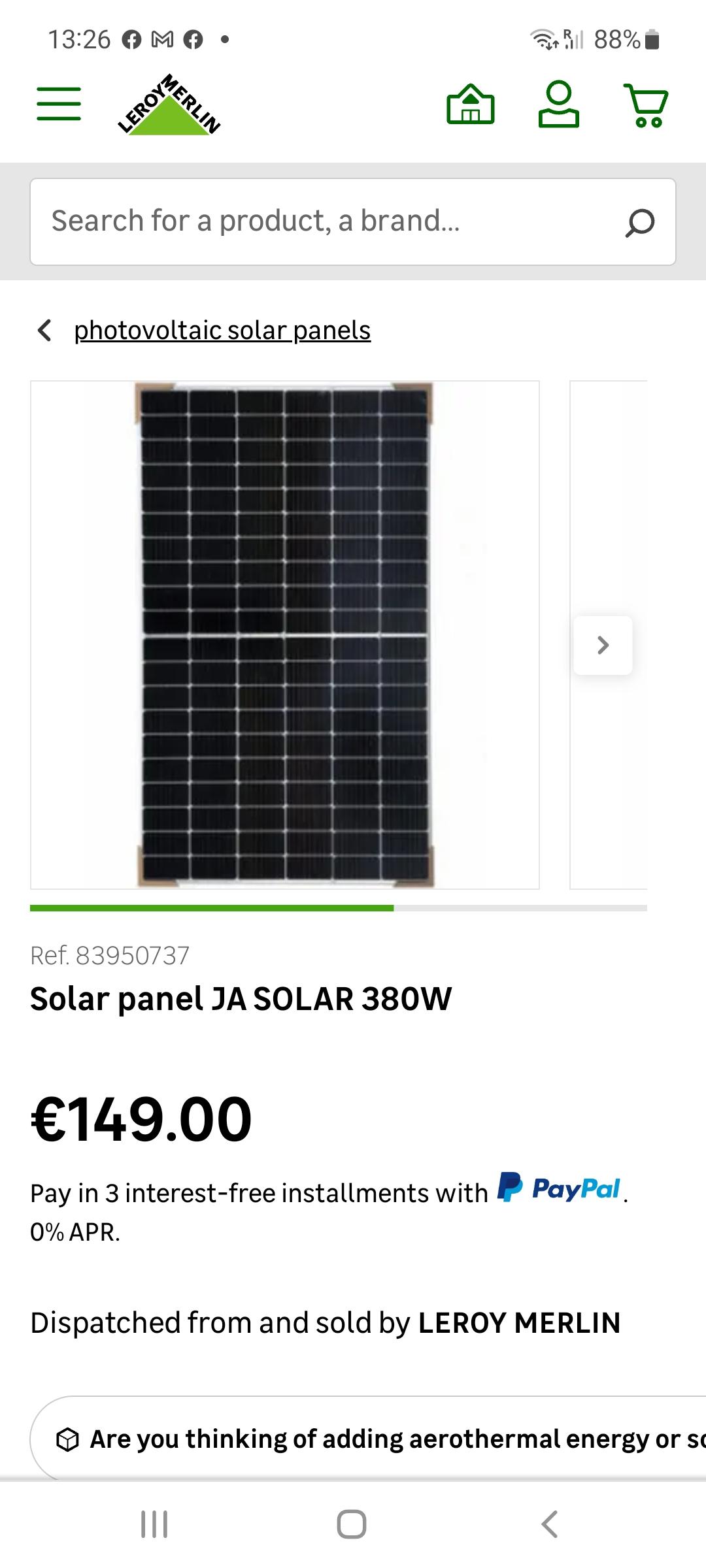
Knowing we pay more for everything in the uk, I searched abroad. This is a French diy store with branches in Spain. So what margin would b &q have? 50%? Take off vat, deduct 50% ish margin, -15% conversion and we get £60 ish.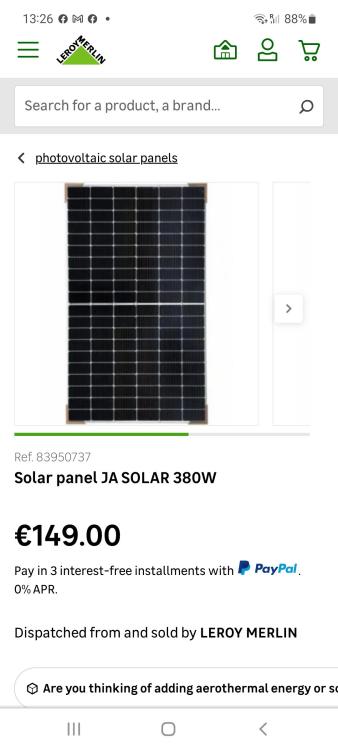
-
ASHP, how to decide - I just don't get it!
saveasteading replied to Jimbo37's topic in Other Heating Systems
I think , without fail, the government's green deals have spent all the money on consultants and the excessive margins of approved 'specialists'. For a while you could get grants for wind turbines and hydro, regardless of them being unfit for purpose. -
Screed thickness with UFH, over PIR. How thick?
saveasteading replied to saveasteading's topic in General Flooring
75 theoretically Due to undulations in the lower screed it varied 60 to 75. No problems with either. -
Structural engineer for a passive house basement
saveasteading replied to WisteriaMews's topic in Basements
A good point about building a very expensive basement then using up floorspace. That will work especially if you like plain walled brutalism.