saveasteading
-
Posts
10887 -
Joined
-
Last visited
-
Days Won
93
Everything posted by saveasteading
-
Doesn't need to be chilled. Unopened the fat and salt preserve it indefinitely. Once started it is just drying of the cut surface that is the slightest issue. Note the standard picture in a Spanish bar.

-
Tree stump stuck in fence
saveasteading replied to dscoll's topic in General Self Build & DIY Discussion
Boltcroppers cost about £15. I dont usually buy own brand but these were good. Clip out the trunk and dispose.Then some sewing with wire or leave the hole for hedgehog traffic. With acknowledgement to those above who have said some of this already. -
Rice into compost bin or the council's food bin. Training required. Cement.....? Training required. I did find a solution once to a dishwasher not emptying, to be tile grout and bits blocking the pipes. The owner's relative who had offered to do it, had washed the equipment repeatedly in the kitchen sink. It goes very hard at the trap and bends.
-
Wherever possible I design without brick, then don't need to employ bricklayers. Of all the trades I find them to be least knowledgeable or interested, yet see themselves as skilled snd special. Years of being in demand I suppose. I speak of SE England. I know there are good bricklayers, rightly very busy.
-
I saw (maybe on bh) a simple ashp that was a single box located indoors. 1 pipe in, one pipe out. Primitive but wouldn't have to work hard in your circumstances. Then I'd insulate the inside surfaces but perhaps leave the outside wall plain.
-
Is it possible to lift a right of way?
saveasteading replied to success1980's topic in Party Wall & Property Legal Issues
And might it allow turning at the end of the road? Your area looks almost like a hammerhead. 9 -
Mesh is sensible, spanning the shorter dimension. How far does it span?
-
Sheet costs a bit more because of transporting air, but tying loose bar is a real skill, so I suggest stick with the nesh.
-
OK, as expected and as ig should be. So do you have a proposal? Are we looking at methane? It's just a heavyish polythene but any difficulties are likely to be at junctions to the existing. Plus sometimes needs venting , which is basically a perforated pipe with gravel round it. The bco may need expert assessment even if you don't, so it may take some time. This is your priority.
-
17m is a long way unsupported. Are there not division walls internally?
-
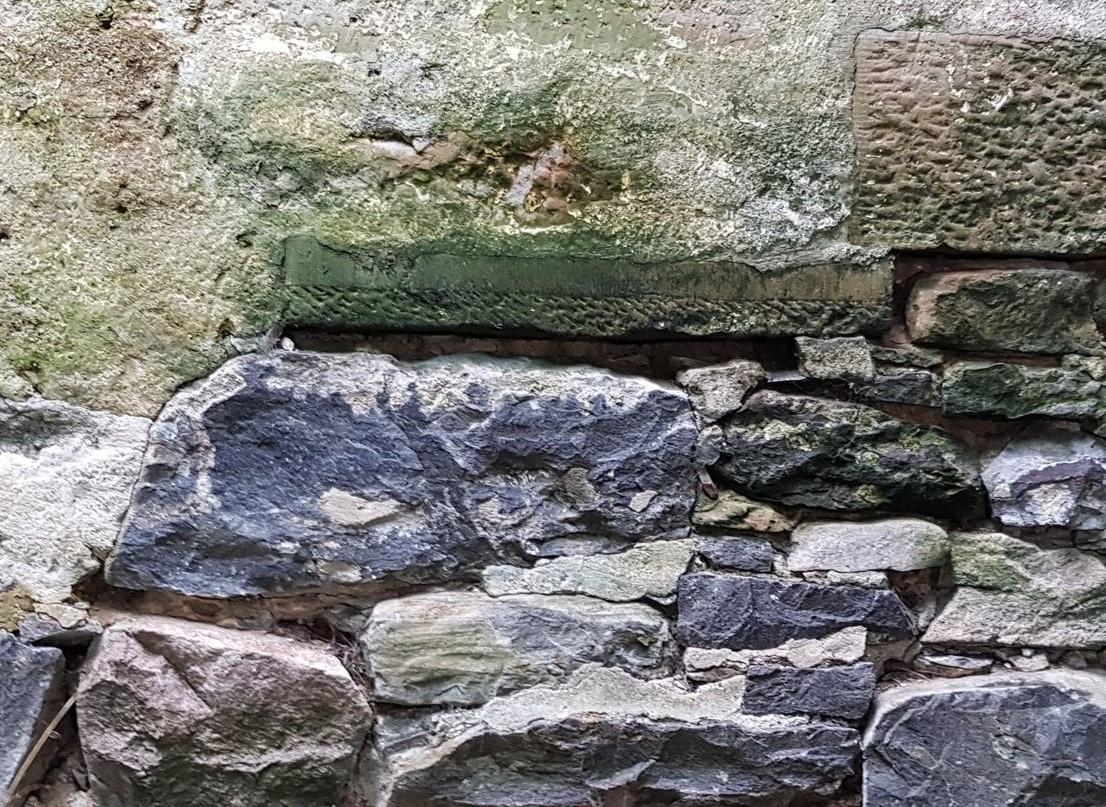
Brick efflorescence and brick face erosion on gable end.
saveasteading replied to ianmoone's topic in Damp & DPCs
Lots of good aside above. I agree and suspect water is splashing from the roof and again up from the concrete. You will have to get wet and observe. The buried air brick is awful. It might not be the same problem but needs sorting. A so called builder buried the air brick. Some people just aren't very bright. Yes a builder can sort the problem but only if they understand the problem. -
rounded stones to delineate garden space on driveway
saveasteading replied to johnhenstock83's topic in Driveways
The block manufacturers (marshalls) do rounded features. But whether you can buy a small number I don't know. Ask at the local BM. -
Are we talking of concrete here? Mag have steel in it? I'd recommend hiring a specialist machine complete with corer. This will be diamond or tungsten, and do your core easily. So you will only need it for a day.
-
The priority must be to present a proposal for gas protection. Otherwise any prep work may be pointless when you have to stop. The wording you give in the title doesn't say to wait for approval, but perhaps it is elsewhere.
-
I don't see any advantage. I thought you meant ins to stud though. Misread!
-
If he is vat registered then he has to charge vat, but at the appropriate rate between zero and 20%. I'm not sure I understand the problem.
-
Private firm or council for building control
saveasteading replied to Barny's topic in Building Regulations
That's fair, as they aren't designers. I have had very helpful advice from time to time. Early advice on problems is worth money of course, but being told that something isn't needed is best. -
Pushed in snugly, no air gaps. 75 or 100 would be better.
-
Beware if there is a chance of the walls being tested. It only occurred once for me because there was a certification needed for use. It failed my target but fortunately was ok because i had overestimated the requirement. The testing expert said that we cannot rely on the lab published test results because they are for optimum conditions, and a sample panel not a real wall.
-
Private firm or council for building control
saveasteading replied to Barny's topic in Building Regulations
I've found big differences in knowledge levels between private inspection companies. Then more between them and some LAs. The question is, do we want the tougher tests or to be left alone to make our own errors? -
BCO should want designs for strength and deflection. Also the rising/goings/landings/headroom geometry. I would also design the handrail in detail now, as making it work later could be tricky. Only Grand Designs and Architects Journal have stairs without handrails, and they will be added later.
-
I didn't know it came in panel form. I see this is from USA. 0.3mm is very thin. made for gluing to another surface perhaps. On this..Steel panel is made from as thin as 0.8mm but can still be very strong if the steel is high tensile. But some is very soft. I bought some from a cheap supplier once, with the client's support for a very basic use. It was very soft and a sample square could easily be bent by hand, which is impossible with good steel. Aluminium is softer than steel of course but often made thicker. But with Corten I have no idea.
-
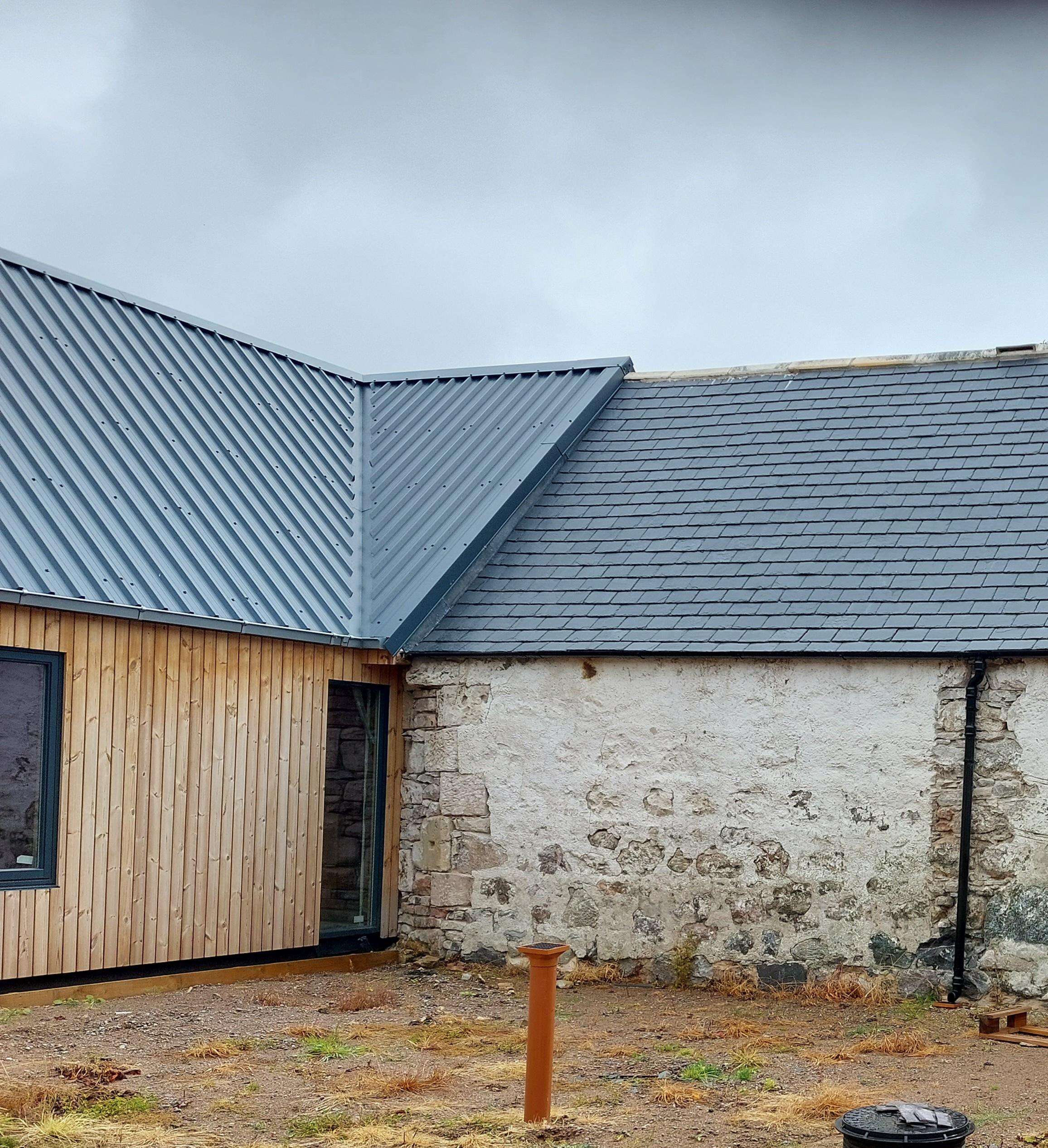
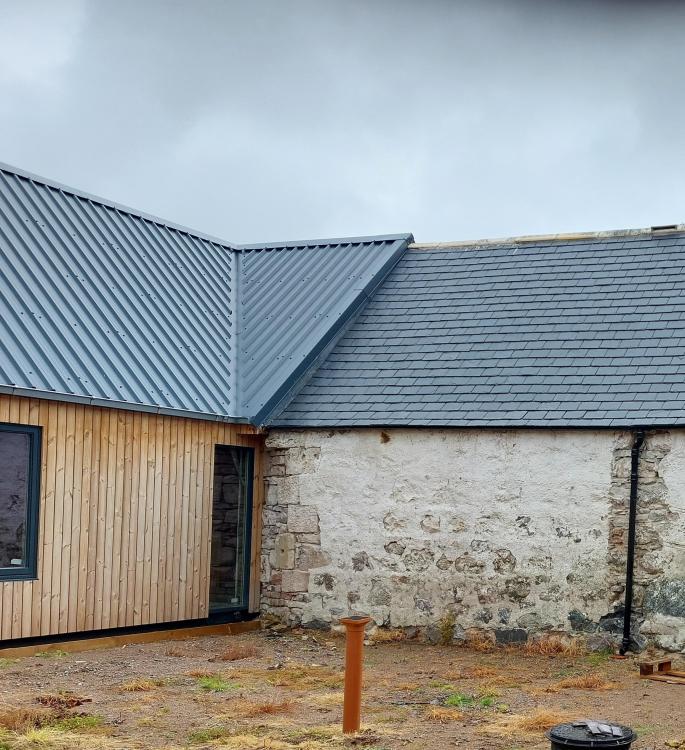
This is ours 9 months after cladding. It won't rust or have swarf on it. It was done by our joiner who would have used a grinder but was instructed not to and watched. The hire companies didn't stock nibblers which shows how little they are used. This wasn't intended to resemble a zinc roof. If it had, we would have used a wider pan. I think £40/m2 probably covers it. Re another current thread, that's a Lindab gutter on the new build and refurbished cast iron on the original.
-
I'm more concerned that beneath your floor is effectively a basement, ie below ground level and could fill with water. Even the floor slab is below ground level. Is there a reason for this?
-
Sketch please? It sounds as if ventilation has been an afterthought. When you say the plans have been approved, by whom?