
saveasteading
-
Posts
10887 -
Joined
-
Last visited
-
Days Won
93
Everything posted by saveasteading
-
 Not far to the fire exit.
 -
I think there are rats in the roof space, judging by the sounds, so yesterday i got out the old ice cream tub where i keep the bait, from a wall cupboard. I found a small hole in the bottom of it and an empty sachet that had been blue wheat. The only way into the cupboard is via a cable entry. I'm going to measure it for interest. I stopped using catch and release after i once forgot.
-
I think these are craned and forklifted the same as the obviously strong steel ones. The reason for selling them off is presumably the chiller being at end of life...or the door, which must be insulated too.
-
At least it is some form of 'promise". It may just have some weight in s formal claim (or give structure to a complaint). I'd be forever quoting bits of this back at them when they try to fob off /deny resonsibility.
-
Wedi is a stiff material and can be fixed down with pins or tile adhesive. Then can be walked on or tiled/ laminate. Pir is cheaper but needs a hard board over it. Without analysing further I'd be plumping for wedi.
-
By default it fits on a flatbed. So it's just the cost! Perhaps find if your local haulier can fit in a delivery the other direction.
-
I looke at their page in disbelief. That is such hypocrisy. I have experience of the utter lack of quality control. Anything for a sale. Perhaps they are not the worst? That wouldn't be much of a sales pitch though.
-
And as I have retorted before, think how much worse it would be without. The incompetent builder is scared of the BCO. But a BCO can hardly accuse an air tester of incompetence or lying. Yes some bco's are rubbish, but I've met plenty of very good ones.
-
Feel good moment. Spread the joy.
saveasteading replied to saveasteading's topic in Barn Conversions
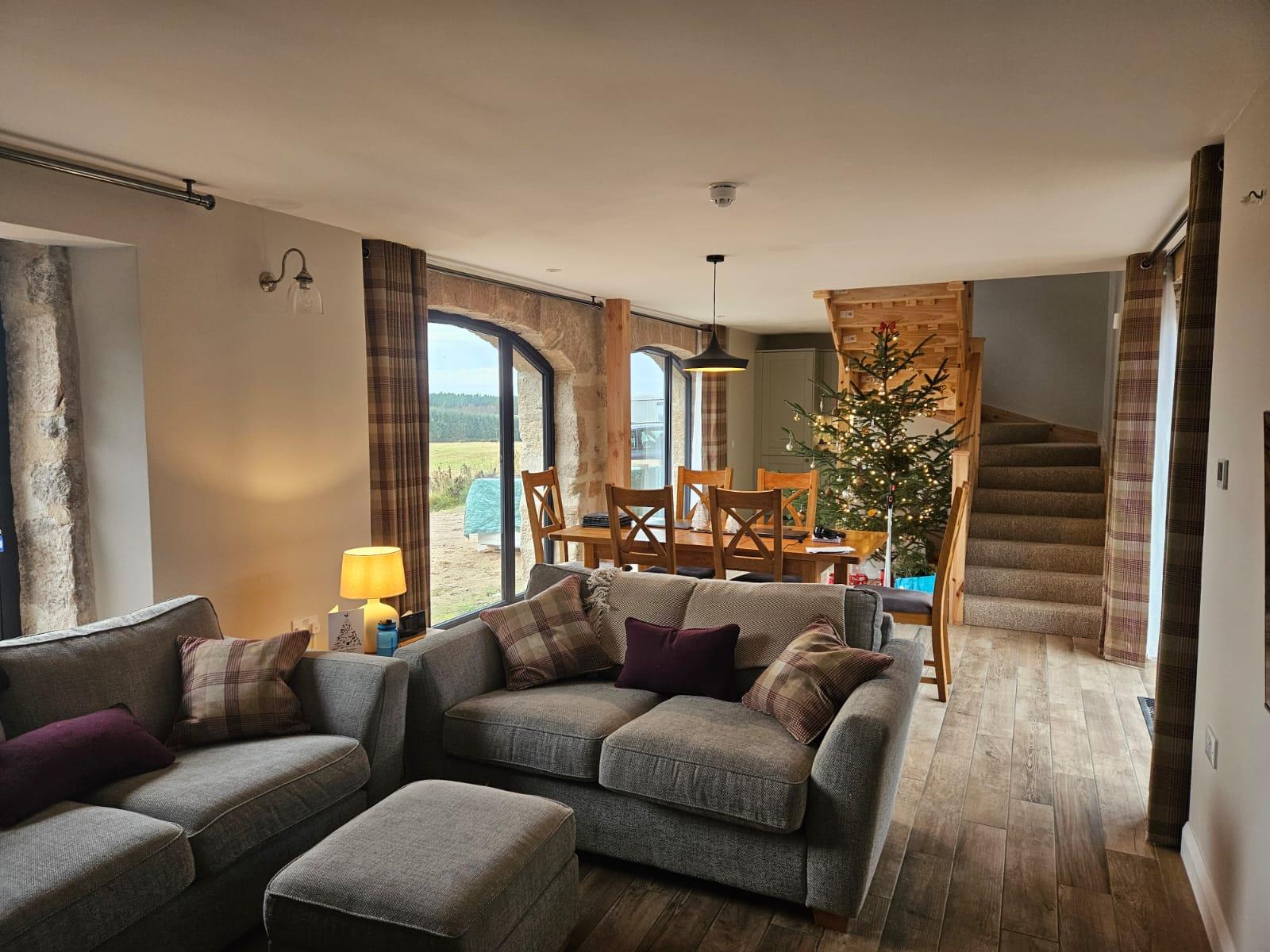
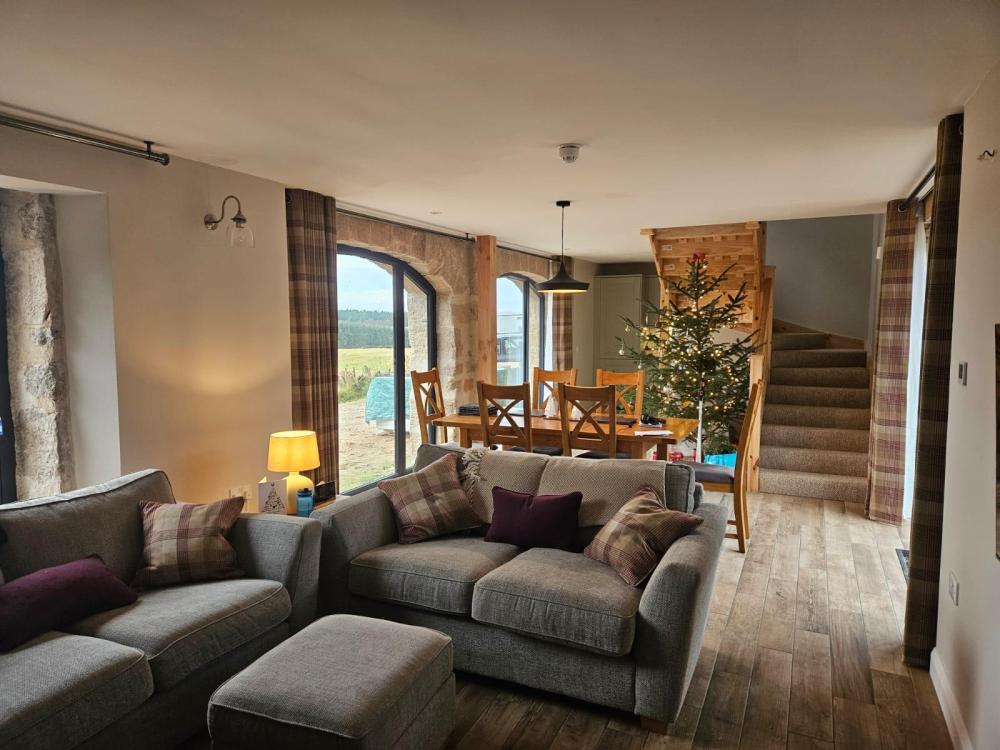
I would also emphasise that I chose the floor tiles. It bothers me if I see repeats in a quasi natural product, especially if they line up. Does that bother anyone else or is it my curse? My Son-in-law realised he had it too when I mentioned it and daughter 'gets it'. They laid them so no similar tiles are near each other, and reversing helps too. These tiles are in 18 patterns, so flipping makes it 36. -
Feel good moment. Spread the joy.
saveasteading replied to saveasteading's topic in Barn Conversions
I was involved, I'll have you know! Hundreds of swatches, reduced to the final 20. Mostly I just agreed with the final decision. I'll admit that the purple features weren't my choice but it's inspired. That view, if it wasn't for a mountain in the way, would be all the way to @ProDave and @Jenki. The Northern Lights shine above them. -
Having spent a lot of my life in these, they warm up quickly, but cool down quickly too. So a container it is. A few bashes or scrapes won't matter but might make them us for shipping. So make sure The doors move freely. It's easy to fix them down to a concrete slab. So as above. Insulate the floor with PIR and a board topping. Ceiling insulated outside with PIR and either board and a membrane, or metal cladding Walls stud and t&g, with pir behind. Inside to taste. Insulating the doors? I've no idea!
-
I'm sure they would then drop into the cash, no insurance, category. The worst ones are there already with nowhere to fall to.
-
Done this. But it was for sports equipment so a much lower standard. Decorating the outside with t & g keeps the sun off. Pir on the roof then some covering, eg metal cladding. I think pir on the outside face before boarding is easy and safe, then stud and board inside. having done all that you might as well have built a nicer, better box from timber stud. We didn't only because the boxes had to be temporary/ removable. I wouldn't leave any cavity inside. Also beware the doors. Shipping containers are usually sold off at the stage of the doors failing. The gimmicky projects that boast of using them as sustainable are usually buying once one used containers for £10k, not £1k.
-
They don't see themselves as builders. Everything is someone else's fault or responsibility.
-
Agreed that this is worthwhile for a novice before committing. More accurate than simply allowing , say, £2,000/m2. But all the rates are generic so they are +/- 10% or so. They could balance out or all be one way. Unknowns an peculiarities of the site remain so, and uncosted. A big contractor will employ their own estimator who will spend days on a site visit and getting their quote right. Otherwise they will lose the job or make a loss.
-
Not so long since this was a storage area with a passage still full of mud and cow manure. Curtains up is a big moment. The rest of the place is at first fix with pb coming behind it.
- 12 replies
-
- 13
-

-
A proportion of units is air tested. Most likely selected to represent the varying models of house. They are pre-advised so they are ready for testing, and the builder can do these ones reasonably well, for a good figure. These results are then applied to all of the same (untested) houses. (Some people say) the developers have influence related to political donations, hence the rules are not tightened. I'm pretty sure one air tester was suggesting to me that he could arrange ( write down) a better result if persuaded. I can't of course say that happens.
-
I mean that the notch is what needs to be spliced, so put some screws in the lower area of the ply splices. When load is applied to the joist, the bottom goes into tension. The ply can take that tension at the bottom , holding it stiff across the gap. It will do that most efficiently if there are fixings lower down ( unless there are and I'm not noticing them).
-
Sorry folks. It didn't seem to submit so I tried again and again. any way I can delete these?
-
Garden wall is failing - How can I save it?
saveasteading replied to johnannik's topic in General Structural Issues
Oops I forgot to put the demo cost alongside the new fence cost. If you decide to skip the bricks, you get a better price if it is all clean hardcore. -
Garden wall is failing - How can I save it?
saveasteading replied to johnannik's topic in General Structural Issues
its a nice wall. how to estimate: how long to take down the wall and clean the bricks? 2 men (or other) for 5 days? =10 @£200 excavate new footing and pour concrete 10m (??) at £100. not enough . say £2k again rebuild the wall. 2 bricklayers for a week? mortar etc. find matching bricks to replace damage ones a temporary fence? skip for the damaged bricks £7k?? if you manage it yourself. £10k as a contract. or a fence for £1k -
Not quite all. the notch is out of the bottom, and that is the bit of ply that needs to be fixed hard. a few more screws down there, if you can.
-
Not quite all. the notch is out of the bottom, and that is the bit of ply that needs to be fixed hard. a few more screws down there, if you can.
-
Not quite all. the notch is out of the bottom, and that is the bit of ply that needs to be fixed hard. a few more screws down there, if you can.
-
Not quite all. the notch is out of the bottom, and that is the bit of ply that needs to be fixed hard. a few more screws down there, if you can.