saveasteading
-
Posts
10100 -
Joined
-
Last visited
-
Days Won
82
Everything posted by saveasteading
-
 I hadn't come across this before but have now looked at the website. It doesn't give much technical information, which always worries me. Is it a spray of expanding foam that sticks at air leak points? Or a sort of fuzzy felt that does the same? So it is for where the intended airtight structure isn't working properly? Either to get building reg's or as a permanent improvement? Does anyone know...Is it messy? Is it permanently flexible? Is it ever used as the intended airtight barrier rather than a problem solver? Being a combination of cynic and innovator I'm confused and need more info.
 -
Juliet point fixing : could you review my design please?
saveasteading replied to ToughButterCup's topic in Windows & Glazing
https://rawlplug.co.uk/product/wire-mesh-sleeves/ Seems to be readily available from specialist suppliers in UK too. this comes in kits or as 1m lengths. I have never used it so it needs further research. Even filling the gap to the insulation will provide a bit more stiffness. If this worked it could glue to the inner face and not need a bolt inside the room .....Maybe -
Juliet point fixing : could you review my design please?
saveasteading replied to ToughButterCup's topic in Windows & Glazing
Do you have to cut out the inside of the block, where you show it recessed? That could be contributing to the strength, and as it's visible you will know it is doing something. Also you would have a conventionally fitted nut there, absolutely preventing the bolt from puling outward. If it can't pull out it won't fall down. Then on the outside, yes use a substantial washer plate to spread the load. The chances of getting any useful fixing on the middle fin of the block are very low. However, I have seen a system of inserting a mesh tube, like a stent, which is inserted into the hole and to which epoxy resin will adhere. It is much used in foreign climes where hollow bricks and blocks are the norm. -
6 litres should do it easily, or there is some design flaw? You would expect that a big name manufacturer will have proven the design with EU standard testing 💩 modules. Sometimes the outlet pipe arrangement can slow the flow. Also. Is it clear which button is full or partial flush? It can be counter-intuitive, or it needs to be held down. Or for a concealed system using tiny air pressure pipes, they can be reversed.
-
That's interesting that there is the partial use of brick. I can't think why. Are these slits all tapered?
-
Is it on show in a room? We're doing one that is in a gable and is a void space. So we're putting battens on the internal face then polycarbonate. That leaves the full visual effect from outside and kills all draughts and sufficient heat loss. Where it will be visible in a room, we haven't done if yet. But probably a skinny frame about midway, ie what looks best as balance of seeing the feature and glass area. Perhaps a home made timber frame? I can't picture how frameless works in a tapering slot, with roughish masonry. There must be hundreds of examples, for better or worse. I think most conversions must blank them on the inside.
-
In roof panels leaking or condensation?
saveasteading replied to CH_18's topic in Roofing, Tiling & Slating
It's in one line down the slope, so I'd say it is one screw at fault, at or above the start of the wet area. -
Advice on repairing a old chimney and bothy with lime mortar
saveasteading replied to Tapster's topic in Scotland
mortar should also be as strong and durable as possible (while still softer than the masonry). So I'd make local enquiry. -
Core drilling 200mm concrete wall - what kit required?
saveasteading replied to BotusBuild's topic in Concrete
As a slight divergence...this makes diamond drilled holes unsuitable for anchor bolts, unless roughened up with an sds drill. -
Advice on repairing a old chimney and bothy with lime mortar
saveasteading replied to Tapster's topic in Scotland
No. The lime for granite is the hardest grade, and it doesn't keep overnight. Your local BM should know the grade for your sandstone if it is a local product. However, I read that unless there is a quarry nearby, it is as likely to have come in by ship. -
Rust removal from marble tile.
saveasteading replied to saveasteading's topic in Wall Tiles & Tiling
I know. But I will try one of the above and report back. I cant remember if the rusty screw was provided or if its my own fault. Either way, in recent years I have invested in Fischer SS screws to fix showers and grab handles and am impressed with them...very hard head and a very good grip...and no rust. -
Saturday and Sunday at Detling. Clashing with rugby.
-
Rust removal from marble tile.
saveasteading replied to saveasteading's topic in Wall Tiles & Tiling
I've now seen SS plates on ebay, 75mm x 3mm thick. I suspect the 1mm thick will be not sit tight. Then just drill a central hole for the screw and plonk on with silicone. -
Yes, I've wanted for a while to go to one, out of curiosity. I'm vainly not expecting to learn much, but you never know. Sometimes , at such events, I amuse myself listening to the half truths and exaggerations of the sales pitches. And asking for guide prices is fun. I don't wind anyone up unless they deserve it. My main interest is observing the vibe and who is pitching at the potential self builder. So if anyone thinks they were mis-sold or has forgotten a vital name or information.... No promises though , especially if there is a wait. I'm also wondering just how big the interest is in these troubled times.
-
Rust removal from marble tile.
saveasteading replied to saveasteading's topic in Wall Tiles & Tiling
Strong Acid on marble could be a problem. I've probably got spare tiles but rather not. I'm thinking of a Grohe "rosette" plate. 65mm. I don't know what their intended use is, but it should be OK.Except that I really need 80mm.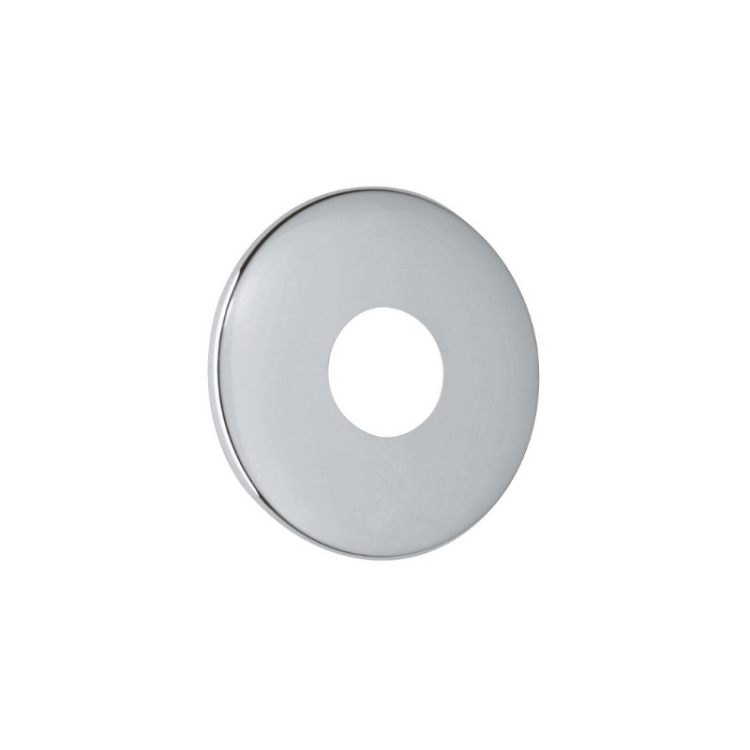
-
Rust removal from marble tile.
saveasteading replied to saveasteading's topic in Wall Tiles & Tiling
Yes I'm afraid so. But if it went in, and it's visible, then Snibbo might also get in, and neutralise or remove it? -
Are you going to build any barrier over the gubbins to keep fingers off? I'm thinking of a stud frame with clip on panels for easy access.
-
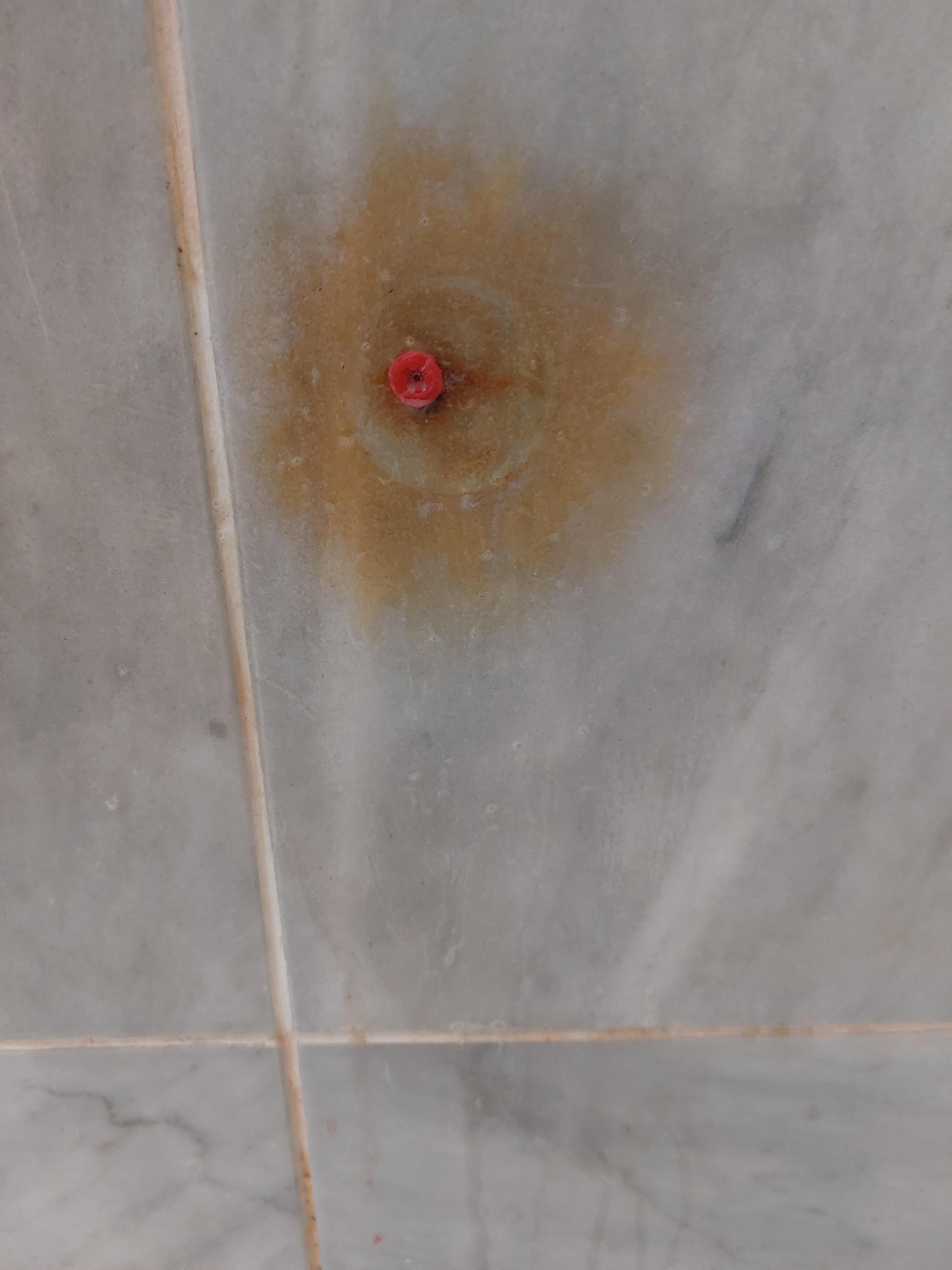
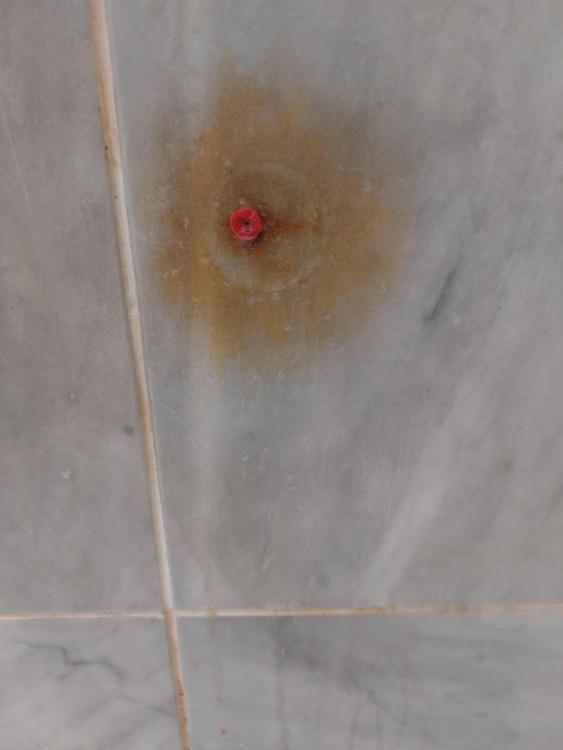
One of the screws on our shower has rusted to failure, leaving a stain. For replacement I will use a branded SS screw, as I always do, in recent years, for wet locations. I've tried baking powder, toothpaste, detergent, vinegar and all combinations ( yes, including mixing acid and alkali, as at least there is bubbling.) Any ideas? Perhaps a big SS or chrome washer if nothing works.
-
Core drilling 200mm concrete wall - what kit required?
saveasteading replied to BotusBuild's topic in Concrete
I used them as door stops in the office or placed on shelves to look suitably techy for the industry. -
Only if there are thirsty trees nearby or your clay is very soft.. Most founds on clay are 1 to 1.2m. Otherwise it makes sense. So the planners haven't asked for a basement. Could subservience be provided by low profile extensions. Catslide roof? That makes it bow down before the other buildings.
-
It would help to know why you want a basement.
-
For context, Why do you need or want a basement? Is this an extension or all new? They're risky, and expensive, and the remaining clay may react to the change in loading. @OwenF and @Gus Potter will be more up to speed on the geotechnics, but I've had these tests done and also designed and built one basement hence my question.
-
I need to understand groundworks
saveasteading replied to flanagaj's topic in General Self Build & DIY Discussion
It's all in BH already. If it seems boggling, it is. Research a thing at a time. Beam and block is a problem solver, and I'm not against it. What you're asking is all ultrasensible. 1,2, 3,5 leave til later. In simplistic terms: 4 is what to look into first. Slab if it's good ground, and level B and b perhaps, if it's poor ground or has to be elevated, or on a big slope OR if you can't get lorries near. -
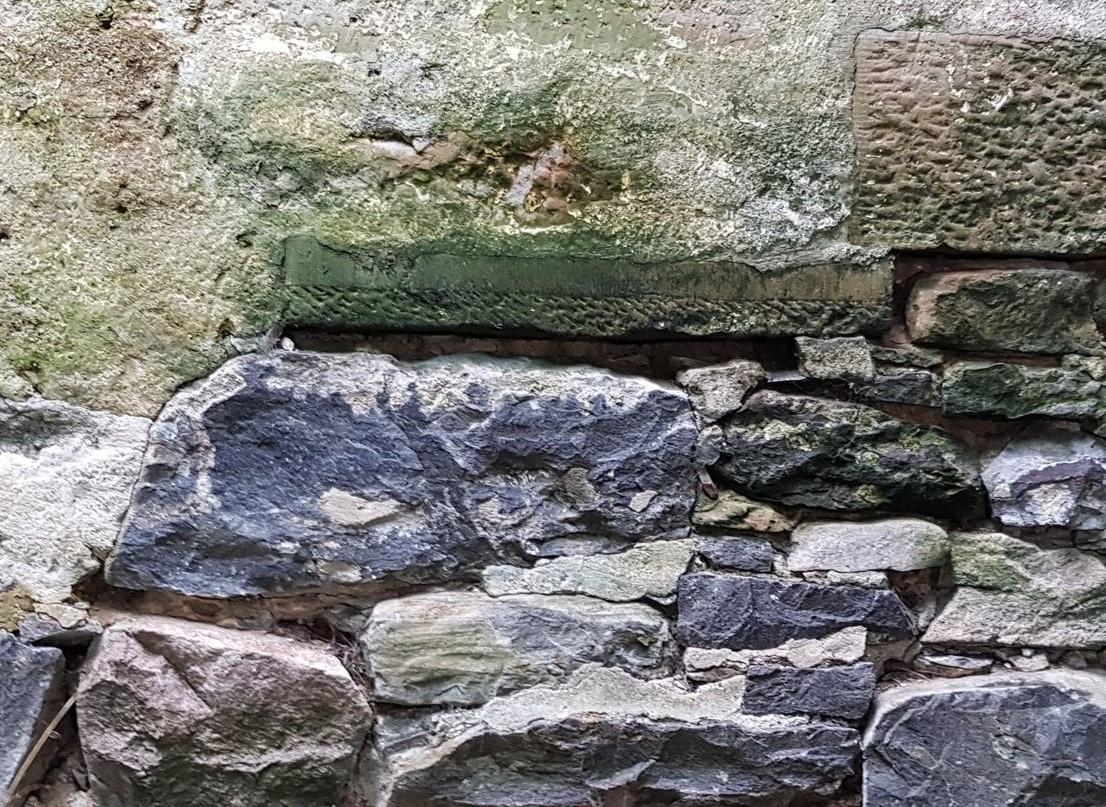
To use stones, the principle is to minimise the volume of mortar. Have a collection of stone sizes to hand. Infill a void at the back with rammed-in mortar, then press in the biggest stone, or stones, that will fit. Repeat until at the surface. This provides more strength and reduces porosity. Granite uses harder lime than sandstone. Stipple the finished lime surface with a brush, to give it more surface area for evaporation. I knew none of this 2 years ago: it's findable with a lot of searching. @Gus Potter is right about the landowner's intention. However this has been built with skill and the 3 skin construction has advantages too: it's still there after 150 years or so. NB the foundations will be 400mm deep probably....leave them alone.