saveasteading
-
Posts
10104 -
Joined
-
Last visited
-
Days Won
82
Everything posted by saveasteading
-
Static caravan sewage?
saveasteading replied to Amateur bob's topic in General Self Build & DIY Discussion
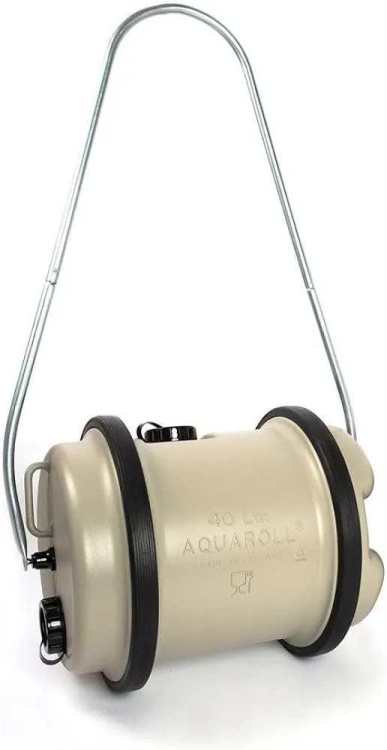
Or simpler plastic tanks that need carrying. Just goohle for caravan waste drim. You won't catch anything off your own fresh waste. Gloves, hand sanitiser? But if the whole idea of drains worries you, best hire a commercial thunder box. £30 X 40 weeks? -
Static caravan sewage?
saveasteading replied to Amateur bob's topic in General Self Build & DIY Discussion
-
Static caravan sewage?
saveasteading replied to Amateur bob's topic in General Self Build & DIY Discussion
If there is a sewer available then you can wheel the caravan waste tank to it, lift the cover, and discharge. OR dig a hole to empty it, well away from your works, let the liquid disappear and gradually fill in. Sawdust is a recognised bug killer too. New hole every 2 weeks or so. Do this until someone stops you, but it won't be harmful short term. OR make a composting toilet, again using sawdust. No chemicals needed. OR long drop, roman style. Don't fall in. -
If it has been down long enough (4 weeks say), any cracks should have stopped moving. I've never used decoupling matting and never had problems. Is it really a way of tiling early on a new screed and otherwise unnecessary? It must also be a heat barrier with UFH.
-
We're featuring on Grand Designs next week 🎥
saveasteading replied to thefoxesmaltings's topic in Property TV Programmes
Never seen a GD where I liked everyone before, and also the project. Very well done. The success comes down to vision, determination, being charming, working hard, and being young and energetic. I fail on the charm, and my youthful energy was spent making other peoples' projects. I wish you all the best, and you deserve that lovely home. -
We're featuring on Grand Designs next week 🎥
saveasteading replied to thefoxesmaltings's topic in Property TV Programmes
@thefoxesmaltings It is on tonight remember @thefoxesmaltings, I hope it has been sympathetically edited. -
Concrete screws for cladding batons ?
saveasteading replied to Firsttimer's topic in Insulated Concrete Formwork (ICF)
OK that is interesting. Tempered steel, close fixings? I'd still like to see someone testing a 150mm projecting one. -
You must ensure that the tank sits on joists, not only on flooring. If it can be spread over 3 rather than 2 then that is a big difference. To do that I suggest relocating it a tad if that works for the room, and anyway, putting a thick plywood base board down to spread the load wider (in both directions) as well as directing it to the joists. No sums done by me, but it is likely to be ok as you are so close to the ends of the joists and the beam. There isn't a grand piano on the other end is there?
-
Concrete screws for cladding batons ?
saveasteading replied to Firsttimer's topic in Insulated Concrete Formwork (ICF)
Fix one of these as a test, then hook on a claw hammer and hang off it. I think it will bend. The whole cladding skin could droop. 180mm mentioned above too. ! It is just a bit of wire through eps. I was once keen to try eps structures but never did, and am out of touch now. Please post the manufacturer's detail if you find it. -
Design for mull of Galloway. Thoughts?
saveasteading replied to DannyT's topic in New House & Self Build Design
Lovely thought. I favour the simplicity of doors and windows for air, and curtains for glare. -
Concrete screws for cladding batons ?
saveasteading replied to Firsttimer's topic in Insulated Concrete Formwork (ICF)
Surely there is a standard detail from the icf manufacturer? A 100mm screw through eps will be susceptible to bending under cladding weight. -
Threaded nails for nail gun. Good idea?
saveasteading replied to saveasteading's topic in Timber Frame
Yes, because then it is turned in the rest of the way and gets a good fix. My dad was a carpenter /joiner and tapped screws in a bit in coarsish work where some precision was required, but predrilled for fine work. But also nails for general stuff where it would never have to come out again. 'Hammering a squint nail in straight' was the ultimate test. -
32mm stopcock. £15 OR £60? What is the difference?
saveasteading replied to saveasteading's topic in General Plumbing
That is why I went to JDP. I have always found the service and advice good. I don't need much advice on drains, but water mains is not my skill. This will be for the plant room end of the new water main. I also went there for a chat about the rest of the project. ie what brands they stock and discount. I had a long chat about why their online price was much the same as the shop price is after 10% discount. It seems there isn't a full price unless you are an amateur who doesn't ask for a discount. In that time, about 5 'men with vans' came in and collected various very large drainage parts. I think this may be the main business for JDP ie having good stocks of stuff that is needed urgently. Of course these stocks and the depot create a cost. They were also good enough to agree that I will get best prices shopping around (or Screwfix) , but for a big order ask for a quote. btw their underground drains are from Dyka, a Netherlands company. Plasson was the make they talked me out of! -
32mm stopcock. £15 OR £60? What is the difference?
saveasteading replied to saveasteading's topic in General Plumbing
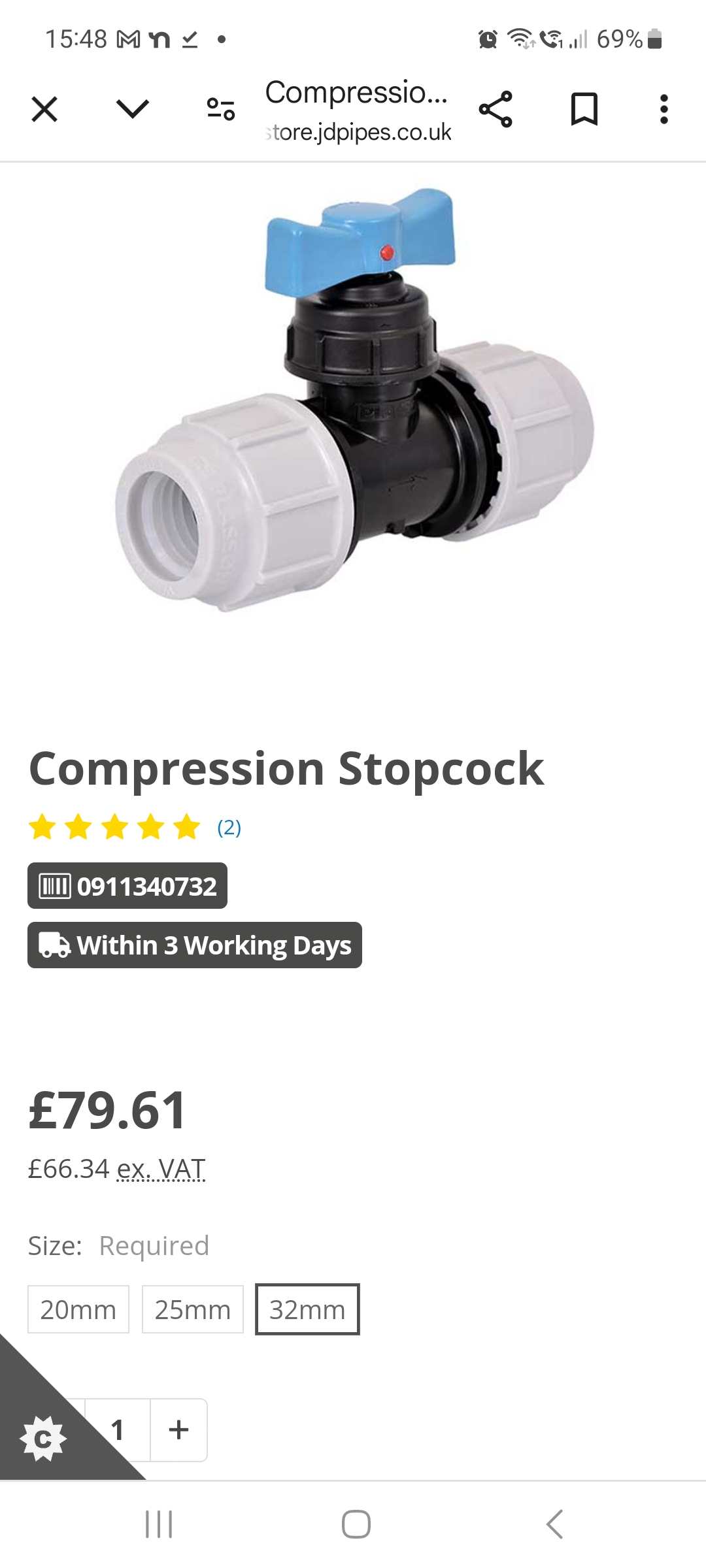
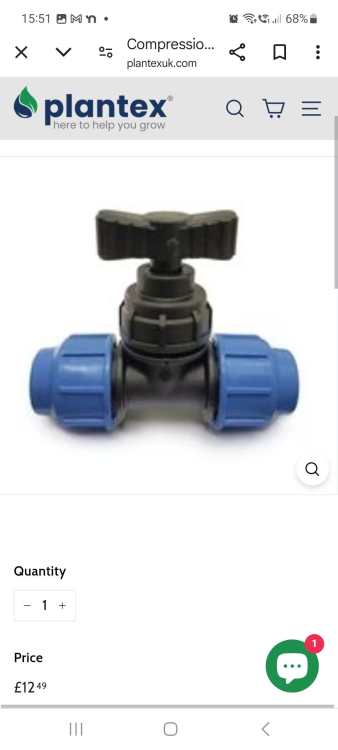
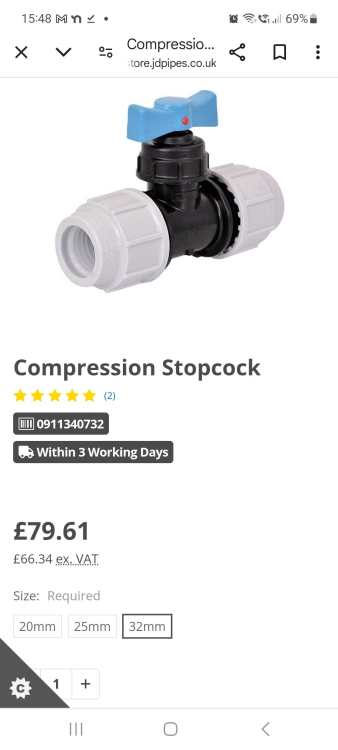
I can't find a reference to the model I was sold. So the second one is a random one online. -
32mm stopcock. £15 OR £60? What is the difference?
saveasteading replied to saveasteading's topic in General Plumbing
-
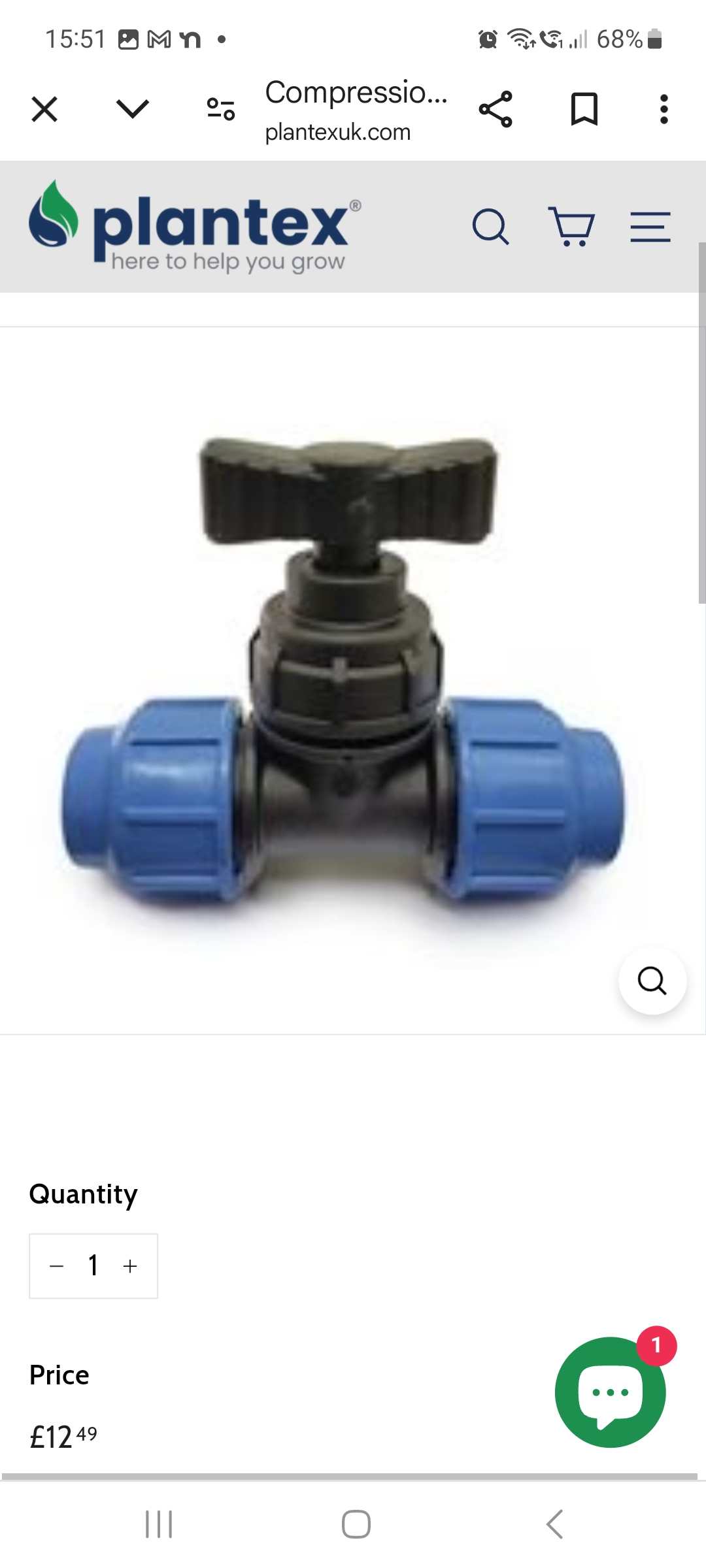
I just bought a 32mm stopcock for £30 from jdp, consisting of a plain stopcock plus an adaptor. The guy dissuaded me from the £60 ones on display. I see them online at £15 ish. I am assuming there is a great difference in quality. I know some turn smoothly and others stiffly. With lots of bits to buy, what should the strategy be on sourcing fittings ?
-
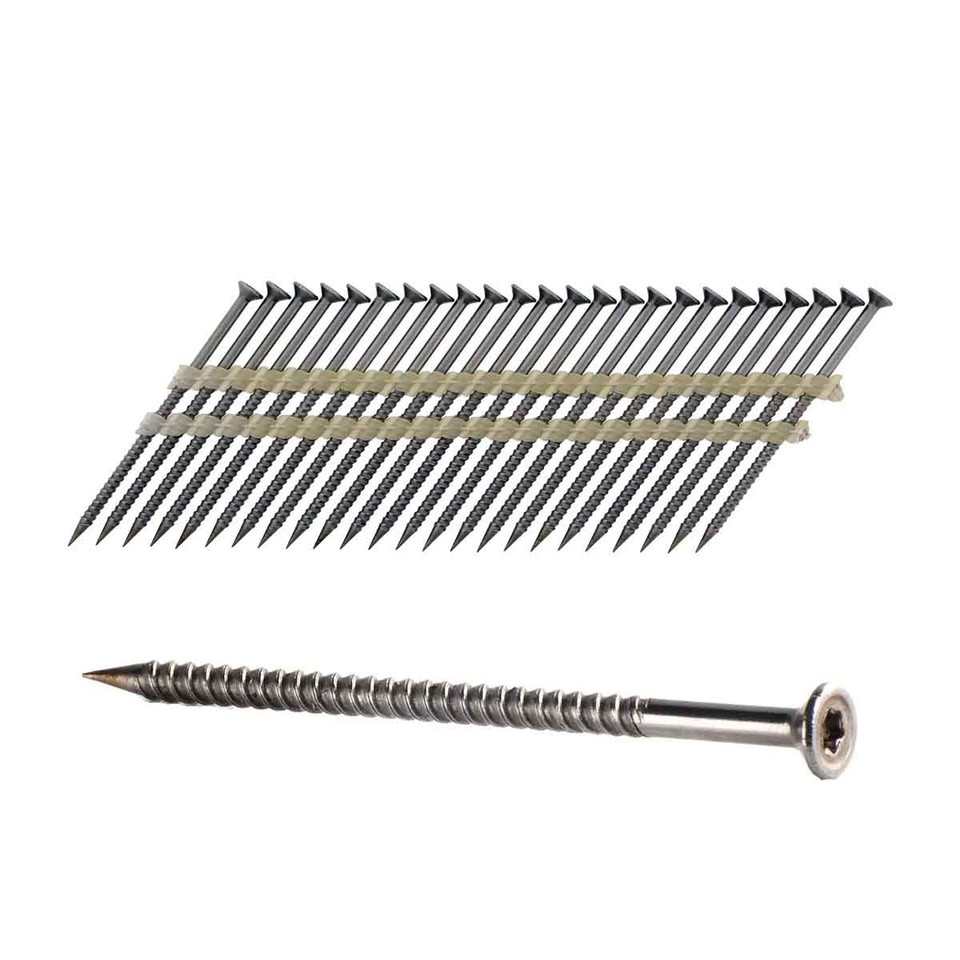
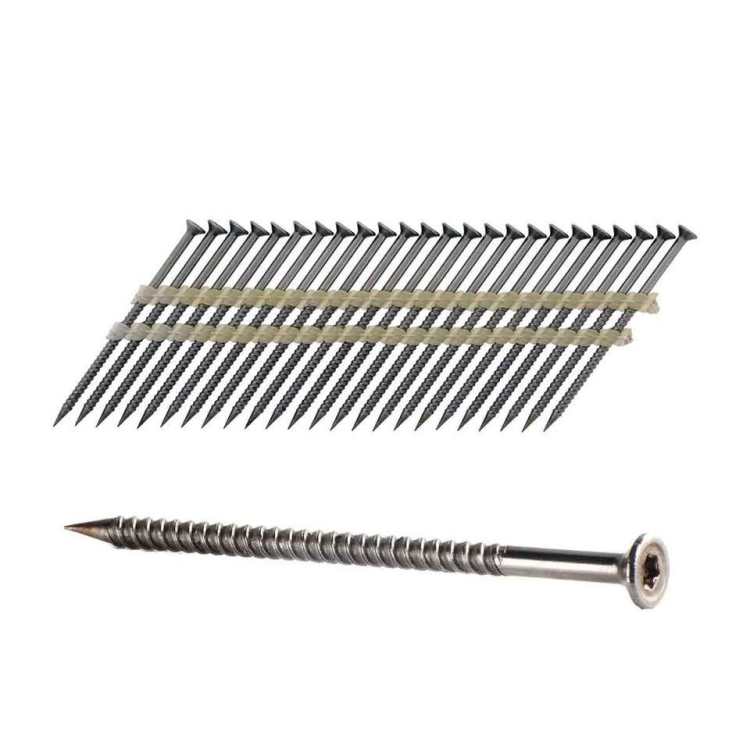
I didn't know these existed until this week. A member of the family came across them and said this would have saved time and material where timbers were out of position. Instead of destroying, for example, a door frame that is 50mm out, it could have been unscrewed and adjusted. But they seem to be twice the price. Is it worth it? Are they commonly used? Any disadvantages? One must be that screws are screwed, rather than hammered, for a reason....strength.
-
Nothing to do with structures. If 150mm does not compress then 300 won't either. There are diminishing returns on thickness, especially if ufh is not on all day. Also depends on the floor area ( and distance to the cold outdoors). If I had a 300mm space to fill then I might do 150 eps below 150 pir. A compromise.
-
I'm thinking of the intermediate amount of heat between @ProDave saying we need none, and plumbers speccing big rads.
-
In extremes, and all comments are welcome, it is like this: Architects design for style and function. Then other people make it work.* Technicians make it work, or can start from scratch for a simple building.* Engineers do sums to make it stand up, but over-design and are philistines. Clients will always find more money.** I say this through experience. I have had it first hand that a university tutor of Architecture told this student to stop worrying about how a building works. Draw what you like and it is other peoples' jobs to make it work. In this example the student was moving columns a little in a 3 storey public building so that they lined up for structural (and cost) efficiency. And sloping the roof to an outside rather than inside gutter. *A practice may include both these persons. ** an Architect actually said this to me when I said his design was not compatible with the clients' stated budget and there was also a large unknown he had not looked into. . ( I believe it went 25% over budget.)
-
Planning permission granted, I am on my way!
saveasteading replied to Greg-in-DD's topic in Introduce Yourself
I'm biased perhaps having designed for steel in flood risk areas. I've also been to and cleaned an old project , built at ground level, that experienced a 1m unexpected flood. It is easy and cost effective to build to a height so that the 'ground floor' is safe. Then you can choose to go higher, for the view and to allow easy cleaning underneath, and perhaps have a useful space. It is wrong to think of this as short lived though. It is indefinite, with good maintenance. It can have any roof and walls you wish. The downside is ramped access. -
We're featuring on Grand Designs next week 🎥
saveasteading replied to thefoxesmaltings's topic in Property TV Programmes
Can you reveal how the finished price is calculated? What does it include and exclude? Do they check this at all? My suspicion is that people have an opportunity to keep their figure low as a measure of their successes. -
Can one have a roof with variable albedo?
saveasteading replied to Garald's topic in Roofing, Tiling & Slating
Clay works well. It absorbs a great deal of heat. Then there is an air gap underneath as a thermal break. Depending on the tile type, there is probably air movement dispersing heat, as well as radiating and wind heat loss. It's nog enough and you still need something underneath. I have poked around with Mediterranean houses that are cool indoors. 25C in when it it is 35C out. The tiles are scorching. Then there is a mass concrete roof 100 thick which gets quite hot but slowly. Then a suspended ceiling. No insulation. At night the roof cools to the ambient temperature. Shiny or light colours would reflect some heat of course. -
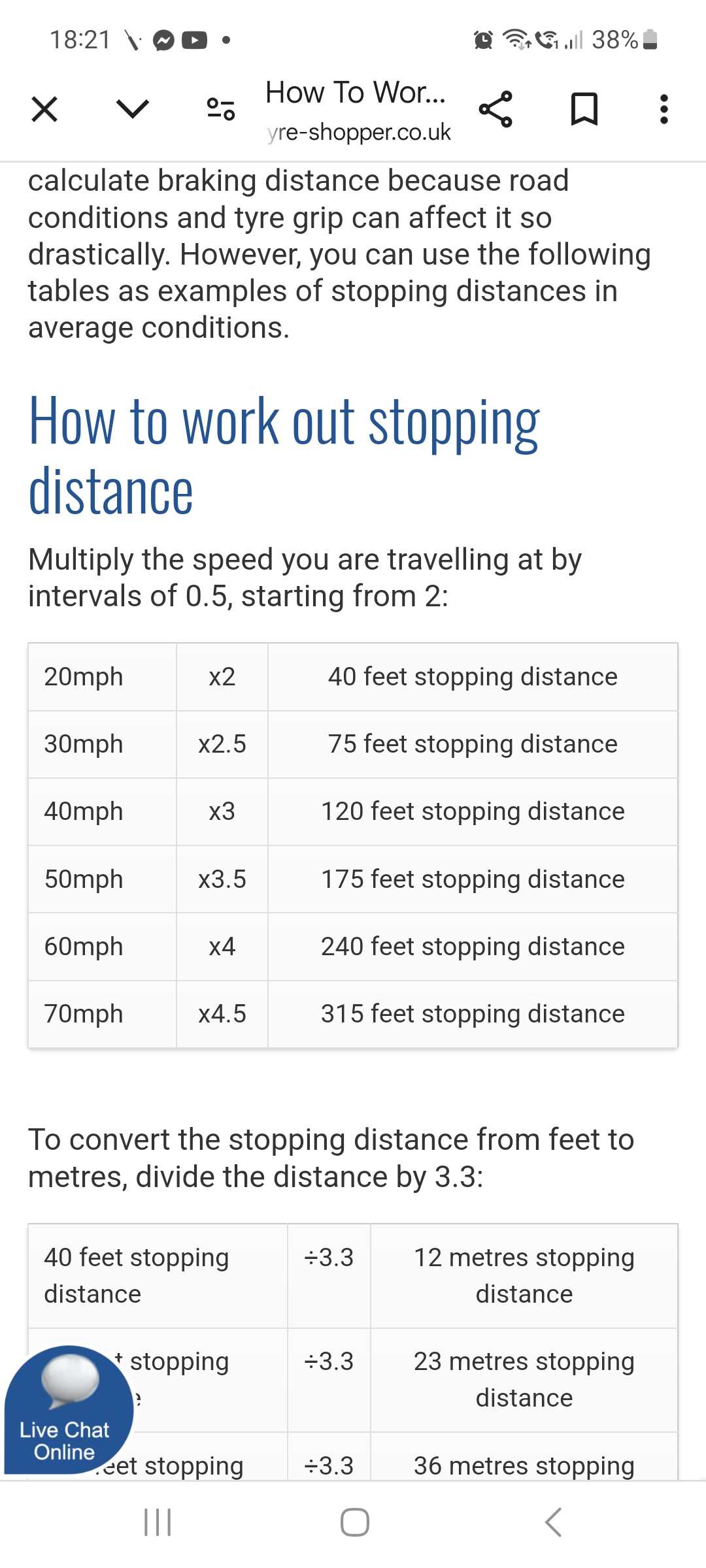
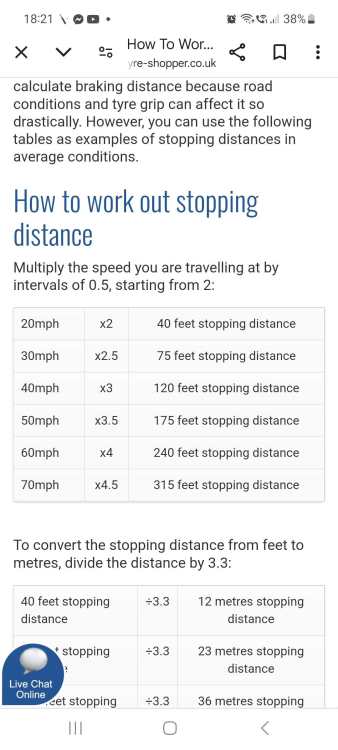
Been there, learnt my lesson. So good I'm doing it again next week. 60,000 miles since the last time, shows that I'm a good person really......is not the sort of thing to say. Yes, people argue pointlessly. Sit still. Answer the most glaringly obvious questions with the 'correct' answer. Watch the taxi driver.....he says as little as possible. At 8mph the remaining stopping distance is going to be, apparently 12 ft. by extrapolating the attached.
-
Why is it thought necessary to consult for archaeology? Or ecology? It is an existing building isn't it?