ProDave
-
Posts
30862 -
Joined
-
Last visited
-
Days Won
427
Everything posted by ProDave
-
The 2 things to consider are making the hot water pipework from the cylinder to the taps as short as possible. So try and get the tank central to all points of use. And you will need a D2 vent pipe to discharge water in the event of a fault, that usually goes to a drain outside (though can via a waterless trap go to an internal stack pipe) That may make for example a ground floor location close the the centre of the house impossible.
-
What matters to the DNO is the maximum output of the inverter. So 14 panels connected to a 3.68KW inverter would be fine and a lot of the time would give more output than 12 panels would. Just make sure the max voltage is within the limit for the inverter when using 7 panels per string.
-
@sam I built my system the way it is because I have a convenient split that allows me to measure generation and usage separately. I agree it is unusual to be able to do that. I did previously at the last house have a Arduino based system with a single current transformer that sensed direction of current flow, but it's measurement was far from perfect. If you are going to build your own diverter to work from a single current transformer, you would be better off using a design that is based on an electricity meter chip which will have perfected how to measure and sense direction of current from a single probe. More than one design has been published and @JSHarris has built one based on this and may be able to advise better than me.
-

The Great Thermal Mass Myth................
ProDave replied to Jeremy Harris's topic in Boffin's Corner
In my case the delay is 13 hours. So if the coldest outside temperature was at say 4AM in the morning, then without any heating, the maximum heat loss from the house would be at 5PM. Of course the heating would be on then so you would not notice the drop in temperature. But you can begin to see why the long delay means you just don't notice an overnight drop in temperature when the heating is off. -
The Great Thermal Mass Myth................
ProDave replied to Jeremy Harris's topic in Boffin's Corner
The thermal analysis of my wall build up suggests when the outside temperature peaks and starts to fall, the inside temperature of my house will START to fall 13 hours later. It would be a VERY long time before it fell to 50% And yes you barely notice the overnight drop in temperature when the heating is off. In the static 'van there was no concept of storing heat. you want to be warm, you need heating on. A wood burning stove actually filled that role well -
No you want something like this. https://www.ebay.co.uk/itm/192310256435?ViewItem=&item=192310256435 Only chose ebay as an example for ease of searching., The one you chose would not have a swept bend for one inlet. And you should really continue the stack pipe up a bit to an air admittance valve.
-
I could do, but an Ardiono Nano is a standard item and can be had for under £5 https://www.ebay.co.uk/itm/262738901345?ViewItem=&item=262738901345 I might just buy a spare of that so I am prepared. The only other thing likely to fail is the solid state relay so a spare for that might be a good idea. I doubt I would bother to package it up as a ready made spare though.
-
Unvented cylinder Immersion heater thermostat
ProDave replied to ProDave's topic in Boilers & Hot Water Tanks
So I sent a question to the ebay seller of the cheap one, asking what is the quoted range of temperature setting. His answer was "The temperature range is from 0C-105C." I won't be buying from him. I have for the time being, taken the "pragmatic" solution. The little adjusting screw on the existing thermostat comes to rest on a "pip" that limits it's travel. That pip is no more so it is free to rotate a bit further. Yesterday it got up to 57 degrees without tripping before the sun went behind the clouds. -
A chippie's advice please ... tear - out?
ProDave replied to ToughButterCup's topic in General Construction Issues
I bought a very cheap Chop Saw on sale at the time from CPC for that purpose and it did great service. -
The Great Thermal Mass Myth................
ProDave replied to Jeremy Harris's topic in Boffin's Corner
No living in a static caravan just illustrates how poor a building can be if you only use a VERY small amount of insulation, and that small layer has a fast decrement delay to compound the issue. If you want to do a scientific test for the forum, load your 'van with a load of concrete blocks inside to give it some "thermal mass" and report back what changes you notice (other than even less space to live in) -
The Great Thermal Mass Myth................
ProDave replied to Jeremy Harris's topic in Boffin's Corner
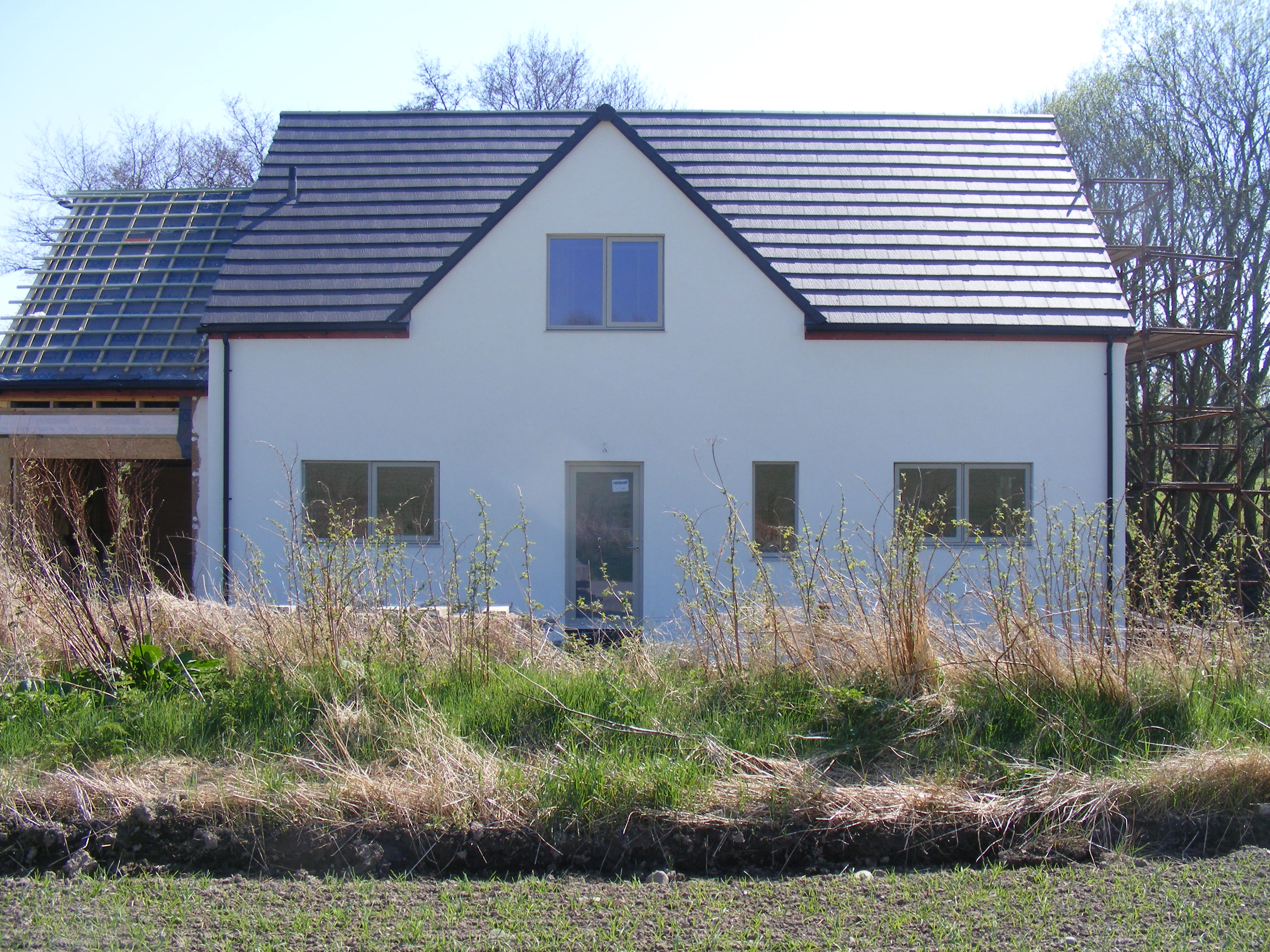
My house is built entirely of timber, plasterboard and insulation. The only concrete / brick is the foundations "hidden" under the insulated suspended timber floor. Yet my house takes very little to heat it, keeps it's temperature very stable, does not heat up or cool down quickly at all, and has a thermal time constant of over 13 hours. It does this (if you believe that paper) without any Thermal Mass. When they have explained that one, how my house can possibly maintain a comfortable stable temperature without lots of thermal storage capacity, I will start to take what they say seriously.- 122 replies
-
- 2
-

-
- thermal mass
- heat capacity
- (and 4 more)
-
The Great Thermal Mass Myth................
ProDave replied to Jeremy Harris's topic in Boffin's Corner
First, if they talked of Thermal Capacity, rather than Thermal Mass (a non existant unit) they might get more respect? Who sponsored this paper? Blue Circle? It is clearly a reason to use concrete in houses, no more, no less. Now if they concentrated on discussing insulation levels and insulation types, and decrement delay, and discussed windows and thermal gain, they would find all the answers to minimising or reducing overheating, regardless of what material the house is actually built from. And if, in spite of your best efforts you still need some summer cooling, put some PV on the roof and that cooling can be done without burning fossil fuel. -
Interresting. the same has happened to us. The "postcode pin" used to appear half way down our short road. But a while back I had a phone call from a delivery driver who had been directed down a private estate track and was on the riverbank but the wrong side of the river. I gave him directions to get here. When I investigates, our "postcode pin" is now beyond the end of the road, down a dirt track and in the middle of a field, just over the river from where this driver had been directed. So I thought I better point out this error to Google. Only to find I can't report an error without first registering with google, something I have vowed never to do. The postcode is still in the correct place on Bing maps. Out of interest, in what direction and how far has your postcode moved?
-
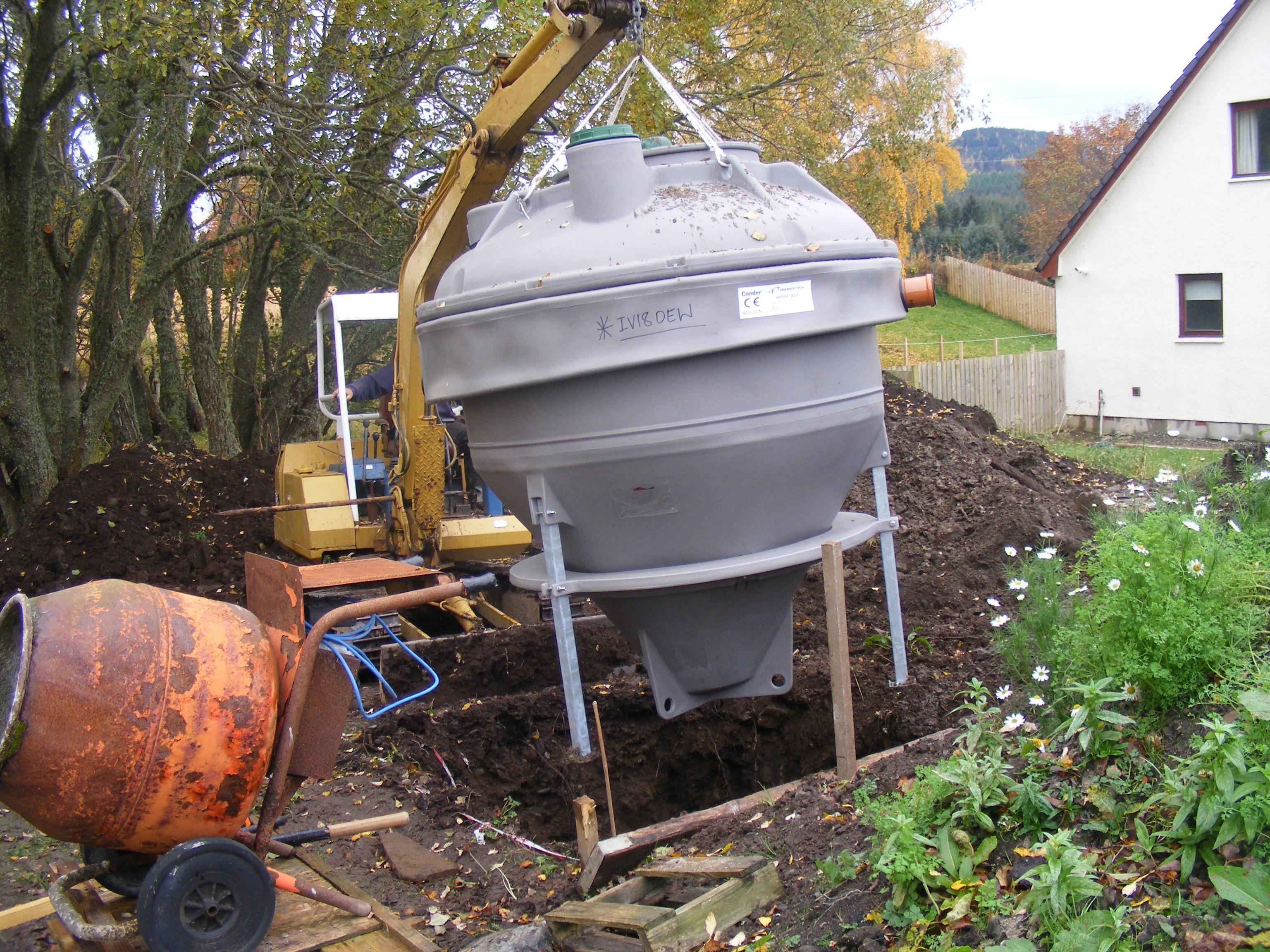
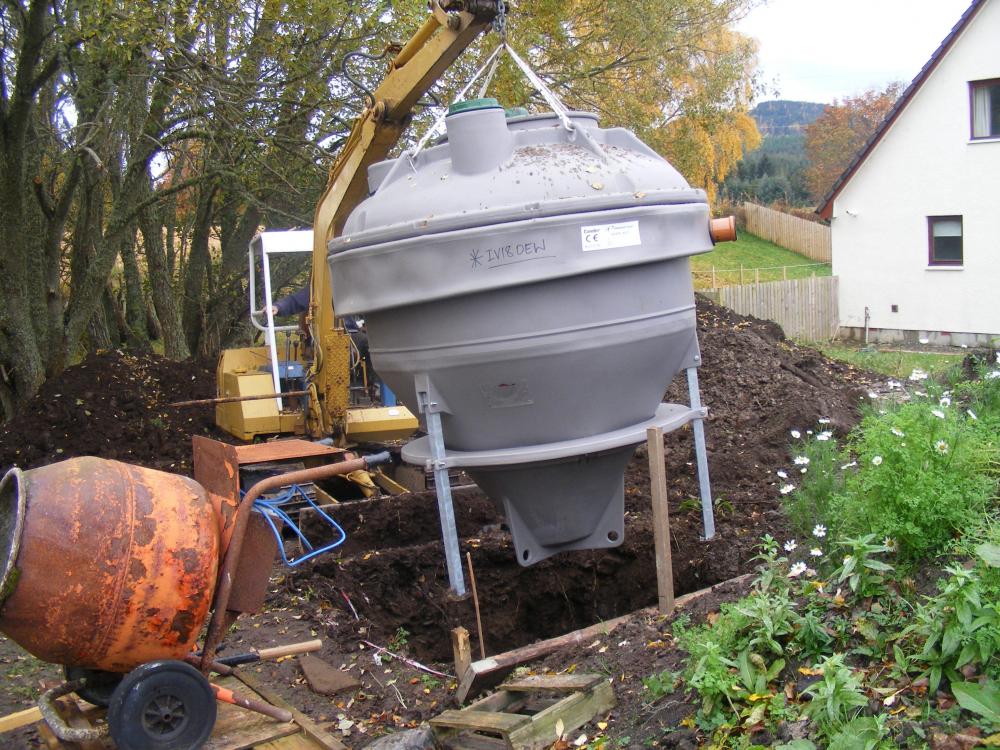
The Conder has legs, and a "ring" round the bottom. When in the hole, you have to concrete it up to at least the level of that ring to anchor it down.
-
Backup gas boiler: outside the airtight envelope? combi?
ProDave replied to joth's topic in General Alternative Energy Issues
The cheap antifreeze / inhibitor I bought from Screwfix at 25% mix is rated to -10. It's what I use to my outside ASHP. Agreed a frost stat is probably a good idea but it will probably never come on. -
Look at the Conder as well, I chose that because it is slightly easier to concrete in than the Biopure. I think that is also available with an inbuilt pumping system. Re the floatation issue. That is only an issue when you have it pumped out. In normal use it remains full of "stuff". At our last house we were badly advised and that has a septic tank set in pea gravel. That is okay as long as you only ever get it pumped out in summer after a long dry spell when the water table is low, and them immediately refill it with water. That has been done like that every 2 years without problem.
-
I have not heard of the concrete one. Any details? I imagine the extra weight makes install a little harder? We went for the Conder, concreted into it's hole because of our high water table. Very similar to the Biopure and also based on the air blower principle
-
Backup gas boiler: outside the airtight envelope? combi?
ProDave replied to joth's topic in General Alternative Energy Issues
How are you heating the house? The PV won't give enough for that for a good part of the winter. Frost prevention should not be an issue. For a start it will have inhibitor in the water which contains atifrfeeze. But freezing inside an attached garage just is not going to happen. I have an attached garage with the walls insulated to the same standard as the house, but let down by the "insulated" roller garage door. In spite of that obvious massive heat leak, and the fact there is no heating at all in the garage, the inside temperature has not dropped below 3 degrees even when it went down to -15 one night. -
There is something nice about having some of your energy use generated by free renewable means. But without any FIT to subsidise it, it has to be cost effective. Here in the Highlands, I am expecting my system to have repaid it's capital cost in about 6 years. Any longer than that and it's viability is in serious question. Once the capital outlay has been repaid it is free electricity for as long as the panels last, accepting you might have to replace the inverter if it fails.
-
That to me seems what SHOULD be the normal price now to make it viable without any FIT. I am sure some of the MCS installers are hanging on to the higher prices in a forlorn hope.
-
The short answer is I don't know. A lot of the previous units like immersun have gone by the way. A quick search on enay suggests this is probably the current choice https://www.ebay.co.uk/sch/i.html?_odkw=solar+immersion&_osacat=0&_from=R40&_trksid=p2045573.m570.l1313.TR5.TRC2.A0.H0.Xsolar+immersion+controller.TRS0&_nkw=solar+immersion+controller&_sacat=0 By comparison the parts cost for mine was about £50 and I enjoyed building it, plus I like to know exactly how things work. I have in the back of my mind that later on I will expand the same unit to control battery charging and usage when I eventually add batteries to the system, then I can make the choice when to use surplus to charge the batteries and when to use the surplus to heat hot water.
-
Probably not. Have a look at the code given in post #1 of this thread, it's posted as a text file so you should be able to open it in any text editor. If it all looks like giberish then probably not. The Ardunio programming language is based largely on the C programming language. You would also need some electronics skills to put the hardware together.
-
Today was a nice sunny day. Something that has been in very short supply up here for the last couple of weeks. So coupled with my other work on the PV system, I also did a bit more tweaking of the PV diverter software. I have corrected the small calibration error that was allowing some to export even when the diverter was working. I also tweaked the increment / decrement function, adding an element of proportional control to speed up response to step changes in house load or generation output. Now it ramps up or down the immersion heater load factor faster if there is a big excess (or shortage) of generation, but makes smaller adjustments if the difference is only small. Being the first decent day for some time I noticed 2 things. Firstly now the sun is higher and generation higher as well, it is perfectly possible to be running the immersion heater at 100% and still be exporting some power. And secondly by 2PM it seemed to be exporting a lot while still showing 100% to the immersion heater. It turned out the thermostat in the immersion had cut out and the tank was not accepting any more heat. It seems it's maximum temperature is only 55 degrees, so I am now looking for a replacement thermostat that can go somewhat higher (see separate thread)
-
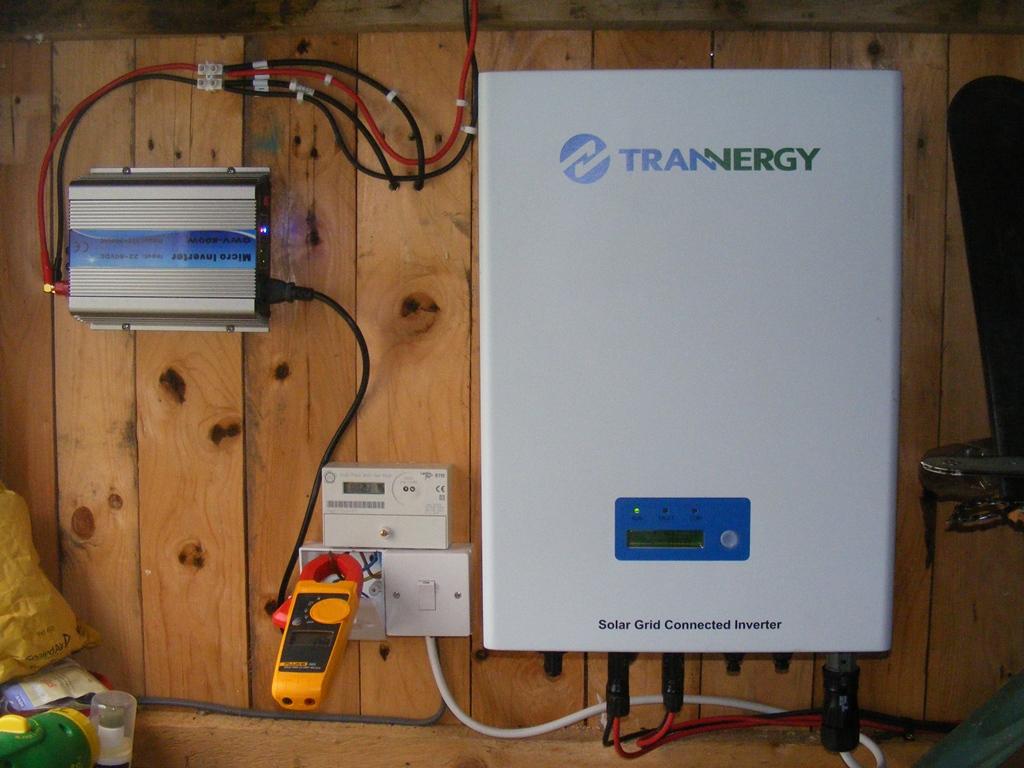
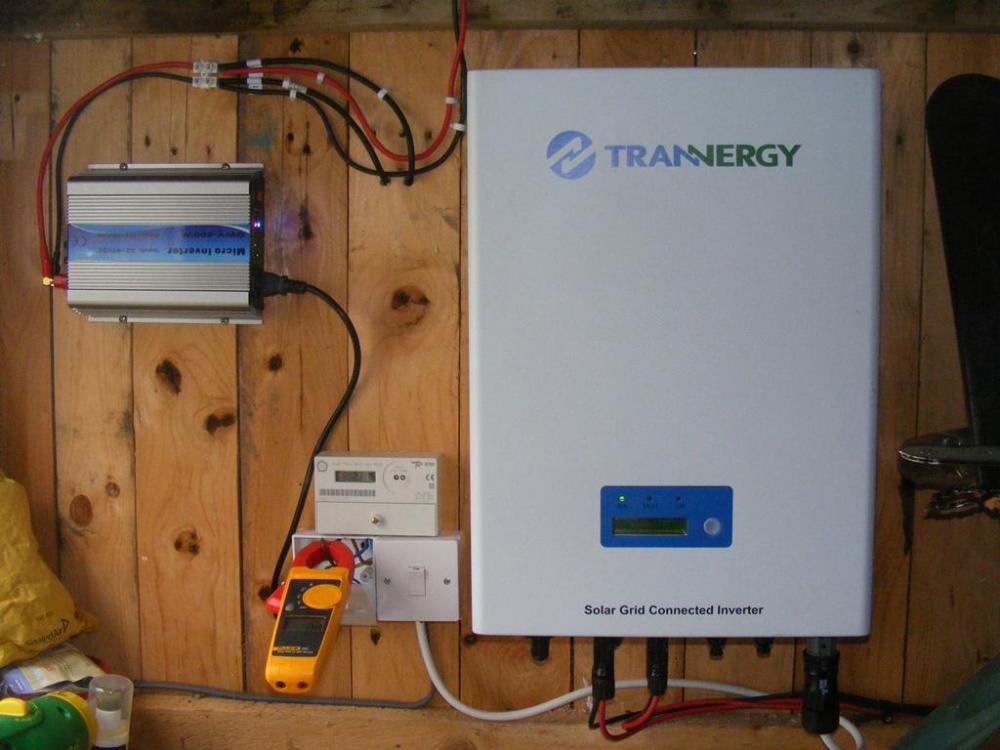
Today the Chinese inverter arrived. I think that is a record for an ebay purchase from China, getting here in just 9 days. So of course today's job was to install it in the shed with it's big brother. I have still got the clamp meter on there to assess it's performance, it only has the most basic of a display. So far it is looking good. It was mid morning before I got it connected and I was then getting 150W from the E facing panel, even though the sun was well on it's way towards south. And this afternoon as it is moving round to the west, I have seen up to 200W from that panel Sadly the sunny day has become cloudy and somewhat hazy so that's probably it's peak for today. But it shows the principle that these 2 otherwise spare panels should add some useful extra generation at the ends of the day.
-
My Telford UVC came fitted with a Thermowatt immersion heater. It is the type where the immersion element has 2 spade terminals, and when you slide the thermostat into the pocket, it has 2 matching connectors that plug onto the immersion element pins. The "problem" with it, is even at it's maximum setting, the thermostat switches off at 55 degrees. I would like it to be able to heat a bit hotter than that, say to 70 degrees? So I am looking for replacements. There is this one that looks like it will fit but no min and max temperature quoted. https://www.ebay.co.uk/itm/323292091126 I have found this one, that states it is adjustable up to 70 degrees (with the safety cut out fixed at 80 degrees) https://www.ebay.co.uk/itm/202623763800?ViewItem=&item=202623763800 But that one is more expensive Questions: Are this type all the same, i.e will one make of "plug on" thermostat fit another make of immersion heater? If not neither of these will do as neither are Thermowatt. Is it imperative that I stick to this type of immersion heater? I guess the answer is yes as these have a 2 pole safety cut out presumably that extra safety is a requirement for an UVC? If not I might be just as well changing the whole immersion heater for one with a "normal" single pole thermostat and cut out? To summarise what I want is to change the thermostat for one that will work to a higher temperature, for minimum cost.