
ProDave
-
Posts
30678 -
Joined
-
Last visited
-
Days Won
424
Everything posted by ProDave
-
 First look around for hauliers that will move one for you. Up here it is a bit of a closed shop, and the only 2 caravan dealers near here will only transport what they are buying or selling, claiming that is all they are insured for. On our first build when we sold the 'van privately, the buyer had to get a haulier from about 50 miles away as the nearest one that would quote for the job.
 -
I keep hearing you must use those special twisted galvanised nails for joist hangers and not screws. I seem to remember it was something BC looked at on an early visit. And they expect every hole to have a nail in it.
-
Get an electrician to test it and confirm that is indeed the cable you think. Then if the cable is good I would use it by getting an outside 13A socket connected to the end of it. But you would need to change the B40 MCB for a B32 or smaller if just feeding a socket. Was there a shed there before that a previous owner took down? If so and if he was responsible you would find the SWA disconnected inside that housing so it is safe, and a note saying where the other end is would be a real bonus (but unlikely)
-
At 200mm spacing, you might sort cable holes etc by pre drilling, but best of luck swinging a hammer to drive the twisted nails into the joist at the joist hangers. 150mm gap is not a lot of room to swing a hammer.
-
Here is another angle to it. A fence that tall close to the road would have needed planning permission. Did they apply? Did you object? If it's been there without PP for a number of years and nobody objected it is likely beyond the time limit for enforcement. When I was going through planning for my plot visibility was raised. At one point the planners were asking me to "demonstrate control over the visibility splay" which of course I could not do. I then found a recent nearby planning without that condition so I queried it and got planning without having to show control over the visibility splay. During my conversation with someone at highways about this I said "so what if my neighbour erects a tall fence" and his reply was contact us immediately and we will come and enforce your neighbour to maintain the required visibility. So have you actually asked if that fence close to thee highway does have pp? and if not can they enforce it's removal. If it IS on your land, why did you not take it down as soon as they put it there?
-
Most terrace houses seem to span joists front to back, which often makes the span longer but avoids the party wall issued. Your front room is pretty square at just under 6 metres so the span of that is the same whichever way you go. so size jousts for 6 metre span and go front to back with a joist supporting over the door opening from that front room. But I suspect whatever you choose you are looking at 300mm deep joists for that span. Our posi joists for 5 metre span are 300mm deep.
-
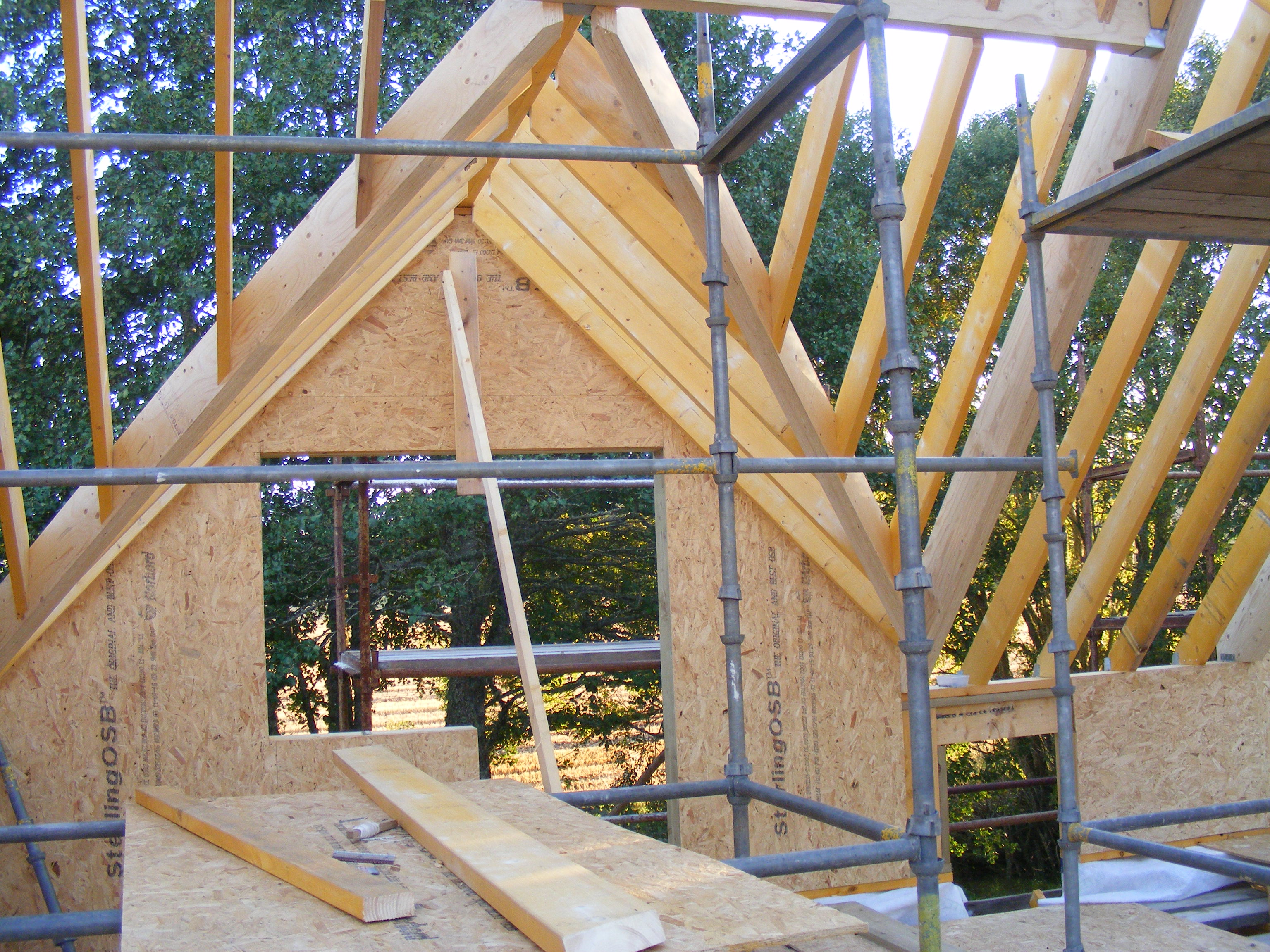
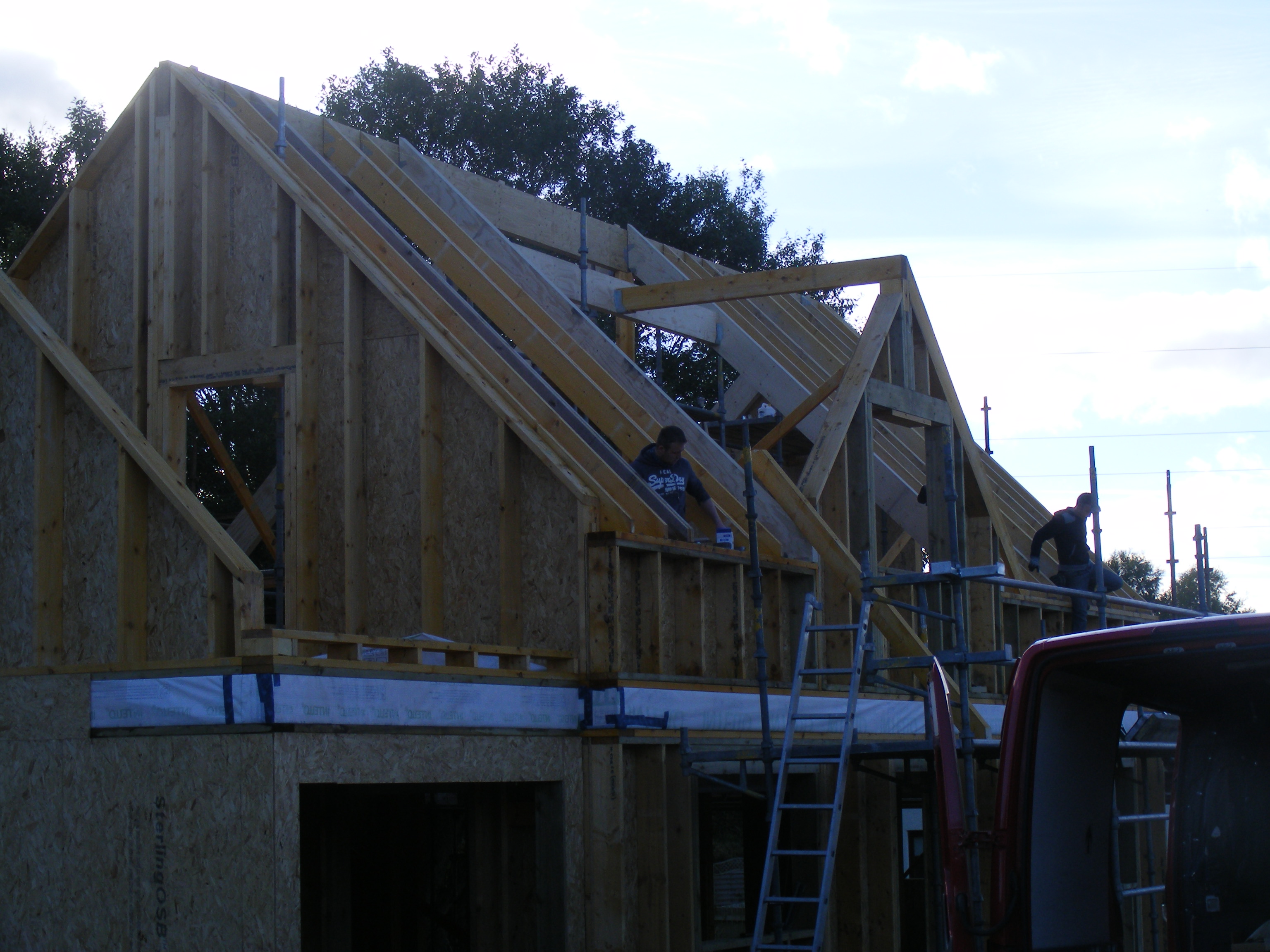
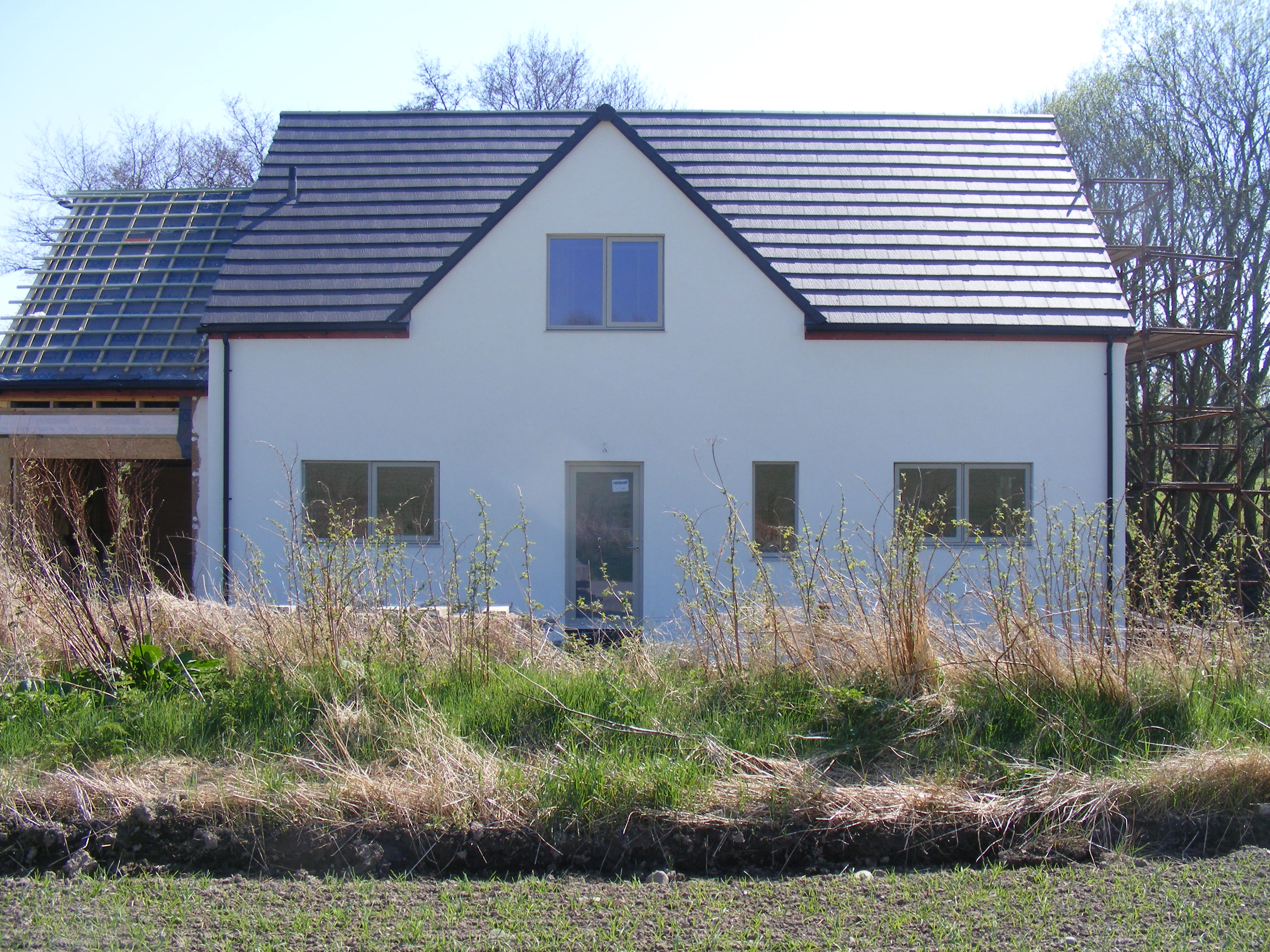
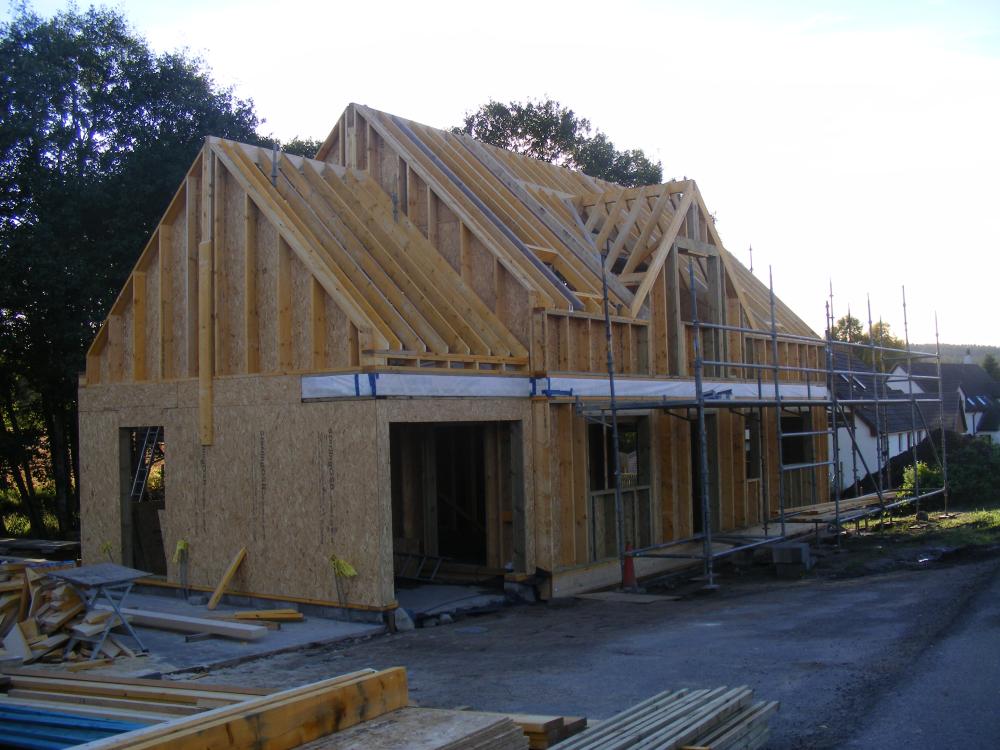
Each piece of the roof is a single bit of timber (or engineered joist) assembled on site and cut to final length on site. so the roof is assembled one stick at a time all by hand. The original roof will almost certainly be like that but supported on purlins rather than the ridge beam. In our case the ridge beam is a timber Kerto beam, think an overgrown bit of plywood. Stronger for a given size than a Glue Laminated beam. some pictures of our roof being assembled: The last picture in particular, you can see the big ridge beam, the individually cut rafters and how a dormer was formed (one on the front, 2 on the rear) In our case the 11 metre long ridge beam was lifted using a digger with a boom extender. the rest were all done by hand. At your size it should all be possible by hand.
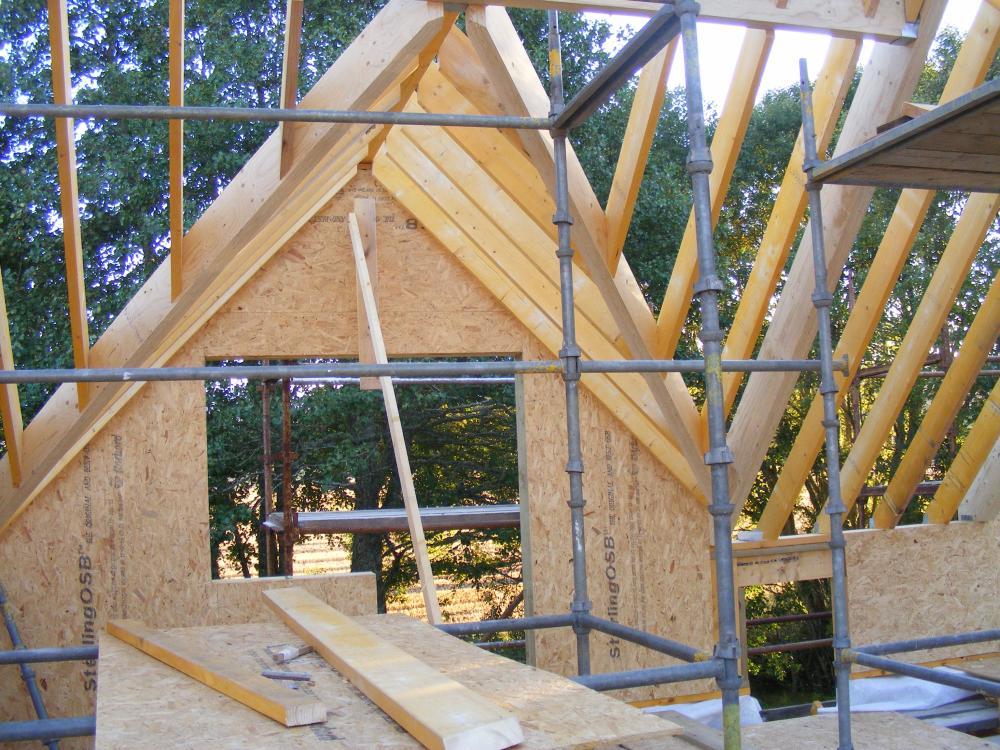
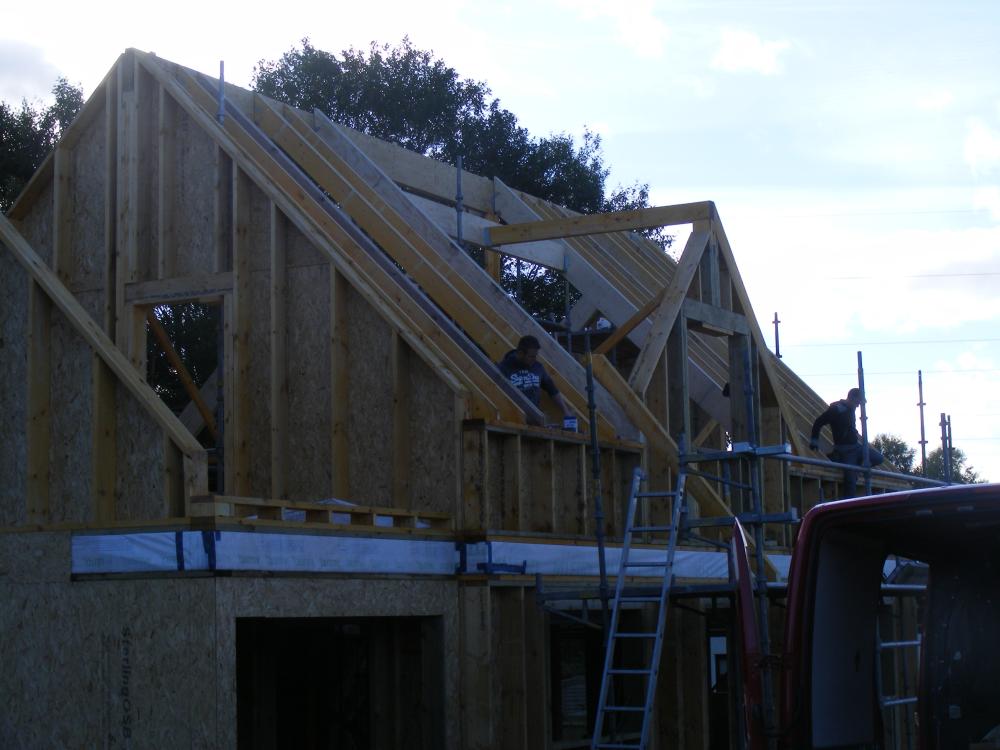
-
Strong argument for cut roof and ridge beam separate to floor joists. Everything can be lifted one at a time by hand at those sizes.
-
Draw it on paper. It makes no difference. You either set the rafters high and insulate below them, or set them lower and insulate above them. The thickness from plasterboard inside to surface of tiles on the outside is the same. If you want minimum thickness, which it sounds like you do, then a hybrid roof, some insulation above the rafters and full fill insulation between the rafters. That is actually what we have. It just needs a little more design.
-
Pause right there. For room in roof, I 100% recommend a warm roof construction (insulation above rafters) and air tightness layer following the roof line of the whole house, so even the eaves space that may not be part of the rooms upstairs is air tight and warm. This is SO much easier to detail and get right and so much better without lots of cold parts of loft to be separated from the warm rooms. This also then makes it easy and desirable to separate the function of floor joists and roof structure. We have posi joists for the floor upstairs and then a cut roof hung from a big ridge beam. So not only is all the roof space insulated and air tight, there are no joist members intruding, so you have a completely open loft area to do as you like in terms of what is accommodation and what is storage and how they work together.
-
Who can dig the trench for my new electrical supply?
ProDave replied to Bancroft's topic in Electrics - Other
I checked that and was told that was only if unfenced. If your boundary is the highway and you have a fence on your boundary, that does not apply. So I erected a fence, did my work on my side of the fence right next to the boundary and then took the fence down. -
What could possibly go wrong?
-
Airtightness progress, this is a lot of work...
ProDave replied to Post and beam's topic in Heat Insulation
This is why my advice at design stage is build a house with a warm roof and all insulation and air tightness following the roof line. Lovely warm loft and no bother with lots and lots of detailed air tightness at the junction between a warm room ceiling and a cold loft above it. -
The air being expelled will contain moisture, and will have been cooled somewhat by the heat exchanger, but it is still likely to be warmer than the air in the loft. so unless the pipe runs in the loft are impecably and well insulated there is scope for the moisture in the air in them to condense. Mine is all contained within a warm space. I get the opposite problem, in spite of being insulated, in very cold weather, the incoming air is very cold and occasionally I get condensation on the outside of the supply pipe passing through the warm space.
-
I would question if the flow rates are adequate or is the MVHR unit in a cold place like a loft? Only 5 years uses but ours is still looking clean.
-
The research evidence on security alarms
ProDave replied to Adsibob's topic in Networks, AV, Security & Automation
I had similar with car insurance. When I built the garage at our house I declared to my insurance on renewal the car was parked in a garage. THEN they told me the reduction in the premium was £0. I then asked what if one night I left it on the drive and it was nicked. Sorry not covered. Needless to say it is declared to the insurance now as stored on the driveway overnight. Madness. -
This is not "advice" but mine (different make design) came to a dead stop against a flimsy plastic pip and maxed out at barely 60 degrees. Turning it a "little" harder the pip broke off. I then turned it further a little each day noting now hot the cylinder got before it cut off. I stopped at 75 degrees. If you try anything similar, entirely at your own decision and risk.
-
The quality of work is going down hill.
-
I think the more important question might be what is above the ceiling? What is making that one of a set of identical lamp holders get hotter than the rest? Is something blocking the ventilation holes? Is there insulation there? Is there a hot pipe running through that section of ceiling meaning it is a much warmer space? etc etc.
-
Extralite metal roofing ridge tile query/concern
ProDave replied to sproutdreamer's topic in Roofing, Tiling & Slating
Post some pictures including the areas of concern. -
Like when I energise a new electrical install I say "time for the smoke test"
-
How to get draw cord or wire down underground 25mm flexible conduit
ProDave replied to Spinny's topic in Electrics - Other
I used flexible I think it was 70mm twin wall. If it is bought as conduit, the inner wall is a lot smoother than the outer corrugated wall, and it comes with a draw cord installed already, but that is usually just a bit of fishing line, so first use that to draw a decent bit of rope through before burying it. -
I would go for outline planning, that is what most buyers of a plot would expect. You can include as much or as little detail as you want, but the drawings can be a lot less detailed than full planning so quite possible to DIY if you want to. From the fees point of view a normal planning application looks far better value than any pre app advice which we know from this forum is likely to be inaccurate an non binding any way, i.e. a waste of time and money.
-
How to get draw cord or wire down underground 25mm flexible conduit
ProDave replied to Spinny's topic in Electrics - Other
There is your answer. the conduit is probably crushed by a stone somewhere and sadly useless. For anyone reading, only use a much larger smooth sided rigid conduit. 50mm absolute minimum. -
4 consumer units on a single supply
ProDave replied to JonChas's topic in Consumer Units, RCDs, MCBOs
Henley blocks and your bank of switch fuses need to be withing 3 metres of the suppliers meter. Simple.