


MikeGrahamT21
-
Posts
1919 -
Joined
-
Last visited
-
Days Won
2
Everything posted by MikeGrahamT21
-
Is there a particular reason for not wanting external wall insulation? You stand to lose an awful lot of thermal mass capacity which you may regret in the coming hotter years.
-
The mystical parge...and how do I do this bit?
MikeGrahamT21 replied to mvincentd's topic in Plastering & Rendering
Having had a room done with dot and dab on celcon blocks, I can only recommend not doing it!! If I knew what I know now, it would be wet plastered, yes its more work for the plasterer and will cost more and leave a bit more mess, but its worth it in the long run. I now have infront of me much drilling and many cans of expanding foam to try and salvage it, as heat loss is immense, despite having enough insulation to achieve around 0.18U -
how to patch up a 2cm line of plaster?
MikeGrahamT21 replied to Tin Soldier's topic in Plastering & Rendering
British Gypsum Easifill - its a jointing compound which has been spoken off, very easy to get a smooth finish and sands well, but be prepared for a LOT of dust -
Blauberg
MikeGrahamT21 replied to MikeGrahamT21's topic in Mechanical Ventilation with Heat Recovery (MVHR)
Looks like they use the decentralised systems that blauberg do. I've not found anything negative about their systems, was hoping there would be some reviews on Amazon as they sell on there, but nothing so far. The only downside I can see is their units don't do automatic summer bypass, its a manual process, thats the only negative i've come across so far. Now I have a spec, i can look into other units, originally the one i was going to get was the Brookvent aircycle 1.2, which seems to have all the features we want, so I may have to go hybrid and pick the best components from each supplier. -
Blauberg
MikeGrahamT21 replied to MikeGrahamT21's topic in Mechanical Ventilation with Heat Recovery (MVHR)
Had a kit list from them now, and more importantly they did a design and airflow design for the project, free of charge, which i've been after for a long time! Their units are SAP Q listed, which appears to be one of the most important things to have, but would like some real life experience to back it all up. -
Is our winter generation amount about right?
MikeGrahamT21 replied to MikeGrahamT21's topic in Photovoltaics (PV)
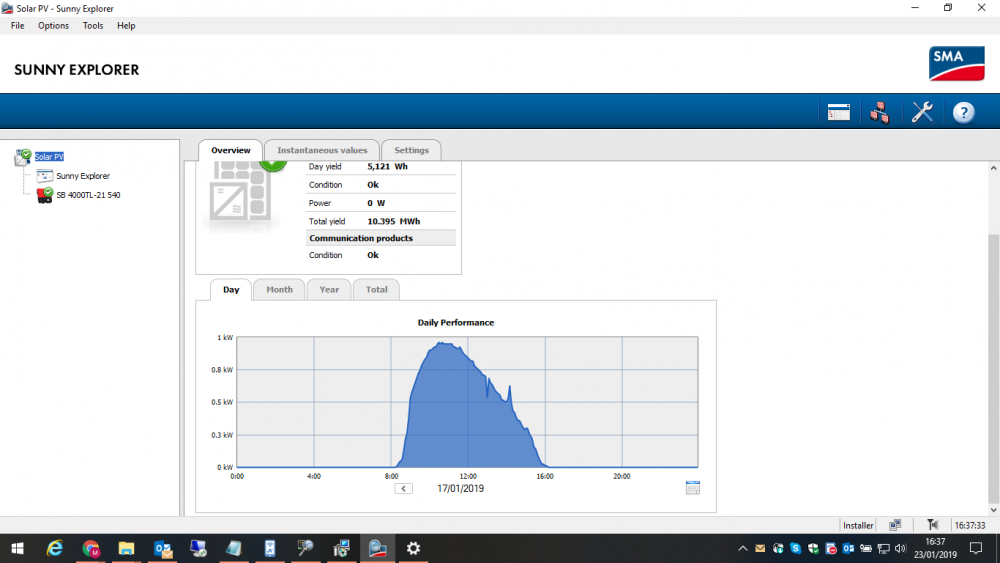
So this has been the first day with full sunshine from morning til night, Ive kept the global optitrac switched off since Monday. Looking at the chart we lose a little first thing and last thing, but everything in between is better. Last time we had nearly as good generation was Jan 2017, but the temperature was higher that day, we did 5.0kwh, today just done a 5.12kwh which is the highest january amount we've ever recorded. So I don't think we are going to see huge increases, but for us this value should have always been set to off, and even with 2 more years under their belts the panels have put out more today than they've ever done in the month of january. I've also noted the power curve is different with optitrac turned off, its smoother. This is todays with it off. You can also see the drop off morning and night. This is before I switched it off, the curve is a lot less smooth, but doesn't drop off quite as sharp first and last thing. Ultimately, its a shame optitrac can't be scheduled to switch on at certain times of the day, as first and last thing would gain us a tiny bit more, but overall, i think off is best for us, and i'll continue to monitor as the months progress. It is almost impossible to directly compare, since no 2 days are the same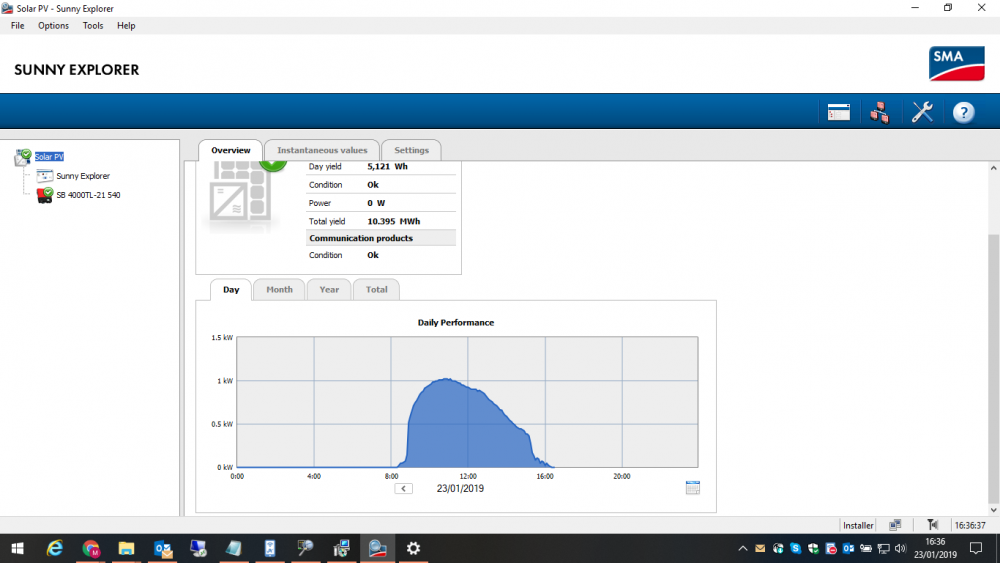
-
Is our winter generation amount about right?
MikeGrahamT21 replied to MikeGrahamT21's topic in Photovoltaics (PV)
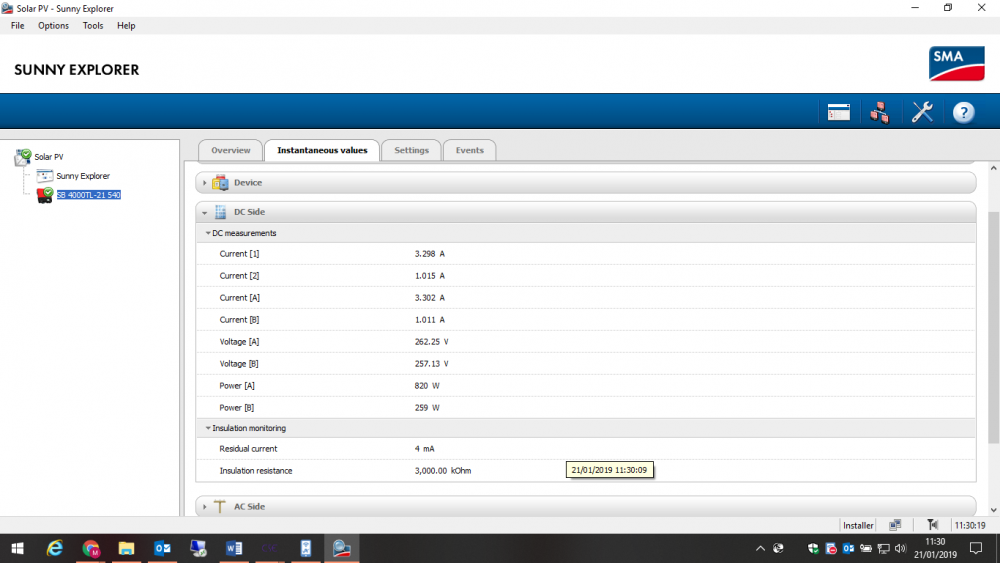
Yeah I can't figure out what Current 1 and A are, as they are almost the same, just slightly different, unless its Current (DC) and Current (AC) i.e. showing the inverter losses. I've disabled the Optitrac Global Peak functionality, as we have absolutely no shading what-so-ever, and according to internet sources this can reduce performance by as much as 2%, might not sound like much but thats around 70kwh over the year, which is a lot when its a simple setting. Still not had a reply back from SMA yet about SD card type, though I suspect its 1st gen SD, once I get one of those i'll do the firmware upgrade on the unit and see whats better about it, wish they would include release notes, they used to do -
Is our winter generation amount about right?
MikeGrahamT21 replied to MikeGrahamT21's topic in Photovoltaics (PV)
This was when the sun came out at 11.30 today: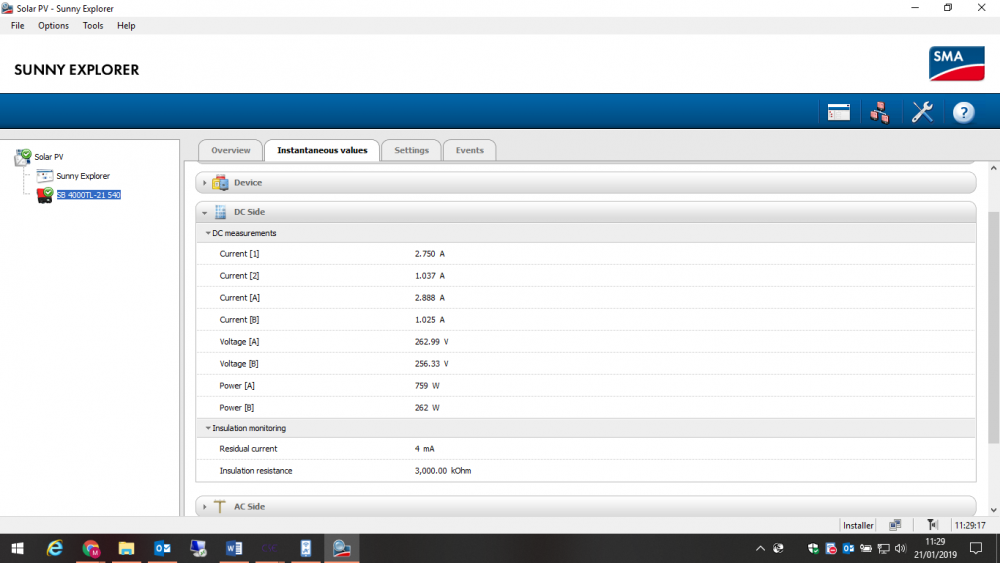
-
Hi, I'm doing a bit of forward thinking for when the bathroom eventually gets ripped out again, previously i only replaced the rotten timbers which was the most important thing at the time. Currently have an underground connection (rather than through wall) for the 110mm soil, with it being a 60's house this is a clay pipe, which current has a 110mm flexible soil pipe shoved into it, and then this has another one of the same flexible connectors in to bring it to floor level. Obviously the flexy connectors have many ridges in them, which just seems a really bad thing for flow and the potential of blockages. Going out of the wall and capping off the underground would be the easy option for sure, but it would lead to more potential of air leakage, and thermal bridging, so the underground is preferable. I'm thinking to get a clay to plastic connector, and use some solid 110mm pipe as far as I can, ideally this would be up to floor level, but this may not be possible as if I remember right, there is a joist just where the toilet soil pipe lands, so there is yet another flexible connector into the other two flexible connectors to get around this issue!! Any ideas? Mike
-
Is our winter generation amount about right?
MikeGrahamT21 replied to MikeGrahamT21's topic in Photovoltaics (PV)
Since I darent move them, I’ve nothing to lose asking British gas for special permission and see what they say, at least that way we can’t be in the wrong. will monitor pv next week and get those figures which were asked for -
Is our winter generation amount about right?
MikeGrahamT21 replied to MikeGrahamT21's topic in Photovoltaics (PV)
Oddly the guy who came was from E.On and we are with British Gas for the FIT payments, so no idea how that works. You're right, there is no data regarding orientation on the sheet, but the company i contacted said straight away, you can't do it, and i can't see why they wouldn't have wanted to, as its free money for them. -
Is our winter generation amount about right?
MikeGrahamT21 replied to MikeGrahamT21's topic in Photovoltaics (PV)
Its a bit risky though, we would stand to lose around £8000 if it got found out. We did have a guy come to the house a year or so ago to read the meter, and wouldn't they be able to look on google maps to see the different locations? The whole issue has actually stopped us from installing a dormer extension on our bungalow, which we weren't very happy about. Apparently, you can ask, but they are very black and white about it. -
Is our winter generation amount about right?
MikeGrahamT21 replied to MikeGrahamT21's topic in Photovoltaics (PV)
I've been monitoring the PV array today, albeit on a pretty dull day, and have noticed that the Power from A and B are always almost identical. When i was up in the loft with the front off of the inverter, I checked that A goes to one side and B goes to the other and everything checked out, but I can't really think of another reason why the power levels would be the same. I'm going to keep an eye on it again next week and see if its ever much different, for example when the sun is on one side and not the other.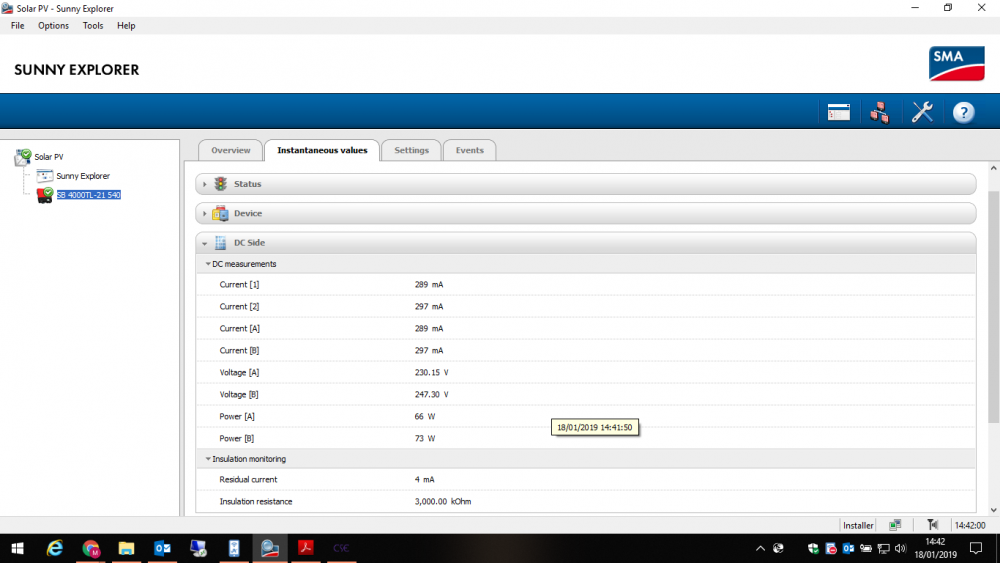
-
Is our winter generation amount about right?
MikeGrahamT21 replied to MikeGrahamT21's topic in Photovoltaics (PV)
So much for upgrading the firmware, it doesn't like SDHC cards! ? One other thing which has cropped up recently was something i'd planned to do from the start, and that was to move half of the panels to a south facing roof which we didn't have at the time of install but we do now. I got in touch with a Solar PV company who are local and they said they can do it, but we would have to re-apply for FIT, which is obviously a big no no, does anyone here know any different? -
Is our winter generation amount about right?
MikeGrahamT21 replied to MikeGrahamT21's topic in Photovoltaics (PV)
Yeah we had a record breaker last year too, which initially made me think the dirt perhaps didn't make any difference (which is what several posts on the internet state) -
Is our winter generation amount about right?
MikeGrahamT21 replied to MikeGrahamT21's topic in Photovoltaics (PV)
I'll likely consider it then. We also have our terrestrial aerial directly over 1 of the panels, and the birds like to sit on it and do what birds do, so 1 panel on the east side is always worse than the rest. Going to get an offset pole to mount the aerial away from the panels which I will do before they get a spring clean, might be a worthwhile investment even if its just as a one off, and i'll see how much difference it makes, they've had nothing done since install september 2015. -
Is our winter generation amount about right?
MikeGrahamT21 replied to MikeGrahamT21's topic in Photovoltaics (PV)
Thats another thing I want to ask about. There is a local solar company who I contacted as they were advertising extended warranty for the SMA inverters (though since found out I can do this myself on SMA's site, which i'll be doing), and they do a maintenance package as a one off full inspection and clean for £110+VAT. Since we are getting ever more concerned over the original installation (company went bust) and we have no insurance backed warranty, as they decided not to bother paying it and registering it before they went bust, it seems reasonable to get it checked over, and we have had a few niggles over the years such as a tripping consumer unit, in october and november (no idea why its only these two months). Is the cleaning worth it? Plenty of wood burners round here, and the velux windows are dirty, so i can't see the solar panels not being, without the cleaning inspection only is £60+VAT. -
Is our winter generation amount about right?
MikeGrahamT21 replied to MikeGrahamT21's topic in Photovoltaics (PV)
Yeah, I thought 1.5KW sounded very optimistic too. Annoyingly today the clouds are out in force, while i was out yesterday it was a perfect day, in which we generated 4.5kWh. I've got a firmware upgrade to do on the inverter today, no idea what it fixes as they haven't included release notes, after i've done that i'll see what data I can drag from Sunny Explorer. T21 doesn't have any gliding significance, its just the first three letters from my car registration plate! Not very imaginative i know... -
Is our winter generation amount about right?
MikeGrahamT21 replied to MikeGrahamT21's topic in Photovoltaics (PV)
It does indeed, I’ll get those figures off and post them. Shame I’m not in today as it’s a lovely day. Also worth noting there’s no trees or other high objects nearby to shade us at any point in the day. -
Hi we have an east west split 50/50, 2kwp on each, and a sunnyboy string inverter with each side of the roof on a different circuit. Now our generation in December and January has never been great, usually around 50kwh each month, and I’ve never really thought there was anything wrong with that, however my suspicions were raised when speaking to a battery supplier the other day. the west side is main concern, it faces slightly more north than south and roof pitch is around 35degrees, so less than ideal at this time of year id say. Yesterday afternoon we had full sun in the back, around 2pm, I was speaking to the battery person and he said you must be generating about 1.5kw (which I thought at the time was a bit optimistic), when in fact we were generating 220w. Does this sound about right. December and January we peak at around 1kw of power at best, generally in the morning. if this doesn’t seem right I’m thinking of getting a local company out to inspect it all (our installers went bust and ‘forgot’ to register our insurance based warranty) and give them a clean at the same time (hardly much more money over inspection alone). what do people think?? regards mike
-
Hi has anyone used blauberg for their MVHR unit? Came across them whilst looking for an activated carbon nox box, theirs is well priced at £200. Their MVHR units look good on paper, but wondering how they are in real life? regards mike
-
They do look pretty cool, plenty of sensors on board too. Be wary though, POE switching is expensive and power hungry!
-
Which stand-alone air purifier.
MikeGrahamT21 replied to epsilonGreedy's topic in General Self Build & DIY Discussion
Any of the Blueair Range, these are rated the best air purifiers in the world, and filter down to 0.1micron, much smaller than most HEPA which do to 0.3micron. We have two Blue Pure 411's which are classed as entry level, but as far as we can tell do a good job (hard to really know), and also come with a small amount of carbon to absorb smells/gasses: https://www.breathingspace.co.uk/air-purifiers-c1/blueair-blue-pure-411-air-purifier-with-combination-filter-p232 Obviously the more expensive units with SmokeStop are better for getting rid of smells and gasses, all depends how much you want to spend. EDIT: Just changed the filters for the first time today, done every 6 months, and my god were the old filters black! New filters are £20 each, so not stupidly expensive.- 1 reply
-
- 1
-

-
mvhr and plastering
MikeGrahamT21 replied to j_s's topic in Mechanical Ventilation with Heat Recovery (MVHR)
Sounds sensible if you want to get the MVHR turned back on ASAP, longer you can leave it the better though. Dehumidifiers and heaters lower relative humidity causing the plaster to give off its moisture too quickly, and in turn weakening it. MVHR will have the same effect, especially at this time of year. Best thing to do is just leave a window slightly open in the rooms being plastered, this way you can guarantee a slow dry, and the air temperature will also be reduced. -
mvhr and plastering
MikeGrahamT21 replied to j_s's topic in Mechanical Ventilation with Heat Recovery (MVHR)
Leave it a couple of days until the plaster is visibly dry, remember the slower the plaster dries the stronger it will be, and you want it to last a lifetime ideally, with the heating on at this time of year it won't take more than a couple of days. Also gives chance for plaster dust to settle, and you to clean it up, as its very fine, will clog the filters up well.


