LnP
-
Posts
386 -
Joined
-
Last visited
-
Days Won
1
Everything posted by LnP
-
Not caused by renewables or lack of inertia.... "The ultimate cause of the peninsular electrical zero on April 28th was a phenomenon of overvoltages in the form of a "chain reaction" in which high voltages cause generation disconnections, which in turn causes new increases in voltage and thus new disconnections, and so on. This phenomenon was preceded by large amplitude voltage variations in short periods of time throughout the morning." "Therefore, it is highly probable that, in a scenario of greater inertia and therefore a slowing down of the frequency drop, the "surge wave" would have caused the "cascade effect" in any case, causing a significant part of the generation to drop and thus overcoming the response capacity of the underfrequency protections.." Spanish_blackout_report_1750239802.pdf
-
Good to know. Thanks for sharing. And this PCC is issued by an FRCS, so a member of one of the approved professional bodies.
-
The professional requirements are listed under 6.7.4 here. But maybe the people CMLC sends out are members of one of these professional bodies?
-
@nod your screenshot with PCC at the top suggests it's a Professional Consultant Certificate and not a Structural Warranty. The post linked below discussed the difference and that a PCC might not be accepted by a lender, which if it were true would make the house hard to sell. On the other hand, there are comments in that thread that some lenders don't require either. I'm sure you looked into this. What are your thoughts?
-
I'm at a similar point with quotes from four timber frame companies but still wrestling with planning. I got quotes from Potton, Frame Technologies, Fleming and MBC. They all quote on different scopes so I made myself a spreadsheet to make sure I had a number against every element. Potton were the cheapest, Frame Technologies were +21%, Fleming were + 23% and MBC were + 35%. I got a price from MBC for their proprietary insulated raft foundation but did't include that in the cost comparison - I'm sure it's a high performing foundation but I wasn't sure it was value for money. Some of them offer an insulation package which includes the slab so I accounted for that in the comparison. If I include the MBC insulated slab foundation in the comparison and assume a strip foundation for the others at half the price, the numbers come out still with Potton the cheapest, Frame Technologies +17%, Fleming +19% and MBC +45%. Another aspect to consider is what professional services they can provide - SAP calculation, BR drawings, `CDM principal designer etc. As always, the cheapest price might not be the best value. @Nickfromwales is right, with MBC you have fewer interfaces to manage, and there's value in that.
-
It's not really a survey, although that's what they call it. It's a consultation. It's asking for input on several of the concerns about BNG which have been raised on here, for example getting rid of the self build exemption, which LAs are implementing via an onerous unilateral undertaking, and replacing it with an exemption based on the size of the plot - they propose 0.1 ha. I support that, but think the threshold needs to be more than 0.1 ha. Definitely worth reading through and responding.
-
BNG de minimis exemption for self build in garden
LnP replied to Fi and J's topic in Planning Permission
So you're splitting off a building plot from the garden of an existing house and leaving the existing house. The question is simply whether the area habitat which will be lost when you build the new house will be less than 25 m2 . Crazy paving is not habitat and neither is unvegitated land, but the overgrown bushes might be. If you're going to make a de minimis claim, I think your LA is probably going to want that to be supported by a report from a competent ecologist. I suggest either getting a recommendation from an independent planning consultant or phoning round a few and discussing you case with them. If you're a bit marginal on the <25 m2 , you might get a feel for whether a bit of bush clearance might help. -
BNG de minimis exemption for self build in garden
LnP replied to Fi and J's topic in Planning Permission
I'm no expert, but my understanding .... CIL and BNG are completely different obligations, but the link is that they are both enforced by the LA under section 106 of the 1990 Town & Country Planning Act. And the BNG UU explicitly states, "This Deed is a local land charge and shall be registered as such by the Council". And there's no CIL where I am. -
BNG de minimis exemption for self build in garden
LnP replied to Fi and J's topic in Planning Permission
No. The way it works is that you have to start by working out the "pre-development diversity value". If you've done work on the land since 30th January 2020, you have to go back to the diversity value before you did the work. It's in The Environment Act Schedule 14, Part 1, paragraph 6. I can imagine though that in some circumstances it might be difficult for the LA to establish how the land was, but you can expect them to look e.g. at historical Google Earth images. -
Principal Designer (BR & CDM) - should it be the architect?
LnP replied to Gibdog's topic in Self Build Insurance
Care to share some? -
BNG de minimis exemption for self build in garden
LnP replied to Fi and J's topic in Planning Permission
This is not correct in my experience. Where did you get this? Is there an LA doing it like this? Don't mean to sound rude, just curious. In my LA, and the Dorset one which was posted elsewhere on BH, when you sign the UU, you are entering into a covenant that you will be the first occupier and that you will not sell the house for 3 years from the date of your first occupation. This is enforced by the deed, i.e. the UU, being a local land charge and registered as such by the Council - you can't sell your house until either the LA remove the charge or it expires. Obviously this is a problem for lenders as if the owner defaults on the loan, they can't dispose of the house to recover their money. None of this is required by the regulations. It's regulatory over reach by the LAs. -
BNG de minimis exemption for self build in garden
LnP replied to Fi and J's topic in Planning Permission
There are several posts about this on here already. Google search Buildhub to find them. We're demolishing an existing building and the new build will be mostly either over the existing foot print or over ground which is unvegitated. The area habitat which will be affected is currently lawn and less than 25 m2 . We found an ecologist who wrote a report for us supporting a de minimis claim which we've included with our application. These judgements and answers to the questions you raised can be a bit subjective. Some ecologists are running BNG points banks and I can't help thinking they might be more inclined to support assessments where they can sell points, i.e. less interested in a de minimis claim. The ecologist we used wasn't doing that. He was recommended by our planning consultant. The report cost £200. We're keeping our fingers crossed the LA ecologist agrees. I'm wondering how long it will be until somebody notices that BNG for self builders is unjust and a mess and does something about it. -
Principal Designer (BR & CDM) - should it be the architect?
LnP replied to Gibdog's topic in Self Build Insurance
Face shields, masks, sun screen, tidy site, barriers around holes ... I have the feeling this thread has drifted back to CDM roles again. Like the OP, I'm struggling to understand the new Building Regs PD and PC roles. I've done some Googling to try and understand what's involved, but mostly what I've found is from RIBA and architects, who might not be interested in helping self builders find their own way. Is there any helpful guidance for self builders out there? -
I think you're talking about this Scottish Enterprise Plan. As a UK tax payer, I sincerely hope this doesn't happen. It's got as far as it has because of successful lobbying by vested fossil interests who promote hydrogen as an energy vector because they hope it will be their saviour. It will only happen with tax payer subsidies and it's a waste of electricity. The solution to the curtailment problem is not to downgrade the excess electricity to hydrogen, but as the excellent article by Justin Rowlatt points out, eliminate it by balancing the grid. The notion that burning green hydrogen makes any sense at all is missing the point that decarbonisation of energy requirements is most efficiently done by electrification - heat pumps, BEVs etc. The priority for large scale green hydrogen production should not be to waste it by burning it, but to use it for applications where there is no alternative like manufacturing ammonia or methanol. Now there's an idea I could get behind, a Scottish chemical industry with well paid jobs making fertiliser and chemicals from green hydrogen from Scottish off shore wind. It will still need subsidies but I'd rather put my tax payer money into that.
-
My planning consultant shared a BNG assessment report from an ecologist for a small garden plot, just 0.015 ha. The baseline area-based habitat score was 0.41 units and the proposed development eliminated all but 0.01 of those units. To replace the lost 0.40 and achieve the 10% net gain, they had to achieve a score of 0.45 units. There was a deficit of 0.43 units. Of these 0.12 units must be of other neutral grassland of medium distinctiveness and 0.29 must be of individual trees of medium distinctiveness. The deficit can be compensated on other off-site land owned by the client, or a financial contribution to off-site ecological enhancements. There are different places to go to buy credits, but if f you buy statutory credits, there is a "spatial risk multiplier" which doubles the number of units you need to buy. In this case it meant they would have had to buy 0.87 credits which would cost £36,540. There is the option to buy credits in the local market through a registered provider .... and to help you with your project, some ecologists are setting themselves up as registered providers with banks of credits .... which looks like a conflict of interest.
-
What next for heat pumps after BUS and MCS?
LnP replied to joth's topic in Environmental Building Politics
Most economists would agree with you, that a carbon tax would be the most efficient way to incentivise decarbonisation. But we would need strong leadership and political consensus for it to be accepted. Canada had one but there were lots of exemptions. It was unpopular. One of the first things Mark Carney did when he became prime minister in March was to abolish it. We do have an emissions trading scheme though, which requires industrial carbon emitters to surrender carbon credits. It's a carbon tax on natural gas and coal electricity generation ... but ironically, since we have a marginal cost pricing system for electricity, this increases the price we pay for all our electricity, including renewables ... which disincentivises heat pumps! Domestic gas boilers are outside the emissions trading scheme. -
@Daniel H I'm a bit confused by your post. Addressing BNG is just another one of the topics you need to address when you make your planning application. If you don't this, your application isn't complete. Your options are: claim the self build exemption, but be prepared to sign a unilateral undertaking not to sell your house for 3 years after completion, and pay the LA ~£1000 in legal fees; claim the de minimis exemption, if you meet the criteria, i.e. < 25 m2 area habitat and < 5 m linear habitat will be impacted; get an ecologist to do the assessment, but since you can't take credit for points added in a private garden, be prepared to buy the offsets you'll need to replace the points lost from your plot by your development plus the 10% you need to add - budget £30,000 - £50,000 for this.
-
Principal Designer (BR & CDM) - should it be the architect?
LnP replied to Gibdog's topic in Self Build Insurance
Good questions. Have you asked MBC what their advice is? They’ve probably seen more self builders than any of the other people you’re dealing with. -
Streamlining the planning process for small sites
LnP replied to -rick-'s topic in Planning Permission
This is a working paper .... prior to a consultation. Don't hold your breath. -
Is it worth having a gas connection for self build house?
LnP replied to Wadrian's topic in Central Heating (Radiators)
Given that hydrogen as an energy carrier is a non starter for the economic and safety reasons mentioned above, there are other ways to deal with curtailment. Interconnectors can solve not only curtailment but also Dunkelflauten. Time of use tariffs will help. Also, the Royal Society recently published a report recommending hydrogen as a means of storing energy to deal with the ups and downs of renewables - electricity via electrolysers to hydrogen then via fuel cells back to electricity for distribution to consumers - it's expensive though. It's also worth pointing out that, despite the marketing blurb from the gas companies, even green hydrogen has a climate impact. It's very leaky stuff and when released into the atmosphere, has a significant global warming potential. Grey hydrogen (produced by reforming natural gas) even with carbon capture and storage (CCS) is also no climate angel. Natural gas extraction and distribution leaks methane (a global warmer), the reforming process creates CO2 , the CCS process has a parasitic energy requirement, is expensive and doesn't capture all the CO2 . It will be a sad day for the climate, for our bank accounts and for our safety if we start burning hydrogen to heat our homes. -
Is it worth having a gas connection for self build house?
LnP replied to Wadrian's topic in Central Heating (Radiators)
It's telling that the clip @nod shared on the switch to hydrogen is from British Gas. The fossil industries, gas network operators and boiler manufacturers are lobbying hard on this.... naturally, because without it, they're sunk. Consider this, to heat your house by burning green hydrogen will require 5.5 times as much renewable electricity as heating it with a heat pump or twice as much if you heat your house with resistive electrical heating. That's 5.5 times as many wind farms. And as @Mike says, as more people make the switch to electrical heating, the fixed costs of operating the gas network will have to be shared among fewer consumers. For these reasons, hydrogen will be prohibitively expensive. Additionally, the safety issues of having hydrogen in your home are problematic. It has a wider flammable range, is easier to ignite, generates higher overpressures when it explodes and is harder to keep equipment leak tight. Additionally, hydrogen gas hobs release more NOx that natural gas. NOx has been implicated in respiratory diseases. There have been three trials proposed for domestic hydrogen in the UK, Whitby (near Ellesmere Port), Redcar and Fife - notably all disadvantaged areas where consumers might be more attracted by inducements from the vested interests sponsoring the proposed trials - Cadent, Northern Gas Networks, Scottish Gas Networks. Whitby and Redcar have been abandoned largely due to independent academics and engineers stepping in to shine a light on the safety issues and misinformation being provided to the residents. Cadent engaged the engineering company Arup to do the risk assessment for Whitby, to estimate the expected frequency of leaks and explosions. Introducing hydrogen with no additional engineering mitigation measures gave unacceptably high risks, higher than gas. They proposed measures to get the risk down to the same level as gas. They considered this level of risk to be tolerable which is in itself flawed, since legislation here requires risks to be managed to be as low as reasonably practicable - heat pumps are a practicable way to heat your home with less risk of fire and explosion. Some experts challenged other conclusions of the Arup risk assessment. There will be challenges to decarbonising by renewable electrification - grid capacity, curtailment, Dunkelflauten. But solutions are available. There are uses for hydrogen for which, unlike heating, there is no alternative - e.g. making ammonia or methanol and desulphurising fuels in refineries. That's the first priority for green hydrogen. But if science and economics are allowed to prevail over politics and lobbying, we won't be heating our homes with hydrogen. @Wadrian, I don't think you need a gas connection! -
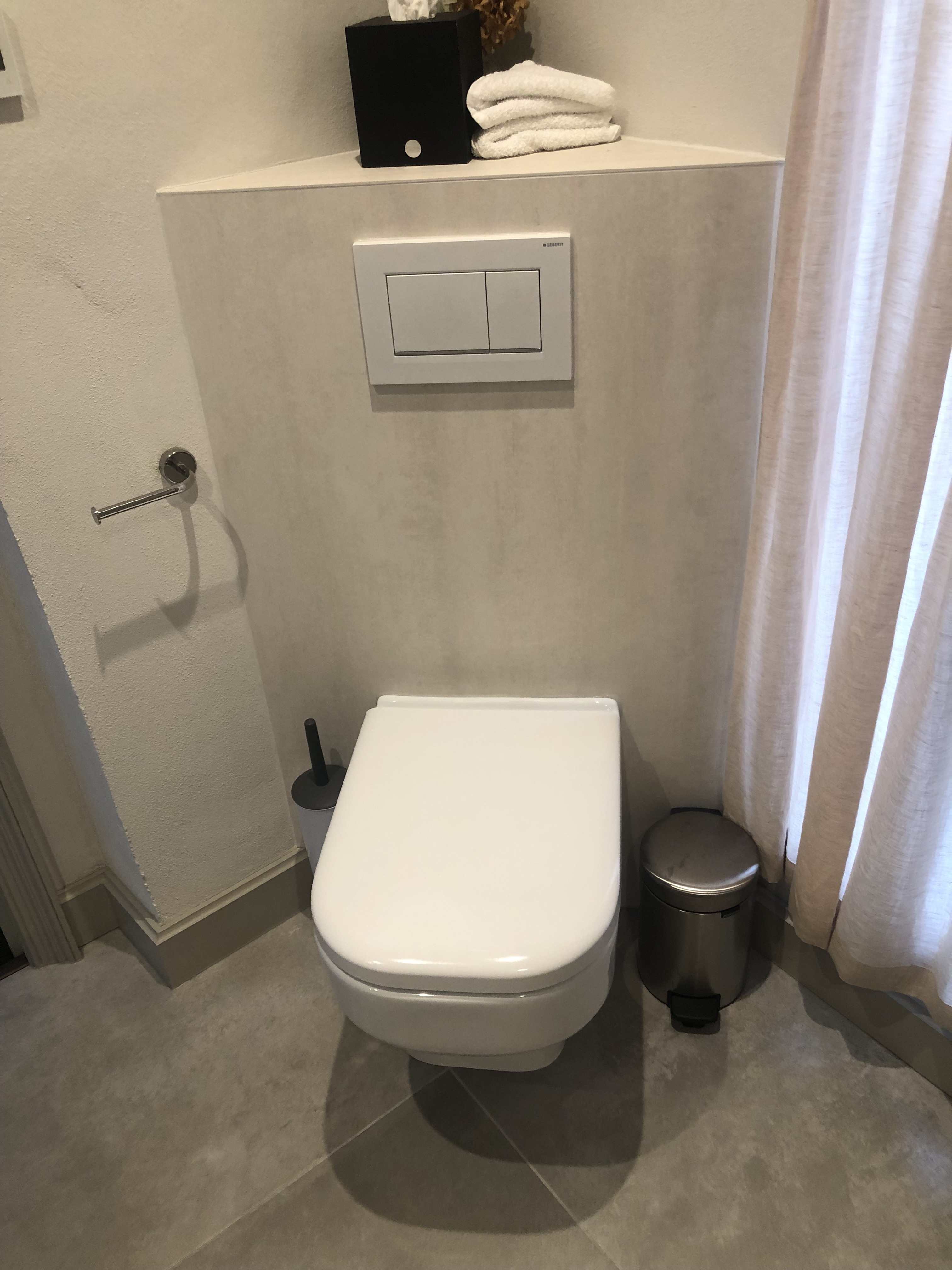
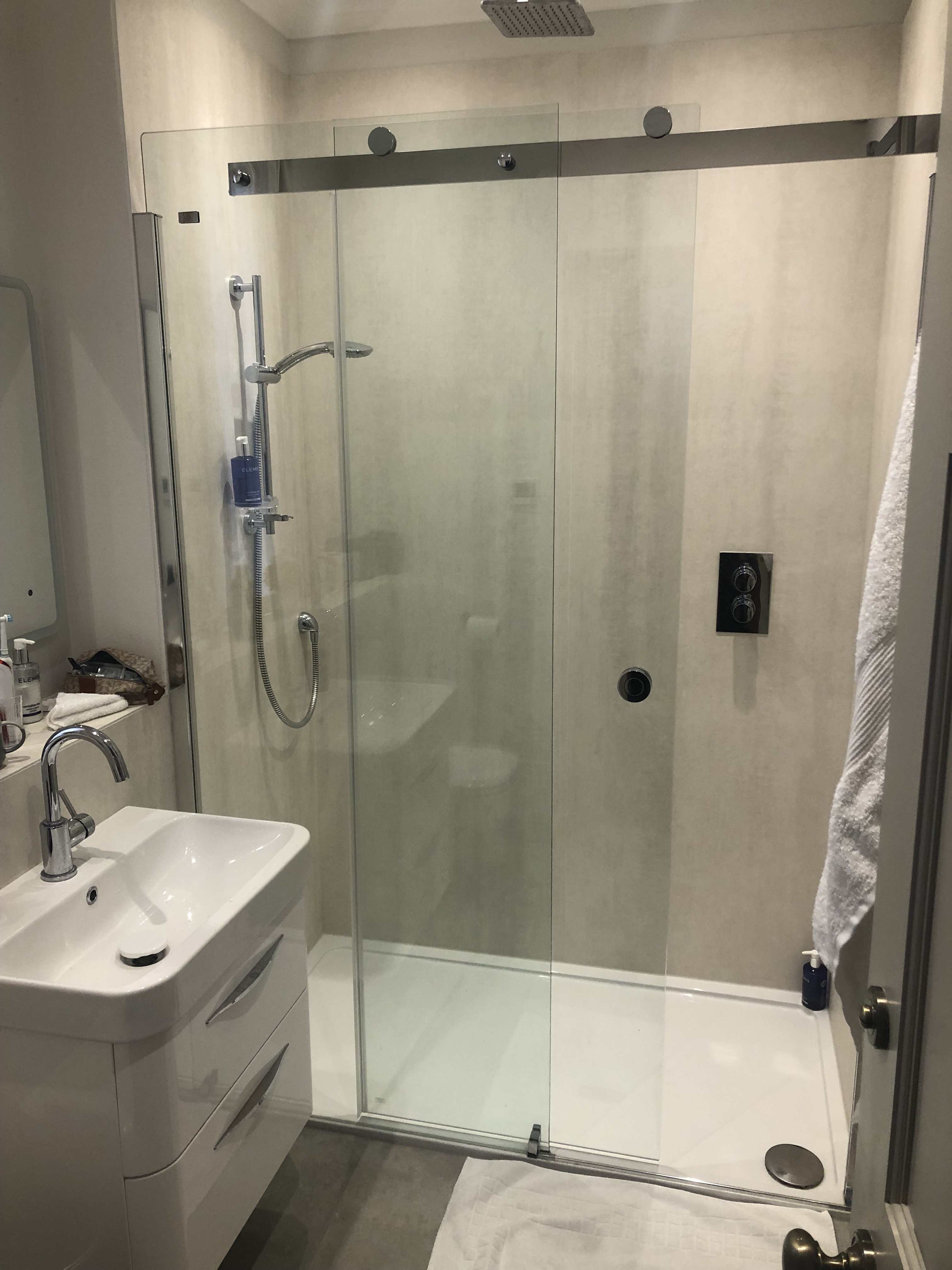
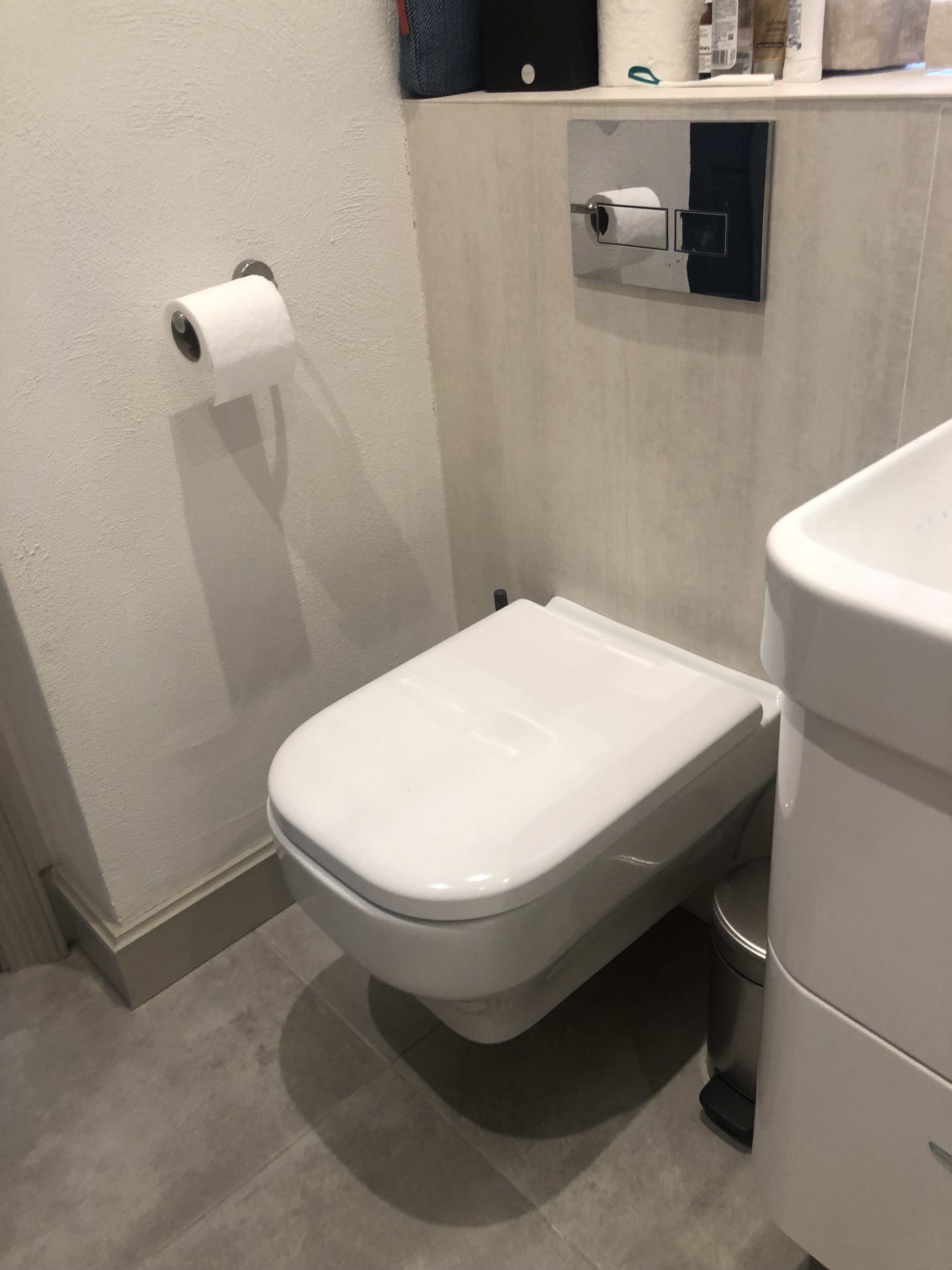
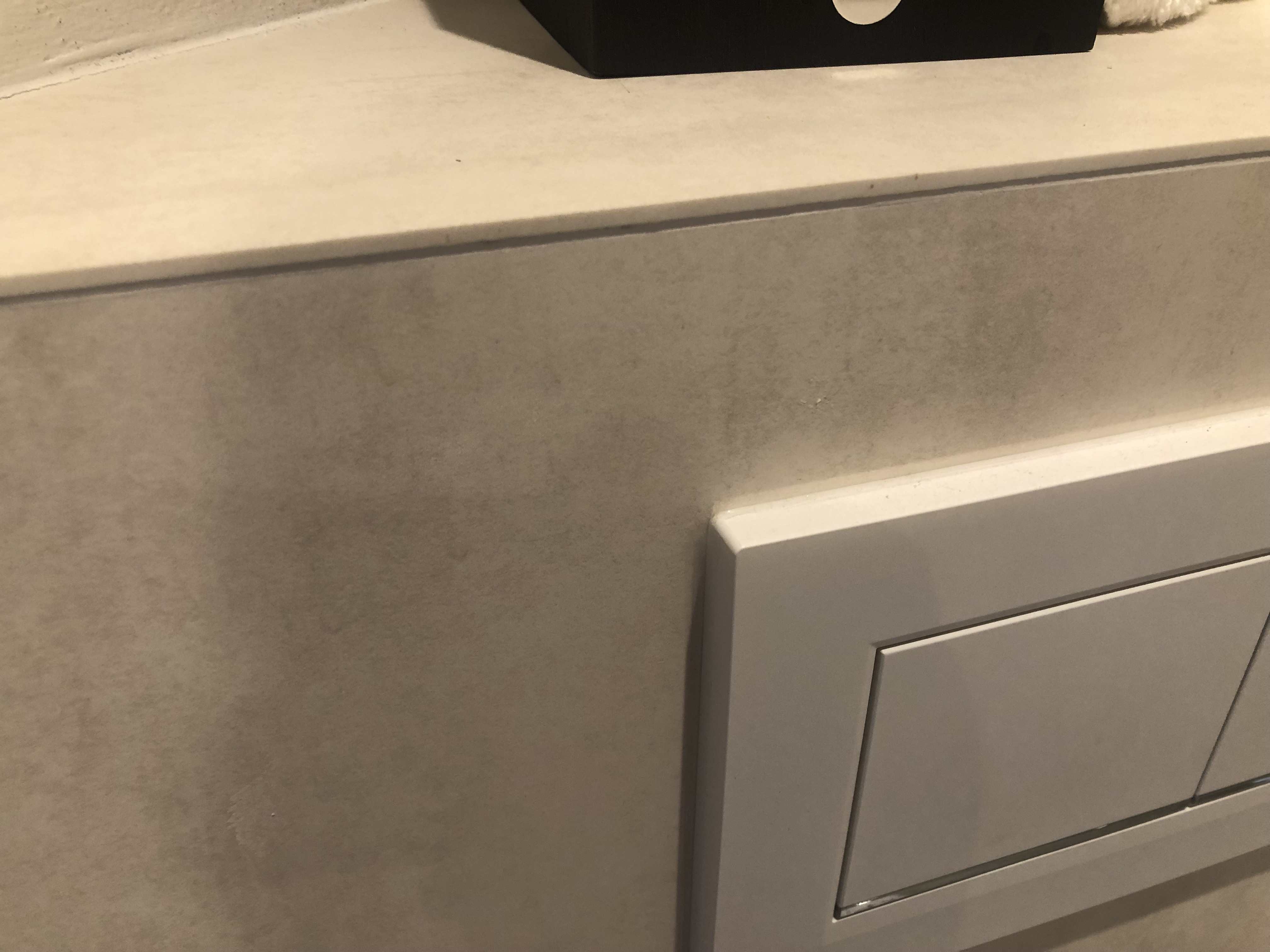
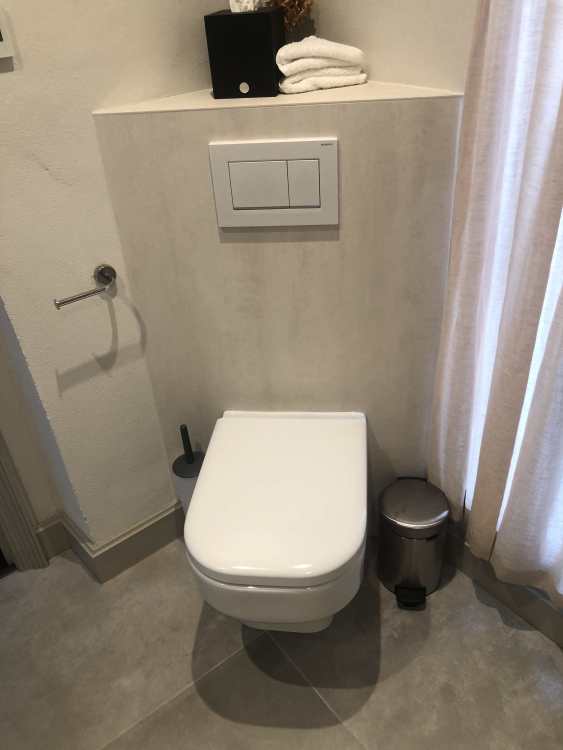
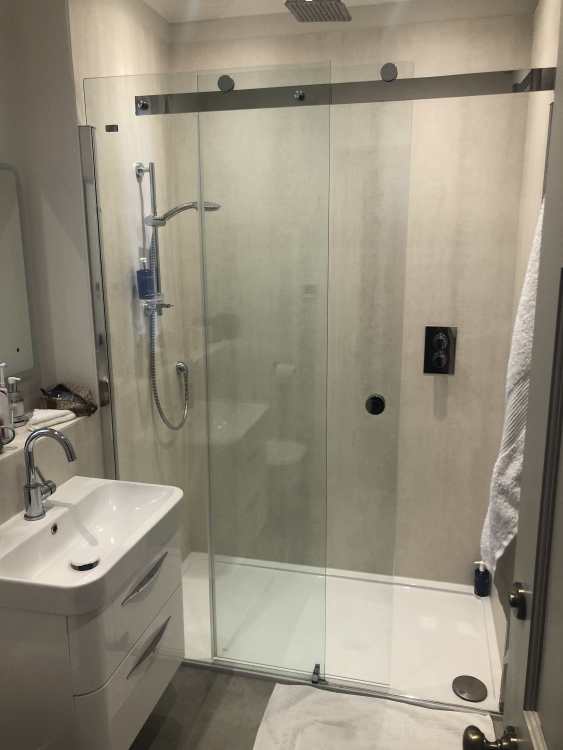
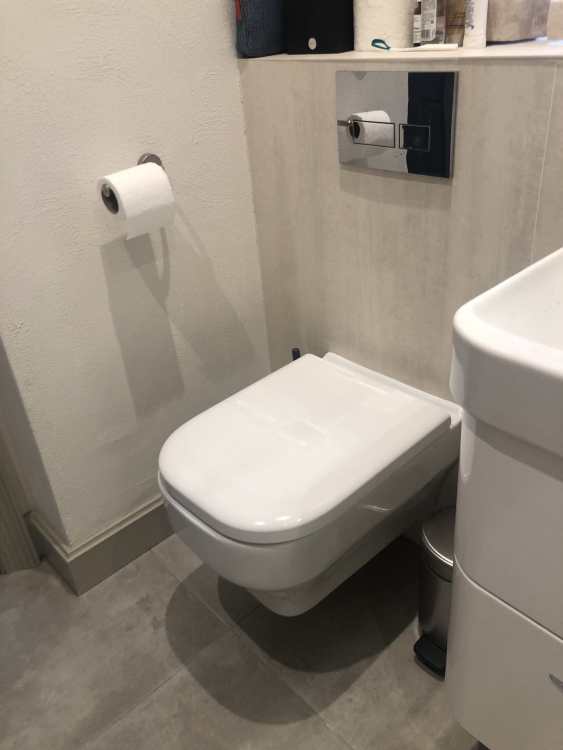
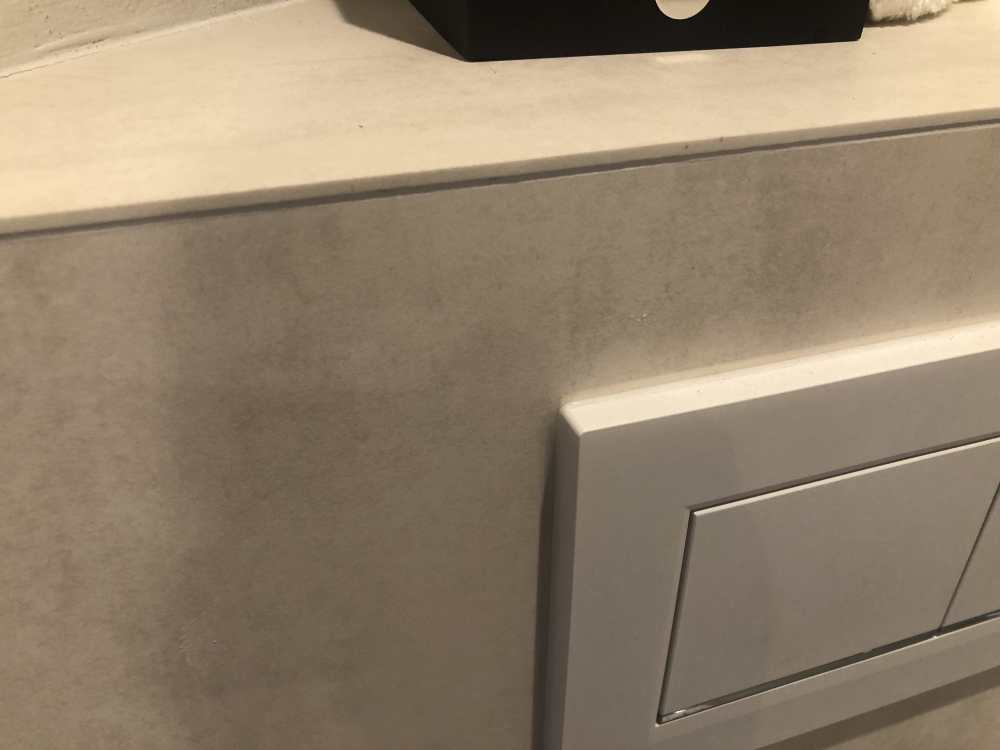
I was in hotel accommodation recently which had bathroom wall finishes which we liked. Wherever there might otherwise have been tiles, so shower surrounds, backsplashes etc., they'd used approx 5 mm thick sheets of what I imagine was stone filled resin. It had the look and feel of stone and was better than some of the formica laminate sheet type material I've seen. I'm attaching some photographs. Does anybody know what this material is and where I can get it? Thanks Thanks
-
This demand calculator might help https://www.ssen.co.uk/our-services/tools-and-maps/demand-calculator/
-
How will you heat your DHW in winter? If it's with the heat pump, what recovery time will you get with 3.5 kW?
-
Cheaper electricity bills on the Way for Scotland?
LnP replied to ProDave's topic in Housing Politics
Generators already have to buy, trade and surrender carbon credits through the UK Emissions Trading Scheme. At the consumer level, you're talking about a carbon tax and you're right, a lot of economists think it's the right way to incentivise reducing carbon emissions. Unfortunately it's politically difficult. Canada used to have one and it was very unpopular. The first thing Mark Carney did when he became prime minister was to ditch it. Pity.