JohnMo
-
Posts
13296 -
Joined
-
Last visited
-
Days Won
200
Everything posted by JohnMo
-
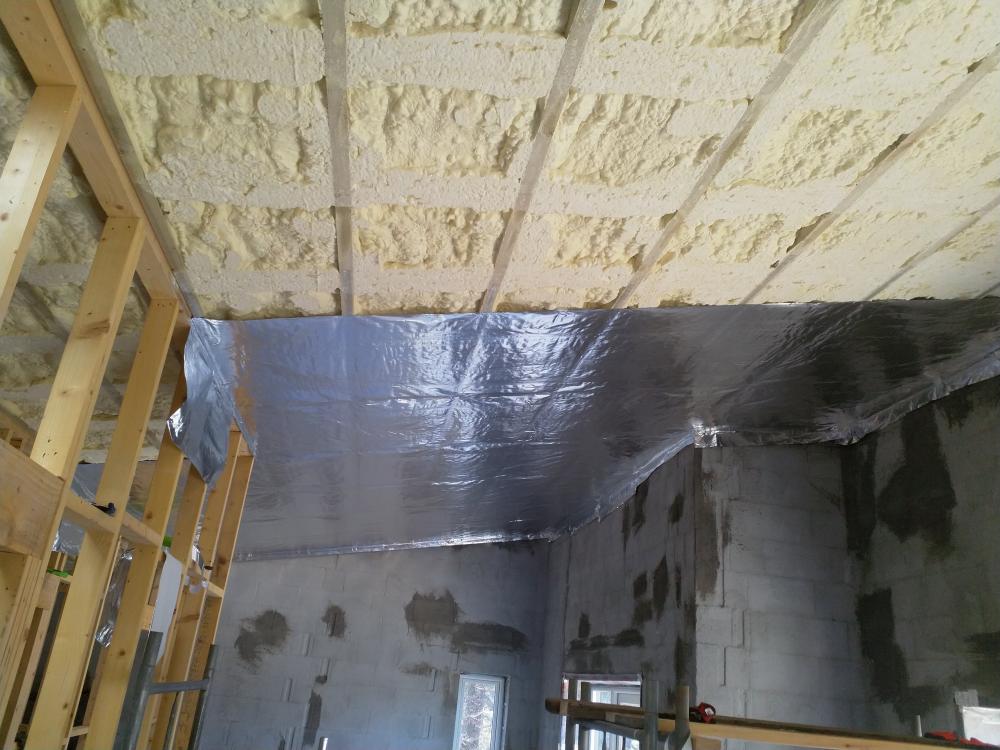
We had about 10 bags of trimmings from over 250m2 of roof. Job was completed in around 2 days. I did all the battens and vapour control layer. Yes very happy to share. The same company built our roof and did the foam (although as two separate contracts). JHJ Joinery and JHJ Insulation. They are based near Aberdeen. The guys on site had a really good work ethic, nothing was to much trouble, they got on with it.
-
We used an airtight vapour tight membrane, double sided taped to battens and stapled, all joints and staples aluminium taped. At the wall the the membrane was glued to wall with airtight mastic. We then added 50mm battens to form a service void and plain plasterboard .
-
You are correct, I had proposed this to the architect but got quite a lot of push back. It would have quicker and way less work for me.
-
My Atag boiler starts with a dT 20 at the highest flow temps, the dT reduced as flow temperature reduces and has dT of 4 when you get to 30 and below. At low flow temps you cannot have a high dT, the return temperature will always be higher than the area you are heating. So if the floor of UFH system is say 23 degrees, the flow temp is 30, the return temp can never be below 23, but is likely to be closer to 25 - dT 5 seems realistic if directly coupled to below pump flow rate would be modulated maintain dT4.
-

Has anyone had any experience with Chelmer Heating?
JohnMo replied to sharpener's topic in Air Source Heat Pumps (ASHP)
I would get an idea of you want by asking and searching on here, then get quotes. Review quotes. Lot of words saying nothing much on the reference web site. -
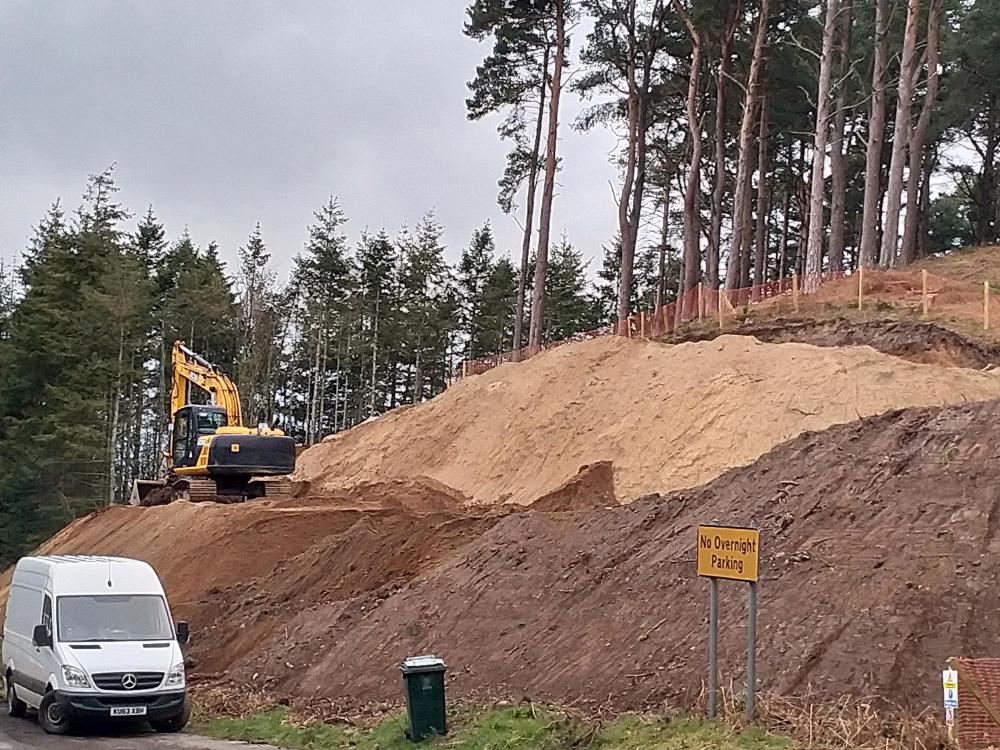
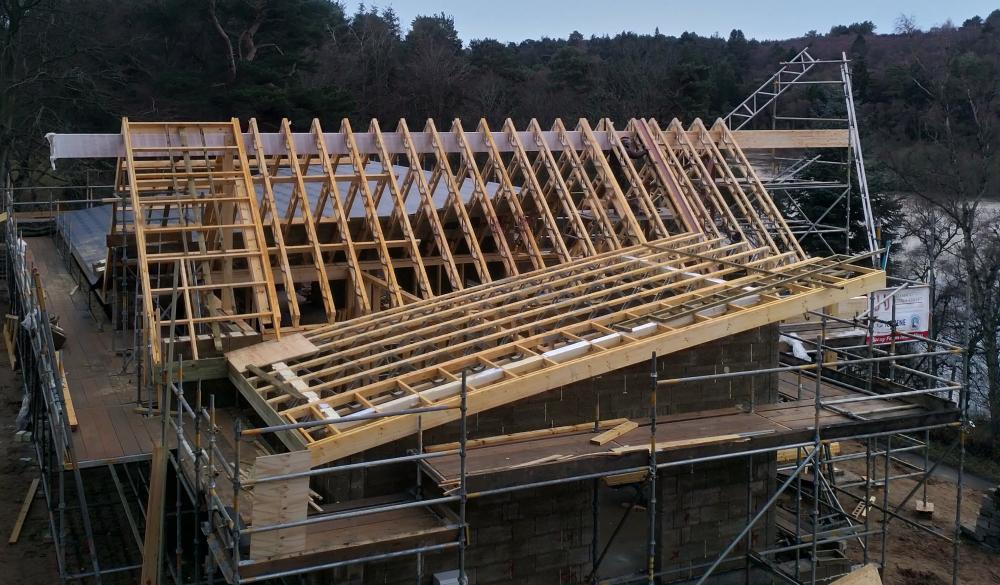
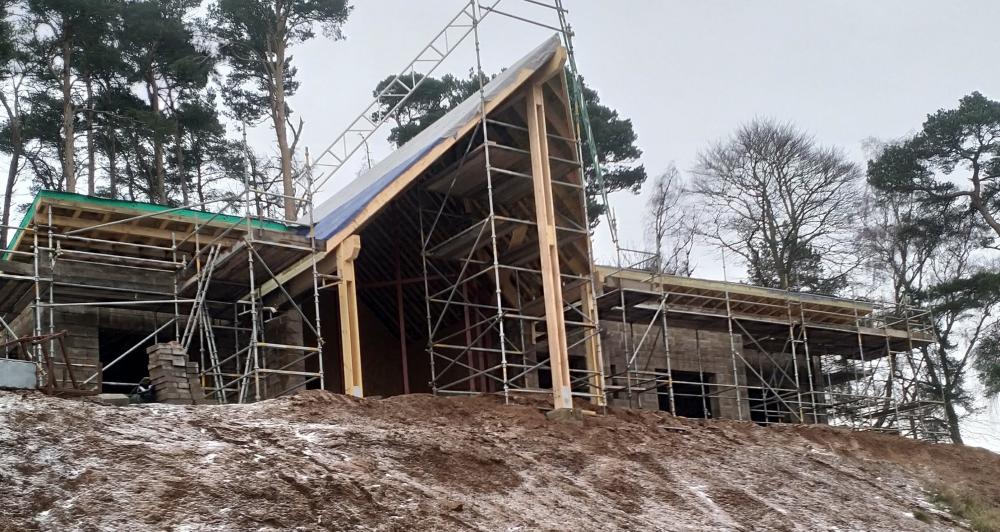
We basically did insulation between rafters, our pozi rafter are 256mm deep and we counter battened below 100mm and then spray foamed. Pozi joist come precut to size, and are a doddle to construct. Big ridge beam, wall plates and just assemble. Pozi joist company designs the whole thing, structural engineer approved and includes within the structural engineering certificate (for Scottish building warrant). From this To this 250m2 of roof ready to slate about 3 to 4 weeks, team of 3 guys.

-
If you're on UFH only, load compensation is of no use to you. So not really an essential feature.
-
Generally there is a load of rubbish and generalisation spoken with respect plumbing and heat pumps. For given house heat load a heat pump will be delivering lower flow temperature than a boiler for a radiator system, although this may not be true for UFH. The lower flow temp requires more flow rate to give the kW output from the heating system. Hence this generalisation you need big pipes. But A circulation pump will give a set output flow based on flow resistance; for a given pipe size say 22mm, the longer the pipe the higher the flow resistance for a set flow rate and if you increase flow rate for a given length the higher the resistance. So to allow the circulation pump to run at the required flow rate could require bigger pipes. But it all depends on the configuration of the pipes and lengths. In each case the system pressure drops need to be calculated and suitable pipe sizes chosen.
-
Have you checked your bank statements? BG credited our bank account monthly directly via the direct debit mandate already in place. @ProDave beat me to it
-
Done a few times this week
-
Another annoying error: cut, hide ignore?
JohnMo replied to ToughButterCup's topic in Electrics - Kitchen & Bathroom
Are the tiles or is it the socket out of level -
I thought fire doors had to have a self closure mechanism, can you do that with pocket doors?
-
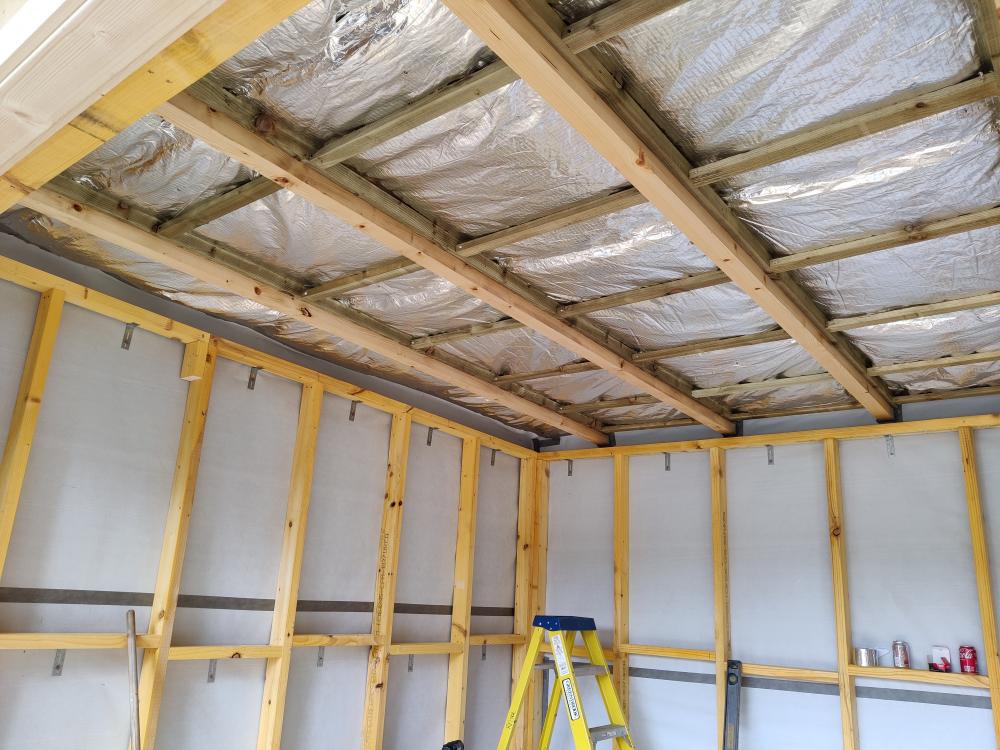
Some more progress UFH pipes are in, 2 layers of 9mm OSB glued and screwed to form floor. Walls and ceiling battening is mostly complete. Used 4x2 on the walls, and 2x1 at the ceiling. Used sliding angle brackets at top and middle of wall to isolate the internal and outside walls (contraction and expansion). We need to cut some wood at the top of walls with a bench saw, that will be compiled next week. Ready for the electrician next week.
-
Two ways to look at it Diverer - if you have 1kWh going spare, you get 1kWh of water heating. If you time your your ASHP to do DHW late morning you will likely get 3kWh or more instead of 1kWh. Once you ASHP has finished it's heating cycle, any further excess can charge to a higher temperature for free, via the diverter or you can export.
-
Recommendations wanted for MVHR
JohnMo replied to IanP's topic in Mechanical Ventilation with Heat Recovery (MVHR)
Titon HRV, UK company, great support by the designers if you need it. -
No don't. It will look rubbish. You get proper filler for the job, which is just the same as car body filler, that is tinted to the colour you want. You could also router the gaps straight and in fill with wood, but that's a lot of work. A rug over the worst bits?
-
I've tried many chemical and combinations in the past, plunger wins every time. Hair, dead skin and soap, will block anything.
-
Leaking boiler left to deal with it myself
JohnMo replied to Niall Patrick's topic in Boilers & Hot Water Tanks
I had a property I rented out, the letting agent wanted me to have fully managed service, so the tenant would call one number and everything would be sorted out. Asked who they used for plumbing and electrical work, and they were located nearly a 3 hour drive away. Not only would I be paying premium rates, I would be saddled with 6 hours travel time. The tenant would get a rubbish service, I declined their offer. Managed service are a get rich quick scheme, by letting agents, the owner gets saddled with big bills and a bad reputation, the tenant gets a rubbish service. -
Sale men may have just been instructed that is the ONLY way acceptable. As you say for a later sub meter, so they can mess with your tariffs etc and you can do nothing about it. Conspiracy - possibly...
-
Buy screws by make, cheap ones either will not drive in without out rounding the head or don't come out either they break or round the heads. As with all things you get what you pay for. Buy cheap spend an hour swearing at the f****** screw you wish you hadn't bought. Been there, done that.
-
Will it comply with building regs? Would you not need balanced ventilation system? As mentioned get other quotes
-
Yes the invented cylinder can be run from any heat source, with the ASHP, you would get one with 3m2 or larger coil, for good heat transfer. You would also require a larger size as you would only be kept below 50 deg. Also the ASHP and UFH have no requirement to talk to battery or PV system either. Keep things simple, otherwise in 10 years when things go wrong you will be stuffed.
-
I came kicking and screaming with the RAF, to Lossiemouth, been here nearly 26 years now, it's great.
-
It is - it's an old sand dune, but the sea hasn't been anywhere near for hundreds of years, sea is now about 6 miles away. We added 600T of top soil to it for landscaping
-
Three years ago today