


JohnMo
-
Posts
13296 -
Joined
-
Last visited
-
Days Won
200
Everything posted by JohnMo
-
All depends on how you live in your house. Some want UFH to operate like rads, because they are out all day, so thin is better. Steady room temp or batch charging floor, thick is better.
-
Are you putting in any secondary heating like a stove, if so that what takes you down to the lower temperature. No way would you size for -20. Valiant are talking out of their a*** Using MCS guidance you would size for the 99.7 (think that's the right number) likelihood lowest temp. So the -9 and -10 temps would not be included. So you are likely to be sizing or -3 or 4. So if you use the 16.6W/m2 fig you will not be far off. Then you need to allow time for cyl reheating also in your daily allowance then divide by 24. Allow some time for defrosts, although not that likely at the lowest temperature. Most the time your conditions will be warmer than the design case, so an oversized unit will be struggling with turndown. I would be going the smaller unit no buffer and run weather compensation. Or run weather comp, a degree or so hotter than needed to allow your floor to batch charge, with the thermostat tripping the ASHP off at 0.5 degree below your ideal temp. Not sure I agree with the thermostat on buffer as by default you will never run at the lowest temperature possible, so CoP will always take a hit.
-

MVHR Valves in vaulted ceiling help
JohnMo replied to richo106's topic in Mechanical Ventilation with Heat Recovery (MVHR)
Keep it simple don't put them in the ceiling. Use coanda effect nozzles and put them in the wall. The coanda effect will cause the air to travel across the room.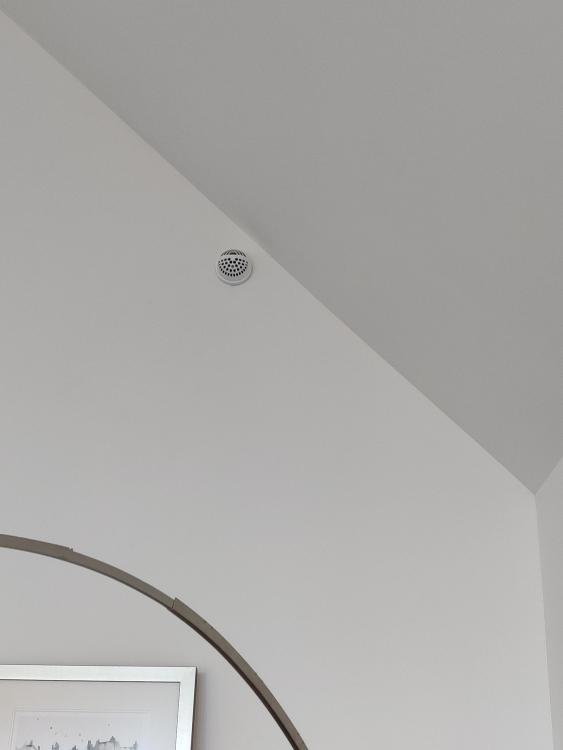
-
If you need 4kW PV to pass your SAP, you really need to take a look at the insulation you are putting in, it must less than than the bare minimum.
-
Loft Hatch / Access Panel
JohnMo replied to GrantMcscott's topic in Lofts, Dormers & Loft Conversions
Scottish and English regs are not the same. What are you trying to find out specifically? What and where to buy depends on the spec you are after. I got mine from Screwfix, insulated, airtight, and with ladder, but my plant room is behind it I spec'ed it that way to keep noise levels down. If you have a ladder in the hatch, you need to ensure you have a hand rail at the top and ideally (in my opinion) you should have some form of fall protection around the opening. A simple rail. On building sign off, the building control guy made no comment at all about our loft hatch. -
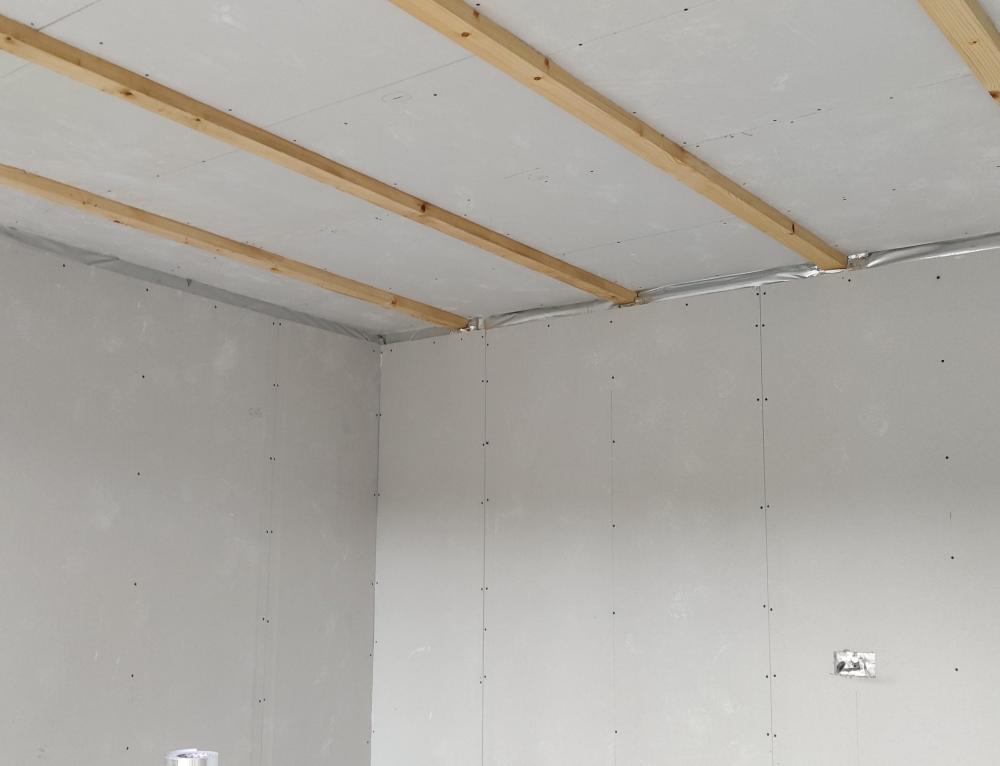
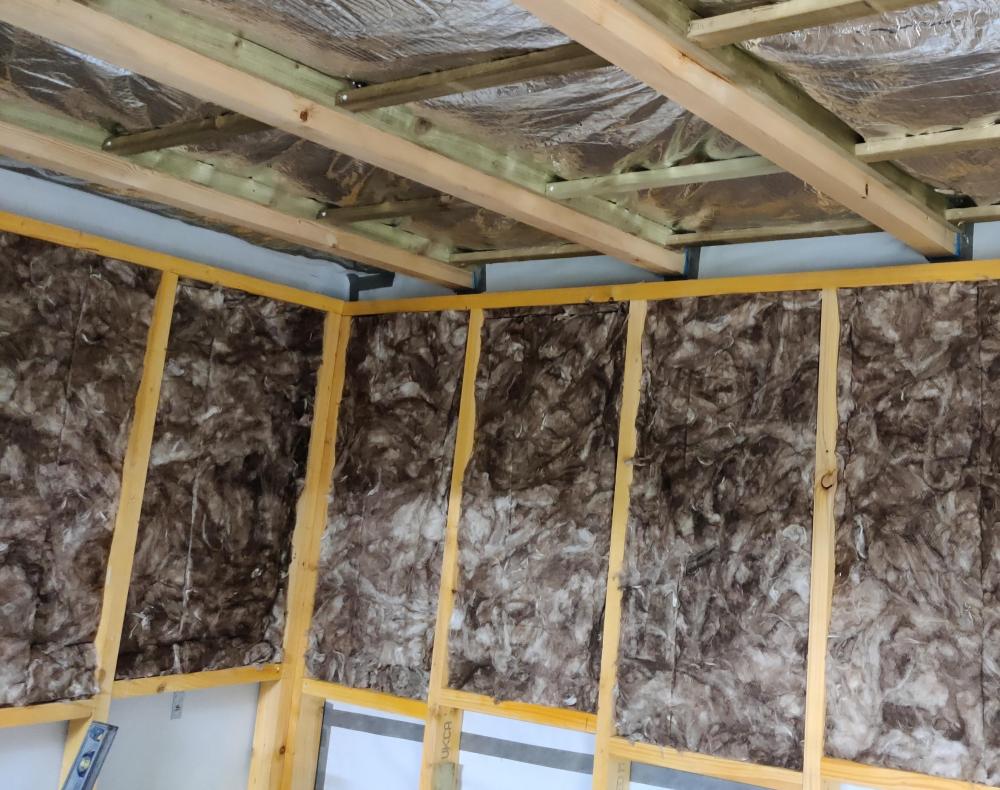
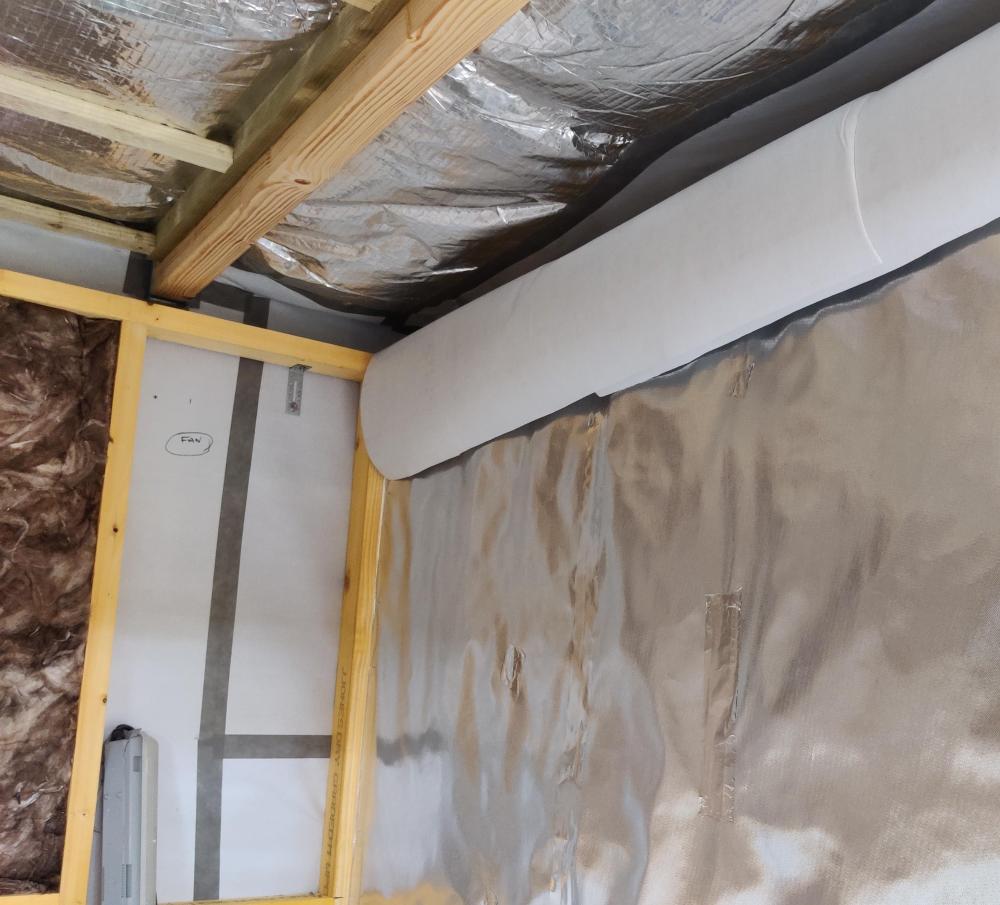
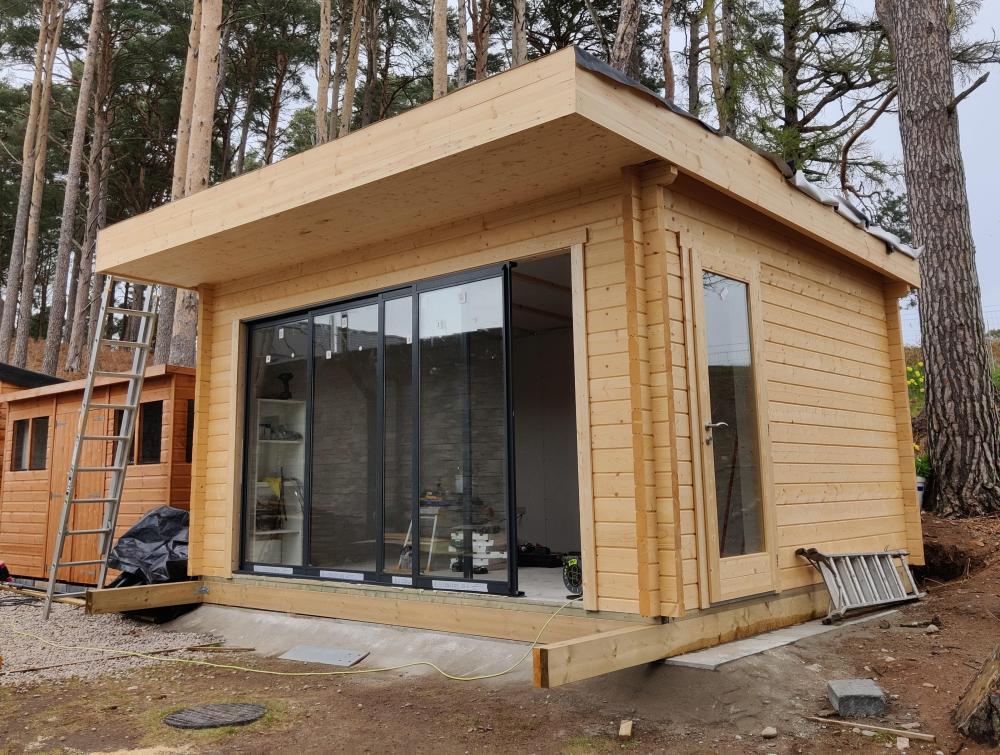
Comments to the above 1. There is a gap between the battens and wall. Battens on wall measure 100mm deep, insulation is 90mm deep. 2. Specific screws for dry wall are used, these do not require to be pre-drilled. Airtightness layer is the breather membrane on walls and superfoil within roof cavity, all joints are double taped per manufacturer instructions. 3. Timber frame specific insulation used, no fixing are used or needed. It is self supporting through friction. 4. No - log building expand and contract with the seasons, fixing battens directly to logs is a big no, no. The inner wall is fixed to the floor and sliding brackets are used to fix to walls. This allows the outer building to rise and fall and the inner wall does not impede that movement. Doing anything else will cause gaps to open up between the logs and lead to water leaks.
-
I have a flat roof in a garden office - can I hang a radiator from the roof?
JohnMo replied to Danv's topic in Flat Roofs
Option 1 to 3 are all insignificant as far as weight is concerned. Ideally attach to the 150 beams. FYI - A sheet of plasterboard is around 20kg. -
Update Walls insulated with 90mm Frametherm 32, vapour barrier, and then plasterboarded. Due to be taped on Monday. Expansion gap at top of wall, is to allow roof to move up and down in relation to the internal walls. Once the plasterboard is taped the gap will be covered with wooden boards (like a skirting at the top of the wall), this will be attached to the ceiling not the walls. Issues so far Roof membrane was supposed to 5.4x5.6, but arrived 4.5x5.6, so had to go back. Patio door sliders, rail for top and bottom slider rails was supposed to be 3.5m long, was supplied 3m long. Patio door lock hole in wrong position, so had to be redrilled in the correct place. Next jobs for me, build decking at front of building and to side door.
-
Can one paint a red expansion vessel white?
JohnMo replied to Question's topic in Boilers & Hot Water Tanks
Just ignore the requests, find other jobs to do, in a couple of weeks she will be nagging you to do something else way more important -
What does ICE mean in the context of the above?
-
Cooker vent / duct for air tight house.
JohnMo replied to MMcGill's topic in Mechanical Ventilation with Heat Recovery (MVHR)
Just fit a recirculation kit to a standard cooker extractor, job done. Cooker hood used when frying only, but nearly always off. We have the room extract about 4m away from the hob, with a filter sock in it, just put MVHR on boost and it takes care of everything. -
Can one paint a red expansion vessel white?
JohnMo replied to Question's topic in Boilers & Hot Water Tanks
You could be right just looked at the user name "question" -
Current EVs are just a stepping stone, other technology or different batteries will come, certainly how to charge then all is not currently feasible, especially when everyone has one and all of them go on charge when people return from work, and if charging off peak, all of a sudden off peak becomes the new peak time. Many say hydrogen will not happen, but there is a lot of work going on behind closed doors to make it a reality. Big companies that used to support oil and gas, have firmly closed that door and are exclusively working on hydrogen projects. Scotland is currently circa 90% renewables with way more in the pipeline with offshore wind, wave etc. Why so much renewable energy? converting it to hydrogen when there is an abundance of wind may be cheaper and more useful than battery storage? Heard a rumour that the Netherlands is exploring import of hydrogen from Scotland, for its hydrogen economy.
-
Can one paint a red expansion vessel white?
JohnMo replied to Question's topic in Boilers & Hot Water Tanks
I believe the colours signify different services, white being drinking water and red for a heating system i.e. not drinking water. Could be wrong, but either way life is to short, get a hobby if that's all you have to worry about. -
bows downwards in the middle. Will have get the long straight edge out and check it properly, nothing you notice waking on it, but noticed it with the spirit level. May use some self levelling screed once the plasterboard is all taped.
-
Forgot to say Amazon is the cheapest I found.
-
I am using a "COMPUTHERM Q7RF, it has a 0.1 hysterisis, so works well with UFH. Can be switched to a cooling thermostat for the summer. Although running UFH on weather compensation, the heat loads are so small at the moment, the heating is off way more than on. Have the night temp set at 19, so if we have had little or no solar gain, the floor gets a top-up overnight. At 0700 the temp is set for 18.5, to force the heating off if it's on. Living room is currently at 20. Heating has only been on a couple of times in the last week.
-
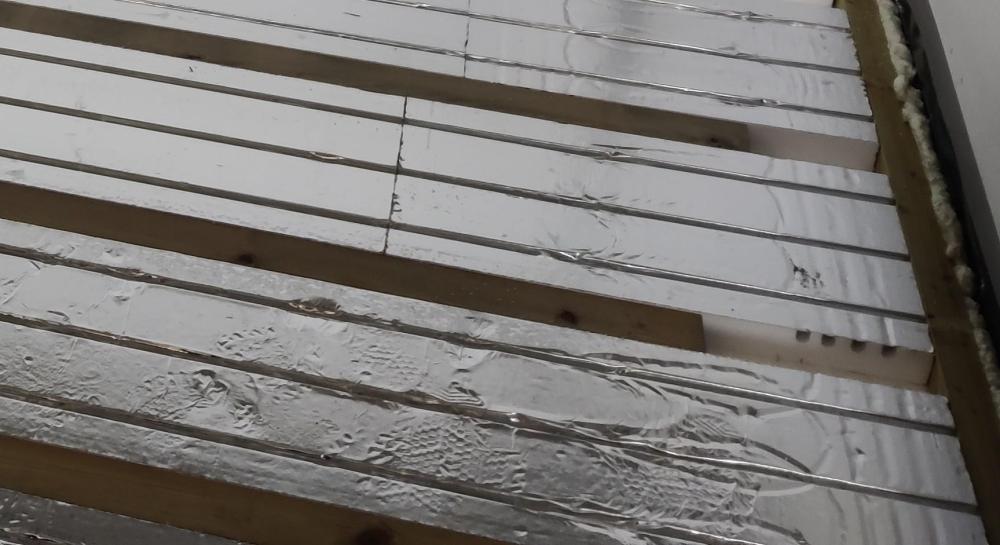
I stopped the battens short see image The OSB is attached to the battens. I feels pretty solid. But there is a small bow into the middle, not sure why. The outer perimeter of battens support the inner walls which are now plasterboarded, so there is plenty of weight there. However our main house is 200mm PIR then 100mm concrete, it has a feel that is not as hard as you would think. I fell from a couple of feet on to my bum, and could feel a slight give on the floor, it hurt but as much as I was expecting. The concrete floor is fully floating on the insulation.
-
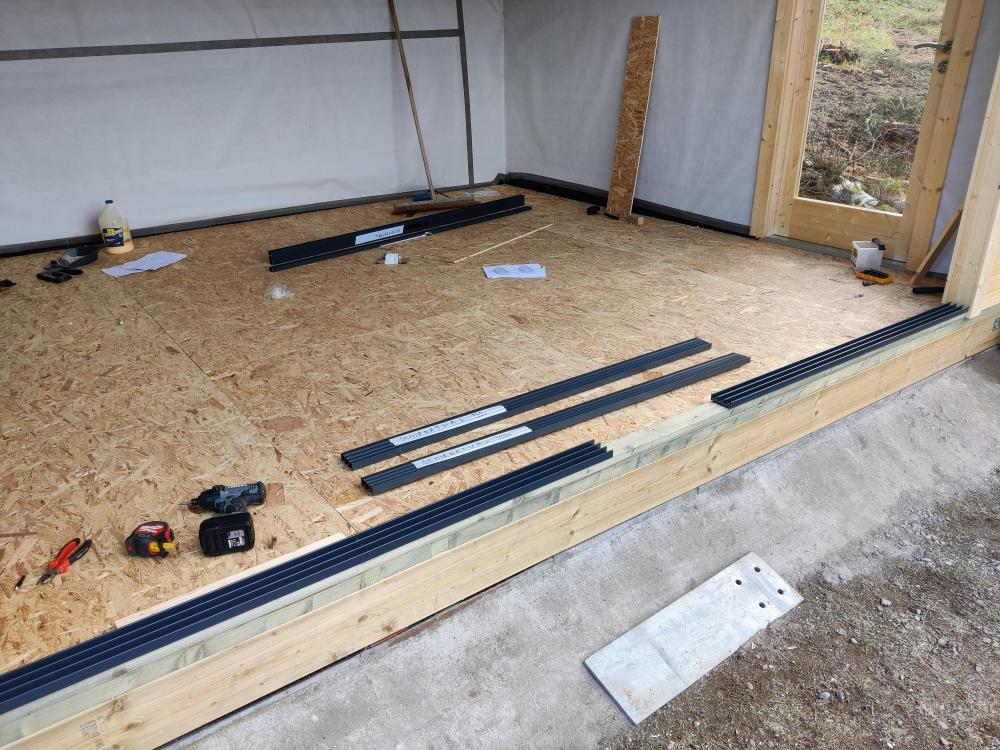
Floor with 2 layers of OSB
-
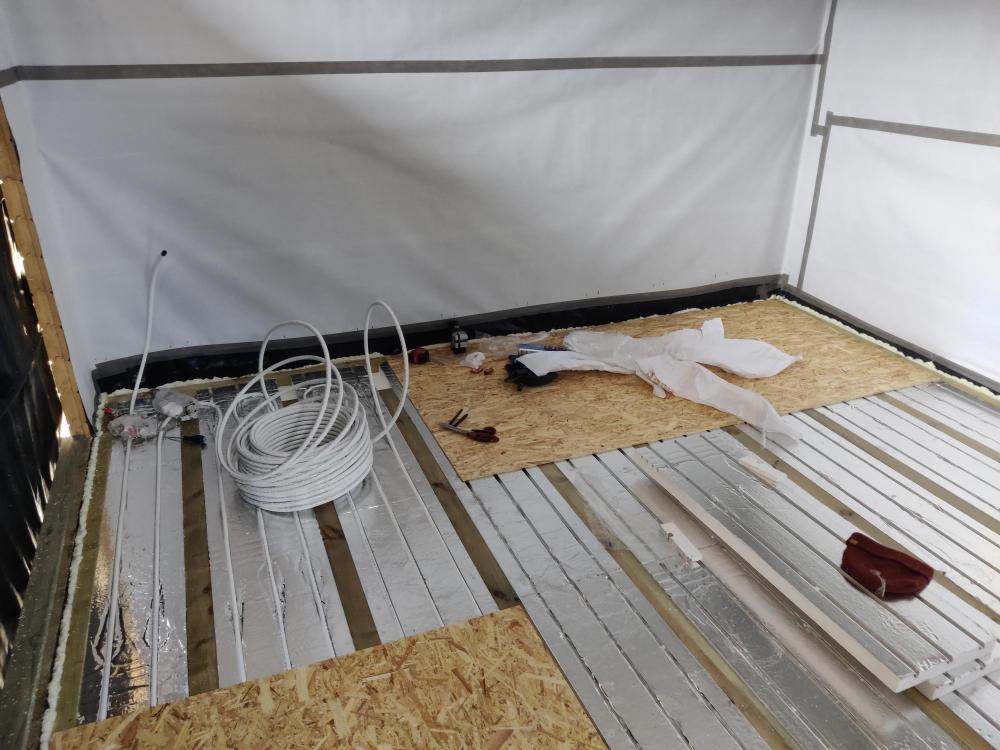
Floor prior to OSB being installed
-
What you doing to generate so much steam you are even thinking about it? Our kitchen fan is just a recirculating one and we don't have any steam buildup inside the kitchen
-
I also used battens in our garden room floor buildup is as follows Concrete slabs 50mm EPS 70 DPM 100mm EPS 70 70x50mm battens at 400mm centres Centres filled with 50mm EPS UFH moulds with aluminium foil. Pipes on 125mm centres 2 layers of 9mm OSB on staggered joint lines glued to each other and screwed to battens. Floor finish will be 10mm interlocking wooden floor.
-
There are a couple of schools of thought on legionnaire and the need to have an overheat cycle. Heat geek did a good write up and video. Looking at all the whys and what it's. Plenty on this forum also.
-
Aren't the cylinder rated at 90 degrees and protection is set to vent the pressure at 90, so if you were to store at the temperature the protection system would operate. So not a practical idea. Not sure how you would heat it that hot anyway as most immersions only can be set to 80 and have a thermal trip set at a hard 85 trip, which requires the immersion to be manually reset. If you replaced the immersion from a higher rated one from a thermal store, you would be circumventing you certification. Thermal store possibly, UVC no.
-
Viable to swap Quooker tap for an alternative?
JohnMo replied to markocosic's topic in General Plumbing
Tap aside you should be treating the water for iron before it enters the house. You just need a backwashing iron reduction filter. Followed by a small 10 and 5 micron filter and a UV filter. Do it right you won't need any other filters.









