


JohnMo
-
Posts
13296 -
Joined
-
Last visited
-
Days Won
200
Everything posted by JohnMo
-
 That would be nice, I would make a £2k profit. Or at least get what I am doing free of charge.
 -
You can register for vat at any turn over it is when you go over that threshold it is compulsory. I set up a company and the next day registered for vat, had zero turnover at that point.
-
Cylinders2go, will make configuration you want, I believe, so will most UK manufacturers.
-
Think the terminology is wrong, I think it should be fit for purpose installs, not a gold plated solution that skips everything to replace with new. So not an on the cheap install.
-
Why are you using acrylic primer in the first place? To prime a wall just use emulsion watered down 20 to 25%. Then emulsion over with undiluted emulsion, once dried. Job done
-
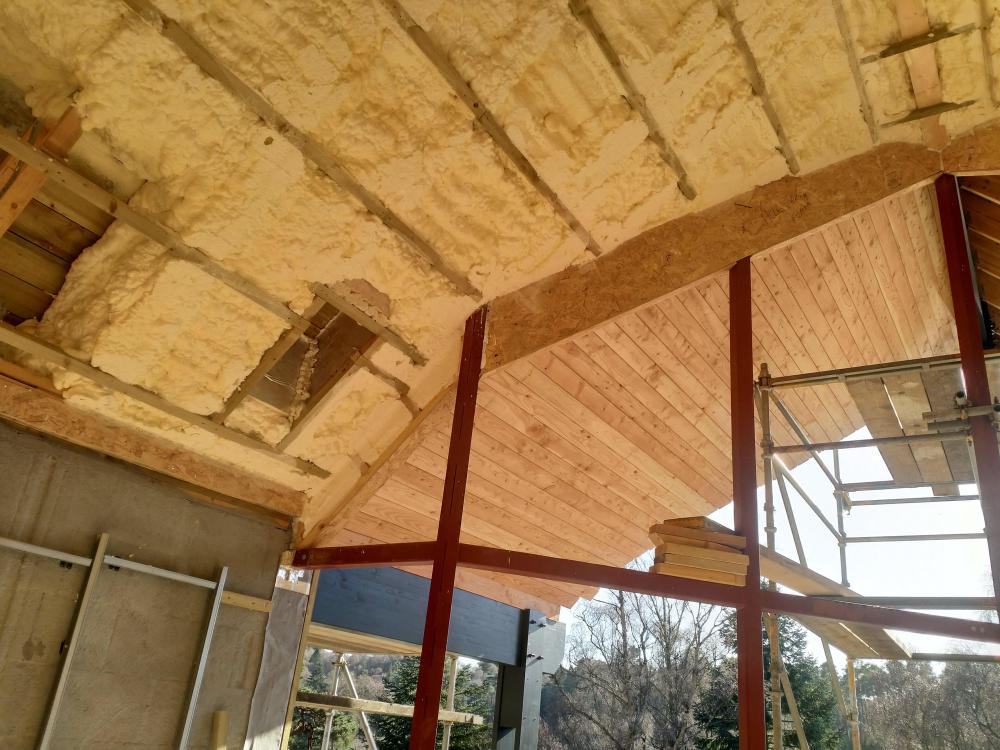
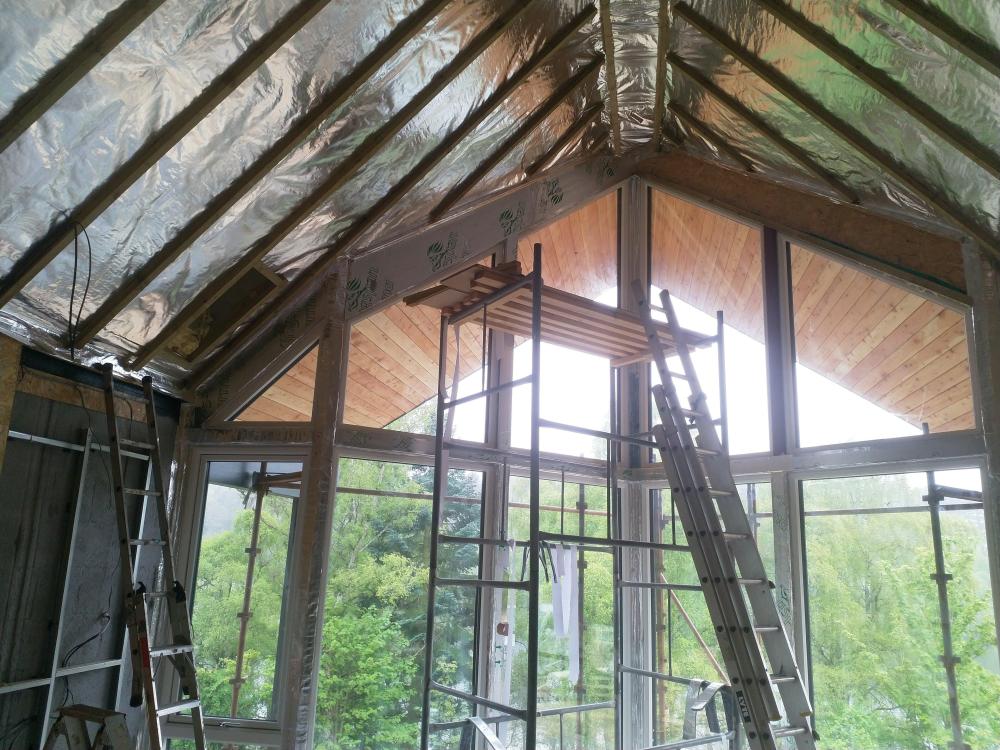
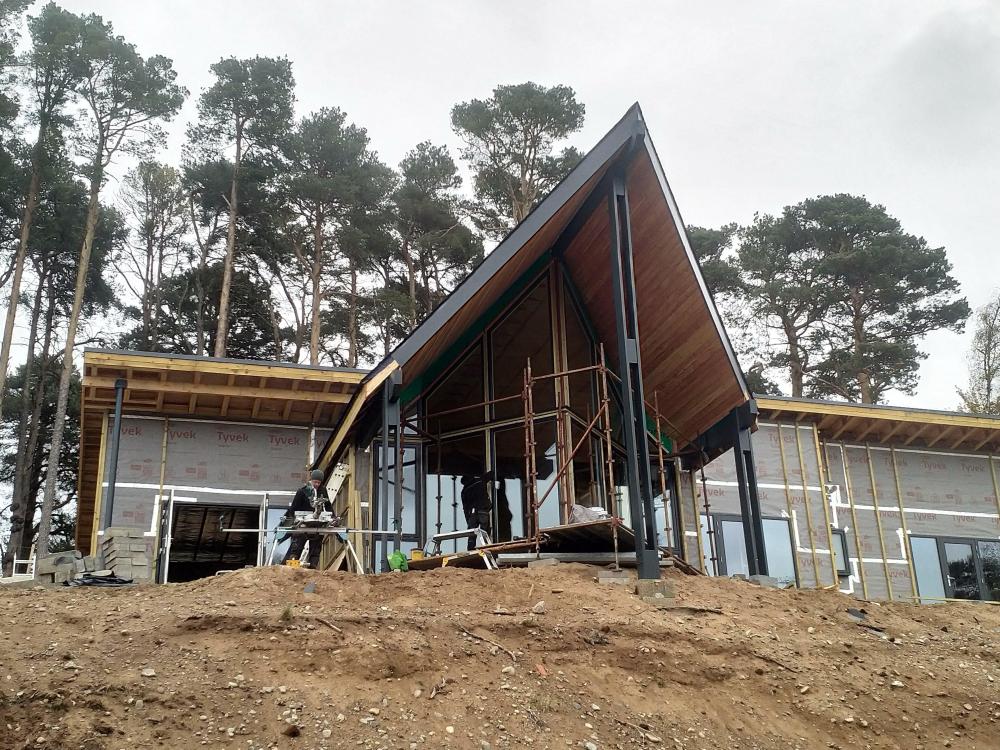
We have a metal frame around our window. We added a frame to the outside in wood and the windows are mounted into that. The steel frame was then wrapped in a combination of aerogel and 25mm PIR. Have attached some images, zoom in to get a close look.
- 11 replies
-
- 1
-

-
- i beam
- insulation
- (and 3 more)
-
New build design - thoughts welcome!
JohnMo replied to AppleDown's topic in New House & Self Build Design
Sorry not a fan Roof design looks too complex and fussy. The utility sticking out doesn't look right East and West views look like you've chopped part of the house off. Is the chimney real, mock, do you need it? -
ashp ASHP - how much ???!!???
JohnMo replied to Robert Clark's topic in Air Source Heat Pumps (ASHP)
People have obviously got too much money, if that's a touch too high. Unless you specified gold plated radiators then it's ok. No wonder they are saying MCS is just tax relief for the rich. If someone came along with half that figure for a gas boiler installation they would be laughed at, but people are will to be royally screwed over for an ASHP - world has gone mad. -
Howdens kitchen - how to negotiate?
JohnMo replied to johnhenstock83's topic in Kitchen Units & Worktops
We went in the other day to Howdens, mentioned our neighbour name, got a 60% discount on a couple of kitchen units and 40% of a brisket join bit. The invoice was in the name of an unheard of joiner. They were almost looking for a name, almost anyone's name would do, to give us a discount. -
But you really only need to do do a room calculation of heat loss for sizing emitters, a whole house will be fine for sizing the overall heat demand, such as the calculation spreadsheet on building (and work out floor, wall and roof U values) @Radian posted just before me
-
I just calculated the following and it gives a close estimate to the heating demand I have. 3700 (total gas usage for Jan and Feb including DHW) / 1488 (number of days x 24) x 150% Gives around 3.7kW. Which fairly close to my heat demand at -9 (which we had over a couple of weeks during the period). The realistic ASHP would be 5 to 6kW. I have chosen a 6kW one as it happens.
-
There are only three complications to a heat pump, that a normal plumber needs to get his around. Everything else should be normal stuff. 1. Sizing the heat pump, for a retrofit taking the energy consumption for December and or January, will give you a good place to start, just a matter of a simple calculation and possibly a loading factor to make the average more realistic and representative of peak loading. 2. Radiators, as said give two options cheap and simple install, little or no changes, or more suitable install of correctly sized rads. 3. Hot water, keep existing cylinder, if one exists, heat via existing coil, top up with immersion. Or new cylinder. Or hot water on demand electric heater. A set of guidelines in plain English for the customer to tune weather compensation, which should really mandatory, to enable during commissioning, so the heat pump always operates at the lowest temp possible.
-
Seems pretty normal, you are getting plenty of run time. If you look at the return temp, this is slowly increasing over the burn period. The flow temp increase is a response to the return temp increasing, the boiler is trying to manage delta T.
-
Our electric meter is inside next to the fuse box. Gas is outside
-
Gee £91 from Tradepoint - not exactly cheap for watered down emulsion
-
Global warming is in fact entirely natural and has already peaked
JohnMo replied to ProDave's topic in Boffin's Corner
It's a known fact that if you built 1 turbine / m² over the entire Earth's landmass They would have to tiny wind turbines to fit in a m2 space. They convert wind and solar to electric, we use the electric, it gets converted to heat etc, it all goes back to environmental energy, the circle completes. -
I went my own way and did 300mm. Pipe and mean flow temp determine the output W/m2 (and floor covering). The lower the W/m2 required the less the pipe centers have an effect on the mean temp required. So at 20W/m2 and 100mm centers the mean flow is 31, while at 300mm the mean flow is 33.
.thumb.jpg.e6f5b10749b0a8b28a782f83356b9791.jpg)
-
First cost needs to be thinned about 25% with water, next coat full strength.
-
Softening the feel of a concrete slab floor
JohnMo replied to Sparrowhawk's topic in Floor Structures
I didn't want to hit UFH pipes, or have screws hanging below the bottom surface and over time scratching away the pipe. The screws would be less than 18mm long if I didn't screw to battens. Was a risk aversion based strategy -
Softening the feel of a concrete slab floor
JohnMo replied to Sparrowhawk's topic in Floor Structures
Floor in main house 300mm centers on UFH, 200mm PIR and 100mm concrete screed. Measured on a cold day, 30 deg flow temp, floor surface temp was 22, room just under 20. Floor never feels hot underfoot, you never actually notice it. Our summer house floor is somewhat different buildup. 150mm EPS 70, 50mm thick UFH EPS moulds to give 115mm centres generally for the UFH. At 400mm centres above the EPS 70 there are 70mm wide wooden bearer. The whole lot is capped with 9mm OSB screwed to the bearers and a 50mm perimeter batten. A second layer of 9mm OSB is glued first layer (offset joint lines) and screwed through to the bearers/battens. Not got the UFH operational yet, but floor has a solid feel, and no comments from the wife, which is a good sign.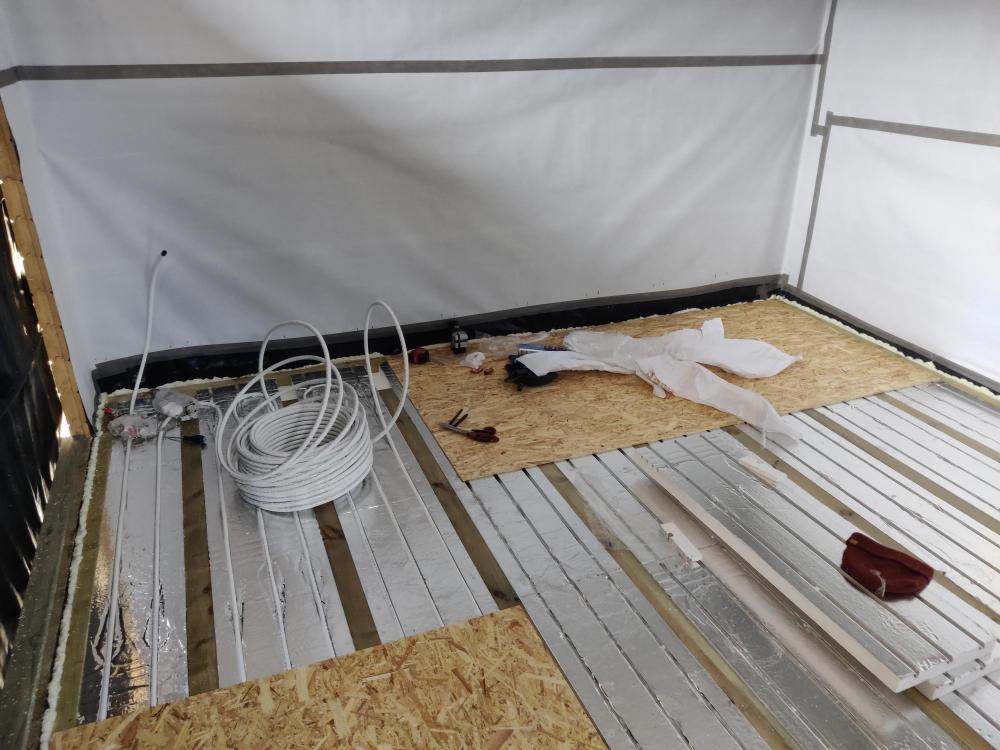
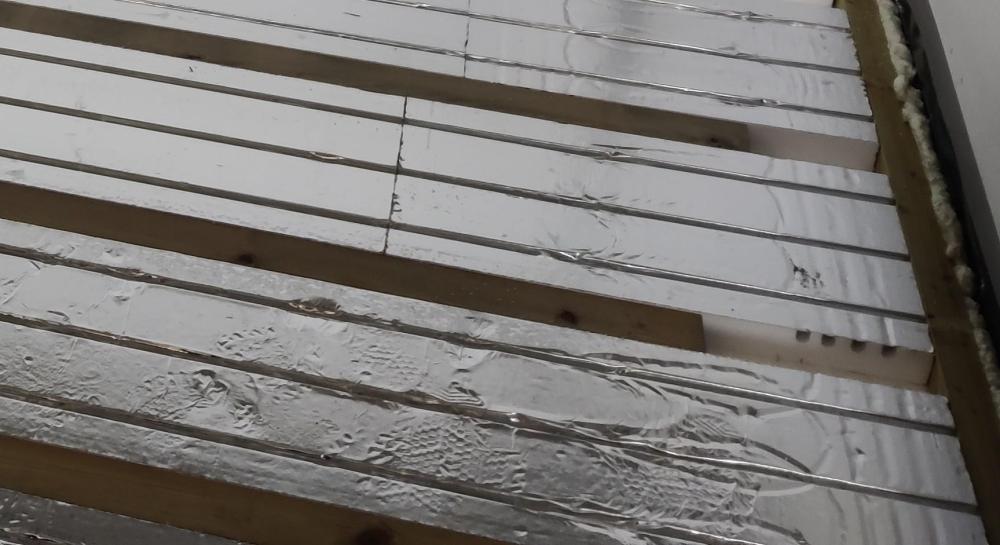
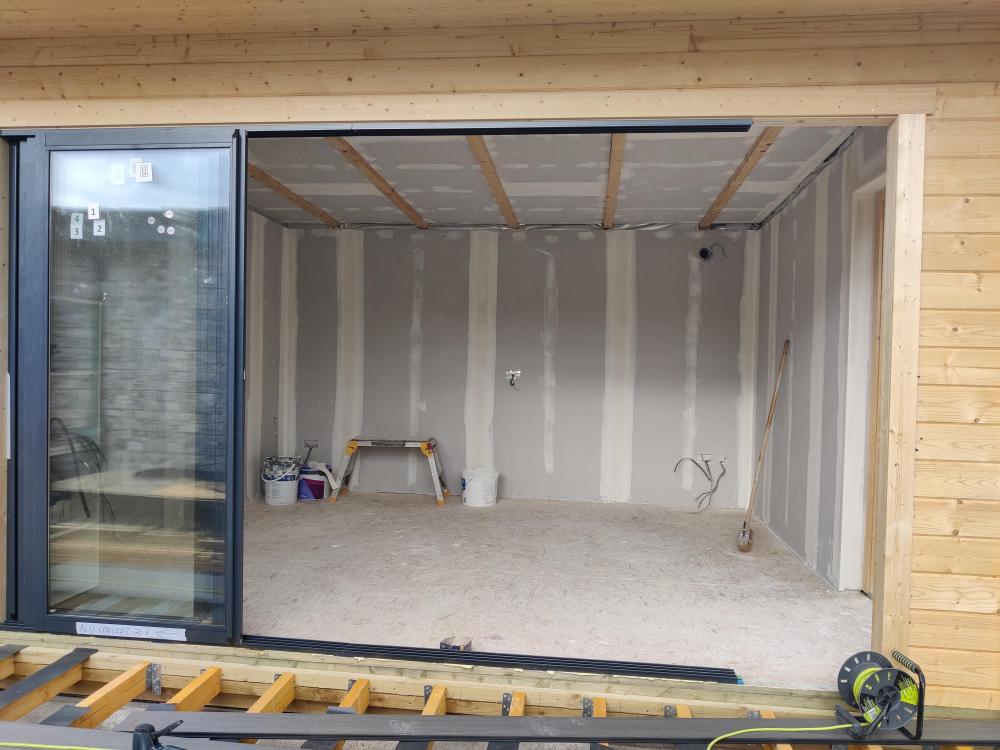
-
Possibly finding someone would be the issue, rather than the cost. Cost may end up being a cost of a new unit. We have a generator, big enough to run the heat pump, but I am still installing glycol. Worst case is away for the weekend and a power cut. Cheap insurance policy
-
Not sure how this would work. You use the heat pump to supply energy to the house, it takes it heat from the ventilation air. The heat loss through the walls etc is lost, so cannot be used by the heat pump - energy is just transformed, so you cannot make more than you have.
-
Softening the feel of a concrete slab floor
JohnMo replied to Sparrowhawk's topic in Floor Structures
There is a big difference between a concrete floor and a concrete floor on top of a couple hundred mm of insulation. The insulation adds some give, so much so that a fell of some steps on to my bum, from a few feet up. Apart from the shock, I got up and carried on working. That would not be the case with just concrete. It's not soft, but it's not super hard either. -
S curve But we are couple of generations along the road with heat pumps, its nothing new, first install for space heating in the late 1930s. First generation were fixed speed, fixed temperature. We are now have (introduced in 2001) modulating, constantly variable temp, two flow temps one for heating the other for DHW. CoP is night and day different, size of the units reduced also. This change has been driven not by innovation alone, but mostly through legislation. Definitely not new technology You can buy a 6kW ASHP for circa £2k, but you hear of quotes of £10 to 15k to supply and install. And then the install isn't the best, and the home owner left to sort it out or pay for a poor performance/cost ratio.


.jpg.87d6d75adaec59a22c40fcf0ea8d2464.jpg)


