JohnMo
-
Posts
13292 -
Joined
-
Last visited
-
Days Won
200
Everything posted by JohnMo
-

Ducting extractor hob on a kitchen island to outside wall
JohnMo replied to CJER's topic in Ventilation
So why are you wasting money with MVHR? If you are not making effort to make airtight MVHR will just increase you ventilation rate. I would dump the MVHR install humidity activated trickle vents in dry rooms and dMEV fans in wet. But your issue still remains with extract and a closed stove in the same room - especially with the kitchen cooker hood that ventilated outside -
Replacement heating for an Old Farmhouse
JohnMo replied to Iceverge's topic in Boilers & Hot Water Tanks
That's what I now do. Even with a heat pump. If you go oil do a thermal store, possibly plate loaded DHW, run CH system how you want. If you went lpg UVC run on priority domestic hot water setup. Then run rads at 50 degs or lower for good efficiency. If you want it simple do a combi or storage combi - no cylinder needed Not sure I would run A2A unless you are only there intermittently. Then you are just heating air in the most part. So quick response heating. And 10 years ends up 15, and your heating system will need looking at most likely anyway. -
Ducting extractor hob on a kitchen island to outside wall
JohnMo replied to CJER's topic in Ventilation
Yes 1. you have to open door to recharge the wood. 2. The flue generates a small negative pressure to draw air in, the external air supply gives air the aid combustion. If you room is a lower pressure than the flue, instead of combustion gases going up the flue, the room low pressure draws the combustion gases in to the room, the seals aren't fantastic on stoves or the flue. How airtight is the house? Most people's houses leak air like sieve. Airtight and MVHR isn't the norm and you have design, not just add in airtight houses. -
Replacement heating for an Old Farmhouse
JohnMo replied to Iceverge's topic in Boilers & Hot Water Tanks
Or a hiaer heat pump cylinder - billy bargain price https://www.wolseley.co.uk/product/haier-200l-heat-pump-water-heater/ -
Ducting extractor hob on a kitchen island to outside wall
JohnMo replied to CJER's topic in Ventilation
So the dMVHR you are proposing to use work in pairs, one extracts and the second one applies air, they do this for around 20 secs and then swop. The room should remain at a stable pressure, not negative or positive. So long as you have 2 working as a pair you are ok. Hob extract, is the danger zone, they will pull huge amounts of air from the room. If you are quite airtight (you are installing MVHR, so should be) you will depressurise the house enough to overcome the flue effect of the stove and instead of leaking air in to fire and flue seals, it will leak combustion smoke and CO into room. CO is a silent killer. -
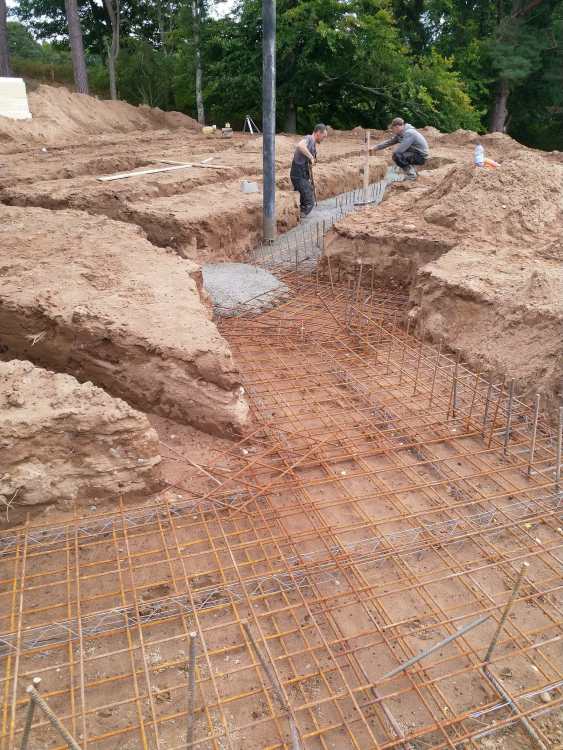
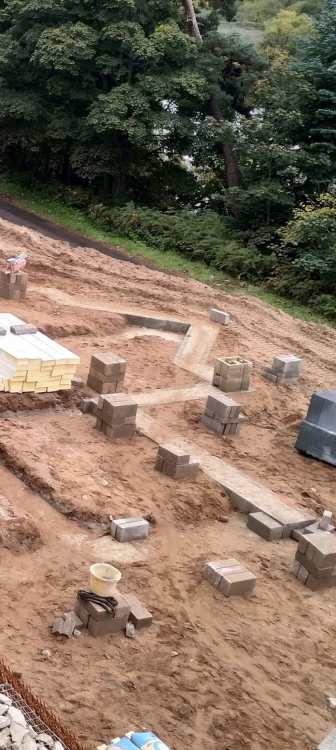
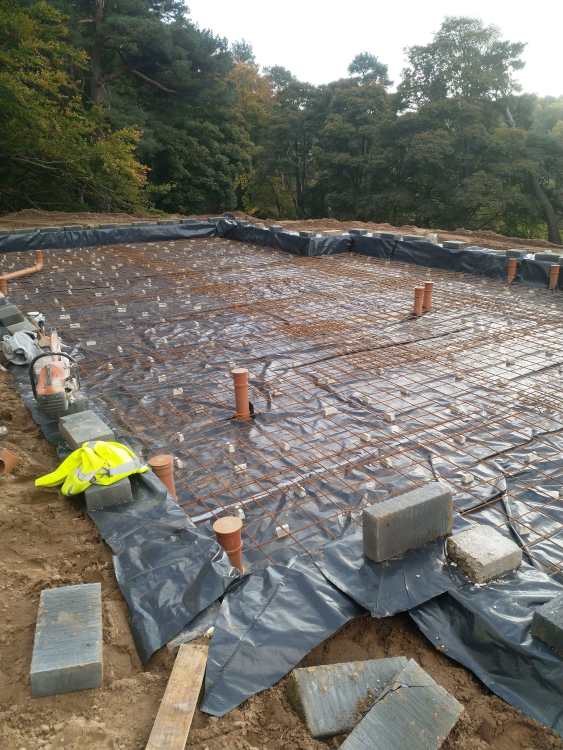
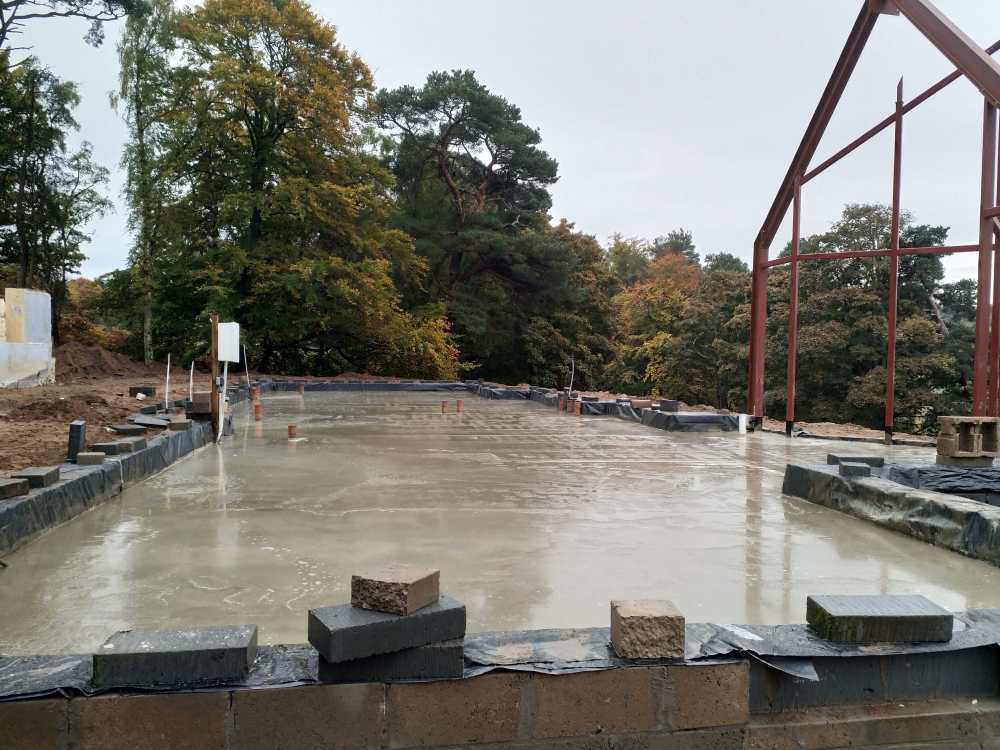
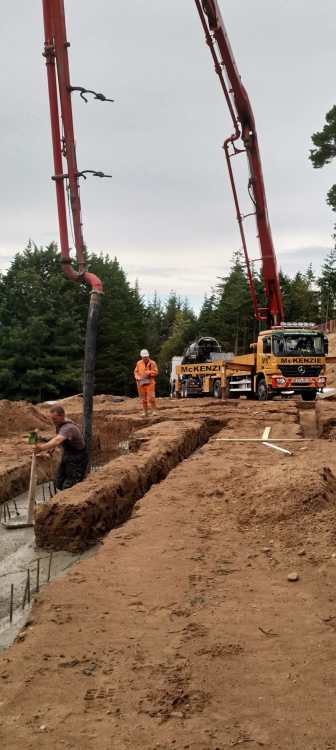
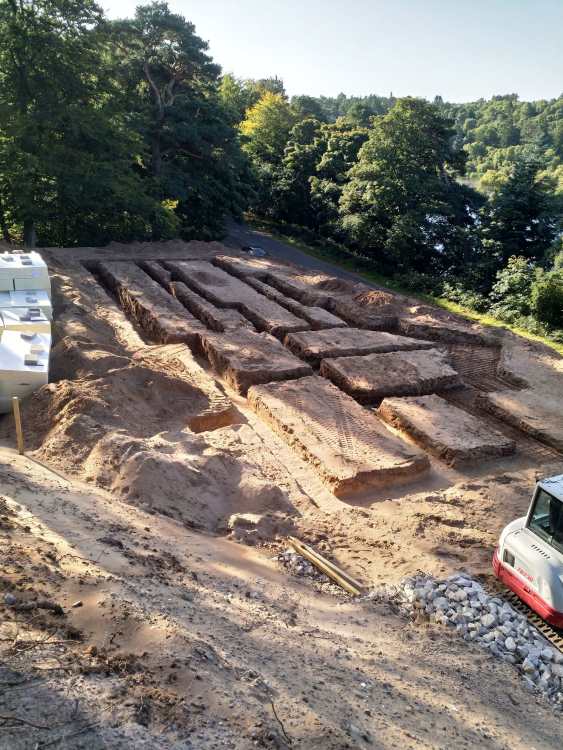
It's a complex foundation by normal standards, due to being on the side of a hill. There's also whole heap of horizontal rebar below that, plus another cast vertical section 500mm wide of concrete foundation to go at the front of the house. The vertical rebar is to join the two sections together. Then more rebar (2 layers) and a 200mm cast concrete slab. 3 days later Then 200mm.of insulation, UFH and another 100mm of fibre reinforced concrete instead of screed.
-
We used a pump lorry - we had a stretch of 30m with no real access any other way.
-
Ducting extractor hob on a kitchen island to outside wall
JohnMo replied to CJER's topic in Ventilation
This sounds like a can of worms. If you have MVHR you really need external only air supply to stove. As mentioned extract in same room isn't allowed. Extracting hood will just lead to room depressurised and the stove spilling combustion air into the room as soon as door is opened. Even if you have hood in recirculation mode, you will still have kitchen extract for the MVHR. Don't be concerned, I rarely even use our cooker hood - MVHR does the job 99.5% of the time. Your issue isn't the cooker hood it's the fire. What is a ventilation fluxo you refer too? The air supply to stove is through wall so takes outside air to use as primary and secondary for combustion. It ensures stove doesn't use room air for combustion. It doesn't remove any need for room ventilation. -
prep for skimming onto old lath plaster walls
JohnMo replied to jfb's topic in Plastering & Rendering
Service battens tapered edge plasterboard and dry line. -
Batteries in plant room and 120 minute fire rated walls
JohnMo replied to jimseng's topic in Energy Storage

-
Batteries in plant room and 120 minute fire rated walls
JohnMo replied to jimseng's topic in Energy Storage
And a massive building trashed. All from a AA sized battery or two. They were still spraying water in the place the next day. -
Batteries in plant room and 120 minute fire rated walls
JohnMo replied to jimseng's topic in Energy Storage
Auto correct - should have read. -
Batteries in plant room and 120 minute fire rated walls
JohnMo replied to jimseng's topic in Energy Storage
Is it going to make any meaningful difference? Battery inside or outside attached to house is a part of full rebuild of house, especially if you get a couple of fire tenders emptying their water -
To add to the above - I have G3 cone filters in the extract terminals, have not need to change an extract filter in the MVHR they come out clean and are reinserted. The cone filters are now hoovered every 6 months and replaced yearly. The intake filter really depends on season and location. Generally I hoover 6 months and replaced annually, but depends on what I see when I take them out. Bearing in 5 years none so far. Service costs about £30 a year for 2x units. Running costs as above but reduced as I have battery and plenty of solar. Heating costs reduced by a bigger margin. MVHR was mandatory due to airtight score in Scotland. So zero options on to install or not.
-
Raft foundation - close to existing structures
JohnMo replied to WisteriaMews's topic in Foundations
Wise words. But seems to the way of things, let's missed out the key steps and try to short cut, then end up spending more time and money to get yourself out of a self dug hole. -
Or get some solar and an immersion - nice hot baths/showers unaffected by global energy costs.
-
How quickly things can change!
-
Scottish heating oil doubled in cost over the last week or so. Was the cheapest, now the most expensive way to heat.
-
ASHP outdoor unit heating pump Q
JohnMo replied to BotusBuild's topic in Air Source Heat Pumps (ASHP)
I came to same conclusion. Good enough for nearly all cases. If the pump can't cope or is close to not coping you will be installing an additional pump anyway, so keep.it easy.- 35 replies
-
- 1
-

-
- vaillant
- arotherm plus
- (and 1 more)
-
If you are at planning stage and not warrant stage, just say ASHP, solar, MVHR? But the architect should be doing this form for you as part of the design and application process This form is nothing you should be paying for, until you get to warrant and then the information comes from as designed EPC.
-
Electricity tariffs
JohnMo replied to Russell griffiths's topic in General Self Build & DIY Discussion
Is that on an EV tariff? No ev here -
Ask your architect - he should have standard words. If you are at planning stage in Scotland, that should be all that's needed. When you get to warrant stage you will need 'as designed' EPC and once built that converted to 'as built'. It's a tick box exercise at planning stage. But if you say your going airtight, they will expect to understand your journey to get there and what products you plan to use with datasheets.
-
ASHP outdoor unit heating pump Q
JohnMo replied to BotusBuild's topic in Air Source Heat Pumps (ASHP)
Just did a comparison, the chart above reads slightly lower than a full calculation (500Pa less) 0.9m head, instead of 0.87m. -
ASHP outdoor unit heating pump Q
JohnMo replied to BotusBuild's topic in Air Source Heat Pumps (ASHP)
Loop length 95 x 90Pa, which s 8550Pa or 0.87m head. Have UFH flow meters open and pressure drop through manifold is small. Plus your pipe, filters and strainer etc. -
Alter ASHP hot water hysteresis?
JohnMo replied to Tom's topic in General Self Build & DIY Discussion
Really depends on what the OP wants