
JohnMo
-
Posts
12468 -
Joined
-
Last visited
-
Days Won
179
Everything posted by JohnMo
-

Enclosure or longer piping run for split ASHP system
JohnMo replied to Jonshine's topic in Air Source Heat Pumps (ASHP)
MCS calc is a blunt pen approach, it's a wall so adds to the reflection factor, so I creases noise. No amendment for it being absorbing. Same as MVHR really, is not heat recovery just ventilation. Whole system thought by office bods with no sense. -
4 bathrooms, and making sure that there is enough hot water.
JohnMo replied to Big Jimbo's topic in Other Heating Systems
Not sure you really need that, you will have got fed up waiting for the shower run hot by the time water got there. 15mm is fine, maybe a dedicated 15mm to each wet room from a manifold close to the cylinder may be more practical. That what we did and the showers flow plenty. I completed my build i.e. had council sign off a few months ago. I fitted a gas combi with preheat cylinder during the build. Since sign off, I have installed an ASHP. The fact is with UFH and well insulated an ASHP is/should be cheaper to run for 98-99% of the year compared to gas. With PV you get to offset some of the running cost. In summer your hot water should be free. Even if your PV is only generating 1kW you are filling the cylinder with 3 to 4 kW by using your ASHP. Will use the ASHP in the summer for hot water and use the nearly new gas one in the winter. You need to shop around for PV your prices are huge. I picked up 12x285W, 2 year old panels yesterday for £800, picked up the nearly new inverter for £150, ground mount frame will be about £300 in materials, plus a load of 6mm2 armoured cable. -
V2G needs a vehicle that can do reverse power supply only a couple do at the moment and you need the correct charger that can handle the flows back and forth. Then you need to lease the vehicle, so you cycle the battery to death and then in a couple of year get a new one and start again.
-
Quick question if I can - are optimisers worth it?
JohnMo replied to MrTWales's topic in Photovoltaics (PV)
I am in a similar position, have just bought 12 panels, I will be splitting into 2x6 arrays. I did concider optimiser, and rejected them, due little or no shade except clouds. I do have them on my roof array, but that gets a fair bit of shading. -
Not just height of summer we can get overheating from March to Oct on very sunny days. We have big overhangs over the windows, as the sun drops to the west we get the sun full blast. We have internal blinds, they help but do not solve the issue. You really need something external.
-
Doesn't have the same WiFi features but...
-
Cool energy have an outlet store the prices are cheapest there. I paid £299 delivered.
-
Nibe (or any heat pump) water scheduling
JohnMo replied to SBMS's topic in Air Source Heat Pumps (ASHP)
If you have solar PV, schedule when that's active, heat the water for free. -
Cool energy diverter is also worth a look, it comes with a built in timer function and everything else Nick explained above for the Eddi and is quite a bit cheaper.
-
The gaps between the woodcrete are too big to support capillary action. Put some woodcrete in a bucket with some of the block out of the water. The part out of the water stays dry. Been there tried it. And is fully free draining. But whatever you want to say, carry on, will not be following this thread any more.
-
Not doubting your own experience, but it was completely opposite to mine, building my own house on a very exposed site in Scotland.
-
True, same with concrete blocks. Nearly all the timber frame houses in Scotland, are encased in concrete blocks. So not any better either.
-
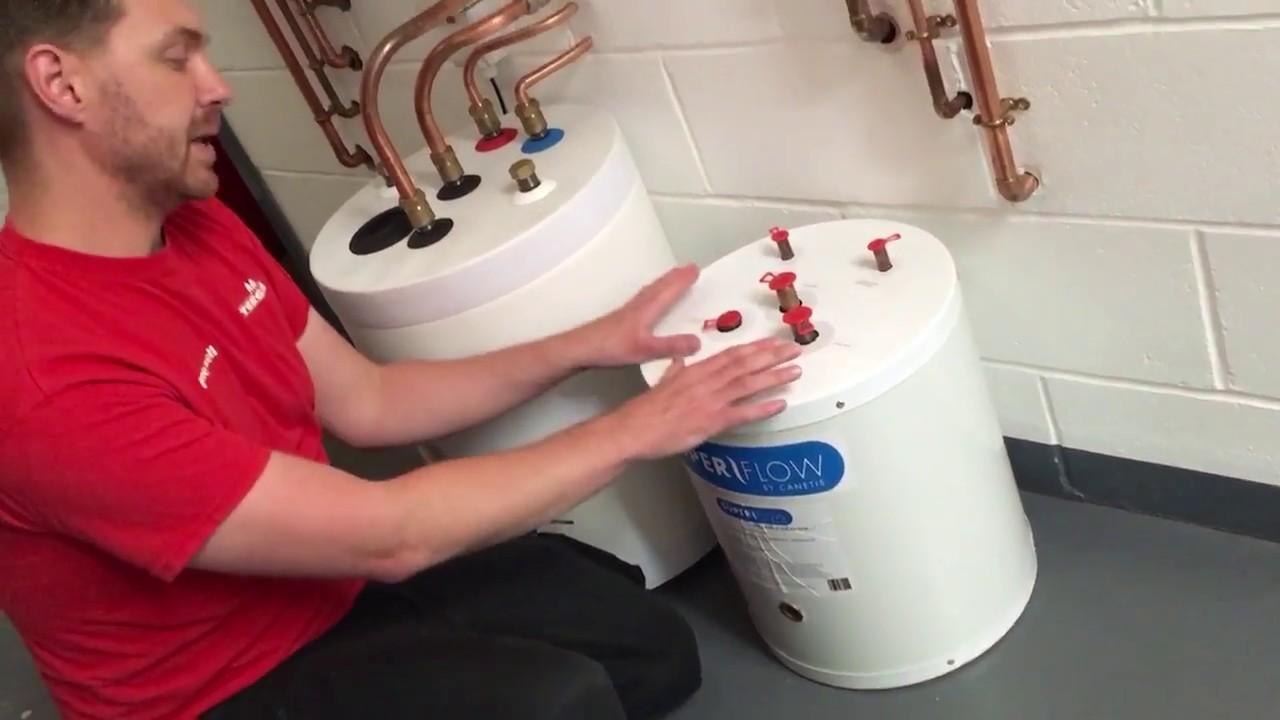
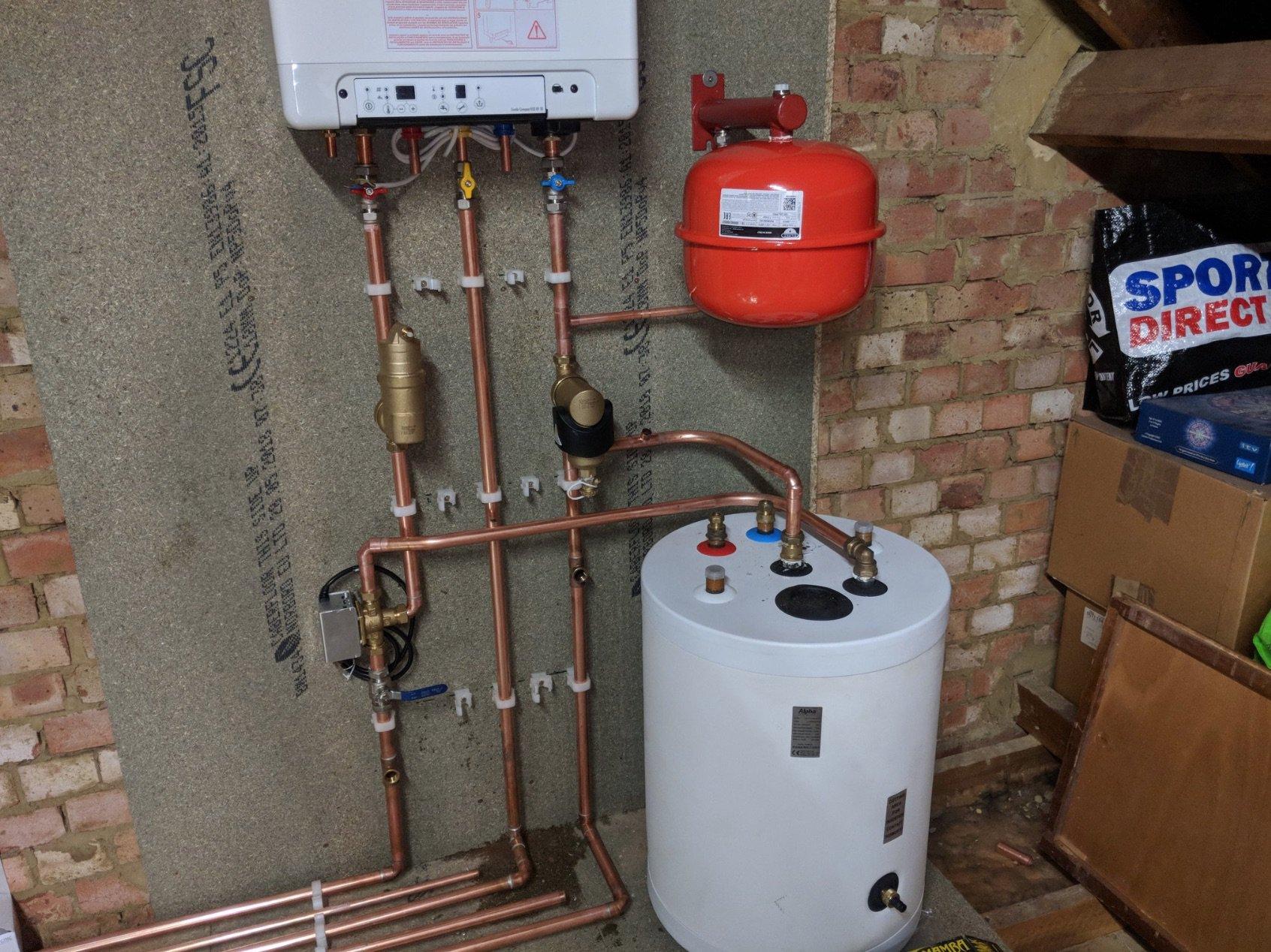
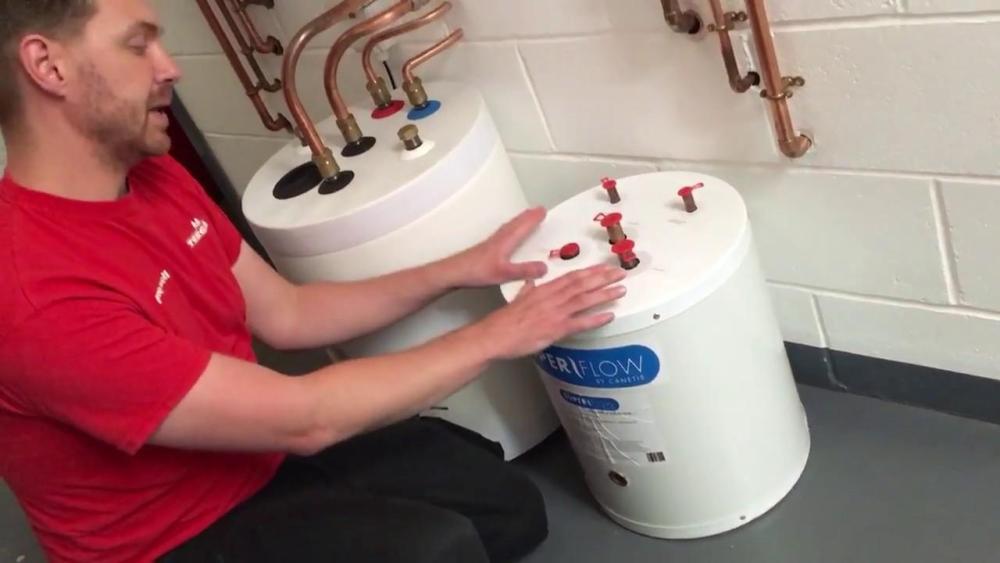
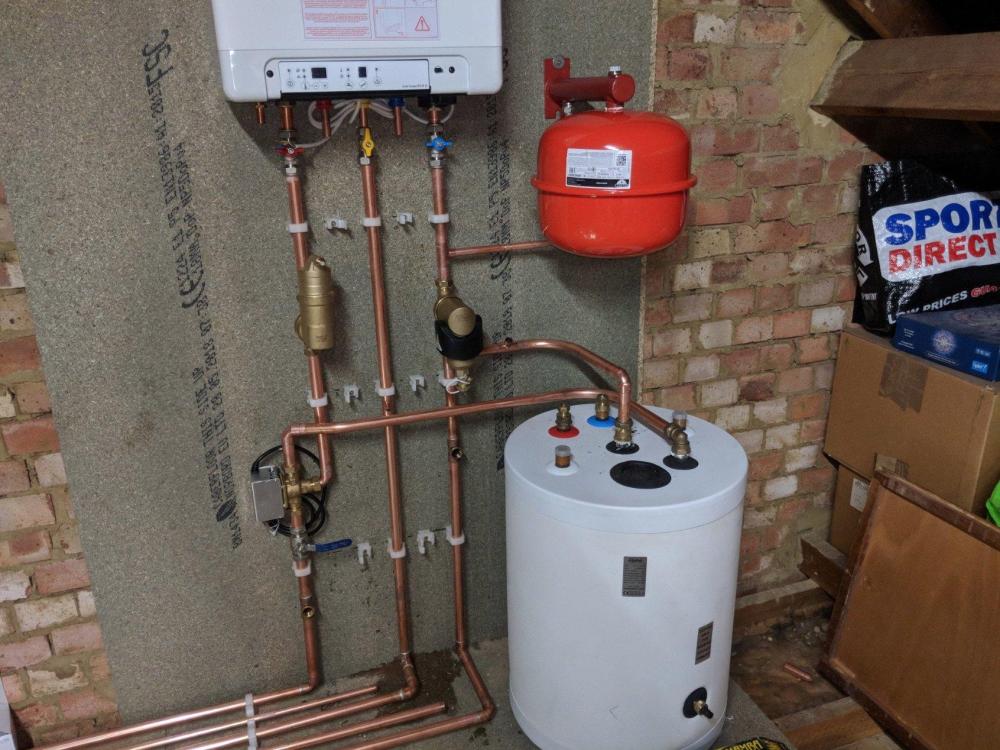
2.5kW of PV will not heat a big cylinder much, so you may be better going small say 50L. Alpha boilers do a cylinder set up out the box for this. An Alpha Superflow 50 and 25. You just need to add a 230v 1-1/4" immersion and your diverter. Some bedtime reading and images Combi-SuperFlow-White-Paper-v1-2-4.pdfCanetis-SuperFlow-Product-Sheet-WE-050318.pdf FlowSmart Inst & Serv Inst 17-6-08.pdf
-
It just there to separate the aluminium foil on your insulation from the cement, to stop a chemical reaction. It also helps stop the screed going under the insulation lifting it all up. Anything will do that does mind being walked on.
-
Our air temp at the same period was sometimes -9. At 6 degs you should be getting a cop of 5, while -9 we would get just over 3. If you have a water source you have access too, it's a bit of a no brainer.
-
Would your option 2 ever work? How are you maintaining the side and top minimum clearances. How would you get access to wire it up and do maintenance on the heat pump? This option may gain nothing (most likely) or a degree on air temp if your lucky or if you don't have enough insulation in your floor. At a water flow temp of 30 at -2 your CoP should be around 3.6, if you managed to gain a degree, that may increase 3.75. Why not place on the ground, easy to do, easy to install and maintain, little or no difference in CoP. You would be better off making sure your flow temps are a low as possible, ensuring you don't need a buffer etc. A poor buffer install and miss match flow rates either side of the buffer could cost 5 degrees in flow temp, that would knock you CoP down to 3.2 at -2.
-
Have you actually calculated it yourself, using the spreadsheet in boffins corner. https://forum.buildhub.org.uk/topic/439-fabric-and-ventilation-heat-loss-calculator/ Even at 302m2, 11kW sounds big heat demand.
-
That can't be the heat demand of a new new build house. Mine is 192m2 or 225m2 if I include the plant room and only needs 3.5kW. I would do a wireless thermostat, then you can move to where suits the heating control best. Which you won't know until you have lived in it for a while.
-
One thermostat per floor. Would review your need for UFH heating upstairs? No, you are restricted by max allowable pipe length. No not really, I had them removed them, they brought nothing to the party. I would delete all hallway loops, and just spread the pipes already going through those areas. What are you pipe centres and what is your heat demand in kW?
-
Of cause you can also do curved walls with Durisol
-
Certainly not my experience, windy rainy hill side site, zero rain through wall, were actually living in the house prior to external walls being sealed. Walls went up in Dec, followed by roof, windows not in until April. We had an issue once with water ingress, but that was because the outside ground level was higher than the dpc, nothing related to Durisol.
-
The trouble with a single unit, it recycles the air, sucking in the air close to it and then throwing it out. It may find it difficult to migrate the warm or cool air around the rooms. You may end end with a warm or cool corridor and room doorways, but rooms not comfortable. You may be better with a two or three outlet A2A, one unit in the kitchen doorway, that will throw conditioned air towards the bedrooms, the other unit on bedroom 3 wall throwing air towards kitchen and lounge. Or with a 3 outlet a dedicated outlet in lounge and kitchen. The more outlets you have more doors that can be shut and it doesn't matter. Single outlets are good for a single room or open plan, not so good for whole house with dedicated rooms.
-
Enclosure or longer piping run for split ASHP system
JohnMo replied to Jonshine's topic in Air Source Heat Pumps (ASHP)
200W with a CoP of 3, would cost in electrical terms is 66W, so assuming the 200W loss was 6 months a year 24 hrs a day (which wouldn't be the case); that's closer to £100. Reality most the time heat loss would be way less than that, as flow temp on a warmer day would have less heat loss and the CoP could 4 or 5. -
That's the best idea so far, hide in plain sight. Move it to the middle of the plain wall, near the green gateway, where the path is quite wide, so should get away without changing that. Make a slightly raised bed in the rounded off grass area get some evergreen shrubs, sorted. Do the bed first, then no-one will notice anything after.
-
If sounds too good, normally is. Like most things there can be huge performance and life expectancy difference. This is a good source of information, I would go for a unit that is A*** for both heating and cooling. https://www.eurovent-certification.com